
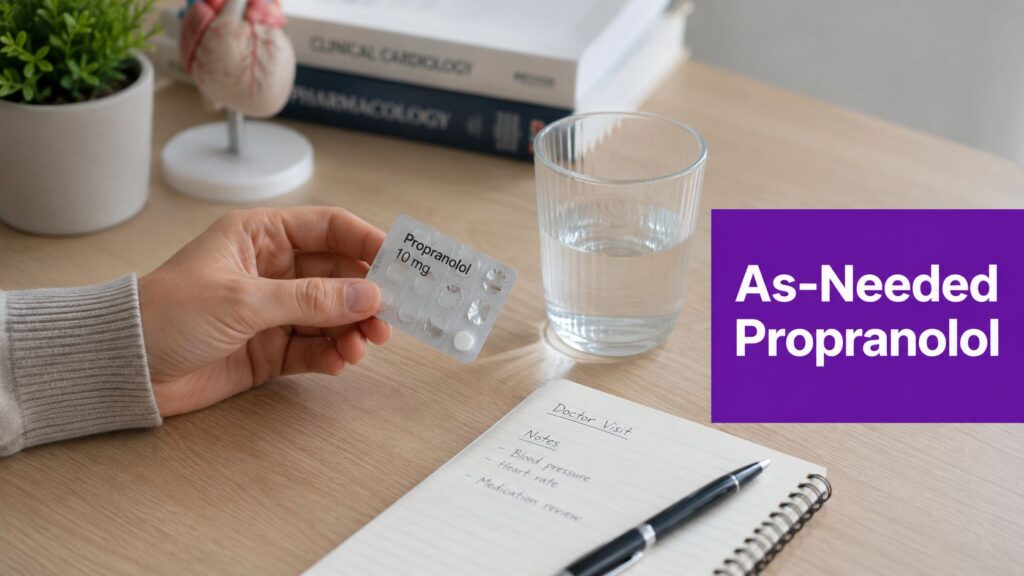
Your presentation starts in an hour. You know the material. You practiced. But your body is acting like you're in danger anyway. Your heart is pounding, your hands are unsteady, and now you're searching a very common question: can I take Propranolol as needed?
The short answer is sometimes, yes. But only in the right context, with the right screening, and with a clear plan from a clinician.
Propranolol isn't a typical anxiety medication in the way people often think about medications for generalized worry or panic. It's a beta-blocker, which means it works on the body's stress response more than the anxious thought itself. For the right person, that can be useful. For the wrong person, it can be risky. That difference matters.
I also want to name something many patients struggle with before they even get to the medication question. Sometimes what looks like anxiety is instead a mix of anxiety, overwhelm, attention issues, or both. If you're trying to sort that out, IPA's approach to anxiety or ADD offers a helpful overview of how those symptoms can overlap.
The Propranolol Question for Situational Anxiety
A common clinical scenario looks like this. Someone feels mostly fine in daily life, but before a speech, audition, job interview, court appearance, or important meeting, their body surges into overdrive. They aren't asking for something to numb them out all day. They want to stop the visible, uncomfortable physical spiral that shows up in a predictable moment.
That is where as-needed Propranolol sometimes enters the conversation.
When this question usually comes up
People usually aren't asking whether Propranolol will solve their whole anxiety disorder. They're asking whether it can help with symptoms like:
- Racing heart: the pounding that makes it hard to feel steady
- Shaking or tremor: especially in the hands or voice
- Sweating or flushing: the symptoms that make people feel exposed
- Physical escalation: when noticing the symptoms makes the anxiety worse
Those are different from persistent rumination, dread, avoidance, or intrusive thoughts. Propranolol may help the body feel less hijacked in the moment, but it doesn't replace therapy, skill-building, or other medication options when anxiety is broader and more frequent.
Some people don't need a medication for daily anxiety. They need a plan for predictable high-stakes moments.
A useful way to think about it
If your anxiety is mostly situational, an as-needed approach may make sense. If your anxiety shows up across many settings, most days, with ongoing worry or panic, Propranolol by itself usually won't be enough.
That is why the best answer to "can I take Propranolol as needed" is not yes or no in isolation. It's: What symptoms are you trying to treat, how often do they happen, and is your health history compatible with this medication?
How Propranolol Calms Physical Anxiety Symptoms
A common clinical pattern looks like this: someone feels mentally prepared for a presentation, audition, or interview, then their body surges the moment it starts. Their heart pounds, their hands shake, their voice wobbles, and the physical symptoms become the main obstacle. In that kind of situation, Propranolol may help because it targets the body response more than the fear itself.

Propranolol is a beta blocker. It blocks some of adrenaline's effects on the heart and circulation, which can lower the intensity of the fight-or-flight response. The result is often a steadier pulse, less tremor, and a body that feels more manageable under stress.
What it can help with
In the right setting, Propranolol may reduce:
- Palpitations
- Trembling
- Sweating
- A shaky voice
- The sense that your body is spiraling
That matters because anxiety often has both a mental and physical component. A person may still have the thought, "What if I mess this up?" but if the pounding heart and shaking ease up, they can usually function more effectively. If you have ever wondered why anxiety can feel so physical, this explanation of how anxiety can cause physical symptoms gives useful context.
What it does not do
Propranolol does not directly treat rumination, dread, trauma reactions, or the habits that keep anxiety going over time. It does not replace therapy. It also does not fix broader anxiety patterns that show up across many settings and most days.
This is why I frame PRN Propranolol as one tool, not the whole plan. It can make a predictable high-stress moment more manageable, but the larger treatment plan may still include therapy, exposure work, sleep changes, or a daily medication if symptoms are frequent.
Practical rule: Propranolol tends to help most when the physical symptoms are the main problem.
How clinicians commonly use it for situational anxiety
For situational anxiety, clinicians often prescribe an immediate-release dose to take shortly before the trigger, rather than using it as a daily anxiety medication. The exact amount and timing vary by the person, the event, and their medical history. The NHS notes that for anxiety, propranolol is commonly prescribed in 10 mg to 40 mg doses taken before the anxiety-provoking event or, in some cases, on a regular schedule depending on the condition being treated, as outlined in the NHS guidance on propranolol.
Timing matters. Taking it too close to the event may leave you disappointed with the effect. Taking it without a clear plan can create avoidable problems, especially if you have low blood pressure, asthma, a slow heart rate, or take other medications that affect the heart.
A safe PRN plan should answer a few practical questions:
- Which physical symptoms are we trying to reduce?
- How far in advance should you take it?
- What side effects would mean you should stop and call your prescriber?
- When is it a short-term strategy, and when do you need a broader anxiety treatment plan instead?
Common Scenarios for As-Needed Propranolol Use
The most appropriate uses for as-needed Propranolol are usually specific and predictable. It tends to fit moments where the body reliably overreacts, and the person wants to stay mentally clear.

The musician before a performance
A musician may know the piece cold in rehearsal but struggle once the audience appears. The hands shake. The heart races. The first minute feels physically chaotic, even though the skill is there. In that situation, a clinician may consider Propranolol because the target is the physical surge, not a constant baseline anxiety problem.
The traveler with a predictable trigger
Someone who can function well day to day may still have intense body symptoms before boarding a flight. They may not need a daily anxiety medication. They may need a targeted plan for a specific trigger that reliably creates sweating, pounding heart, trembling, and anticipatory dread.
In cases like that, medication is often only one part of the strategy. Breathing work, exposure-based therapy, and practical travel routines still matter.
The graduate student defending a thesis
Another common example is a student facing an oral defense or major presentation. They aren't looking to feel sedated. They want their body to stop sabotaging their concentration. That can be a reasonable conversation for a clinician to have, especially if the pattern is narrow and event-based.
For people who are trying to sort out whether they need a rescue medication, a broader anxiety treatment, or both, it can also help to understand where medications like benzodiazepines fit differently. This discussion of Xanax and anxiety attacks highlights that distinction.
The better the trigger is defined, the easier it is to tell whether PRN Propranolol is a strategic tool or the wrong tool.
When it may not be the right fit
Situational use makes less sense when anxiety is:
- Frequent and diffuse: not tied to one event or setting
- Mainly cognitive: looping worry without strong physical symptoms
- Unpredictable: attacks happen without enough warning to time a dose
- A stand-in for needed treatment: using PRN medication while avoiding therapy or fuller evaluation
Those cases often call for a broader plan than an occasional beta-blocker.
As-Needed PRN vs Scheduled Daily Dosing
One of the biggest mistakes people make with Propranolol is assuming that "as needed" means casual or interchangeable. It doesn't. PRN use and scheduled daily use are different prescribing strategies with different goals.
The core difference
PRN use is usually about a defined event. Scheduled use is about maintaining a steadier effect for ongoing symptoms or chronic medical conditions.
The NHS notes that Propranolol for chronic conditions like anxiety or migraine is often prescribed on a fixed schedule, such as 40 mg two to three times daily, rather than as a one-time situational dose, as outlined in the NHS guide on how and when to take Propranolol.
Propranolol dosing comparison
| Aspect | As-Needed (PRN) Use | Scheduled Daily Use |
|---|---|---|
| Primary goal | Short-term control of physical symptoms before a known trigger | Ongoing symptom control or management of a chronic condition |
| Typical context | Performance anxiety, event-based physical anxiety symptoms | Chronic anxiety treatment plans, migraine, angina, other medical uses |
| Pattern of use | Single dose before a specific event, if prescribed that way | Repeated doses on a routine schedule |
| Why timing matters | You need the effect to be active before the trigger begins | The goal is steadier beta-blockade over time |
| Risk of self-adjusting | Taking extra because you're nervous can create safety problems | Doubling up or taking doses too close together can also be dangerous |
| Clinical question | "Do I need help for a predictable situation?" | "Do I need ongoing treatment?" |
Why people get confused
Patients often hear that Propranolol can be used for anxiety and assume they can borrow a family member's pill, try it before a stressful day, or repeat a dose if they don't feel enough relief. That is where problems start.
This medication affects heart rate and blood pressure. It isn't like taking a mint before a meeting. The exact regimen depends on why you're taking it, what other medications you use, and whether your body can safely tolerate beta-blockade.
If you're also trying to understand how long the medication may be active after a dose, propranolol's full duration guide offers a useful explanation of the timing questions patients often ask.
Scheduled medications are built around consistency. PRN medications are built around precision. Mixing those mindsets leads to mistakes.
A practical takeaway
If you need Propranolol often, that doesn't automatically mean you've done something wrong. It does mean your clinician should reconsider the plan. Frequent need can be a clue that the problem is no longer purely situational, or that another treatment deserves more attention.
Critical Safety Risks and Who Should Avoid Propranolol
A common scenario is a patient who wants something simple for a presentation, interview, or flight, then learns the harder question is not "Will it calm my nerves?" but "Is it safe with my body, my history, and my other medications?"

Who should not use it without direct clinician guidance
Propranolol lowers heart rate and blood pressure. It can also tighten the airways in susceptible people. That means it is usually a poor choice, or requires very careful review, for people with asthma or a history of bronchospasm, bradycardia, heart block, cardiogenic shock, or uncontrolled heart failure, based on standard prescribing safety information in the NHS propranolol guidance.
For those patients, "as needed" does not mean "low risk." A single dose can still cause trouble if the medication is a bad fit.
Why supervision matters
Self-directed use is one of the biggest problems with propranolol for anxiety. People hear that it helps with physical symptoms, assume it is harmless, and try a borrowed tablet or reuse an old prescription without a fresh review.
A UK patient safety investigation reported a 33% increase in propranolol prescribing between 2012 and 2017, and described a 9.9% prevalence of use in one study of medical and dental students, with 58.6% of users taking it without supervision (HSSIB investigation report on propranolol-related risk).
The same report states that the British Association for Psychopharmacology found no evidence that propranolol is effective for anxiety disorders overall, aside from a possible exception in certain children with autism spectrum disorder and anxiety, and it notes reported fatalities with doses as low as 2,000 mg (HSSIB investigation report on propranolol-related risk).
Those points matter because PRN propranolol should sit inside a broader treatment plan. It is one tool for selected situations, not a substitute for proper diagnosis, therapy, or a review of whether another treatment fits better.
Other people who need extra caution
Some patients are not in the "never use" group, but they still need a slower and more thoughtful decision. That includes people with:
- Low blood pressure or frequent lightheadedness
- Diabetes, especially if they depend on a racing heart or tremor to notice low blood sugar
- Circulation problems
- A history of fainting
- Multiple medications that affect heart rate or blood pressure
- ADHD treatment involving stimulants, where the symptom picture can be harder to sort out. This guide to ADHD medication and anxiety gives helpful background for that conversation
In practice, I tell patients to treat propranolol like any other medication that can help and can also harm. The goal is not to avoid useful treatment. The goal is to choose it carefully, test it safely, and make sure it fits the larger plan you and your clinician are building.
Understanding Drug Interactions and Other Precautions
Most unsafe medication experiences don't happen because someone chose the "wrong" medication in isolation. They happen because the full picture wasn't discussed.
What your prescriber needs to know
Before Propranolol is prescribed, give a complete list of:
- Current prescriptions
- Over-the-counter products
- Supplements
- Alcohol use
- Recreational substances
- Any history of heart, lung, blood pressure, or blood sugar problems
That list matters because Propranolol can overlap with other substances that also lower heart rate, lower blood pressure, increase dizziness, or complicate how side effects show up.
Common categories to review
A prescriber will often pay close attention to these categories:
- Blood pressure or heart medications: Combining effects can push heart rate or blood pressure lower than intended.
- Some psychiatric medications: Certain antidepressants and other mental health medications can change tolerability, side effects, or the overall treatment strategy.
- Alcohol: It can make dizziness or lightheadedness harder to predict.
- Stimulant treatment: If you already take medication for ADHD or attention symptoms, the overall symptom picture needs more nuance than "just add Propranolol."
If that last point applies to you, this guide to ADHD medication and anxiety is a useful resource for thinking through how overlapping symptoms can complicate treatment decisions.
Precautions patients often overlook
Some practical habits reduce avoidable problems:
- Don't experiment before an important event. If your clinician prescribes it, ask whether you should test a dose in a lower-stakes setting first.
- Don't double up because you're still nervous. Feeling anxious doesn't always mean you need more medication.
- Stand up slowly if you're prone to lightheadedness. This is especially relevant if you're anxious, dehydrated, or haven't eaten well.
- Tell your pharmacist it is for PRN use. That helps them catch counseling points that fit how you'll take it.
Good prescribing is not only about the medication choice. It's about making sure the whole treatment plan still makes sense when that medication is added.
How to Discuss PRN Propranolol with Your Doctor in Arizona
To determine if Propranolol can be taken as needed, a focused medical conversation is the most productive next step. Provide the specific pattern, not a vague summary. "I get anxious sometimes" is harder to treat than "before every presentation, my heart pounds, my hands shake, and I lose my train of thought."

Questions worth bringing to the appointment
Use a short checklist like this:
- Is my symptom pattern a good fit for PRN Propranolol?
- Are my physical symptoms the main target, or do I need a broader anxiety plan?
- Does my medical history make a beta-blocker unsafe or higher risk?
- What should I do if it helps only partly?
- How often is too often to rely on it?
- What are the alternatives if this isn't a fit?
What a strong plan usually includes
A careful prescriber won't just write a prescription and send you on your way. They should help you understand:
| What to clarify | Why it matters |
|---|---|
| Exact use case | A medication works better when the target symptom is specific |
| Dose timing | PRN use depends on taking it at the right time, not just "sometime before" |
| Safety screening | Heart, lung, blood pressure, and medication history matter |
| Backup plan | You need to know what to do if side effects show up or the benefit is limited |
| Bigger treatment plan | PRN support works best when it fits into therapy, coping skills, and follow-up |
For people in Arizona who want a medication evaluation as part of a broader plan, psychiatric medication management can be one appropriate route. One local option is reVIBE Mental Health, where psychiatric care and therapy can be coordinated as part of an individualized treatment plan.
If you're in the Phoenix metro area and want to have this conversation in person, reVIBE Mental Health has five locations for convenience:
- Chandler: 3377 S Price Rd, Suite 105, Chandler, AZ
- Phoenix Deer Valley: 2222 W Pinnacle Peak Rd, Suite 220, Phoenix, AZ
- Phoenix PV: 4646 E Greenway Road, Suite 100, Phoenix, AZ
- Scottsdale: 8700 E Via de Ventura, Suite 280, Scottsdale, AZ
- Tempe: 3920 S Rural Rd, Suite 112, Tempe, AZ
You can also call (480) 674-9220 to ask about scheduling.
The best use of PRN Propranolol is rarely "take this and hope." It's a shared decision, built around your symptoms, your medical history, and the kind of life you want to function well in.
If you'd like help sorting out whether PRN Propranolol fits your anxiety pattern, reVIBE Mental Health offers therapy and psychiatric care in Chandler, Phoenix, Scottsdale, and Tempe, with medication management, in-person visits, and secure online sessions. A clinician can help you decide whether a beta-blocker makes sense, what alternatives may fit better, and how to build a treatment plan that goes beyond getting through one stressful event.