
Panic attacks can feel overwhelming, like a sudden and intense storm that disrupts your sense of safety and control. The powerful physical and emotional symptoms, a racing heart, shortness of breath, and a feeling of impending doom, can leave you feeling exhausted and fearful of the next one. But you are not powerless against this storm. Understanding what is happening in your body and mind is the critical first step toward reclaiming your calm and navigating these episodes with confidence.
This guide provides a comprehensive roundup of evidence-based coping strategies for panic attacks, offering both immediate, in-the-moment techniques and effective long-term therapeutic approaches. Whether you need a practical anchor to hold onto during the peak of an attack or a clear blueprint for building lasting resilience, these actionable strategies offer a definitive path forward. We will explore a wide range of tools designed to build your personalized toolkit for not just surviving panic, but thriving beyond it.
You will learn specific, step-by-step methods you can use right away, including:
- Breathing and Grounding: Regain control over your body's physical response with techniques like Box Breathing and the 5-4-3-2-1 sensory method.
- Cognitive and Behavioral Skills: Challenge catastrophic thoughts and gradually reduce fear through cognitive reframing and gentle exposure exercises.
- Therapeutic Solutions: Discover how established therapies like EMDR and CBT, alongside options for medication management, address the root causes of panic.
For individuals in the Phoenix metro area, our team at reVIBE Mental Health is here to support you with professional guidance and personalized care. With locations in Chandler, Phoenix, Scottsdale, and Tempe, finding compassionate, expert help is always within reach. Let's begin building your strategy for lasting peace and empowerment.
1. Box Breathing (4-4-4-4 Technique)
When a panic attack strikes, your breathing often becomes rapid and shallow, a physiological response that can intensify feelings of fear and loss of control. Box breathing, also known as the 4-4-4-4 technique, is a powerful coping strategy for panic attacks because it directly counters this response. This structured breathing exercise works by intentionally slowing your respiratory rate, which helps activate the parasympathetic nervous system, your body's natural "rest and digest" system. It provides a simple, rhythmic pattern for your mind to focus on, pulling your attention away from the overwhelming physical sensations and catastrophic thoughts of panic.
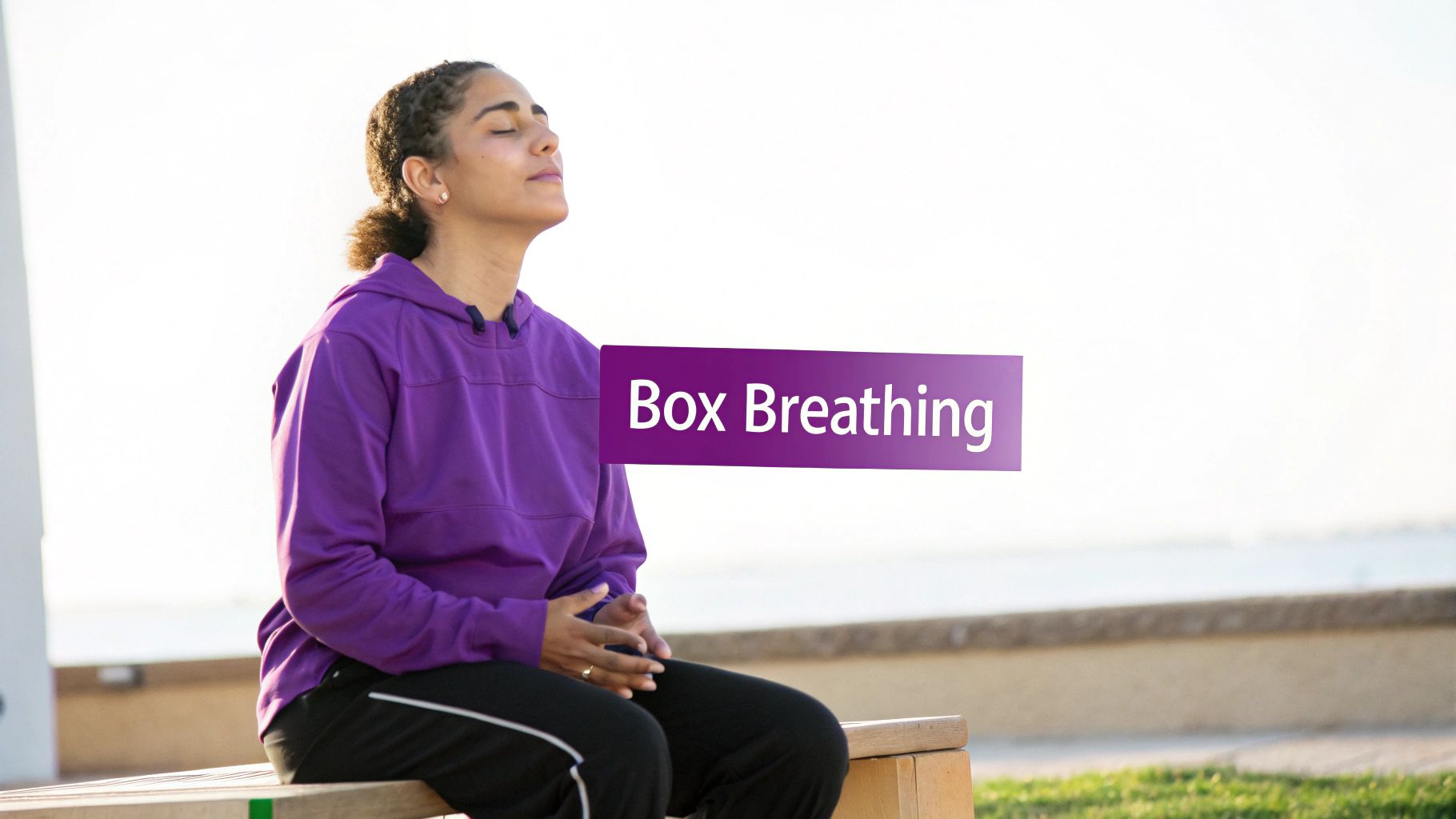
The technique is celebrated for its simplicity and effectiveness, having been popularized by U.S. Navy SEALs to maintain composure during high-stress missions. Its value extends far beyond the military; emergency responders, athletes, and individuals managing anxiety all use this method to regulate their physiological and psychological states.
How to Practice Box Breathing
The beauty of this technique is its discretion; you can do it anywhere without anyone noticing. Follow these simple steps:
- Inhale: Slowly breathe in through your nose for a count of four.
- Hold: Gently hold your breath for a count of four.
- Exhale: Slowly breathe out through your mouth for a count of four.
- Hold: Hold your breath with your lungs empty for a count of four.
Repeat this cycle for several minutes, or until you feel a sense of calm returning. The square "box" pattern gives your brain a predictable anchor, making it one of the most reliable and immediate coping strategies for panic attacks.
Tips for Effective Use
To make this technique a dependable part of your mental health toolkit, consistency is key.
- Practice When Calm: Integrate box breathing into your daily routine when you aren't anxious. This builds muscle memory, making it easier to access during a high-stress moment.
- Use Early Warning Signs: Deploy the 4-4-4-4 technique as soon as you notice the first signs of panic, such as a racing heart or shortness of breath. Intervening early can prevent the attack from escalating.
- Combine with Grounding: For enhanced effect, pair box breathing with a grounding technique, like focusing on the feeling of your feet on the floor.
Our therapists at reVIBE Mental Health often guide clients in mastering this skill, helping them build confidence in managing panic symptoms. To learn more about this and other evidence-based techniques, contact our team at any of our Phoenix-area locations in Chandler, Scottsdale, Tempe, or Phoenix.
2. Grounding Techniques (5-4-3-2-1 Sensory Method)
During a panic attack, your mind can feel disconnected from your body and reality, caught in a terrifying loop of "what if" scenarios. Grounding techniques are coping strategies for panic attacks designed to pull your focus out of this internal chaos and anchor you firmly in the present moment. The 5-4-3-2-1 Sensory Method is a particularly effective form of grounding because it systematically engages all five of your senses, forcing your brain to notice the immediate, tangible world around you instead of the frightening sensations within. This shift in attention interrupts the panic cycle and reaffirms a sense of safety and control.
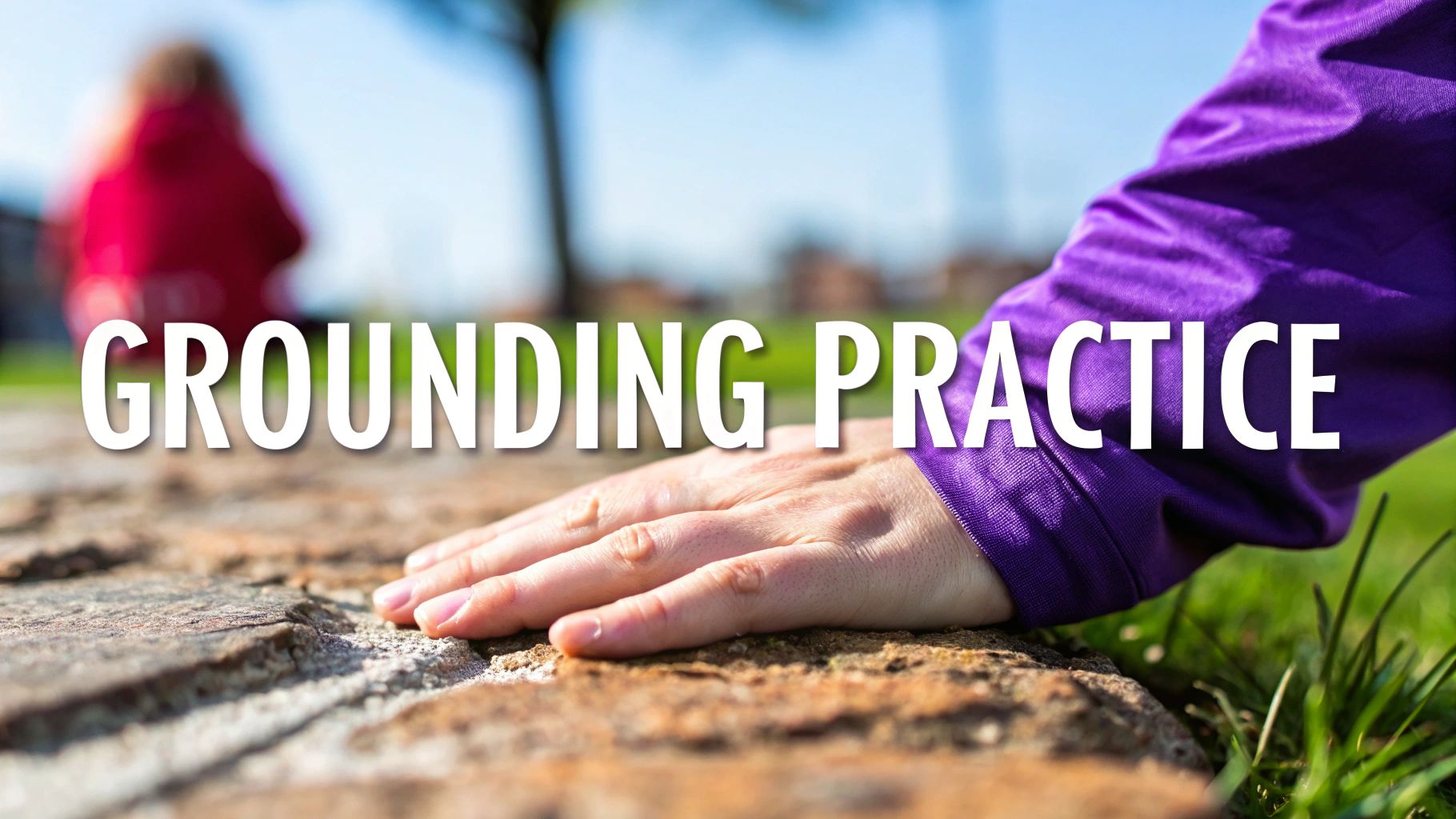
This method is widely utilized in trauma-informed therapies like EMDR and Dialectical Behavior Therapy (DBT), as championed by experts like Dr. Bessel van der Kolk. Its power lies in its ability to bring a person out of a flashback or a dissociative state and back into the safety of the here and now. From students facing exam anxiety to individuals navigating a crowded public space, this technique provides a discreet yet powerful tool to regain composure.
How to Practice the 5-4-3-2-1 Method
This technique requires no special equipment and can be performed silently, making it ideal for any situation. The goal is to notice your surroundings without judgment.
- See: Acknowledge five things you can see around you. Notice details like the color of a chair, the texture of a wall, or a light reflecting off a surface.
- Touch: Identify four things you can feel. This could be the texture of your jeans, the coolness of a table, or your feet firm on the floor.
- Hear: Listen for three distinct sounds. It might be the hum of a computer, the sound of traffic outside, or your own breathing.
- Smell: Name two smells you can detect. This might be faint, like the scent of paper or coffee from another room.
- Taste: Acknowledge one thing you can taste. You can notice the lingering taste of your last meal or simply the natural taste inside your mouth.
Repeat the sequence if needed until the intensity of the panic begins to subside. The structure provides a clear path for your mind to follow, leading it away from fear.
Tips for Effective Use
To make grounding a reliable ally, prepare ahead of time and practice it regularly.
- Practice When Calm: Regularly run through the 5-4-3-2-1 method when you are relaxed. This builds a strong neural pathway, making the skill easier to recall during high-stress moments.
- Create a Grounding Kit: Keep a small kit with items that engage your senses, such as a smooth stone (touch), a small vial of essential oil (smell), or a sour candy (taste).
- Use Early Warning Signs: Deploy this technique at the first sign of rising anxiety. Early intervention is one of the most effective coping strategies for panic attacks, as it can stop the cycle before it peaks.
- Combine with Breathing: Pair the 5-4-3-2-1 method with Box Breathing. Focusing on your breath while you engage your senses can create a powerful, dual-layered calming effect.
Our therapists at reVIBE Mental Health often teach clients this method to manage symptoms related to trauma, anxiety, and PTSD. To learn more about grounding and other evidence-based techniques, contact our team at any of our Phoenix-area locations in Chandler, Scottsdale, Tempe, or Phoenix.
3. Progressive Muscle Relaxation (PMR)
Panic attacks often create a vicious cycle where mental fear triggers physical tension, which in turn amplifies the sense of alarm. Progressive Muscle Relaxation (PMR) is a powerful coping strategy that directly interrupts this cycle by teaching you to recognize and release physical stress. This technique involves systematically tensing specific muscle groups and then letting go, creating a profound sense of physical calm that signals to your brain that the danger has passed. It helps lower your heart rate, slow your breathing, and reduce the overwhelming physical symptoms of panic.

Developed by Dr. Edmund Jacobson in the 1920s, PMR is a cornerstone of cognitive-behavioral therapy and mindfulness-based programs. Its effectiveness lies in its ability to give you a tangible sense of control over your body's stress response. Many individuals, from those with generalized anxiety to athletes managing pre-competition jitters, use PMR to achieve a state of deep relaxation and ground themselves in the present moment.
How to Practice Progressive Muscle Relaxation
This exercise is best done in a quiet, comfortable space where you won't be disturbed. You can do it lying down or sitting in a supportive chair.
- Feet & Toes: Begin by taking a deep breath. As you do, curl your toes and tense the muscles in your feet for 5-10 seconds.
- Release: Exhale and quickly release all the tension. Notice the difference between the feeling of tension and the feeling of relaxation.
- Lower Legs: Tense your calf muscles. Hold, then release.
- Thighs: Tense your thighs. Hold, then release.
- Continue Upward: Systematically move up your body, tensing and releasing each major muscle group: your glutes, abdomen, back, hands, arms, shoulders, neck, and face.
Focus on the distinct sensation of relaxation that follows each release. The entire sequence provides a physical anchor, making it one of the most effective coping strategies for panic attacks driven by physical symptoms.
Tips for Effective Use
To make PMR a reliable tool, proactive practice is essential.
- Practice Proactively: Integrate PMR into your daily routine, especially before bed. This builds your ability to relax on command, so it's more accessible during an actual panic attack.
- Use Guided Audio: When you're first learning, use a guided PMR recording or app to walk you through the steps without having to think about it.
- Create a Calm Space: Designate a quiet area in your home for relaxation practices to minimize distractions and signal to your body it's time to unwind.
- Combine with Breathing: Pair PMR with slow, deep breathing exercises to enhance the relaxation response and calm your nervous system more quickly.
The therapists at reVIBE Mental Health often teach PMR as a foundational skill for anxiety management. To learn how to incorporate this and other techniques into your life, contact our team at any of our Phoenix-area locations in Chandler, Scottsdale, Tempe, or Phoenix.
4. Cognitive Reframing and Mindfulness/Acceptance-Based Strategies
Panic attacks are fueled by catastrophic thoughts that interpret benign physical sensations as life-threatening events. Cognitive reframing and mindfulness/acceptance strategies are powerful coping strategies for panic attacks because they directly target this cognitive-emotional spiral. Reframing involves actively challenging and replacing distorted thoughts with more realistic ones, while mindfulness teaches you to observe your symptoms with non-judgmental awareness, reducing your resistance and fear. Together, these approaches build psychological flexibility, helping you change both what you think and how you relate to your thoughts.
This dual approach draws from the pioneering work of Dr. Aaron Beck in Cognitive Therapy and Dr. Jon Kabat-Zinn in Mindfulness-Based Stress Reduction. It acknowledges that while you can't always stop anxious feelings from arising, you can change your response to them. Instead of getting swept away by thoughts like, "My racing heart means I'm having a heart attack," you can reframe it: "This is a normal symptom of anxiety; it is uncomfortable but not dangerous, and it will pass." This shift in perspective is a cornerstone of building resilience against panic.
How to Practice Cognitive and Mindfulness Strategies
These techniques empower you to become an active participant in your mental state rather than a passive victim of your thoughts.
- Identify the Thought: Acknowledge the catastrophic thought fueling the panic. For example: "I can't breathe" or "I'm losing my mind."
- Challenge and Reframe: Question the thought's validity. Ask yourself, "What is the evidence for this? What's a more likely explanation?" Replace it with a prepared, realistic statement. Example: "My breathing is just shallow due to anxiety, but I am still getting enough air."
- Observe Without Judgment: If thoughts persist, shift to a mindfulness stance. Notice the physical sensations and anxious thoughts as if you were an outside observer. Acknowledge them without labeling them as "good" or "bad."
- Accept and Allow: Rather than fighting the feelings, allow them to be present. You can say to yourself, "Anxiety is here right now. I can make room for it while I continue to sit in this chair." This acceptance paradoxically reduces the panic's intensity.
Tips for Effective Use
Integrating these skills into your life requires practice, especially when you are not in a state of high alert.
- Keep a Thought Record: Write down anxious thoughts you have during the day to identify recurring patterns you can work on reframing.
- Practice Daily Mindfulness: Start with 5-10 minutes of guided meditation using apps like Headspace or Insight Timer to build your observation "muscle." Developing a stronger understanding of the mind-body connection exercises can significantly enhance the effectiveness of these strategies.
- Prepare Realistic Thoughts: Create a list of balanced, alternative thoughts on your phone or a notecard that you can refer to when you feel panic rising.
At reVIBE Mental Health, our therapists specialize in Cognitive Behavioral Therapy (CBT) and Acceptance and Commitment Therapy (ACT) to help clients master these skills. To get personalized support in building these essential coping strategies for panic attacks, explore our anxiety therapy services and contact us at one of our locations in Chandler, Phoenix, Scottsdale, or Tempe.
5. Exposure Therapy and Interoceptive Exposure
While many coping strategies for panic attacks focus on calming symptoms in the moment, exposure therapy is a powerful, long-term approach designed to retrain your brain's fear response. This gold-standard treatment involves gradually and systematically confronting the situations, sensations, or thoughts you fear, allowing your brain to learn through direct experience that they are not truly dangerous. By facing these triggers without resorting to avoidance or safety behaviors, you break the cycle of panic and build lasting confidence.
This method, a core component of Cognitive-Behavioral Therapy (CBT), is endorsed by leading mental health institutions like the National Institute of Mental Health (NIMH). A specific form called interoceptive exposure directly targets the fear of physical sensations themselves. It involves safely and deliberately inducing mild versions of sensations like a racing heart or dizziness, teaching you that these feelings, while uncomfortable, are not catastrophic. This is one of the most effective coping strategies for panic attacks because it strikes at the root of panic disorder: the fear of fear itself.
How to Approach Exposure Therapy
Because this technique involves facing fear, it is most effective and safely done under the guidance of a trained therapist. The process is collaborative and tailored to your specific fears.
- Create a Fear Hierarchy: You and your therapist will create a detailed list of feared situations or sensations, ranking them from least to most anxiety-provoking. For example, someone with agoraphobia might start by simply standing outside their front door and gradually work up to visiting a crowded mall.
- Systematic Exposure: Starting with a low-anxiety item, you will intentionally enter the feared situation and remain there until your anxiety naturally decreases, a process called habituation. This often takes 30 minutes or more.
- Resist Safety Behaviors: The goal is to learn that you can handle the situation on your own. Your therapist will help you identify and eliminate "safety behaviors" like always carrying water, checking your pulse, or needing to be near an exit, as these prevent your brain from learning that the situation is safe.
- Practice Interoceptive Exposure: To target the fear of bodily sensations, your therapist might guide you through exercises like spinning in a chair to induce dizziness or running in place to increase your heart rate, helping you habituate to these internal feelings.
Tips for Effective Use
To make exposure therapy a life-changing part of your recovery, a structured and consistent approach is crucial.
- Work with a Professional: Self-directed exposure can be overwhelming and may even worsen anxiety if not done correctly. A therapist provides essential guidance and support.
- Practice Consistently: Completing exposure "homework" between sessions is vital for consolidating your learning and making progress.
- Be Patient with the Process: Exposure therapy requires courage and commitment. It is normal to feel anxious during the process, but this is a sign that you are challenging the panic cycle effectively.
Our therapists at reVIBE Mental Health are extensively trained in CBT and exposure therapies. We help clients across the Phoenix metro area create and work through personalized exposure hierarchies to reclaim their lives from panic. To start your journey, contact our team at any of our locations in Chandler, Scottsdale, Tempe, or Phoenix.
6. Physical Exercise and Movement
When a panic attack hits, the surge of adrenaline can feel overwhelming, but physical exercise provides a powerful, constructive outlet for this energy. Regular movement acts as a natural anxiety reducer by burning through stress hormones like cortisol and adrenaline while simultaneously boosting mood-lifting endorphins. This makes it one of the most effective long-term coping strategies for panic attacks, helping to build resilience and lower your baseline anxiety levels.
The value of exercise is consistently highlighted by major health institutions, including the American Psychiatric Association and Harvard Medical School. By intentionally raising your heart rate through activity, you teach your brain that these physical sensations are not dangerous, which can reduce the fear associated with panic symptoms. It also improves sleep quality and cardiovascular health, both of which are crucial for managing anxiety.
How to Incorporate Physical Movement
Integrating exercise doesn't require an intense gym regimen; gentle and consistent movement is key. The goal is to find an activity you enjoy and can stick with.
- Choose Your Activity: Start with moderate-intensity options like brisk walking, cycling, dancing, or swimming.
- Schedule It: Aim for 3-5 sessions per week, lasting about 30 minutes each. Scheduling it like any other appointment makes it a priority.
- Be Mindful: During the activity, pay attention to your body. Notice your heart beating, your breath deepening, and the feeling of your muscles working. This helps you re-associate these sensations with safety and health.
- Cool Down: End each session with gentle stretching to help your body and mind transition back to a state of calm.
Regular movement can fundamentally change your relationship with your body's stress response, making it a proactive tool against panic.
Tips for Effective Use
To maximize the anxiety-reducing benefits of exercise, a thoughtful approach is more important than intensity.
- Start Small: If you're new to exercise, begin with just 10-15 minutes of walking and gradually increase the duration and intensity. The key is building a sustainable habit.
- Move During an Attack: If you feel a panic attack beginning, try a light activity like a slow walk. This can help burn off nervous energy and provide a healthy distraction.
- Exercise Early: Working out earlier in the day can lead to better sleep, which is a critical factor in managing anxiety levels.
- Get Outdoors: Combine exercise with time in nature. A walk or hike in one of Phoenix's beautiful parks can amplify the calming effects.
Our therapists at reVIBE Mental Health often encourage clients to pair therapy with a consistent exercise routine to support their recovery. To learn how to build a comprehensive wellness plan, contact our team at any of our Phoenix-area locations in Chandler, Scottsdale, Tempe, or Phoenix.
7. Psychiatry and Medication Management
While in-the-moment grounding and breathing exercises are crucial, sometimes the biological underpinnings of panic require professional medical intervention. Psychiatry and medication management offer a powerful, evidence-based approach to stabilize the brain chemistry that contributes to panic attacks. This coping strategy involves working with a psychiatric professional to find a medication that can reduce the frequency and intensity of panic, giving you the stability needed to engage more effectively in therapy and daily life.
Medications, such as Selective Serotonin Reuptake Inhibitors (SSRIs) and Serotonin-Norepinephrine Reuptake Inhibitors (SNRIs), work by modulating neurotransmitters like serotonin, which helps regulate mood and anxiety. While these take several weeks to become fully effective, they provide long-term management. For immediate relief or stabilization during severe panic, a psychiatrist might prescribe a short-term medication. This combination makes medication one of the most effective long-term coping strategies for panic attacks when they become unmanageable.
This approach is validated by extensive research and supported by treatment guidelines from the American Psychiatric Association. For many, the right medication provides a crucial biological reset, turning down the volume on the constant "fight or flight" signals and creating space for therapeutic growth.
How Psychiatry and Medication Can Help
Working with a psychiatrist is a collaborative process to find the right treatment plan for your specific needs. The goal is not just to prescribe medication but to manage your overall mental wellness.
- An individual with frequent, debilitating panic attacks might start an SSRI, noticing a significant reduction in panic episodes after four to six weeks.
- Someone experiencing an acute crisis with severe panic may receive a short-term prescription to regain stability while a long-term plan is developed.
- For those considering medication options, exploring treatments like Propranolol for anxiety can offer quick relief for physical symptoms associated with panic.
- The most effective approach often combines a daily medication with weekly Cognitive Behavioral Therapy (CBT) for comprehensive panic management.
Tips for Effective Use
Medication is a tool, and using it effectively requires active participation and communication.
- Communicate Openly: Maintain a transparent dialogue with your psychiatrist about any side effects, concerns, or improvements you experience. This feedback is essential for adjusting your treatment.
- Combine with Therapy: Research consistently shows that combining medication with therapy yields the best long-term outcomes for panic disorder.
- Be Patient: Long-term medications like SSRIs can take 4-8 weeks to reach their full therapeutic effect. Give the process time to work.
- Never Stop Abruptly: Do not discontinue your medication without consulting your doctor, as this can cause withdrawal symptoms or a relapse of panic.
Our psychiatric team at reVIBE Mental Health specializes in creating personalized medication management plans. To learn more about how our psychiatric and mental health practitioners can help you, contact us at any of our Phoenix-area locations in Chandler, Scottsdale, Tempe, or Phoenix.
8. EMDR (Eye Movement Desensitization and Reprocessing) for Trauma-Related Panic
When panic attacks are rooted in past trauma, surface-level coping strategies may offer temporary relief but often fail to address the core issue. EMDR is a powerful, evidence-based psychotherapy designed to help the brain reprocess traumatic memories that fuel panic responses. This approach works by using bilateral stimulation, such as guided eye movements, tapping, or sounds, while a person recalls distressing events. This stimulation helps the brain's information processing system get "unstuck," allowing it to integrate the traumatic memory in a healthier, less emotionally charged way.
Originally developed by Dr. Francine Shapiro and now recognized by the American Psychiatric Association as a first-line treatment for PTSD, EMDR is not just about reliving a memory. It’s about allowing the mind to make new, adaptive connections, which neutralizes the triggers that lead to panic. For example, a combat veteran experiencing panic attacks from loud noises can use EMDR to reprocess battlefield memories, reducing the hyperarousal that causes the panic. Similarly, a survivor of a car accident may find that EMDR helps them drive again without overwhelming fear.
How EMDR Works for Panic
EMDR is a structured, eight-phase therapy that goes beyond simply talking about the trauma. Here’s a simplified overview of the core process:
- Preparation: The therapist teaches you grounding and self-soothing techniques to ensure you feel safe and in control.
- Assessment: You and your therapist identify the specific traumatic memories (targets) that are linked to your panic attacks.
- Desensitization: You focus on the target memory while engaging in bilateral stimulation. This continues until the memory no longer triggers a strong emotional disturbance.
- Installation & Closure: The process shifts to reinforcing positive beliefs about yourself and ensuring you leave each session feeling stable.
By targeting the neurological roots of trauma, EMDR stands out among coping strategies for panic attacks because it aims to resolve the underlying cause rather than just manage the symptoms.
Tips for Effective Use
To get the most out of this powerful therapy, consider the following:
- Find a Certified Therapist: Ensure your therapist is certified by an official body like the EMDR International Association (EMDRIA). This guarantees they have met a rigorous training standards.
- Establish Safety First: A good EMDR therapist will spend ample time on the preparation phase, helping you build a toolkit of grounding skills before you begin processing trauma.
- Communicate Openly: Be honest with your therapist about the pace and intensity of the sessions. You are in control of the process.
- Integrate with Other Therapies: Combining EMDR with cognitive therapy can provide a comprehensive approach to healing, addressing both the traumatic memory and the thought patterns it created.
Our specially trained therapists at reVIBE Mental Health are experienced in using EMDR to help clients find lasting freedom from trauma-related panic. To learn more about how EMDR therapy can help with anxiety, contact our team at any of our Phoenix-area locations in Chandler, Scottsdale, Tempe, or Phoenix.
8-Strategy Comparison: Coping with Panic Attacks
| Technique | Implementation Complexity 🔄 | Resource Requirements ⚡ | Expected Outcomes ⭐ | Ideal Use Cases 📊 | Key Tips 💡 |
|---|---|---|---|---|---|
| Box Breathing (4-4-4-4) | Low — simple, discreet; benefits with brief practice | Minimal — no equipment; 5–10 min to notice effect | ⭐⭐⭐ — rapid calming; lowers HR/BP; variable by severity | Acute panic onset, public settings, attention anchoring | Practice daily; pair with grounding; use apps or reminders |
| Grounding (5-4-3-2-1) | Low–Moderate — stepwise sensory focus; needs mental clarity | Minimal — can use sensory objects; 5–10 min | ⭐⭐⭐ — immediate distraction; reduces dissociation and rumination | Racing thoughts, flashbacks, discreet public coping | Rehearse when calm; build a grounding kit; shorten if needed |
| Progressive Muscle Relaxation (PMR) | Moderate — systematic sequence; 15–20 min full practice | Low — quiet space, guided recording helpful | ⭐⭐⭐⭐ — strong physiological relaxation; reduces tension | Evening routines, tension-based panic, insomnia prevention | Use guided audio; practice regularly; combine with breathing |
| Cognitive Reframing & Mindfulness/Acceptance | High — skill-building over weeks to months | Low–Medium — therapy time, daily practice, apps | ⭐⭐⭐⭐ — long-term resilience; reduces catastrophic thinking | Chronic panic patterns, prevention, improving psychological flexibility | Keep thought records; daily short meditations; pre-plan alternative thoughts |
| Exposure Therapy & Interoceptive Exposure | High — structured hierarchy; therapist-guided | Medium — multiple sessions, therapist expertise | ⭐⭐⭐⭐⭐ — gold-standard for panic disorder; lasting change | Panic disorder, agoraphobia, interoceptive sensitivity | Work with trained therapist; avoid safety behaviors; practice between sessions |
| Physical Exercise & Movement | Low–Moderate — planning and adherence required | Low — time commitment (30+ min/session); minimal equipment | ⭐⭐⭐ — preventive effects over weeks; improves sleep and mood | Long-term anxiety reduction, cardiovascular tolerance to arousal | Aim 3–5×/week; start moderate intensity; combine with outdoor/social activity |
| Psychiatry & Medication Management | Moderate — diagnostic evaluation and titration | Medium–High — prescriber access, monitoring, cost/insurance | ⭐⭐⭐⭐ — often rapid symptom relief; best paired with therapy | Severe or frequent panic, stabilization to enable therapy | Combine with psychotherapy; allow 4–8 weeks for SSRIs; monitor side effects |
| EMDR for Trauma-Related Panic | High — certified clinician and phased protocol | High — trained EMDR therapist, multiple sessions | ⭐⭐⭐⭐–⭐⭐⭐⭐⭐ — highly effective for trauma-linked panic; durable change | Panic rooted in trauma/PTSD, trauma processing needs | Verify EMDR certification; prepare with grounding skills; maintain session continuity |
Find Your Strength and Regain Your Balance with Professional Support
Navigating the overwhelming experience of a panic attack can feel isolating, but as we've explored, you have a powerful and diverse toolkit at your disposal. This guide has walked you through a range of evidence-informed coping strategies for panic attacks, from immediate, in-the-moment interventions to proactive, long-term lifestyle adjustments. Each strategy is a building block in constructing a more resilient and empowered relationship with your own mind and body.
The journey to managing panic is not about finding a single magic bullet. Instead, it’s about creating a personalized and layered defense system. Mastering techniques like Box Breathing and the 5-4-3-2-1 Grounding Method gives you direct control when physical symptoms surge. Integrating Progressive Muscle Relaxation and regular physical exercise helps release stored tension and reduce the baseline anxiety that often fuels panic.
From Coping to Conquering: The Power of a Proactive Mindset
Beyond physical management, the most transformative work begins when you shift your mindset. Cognitive reframing allows you to challenge the catastrophic thoughts that give panic its power, while gentle exposure helps you teach your nervous system that the physical sensations, though uncomfortable, are not dangerous. This is where you move from simply surviving panic to truly understanding and disarming it.
Remember, the goal is not to eliminate anxiety entirely, an impossible and unnatural task, but to change your relationship with it. It's about recognizing the early warning signs, responding with skill rather than fear, and trusting in your ability to move through the experience without letting it control your life.
Key Takeaway: Effective panic management is an active, ongoing practice. It combines immediate relief techniques with long-term strategies that address the root causes of anxiety, empowering you to regain a sense of safety and control.
Your Path Forward: Integrating Strategies and Seeking Support
Your next step is to begin practicing these skills when you are calm. Rehearse the breathing exercises, mindfully engage your senses throughout the day, and gently question anxious thoughts as they arise. The more you integrate these coping strategies for panic attacks into your daily routine, the more instinctive they will become during moments of high stress.
While self-help is invaluable, you do not have to walk this path alone. Professional support can provide the structure, expertise, and personalized guidance needed to accelerate your progress. Therapies like CBT, EMDR for trauma-related panic, and medication management can offer profound relief by addressing the underlying mechanisms driving the panic cycle. A skilled therapist can help you build a comprehensive plan tailored specifically to you.
At reVIBE Mental Health, we specialize in creating these integrated care plans. Our compassionate team of therapists and psychiatric providers understands the complexities of anxiety and panic. We are dedicated to providing accessible, collaborative care that fits your life, with appointments available seven days a week, both online and in-person across the Phoenix area.
Find a reVIBE Location Near You!
We currently have five locations for your convenience. (480) 674-9220
-
reVIBE Mental Health – Chandler
3377 S Price Rd, Suite 105, Chandler, AZ -
reVIBE Mental Health – Phoenix Deer Valley
2222 W Pinnacle Peak Rd, Suite 220, Phoenix, AZ -
reVIBE Mental Health – Phoenix PV
4646 E Greenway Road, Suite 100, Phoenix, AZ -
reVIBE Mental Health – Scottsdale
8700 E Via de Ventura, Suite 280, Scottsdale, AZ -
reVIBE Mental Health – Tempe
3920 S Rural Rd, Suite 112, Tempe, AZ
If you are ready to move beyond just coping and start building a life defined by confidence instead of fear, the team at reVIBE Mental Health is here to guide you. We provide expert therapy and psychiatry to help you implement these strategies effectively and address the root causes of panic. Visit us at reVIBE Mental Health to learn more and schedule your first appointment today.