
You've been managing food rules, skipped meals, binge episodes, purging, or relentless exercise while keeping up with work and family responsibilities. Maybe your primary care clinician has noticed a concerning pattern, or maybe you're the one who finally admitted that eating has started to control your day. The next step can feel confusing because eating disorder treatment for adults isn't a single appointment, diet plan, or therapy style.
The safest starting point is a careful assessment. Treatment needs to account for your symptoms, medical stability, daily functioning, and insurance coverage. Those factors determine whether outpatient therapy is appropriate, whether nutrition and medical monitoring need to begin immediately, or whether a more structured setting is safer.
Starting With the Right Kind of Help
Consider a 32-year-old professional who has restricted food for years. She's still meeting deadlines, her weight hasn't drawn attention from colleagues, and she finally tells her primary care doctor that eating feels frightening and exhausting. She expects a diet plan or a therapy referral. Instead, the doctor recommends a structured evaluation before choosing treatment.
That response can feel slower than expected, but it protects against several common mistakes. A self-prescribed meal plan might intensify fear or restriction. A therapist without eating-disorder training might focus only on anxiety while missing purging, compulsive exercise, or nutritional risk. Normal-looking laboratory results might create false reassurance because medical danger can change quickly and may not appear in every test.
A thoughtful assessment considers four practical inputs:
- The symptom picture: restriction, binge eating, vomiting, laxative misuse, compulsive movement, food avoidance, body-image distress, and the frequency or intensity of each behavior.
- Medical stability: vital signs, weight trends, hydration, electrolytes, menstrual or hormonal changes, gastrointestinal symptoms, and other effects of eating-disorder behaviors.
- Daily functioning: whether symptoms interfere with work, relationships, sleep, concentration, shopping, cooking, or the ability to eat without supervision.
- Coverage and access: insurance networks, authorization requirements, appointment availability, transportation, and whether the recommended level of care is realistically available.
Treatment underuse makes this evaluation especially important. National Institute of Mental Health data show that only 33.8% of adults with lifetime anorexia nervosa, 43.2% with bulimia nervosa, and 43.6% with binge-eating disorder had ever sought disorder-specific treatment, meaning most had not entered specialized care (NIMH eating-disorder statistics).
Practical rule: Ask for an eating-disorder-informed evaluation before committing to a diagnosis, meal plan, or level of care.
You're not giving up control by asking for an assessment. You're gaining information that lets you participate in a safer decision. Adults deserve clear explanations, collaborative choices, and a plan that can change when symptoms or medical needs change.
Understanding Adult Eating Disorder Care
Eating disorders don't have one recognizable body type, age, gender, or life stage. An adult may restrict food while appearing medically well, binge without purging, purge after eating without a low body weight, or avoid entire categories of food because of sensory sensitivity or fear of choking. Symptoms can also emerge or intensify during midlife, pregnancy or postpartum changes, menopause, illness, grief, or major stress.
Weight-based assumptions delay recognition. Cultural ideas about who “looks sick,” gender stereotypes, and the belief that eating disorders belong mainly to adolescents can keep adults from receiving an evaluation. A person with a larger body may be praised for weight loss while becoming increasingly restrictive. A man may be overlooked when compulsive exercise and rigid eating are framed as fitness. An older adult may have symptoms attributed only to medical aging or medication effects.
Diagnoses clinicians consider
Clinicians may evaluate for anorexia nervosa, which involves restriction and an intense disturbance around weight or shape; bulimia nervosa, which combines recurrent binge eating with compensatory behaviors; and binge-eating disorder, which involves recurrent binge episodes with distress and a sense of loss of control. They may also assess avoidant/restrictive food intake disorder, or ARFID, where avoidance can relate to sensory sensitivity, low interest in eating, or fear of aversive consequences rather than weight or shape concerns.
Other specified feeding or eating disorders, commonly called OSFED, can cause substantial distress and impairment even when a person doesn't meet every technical criterion for another diagnosis. Related presentations may include compulsive exercise, purging without objectively large binges, or restrictive patterns that clinicians need to understand in context.
Diagnosis helps guide treatment, but it doesn't dictate the entire plan. Medical risk, symptom persistence, psychiatric safety, motivation, co-occurring depression or anxiety, substance use, trauma, obsessive-compulsive symptoms, and the person's ability to function all matter. Adults with longstanding symptoms still deserve a careful evaluation when a previous provider dismissed their concerns.
Comparing Levels of Care
Adult treatment works best when the setting matches the person's current needs. Outpatient therapy may be sufficient for someone who's medically stable, able to eat with support between sessions, and capable of maintaining essential daily responsibilities. A higher level of care becomes appropriate when symptoms are escalating, home support is inadequate, or outpatient treatment hasn't contained the risk.
Treatment use can also be understood as a continuum. A 2024 Psychiatric Services study found that 90% of U.S. adults with eating disorders reported ever seeking any treatment, while 73% reported receiving specialized eating-disorder treatment. Among those who had received treatment, 79% had outpatient therapy, 61% outpatient dietitian care, 49% intensive outpatient care, 44% partial hospitalization, 37% residential treatment, and 32% inpatient treatment (ANAD summary of the Psychiatric Services study).
| Level of Care | Setting | Hours per Week | Team | Typical Reason |
|---|---|---|---|---|
| Outpatient therapy | Home and community, with scheduled appointments | Varies by treatment plan | Eating-disorder therapist, often with a dietitian and medical clinician | Medical stability, manageable symptoms, and adequate support between visits |
| Intensive outpatient program | Structured program while living at home | Varies by program | Therapist, dietitian, psychiatric professional, and medical support | Symptoms need frequent intervention, but the person can remain safe outside program hours |
| Partial hospitalization program | Day program with return home, when clinically appropriate | Varies by program | Multidisciplinary team with regular meal and symptom support | Greater impairment, nutritional instability, or failure of routine outpatient care |
| Residential treatment | Live-in therapeutic setting | Program-based schedule | Continuous residential staff plus clinical, nutrition, and psychiatric providers | A person needs a protected environment but doesn't require hospital medical stabilization |
| Inpatient medical or psychiatric care | Hospital setting | Continuous hospital care | Hospital physicians, nurses, psychiatry, nutrition, and specialty consultants | Acute medical compromise, serious psychiatric risk, or inability to remain safe elsewhere |
The terms IOP and PHP aren't interchangeable. Programs differ in schedule, meal support, medical monitoring, family involvement, telehealth availability, and how they communicate with outside clinicians. Adults comparing programs should ask what happens after hours, who manages medications, how weight and vitals are monitored, and how discharge planning works. A specialized intensive outpatient program for eating disorders may offer more structure than weekly therapy without requiring residential placement, but the right choice depends on the assessment.
Higher intensity isn't automatically better. It's selected when lower intensity can't safely contain symptoms or support nutrition. Stepping down is also part of recovery, not a sign that care has failed. A person may move from inpatient stabilization to residential treatment, then PHP, IOP, and outpatient care, while another person may begin and remain in outpatient treatment.
What to Expect During Assessment
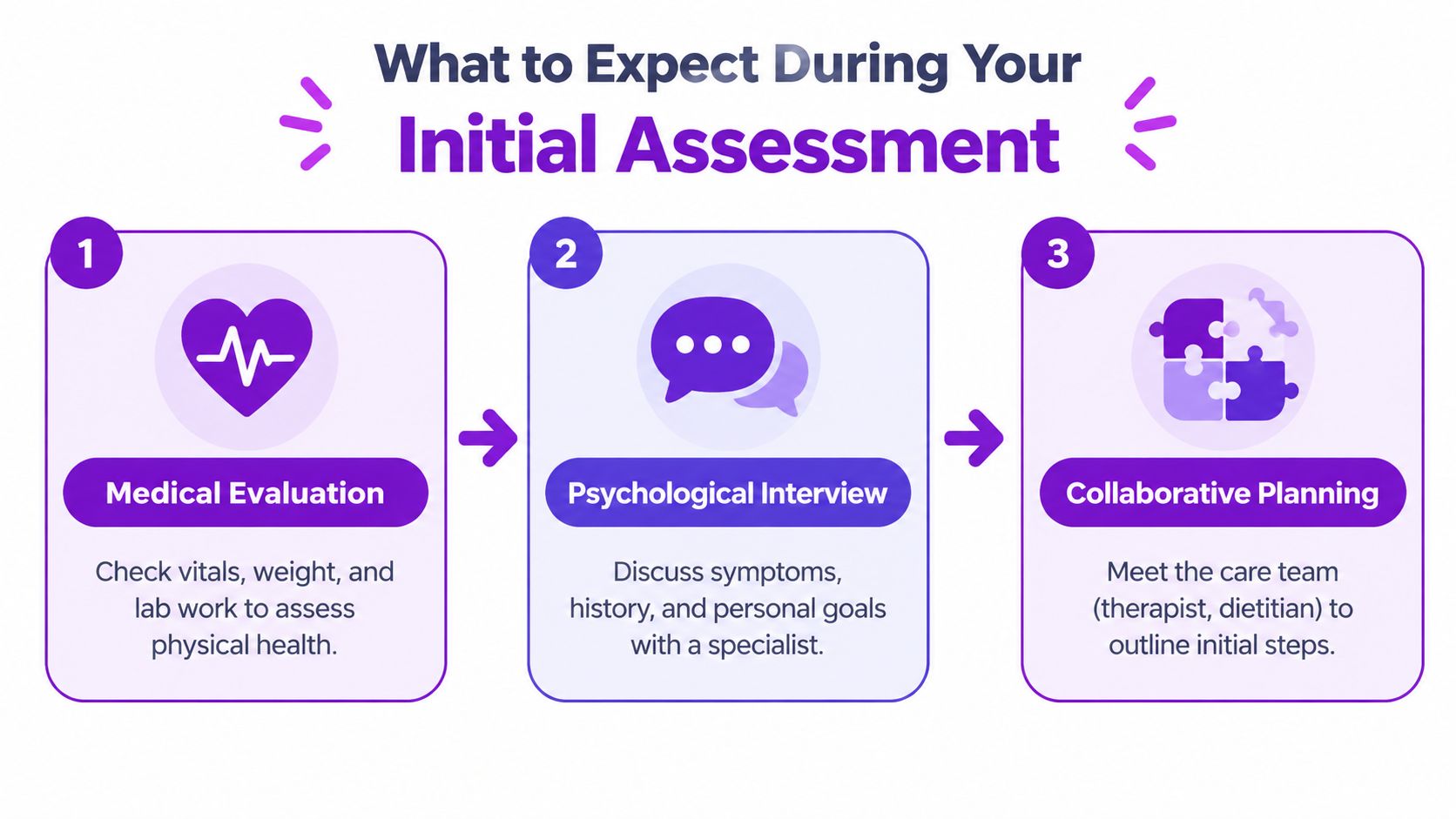
An assessment usually involves several connected conversations rather than one form or questionnaire. Each discipline answers a different safety question, and the team's shared information helps prevent a mismatch between symptoms and treatment intensity.
The medical review
A medical clinician checks vital signs, weight trends, hydration, electrolytes, and possible complications related to restriction, binge eating, vomiting, laxatives, compulsive exercise, or other behaviors. Bring recent laboratory results if you have them, but don't assume older normal results settle the question. Tell the clinician about fainting, chest symptoms, weakness, gastrointestinal problems, menstrual or hormonal changes, sleep disruption, and recent changes in eating or weight.
The nutrition and psychological reviews
A registered dietitian may ask what a typical day of eating looks like, which foods feel unsafe, how food rules developed, what happens before and after a binge or purge, and how weight history affects your decisions. The purpose isn't to judge your intake. It's to identify patterns that treatment must address.
A therapist explores eating-disorder behaviors, body image, trauma, anxiety, depression, substance use, relationships, and personal goals. A psychiatric consultation may clarify diagnosis, medication options, co-occurring symptoms, and safety risks.
Bring your insurance card, medication list, current provider contacts, recent labs, and a brief symptom timeline. Include how symptoms affect work, relationships, shopping, cooking, sleep, and concentration. You don't need a perfect record. A few dated notes about restriction, bingeing, purging, exercise, or major changes can make the first appointment more useful.
Building a Collaborative Treatment Plan
A strong plan rarely relies on one professional or one technique. It usually combines diagnosis-specific psychotherapy, nutrition support, medical monitoring, and psychiatric care when needed. The team should explain what each provider is doing, how progress will be measured, and when the plan will be adjusted.
For adults with bulimia nervosa and binge-eating disorder, enhanced cognitive behavioral therapy, or CBT-E, has substantial support. A systematic review found compelling evidence across seven effectiveness studies, including five randomized controlled trials, with improvement in eating-disorder behaviors and broader psychological symptoms for bulimia nervosa, binge-eating disorder, and transdiagnostic adult groups (systematic review of CBT-E). CBT-E targets mechanisms that maintain the disorder, such as rigid rules, binge-restrict cycles, body checking, and avoidance.
Guidance for bulimia nervosa and binge-eating disorder supports stepped care. NICE describes guided self-help as an option before more intensive treatment, with progression to group or individual CBT-E when needed (NHS eating-disorder resources). Medication may complement therapy rather than replace it. The American Academy of Family Physicians summarizes guidance recommending CBT plus fluoxetine at 60 mg daily for bulimia nervosa, while binge-eating disorder is treated with CBT or interpersonal psychotherapy, with antidepressants or lisdexamfetamine considered when medication is indicated (AAFP practice-guideline summary).
Matching the plan to the diagnosis
For anorexia nervosa, NICE recommends individual eating-disorder-focused CBT, Maudsley Anorexia Nervosa Treatment for Adults, or specialist supportive clinical management, and advises against using medication as the sole treatment (NICE recommendations for anorexia nervosa). NICE patient guidance says CBT for adults with anorexia nervosa is usually weekly for up to 40 weeks, about 9 to 10 months, and includes 20 sessions with a practitioner (NICE adult anorexia treatment guidance).
ARFID requires a different emphasis. Treatment may address sensory differences, fear of choking or vomiting, low appetite awareness, anxiety, and gradual exposure. Weight restoration or stabilization can be necessary, but the psychological target isn't automatically body shape.
| Component | Primary Role | Typical Adult Formats |
|---|---|---|
| Psychotherapy | Reduce eating-disorder behaviors and address maintaining thoughts, emotions, and avoidance | Individual CBT-E, interpersonal psychotherapy, supportive therapy, or other diagnosis-informed approaches |
| Nutrition support | Build reliable nourishment and challenge rigid food rules | Dietitian visits, meal planning, supported meals, and nutrition education |
| Medical monitoring | Track physical effects and identify changes requiring escalation | Primary care, specialty medical visits, vitals, labs, and medication review |
| Psychiatric care | Treat co-occurring conditions and assess safety | Psychiatry visits, medication management, and coordination with therapy |
| Social support | Reduce isolation and improve follow-through | Partner or family sessions, trusted-person involvement, and practical support at meals |
Adults should receive a written plan that names each provider's role, appointment format, telehealth options, communication permissions, goals, and warning signs. Meal support can be part of that structure, including eating-disorder meal support when a person needs help practicing nourishment outside traditional talk therapy.
Navigating Insurance and Local Access
Access decisions often begin with a phone call, not a clinical conversation. Confirm that the clinician or program is in-network and ask whether eating-disorder services fall under behavioral-health benefits, medical benefits, or both. Verify whether the plan requires a referral, prior authorization, utilization review, or documentation of failed outpatient treatment before covering PHP, IOP, residential, or inpatient services.
Ask precise questions:
- Network status: Is the individual clinician, dietitian, psychiatrist, and program each in-network?
- Coverage rules: Are eating-disorder diagnoses covered, and are there visit or day limits?
- Authorization: Who submits authorization, what records are needed, and how quickly does review occur?
- Higher care: Does the policy cover PHP, IOP, residential, and inpatient treatment separately?
- Out-of-network options: Is reimbursement available if no appropriate in-network specialist exists?
- Billing records: Can the provider issue a superbill for eligible out-of-network services?
Billing codes that may appear in behavioral-health or nutrition claims include 90834, 90837, 90846, 97802, and 97803, but a code doesn't guarantee coverage. The diagnosis, clinician credentials, plan language, authorization status, and network arrangement all affect payment.
One treatment-access study found that 43% of treatment seekers said insurance didn't cover the right level of care, 26% said the recommended level was denied, 36% reported no in-network eating-disorder providers, and 31% couldn't afford out-of-pocket costs even when treatment was covered (Psychiatric Services access study). These barriers can change the clinical plan, so discuss them early rather than waiting until symptoms worsen.
Making local care workable
Phoenix and the surrounding metro area have outpatient specialists and structured programs, while rural residents may need telehealth or regional referrals. Ask whether a provider can coordinate with primary care and nutrition professionals, whether secure online appointments are available, and how emergencies are handled between visits. Scheduling an evaluation that identifies several needed disciplines can reduce repeated intake delays and unnecessary travel.
If you're comparing insurance benefits or need help understanding behavioral-health coverage, review therapy insurance coverage questions before the first appointment. Keep call dates, representative names, reference numbers, denial letters, and submitted records. That documentation supports an appeal when the insurer authorizes less care than the treating team recommends.
Choosing a Provider and Escalating Care
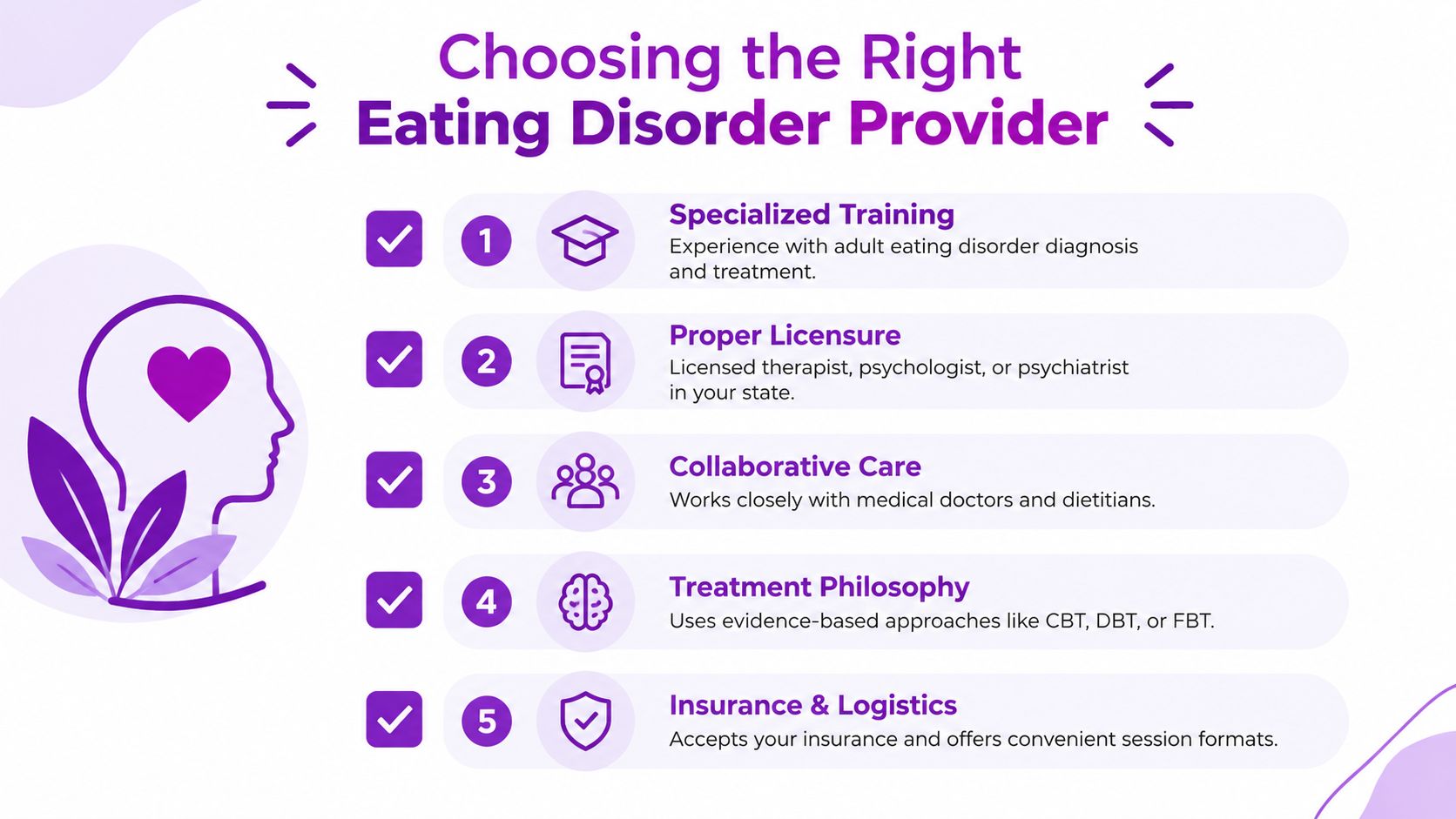
Choose a clinician based on eating-disorder competence, not a general promise to “help with food issues.” During the first call, ask whether the provider treats adults with your specific symptoms, how often medical monitoring occurs, whether they coordinate with primary care and dietitians, and what happens if you relapse or need more structure.
A useful checklist includes:
- Specialty: Experience with anorexia nervosa, bulimia nervosa, binge-eating disorder, ARFID, OSFED, or the symptoms you're experiencing.
- Licensure: A current license appropriate to the services provided in your state.
- Coordination: Consent-based communication with your physician, dietitian, psychiatrist, or higher-level program.
- Treatment approach: A clear explanation of the therapy model and how it fits your diagnosis and goals.
- Logistics: Availability, telehealth or in-person options, insurance authorization experience, fees, and cancellation policies.
- Monitoring: A specific plan for vitals, weight trends, labs, medication effects, and changes in risk.
Escalation should be planned before a crisis. Increasing restriction, more frequent purging, rapid or concerning weight change, vital-sign changes, worsening weakness, inability to complete meals, suicidal thoughts, or loss of basic work and home functioning can signal that weekly outpatient care isn't enough. Your clinician may recommend IOP, PHP, residential care, or urgent medical evaluation based on the full picture, not one number alone.
Some situations need same-day contact with a treating clinician or emergency evaluation. Chest pain, fainting, severe confusion, serious dehydration, vomiting blood, inability to keep fluids down, or immediate danger from suicidal thoughts require urgent medical attention. Don't wait for a routine therapy appointment.
Document deterioration clearly: Record dates, behaviors, symptoms, missed meals, purging, fainting, medication changes, medical visits, and the level of care recommended.
If an insurer denies a higher level of care, ask the treatment team for the clinical rationale in writing, request the denial letter and appeal process, and ask whether peer-to-peer review is available. A change in provider or setting isn't a personal failure. It's a clinical adjustment when the current plan no longer provides enough safety or support.
Taking the Next Step With Confidence
Treat the first appointment as information gathering, not a contract. Within the next two weeks, schedule an assessment with an eating-disorder-informed clinician, arrange a primary care visit for baseline vitals and labs, gather your medical history and insurance details, and tell one trusted person what support would help.
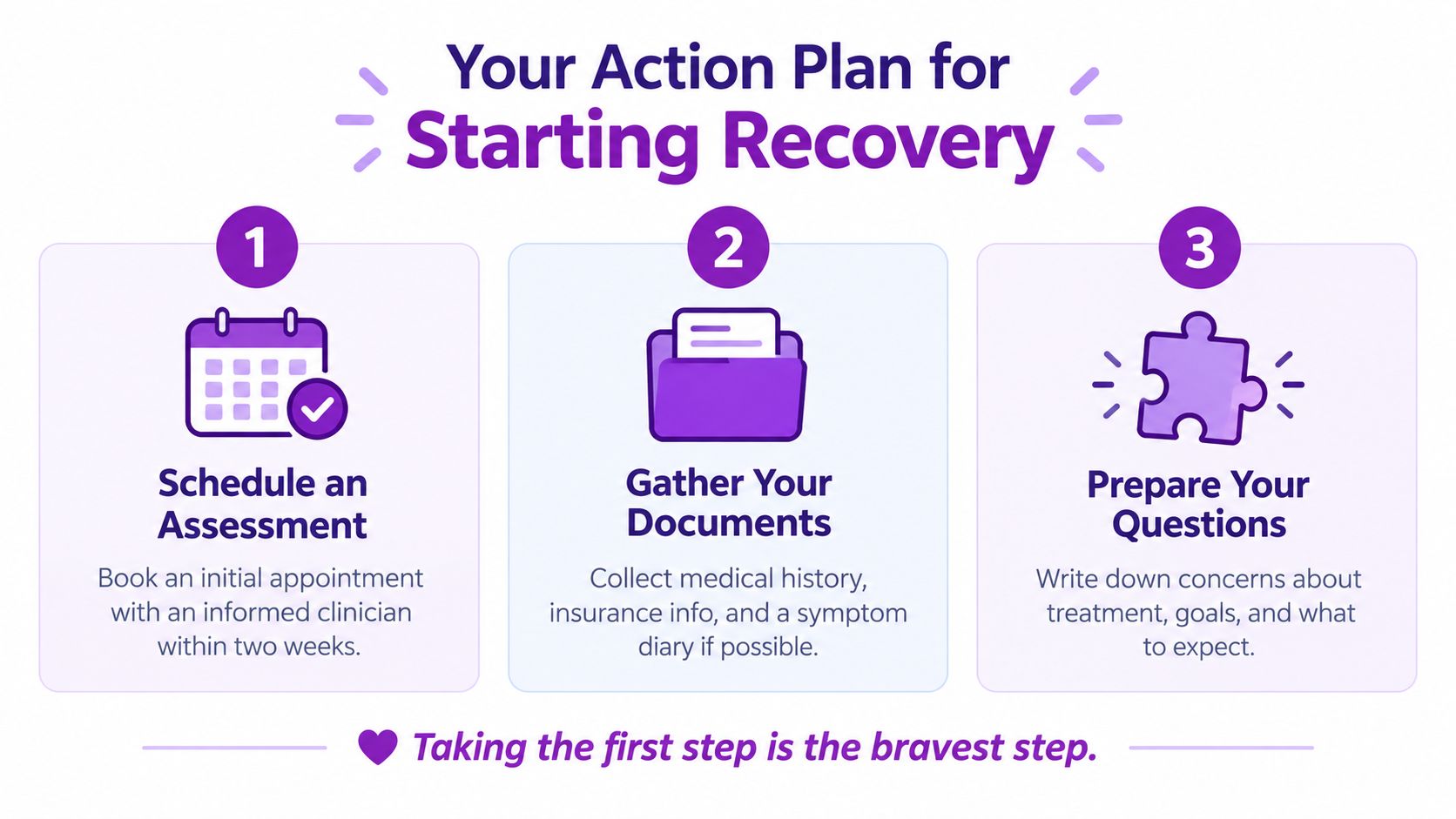
Write down questions about diagnosis, treatment frequency, nutrition support, medication, telehealth, costs, and warning signs. Recovery pacing varies, and changing providers or levels of care is sometimes necessary. Safety takes priority over convenience, and professional guidance for your medical and psychological situation is the most reliable next step.
reVIBE Mental Health offers outpatient therapy, psychiatric support, medication management, and eating-disorder-informed care through in-person and secure online appointments across the Phoenix metro area. Call (480) 674-9220 to ask about a location near you, or visit reVIBE Mental Health to begin discussing an assessment and treatment plan. Five locations are available in Chandler, Phoenix Deer Valley, Phoenix PV, Scottsdale, and Tempe.