

If you've found yourself searching for "EMDR therapy near me" around Phoenix, you're on a promising path. Here at reVIBE Mental Health, with our clinics in Chandler, Phoenix, Scottsdale, and Tempe, our therapists specialize in this powerful, evidence-backed approach to help people truly move on from what's holding them back. This isn't just another flavor of talk therapy; it’s a specific, structured method designed to get your brain's own healing system unstuck.
What is EMDR Therapy, Really? And How Does It Work?
Think of a deeply upsetting memory as a computer file that crashed while saving. The file is corrupted—it's fragmented, glitchy, and keeps popping up when you least expect it, causing your whole system to slow down. Eye Movement Desensitization and Reprocessing (EMDR) therapy is like running a diagnostic tool that finds that corrupted file, repairs it, and saves it correctly.
Instead of just talking about the distressing event over and over, EMDR uses bilateral stimulation—most commonly, guided eye movements—to kickstart your brain's reprocessing system. This dual awareness, focusing on both the memory and the external stimulation, allows the memory to be integrated properly. The file gets saved in the right folder. It’s still part of your history, but it no longer crashes your system.
A Proven Path to Healing
This isn't just a theory; EMDR's effectiveness is backed by decades of solid research. Developed back in 1987, it has been put to the test in over 42 randomized controlled trials for treating post-traumatic stress disorder (PTSD). Time and again, major studies have shown that EMDR significantly reduces PTSD symptoms, often to the point where a person no longer meets the diagnostic criteria. You can explore the research findings on PTSD treatment here for a deeper dive into the data.
EMDR simply helps your brain do what it's built to do—heal. It reactivates your natural adaptive information processing system, letting you finally integrate difficult memories so you can move forward without being defined by them.
Who Can Benefit From EMDR?
While it earned its reputation as a go-to for PTSD, the power of EMDR extends far beyond that. It can be a game-changer for anyone who feels "stuck" because of past experiences, helping with a whole range of mental health challenges.
- Anxiety and Panic Attacks: EMDR can get to the root memories that fuel anxious thinking and panic, helping to quiet the alarm bells that seem to go off for no reason.
- Depression: For depression that's tied to past loss, grief, or painful events, EMDR can help process those core wounds that weigh you down.
- Phobias and Performance Anxiety: It works to desensitize the intense fear linked to specific triggers, whether it’s a fear of flying or the dread of speaking in front of a crowd.
Navigating Your EMDR Healing Journey
Starting any new therapy can feel a bit daunting, like you’re about to head out on a big trip without a map. But with EMDR, you’re not just wandering aimlessly. It’s a very structured and predictable process, designed to make sure you feel safe and in control from start to finish. Think of it as a carefully guided expedition with eight distinct phases, each one leading you toward lasting healing.
The journey doesn't just dive into the deep end. In fact, the first few steps are all about building trust with your therapist and gathering the right tools for the road ahead. You’ll learn coping skills to help you stay grounded, creating a solid foundation before you ever start processing difficult memories. This prep work is key to making the entire experience feel manageable and safe.
At its core, EMDR helps your brain re-file disruptive memories, taking them from a state of chaos and putting them into a more organized, less intrusive place.
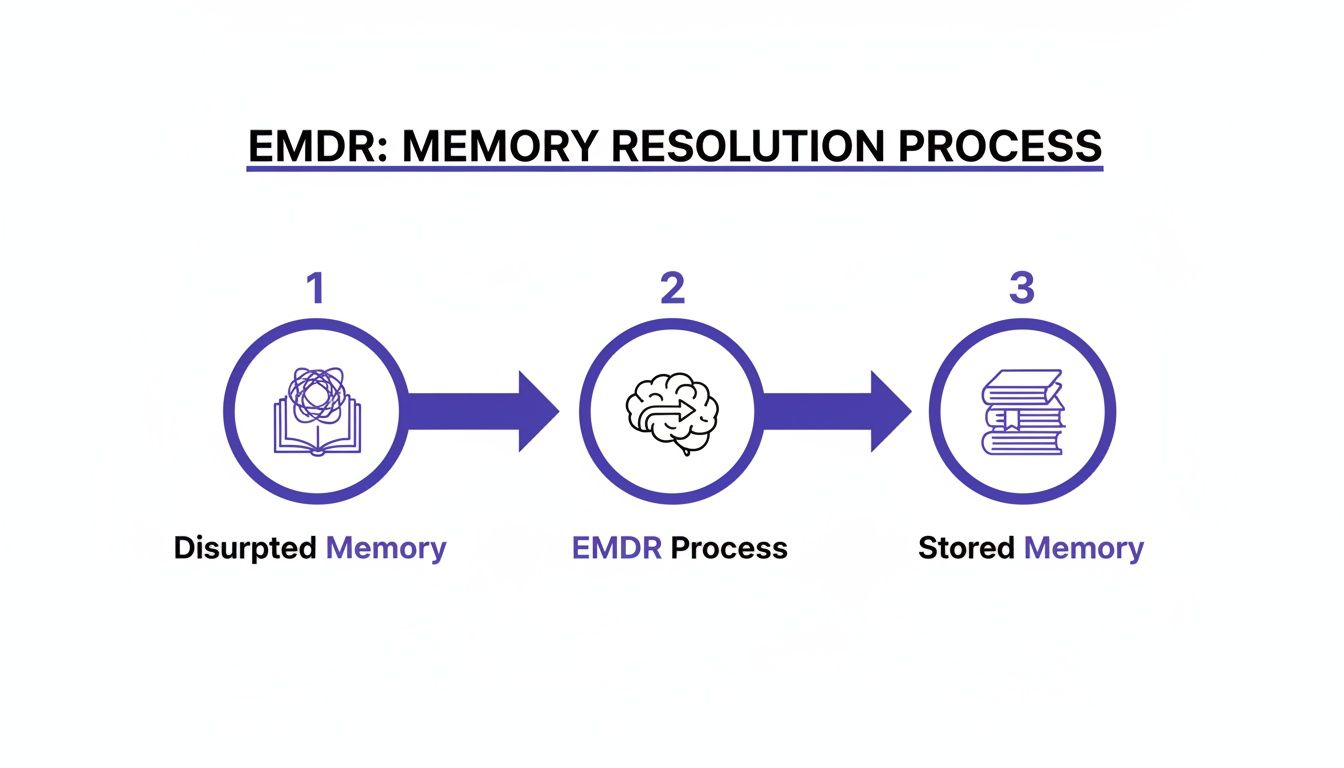
This image really captures the essence of it. EMDR gives your brain’s natural information processing system the boost it needs to store these memories properly, so they stop showing up uninvited in your daily life.
A Look Inside Your EMDR Sessions
To give you a clearer picture, let's break down the eight-phase roadmap. Each phase has a specific job and builds on the last, creating a safe and effective path forward. Your therapist will guide you through this process at your own pace, never rushing and making sure one step is solid before moving to the next.
This table gives you a glimpse into what each of those steps looks like in practice.
| Phase | Primary Goal | What to Expect in Session |
|---|---|---|
| 1. History | Develop a treatment plan. | Talking about your background to pinpoint the specific memories or beliefs you want to work on. |
| 2. Prep | Build coping and grounding skills. | Learning techniques to manage tough emotions and stay present, both in the session and out. |
| 3. Assess | Activate the target memory. | Identifying the specific image, negative belief, emotions, and physical sensations connected to that memory. |
| 4. Desens. | Process the memory with BLS. | Using eye movements or tapping while you focus on the memory until its emotional charge goes down. |
| 5. Install | Strengthen a positive belief. | Replacing that old negative belief with a new, empowering one until it genuinely feels true. |
| 6. Body Scan | Clear remaining physical tension. | Checking in with your body to notice and release any lingering uncomfortable sensations tied to the memory. |
| 7. Closure | Ensure stability after each session. | Ending every session with grounding exercises so you leave feeling calm and back in the present moment. |
| 8. Re-eval | Check progress at the next session. | At the start of the next session, we’ll confirm the positive results have stuck and decide what to tackle next. |
As you can see, it’s a thorough and intentional process.
Building a Resilient Future
This step-by-step structure is exactly what makes EMDR so effective. It doesn't just ask you to talk about the past; it gives your brain a way to systematically dismantle the painful emotions and negative beliefs that got stuck there. The goal is to leave you with the memory of what happened, but without all the pain. It’s about being freed from old patterns.
By moving through these phases, you're doing more than just healing from past events—you’re building real, lasting resilience. You learn new ways to self-soothe and develop a much stronger sense of who you are today. It’s a truly collaborative process; your therapist is your guide, but you are always in the driver's seat.
Of course, the first step is making sure this is the right approach for you. It’s always best to chat with a trained professional who can help map out the best path for your unique needs. You can learn more about our team of psychiatric mental health practitioners who are here to help you figure that out.
Ultimately, this structured progression makes your healing journey not only effective but also incredibly empowering. Each phase you complete is a milestone, bringing you that much closer to a future where your past no longer calls the shots.
More Than Just a PTSD Treatment: Who Else Can EMDR Help?
While EMDR is famous for its incredible success with PTSD, its healing power doesn't stop there. So many people who look up "EMDR therapy near me" are surprised to learn it can help with a whole range of issues that leave them feeling stuck, anxious, or just not themselves. It’s a powerful option for anyone who feels like their past is casting a long shadow over their present.
The reason it works so well is that EMDR gets right to the root of the problem. Instead of just teaching you to cope with symptoms like anxiety or low self-esteem, it directly targets the unprocessed memories and negative beliefs that keep those feelings alive. It helps neutralize those deep-seated, gut-level beliefs like "I'm not good enough," "I'm not safe," or "I'm out of control," which often take root after difficult experiences and run on a loop in the background of our minds.
From Anxiety to Depression
Take persistent anxiety, for instance. It's often tangled up with past events where you felt terrified or powerless. EMDR can process those specific memories, which in turn helps calm your nervous system's constant "on-alert" state. By dealing with the original source, it can dial down the feelings of dread and panic that make everyday life feel like a battle. For a closer look at this, check out our guide on how EMDR therapy for anxiety works.
Depression, too, frequently has roots in past hurts, losses, or experiences that left you feeling hopeless. EMDR is particularly effective when that depression is linked to traumatic events.
A major meta-analysis revealed that for depression tied to trauma, EMDR had a significant impact. Patients saw substantial drops in their depression scores, and those positive changes were still going strong even 18 months after treatment ended. This really speaks to its power to create deep, lasting change. You can read more about these findings on EMDR for depression here.
Overcoming Performance Blocks and Relationship Hurdles
The benefits of EMDR also show up in really practical, everyday parts of life. Many high-achievers—from athletes to executives—use EMDR to break through performance blocks or finally quiet that nagging "imposter syndrome" voice that started after a past failure or harsh criticism. By reprocessing those specific memories, they find they can unlock their true potential.
It can also be a game-changer for relationships. If you keep finding yourself in the same unhealthy dynamics or struggling with intimacy, EMDR can help you work through early attachment wounds or hurts from past relationships. This frees you up to build healthier, more secure connections today.
Ultimately, EMDR isn’t just about surviving your past; it’s about giving you the tools to build a better future. By resolving the core issues holding you back, it helps foster a genuine, earned sense of self-esteem and confidence. It allows you to finally live a life that feels authentic and free from the weight of yesterday.
How to Prepare for Your First EMDR Session

Starting any new kind of therapy can stir up a mix of feelings, from excitement to straight-up nerves. That’s completely normal. Knowing a little bit about what to expect can make a huge difference, helping you walk into that first appointment feeling more confident and ready. The goal isn't to have everything figured out beforehand; it’s really just about creating a little breathing room for yourself before and after the session.
Think of this first meeting as a chance to connect and gather information. You get to meet your therapist, and they get to start understanding your history and what you’re hoping to get out of this process. There’s absolutely no pressure to dive into your deepest traumas on day one. Right now, it’s all about building a foundation of trust and safety.
Setting Yourself Up for Success
A little bit of prep work can go a long way in helping you feel grounded and present. These are small, simple steps you can take to honor the important work you’re about to begin.
Here are a few practical tips to consider:
- Reflect on Your Goals: You don’t need a perfectly polished list, but it helps to think about what led you to search for EMDR therapy near me in the first place. What’s causing the most friction in your life right now? What changes are you hoping for? Even just jotting down a few thoughts can be really helpful.
- Prioritize Comfort: Wear something that makes you feel relaxed and at ease. You want to be able to focus on your internal experience, not a restrictive outfit.
- Schedule Buffer Time: Try to avoid squeezing your session in right before a big work meeting or a stressful family event. If you can, give yourself at least 15-30 minutes of quiet time afterward to process and gently transition back into your day.
Remember, the most important thing you can bring to your first session is yourself—exactly as you are. Your therapist isn’t expecting perfection; they are there to meet you with compassion and support, wherever you are on your journey.
Learning Simple Grounding Techniques
Your therapist will guide you through specific coping skills, but practicing a simple one on your own beforehand can be incredibly empowering. Grounding techniques are just small actions that pull your attention back to the present moment, which can be a lifesaver for an anxious mind.
One of the easiest is the 5-4-3-2-1 technique. Wherever you are, just take a slow breath and gently notice:
- 5 things you can see
- 4 things you can feel (the chair under you, the texture of your jeans)
- 3 things you can hear
- 2 things you can smell
- 1 thing you can taste
You can do this simple exercise anywhere, anytime you start to feel overwhelmed.
By taking these small steps, you’re already taking an active role in your own healing. You're walking into your reVIBE appointment with a greater sense of peace, ready to begin this important work in a supportive, non-judgmental space.
Finding Local EMDR Therapy in Phoenix and Scottsdale

Once you've decided to give EMDR a try, the next question is always, "Where do I go?" Finding the right therapist is crucial, but so is finding the right place—a professional, comfortable environment where you can feel truly safe and supported. Your search for "EMDR therapy near me" can end right here.
At reVIBE Mental Health, we've deliberately designed our spaces to feel less like a sterile clinic and more like a welcoming home. We want you to walk in and feel like you've found a sanctuary for your healing journey.
We also know that life is complicated, so we make access to care as simple as possible. We offer appointments seven days a week, ensuring you can find a time that fits your schedule. Whether you're looking for an in-person session or the flexibility of telehealth, we meet you where you are.
Your Path to Healing Starts Here
Taking that first step often feels like the hardest part, so we've made our process incredibly straightforward and supportive. When you call us, you won't get lost in a confusing phone tree or have to fill out a bunch of impersonal forms. You'll connect directly with our compassionate care team, who are here to listen and gently guide you.
We handle the logistics so you can focus on what really matters: your well-being. This includes:
- Expert Therapist Matching: We don't just assign you to the next available therapist. We take the time to understand your goals and personality to match you with an EMDR specialist who is the right fit.
- Insurance Verification: Our team will verify your insurance benefits for you, giving you a clear picture of your coverage from the very beginning. No surprises, no stress.
This personalized approach is designed to remove the usual hurdles that can make starting therapy feel overwhelming. For therapy practices aiming to connect with local clients, understanding effective online strategies is key. A guide on Local SEO for medical practices can offer valuable insights into improving visibility.
Find a reVIBE Location Near You!
We currently have five locations for your convenience. (480) 674-9220
- reVIBE Mental Health – Chandler
3377 S Price Rd, Suite 105, Chandler, AZ - reVIBE Mental Health – Phoenix Deer Valley
2222 W Pinnacle Peak Rd, Suite 220, Phoenix, AZ - reVIBE Mental Health – Phoenix PV
4646 E Greenway Road, Suite 100, Phoenix, AZ - reVIBE Mental Health – Scottsdale
8700 E Via de Ventura, Suite 280, Scottsdale, AZ - reVIBE Mental Health – Tempe
3920 S Rural Rd, Suite 112, Tempe, AZ
At reVIBE, our mission is to create a therapeutic relationship built on trust and empowerment. We believe everyone deserves a space where they feel heard, valued, and understood from the very first call.
You can learn more about what makes each one unique when you explore all reVIBE Mental Health locations on our site. When you're ready, we're here to help.
Answering Your Questions About EMDR Therapy
Stepping into any new kind of therapy can feel a little uncertain, and it’s completely natural to have questions. You should feel informed and comfortable as you take this step toward feeling better.
Here, we’ll walk through some of the most common questions we hear from people looking into EMDR therapy near me. Our goal is to clear up any confusion and give you the confidence you need to move forward.
How Long Does EMDR Therapy Take to Work?
This is probably the number one question people ask, and the honest answer is: it depends. The timeline for EMDR is very personal.
For a single, specific traumatic event—like a car accident—some people feel a real shift in as few as 3-6 sessions. But for more complex or long-term issues, like trauma from childhood, it might take 8-12 sessions or more to work through everything.
The good news is that EMDR is often much more focused and can be shorter than many traditional talk therapies. After your first few assessment sessions, your reVIBE therapist will work with you to map out a plan and give you a much clearer idea of what your personal timeline might look like.
Will I Have to Describe My Trauma in Excruciating Detail?
This is a big one. So many people avoid trauma therapy because they can't bear the thought of having to verbally relive their worst moments over and over again. Here’s where EMDR is truly different.
You do not need to provide a lengthy, detailed story of what happened. EMDR is built to let your brain’s own healing system do the work. The bilateral stimulation keeps you grounded in the present while your brain reprocesses the memory, and your therapist is there to make sure you feel safe, secure, and in control the entire time.
Think of it this way: you're in the driver's seat of your own healing journey. Your therapist is the expert navigator sitting beside you, guiding the process, but you always control the pace and direction.
What Does the "Bilateral Stimulation" Part Actually Feel Like?
"Bilateral stimulation" (BLS) sounds technical and a little intimidating, but the experience is actually very gentle and rhythmic. It isn't uncomfortable at all.
BLS is just a way of activating the left and right sides of your brain, which helps kickstart its natural information-processing abilities. It usually takes one of three forms:
- Eye Movements: This is the classic method, where you simply follow your therapist's fingers back and forth with your eyes.
- Tapping: You might hold small, handheld "tappers" that create a gentle, alternating pulse in each palm.
- Audio Tones: You can also listen to soft tones through headphones that alternate from your left ear to your right.
The sensation is just enough to distract your conscious mind, allowing the deeper parts of your brain to make new, healthier connections without getting stuck in the old emotional rut.
Does My Insurance Cover EMDR Therapy at reVIBE?
Yes, most of the time it does. EMDR is a well-established, evidence-based therapy recommended by major health organizations for treating PTSD, anxiety, depression, and other conditions.
Because it’s so effective, most major insurance plans cover it. The care team here at reVIBE Mental Health works with most major carriers and will handle the process of verifying your benefits for you. We believe in being completely upfront about costs so you can start therapy with peace of mind. Your job is to focus on your well-being—we'll handle the rest.
Your journey to feeling better starts with a single, supportive conversation. At reVIBE Mental Health, we make that first step easy with five convenient locations in Chandler, Phoenix, Scottsdale, and Tempe. Call us at (480) 674-9220 to get matched with the right EMDR therapist for you. Start your path to healing today by visiting https://revibementalhealth.com.