If you're dealing with something common like anxiety or situational stress, you can usually start feeling meaningful progress within 3 to 6 months of weekly therapy. I often tell my clients to think of it like starting a new fitness routine; the results aren't instant, but with consistent effort, you build emotional strength and resilience week by week.
This guide will give you a realistic overview of what that timeline can look like.
Your Guide to the Therapy Timeline
When you're thinking about starting therapy, one of the first and most practical questions that comes to mind is, "How long will this take?" It’s a completely fair question—you're investing your time, energy, and money into your well-being, and you deserve to know what to expect.
While there’s no single, universal answer, clinical experience and research give us a pretty reliable map for the journey ahead. The timeline really depends on your specific goals, the challenges you're facing, and the therapeutic approach you and your therapist decide on together.
Understanding the typical duration helps you set realistic expectations and stay motivated. Just like a physical injury needs time to heal, so does our mental and emotional health. Progress usually shows up in small, steady steps rather than one giant leap.

Setting Realistic Expectations for Your Journey
It’s much more helpful to see therapy not as a quick fix, but as a process of building new skills and deeper self-understanding. For some people, therapy is a short-term solution focused on a specific life event, like grieving a loss or navigating a stressful transition at work. For others, it’s a longer-term process of addressing deep-rooted patterns or healing from past trauma.
Research is a great guide here. According to data referenced in the American Psychological Association's PTSD treatment guidelines, it takes an average of 15 to 20 sessions for about half of patients to see significant improvement. If you're going to therapy weekly, that's roughly four or five months of dedicated work. This is solid evidence that consistency truly pays off. You can learn more about research on therapy treatment length to see how these timelines are established.
At reVIBE Mental Health, our entire focus is on creating a care plan that fits your unique needs. We believe that finding the right support shouldn't be another source of stress, which is why we make starting your journey as straightforward as possible.
To give you a clearer picture, here’s a quick look at what to expect for some common concerns.
Typical Therapy Timelines at a Glance
| Therapy Goal or Concern | Common Modality | Average Time for Noticeable Improvement | Average Time for Significant Recovery |
|---|---|---|---|
| Mild to Moderate Anxiety | Cognitive Behavioral Therapy (CBT) | 4-8 weeks | 3-6 months |
| Specific Phobias | Exposure Therapy | 2-6 weeks | 1-3 months |
| Depression | CBT, Psychodynamic Therapy | 6-12 weeks | 6-12 months |
| PTSD or Complex Trauma | EMDR, Trauma-Focused CBT | 8-16 weeks | 9-18+ months |
| Relationship Issues | Couples Therapy (e.g., Gottman Method) | 4-8 weeks | 3-9 months |
| Grief and Loss | Grief Counseling, ACT | 4-10 weeks | 6+ months |
Keep in mind these are averages. Your personal journey is your own, and progress isn't always linear. Some weeks you'll feel like you're taking huge strides, and other weeks might feel slower—that’s all part of the process.
Find a reVIBE Location Near You!
We currently have five locations for your convenience. (480) 674-9220
reVIBE Mental Health – Chandler
3377 S Price Rd, Suite 105, Chandler, AZ
reVIBE Mental Health – Phoenix Deer Valley
2222 W Pinnacle Peak Rd, Suite 220, Phoenix, AZ
reVIBE Mental Health – Phoenix PV
4646 E Greenway Road, Suite 100, Phoenix, AZ
reVIBE Mental Health – Scottsdale
8700 E Via de Ventura, Suite 280, Scottsdale, AZ
reVIBE Mental Health – Tempe
3920 S Rural Rd, Suite 112, Tempe, AZ
What Progress in Therapy Actually Looks Like
Before we can get into timelines, we need to talk about what "working" really means when it comes to therapy. It's easy to imagine a single, dramatic breakthrough—a lightbulb moment where everything suddenly clicks. But the reality is usually much quieter and more gradual.
Real progress is a collection of small, meaningful shifts that build on each other over time.
Think of it like learning an instrument. At first, your fingers are clumsy, and you can barely get a single note right. But with consistent practice, you start stringing a few notes together, then a simple melody, and eventually, you can play a full song without even thinking about it. Therapy is a lot like that.
From Subtle Shifts to New Habits
The very first signs that therapy is starting to work can be so subtle you might not even notice them. These are the small wins that lay the groundwork for bigger changes down the road. Soon enough, these tiny shifts start to solidify into healthier habits and new ways of being.
What you're really doing is carving out new pathways in your brain. For instance, instead of spiraling into anxiety the moment you feel stressed, you might find yourself instinctively taking a deep breath first. That small pause? It’s a huge step forward.
Here are some early signs that you're on the right track:
- You're More Self-Aware: You start to catch yourself in the act. You notice your automatic negative thoughts or recognize an emotional trigger before it completely hijacks your mood.
- Emotions Feel More Manageable: Difficult feelings don't feel so overwhelming anymore. A tough conversation or a minor setback doesn't have the power to ruin your entire day.
- You're Making Small Changes: You begin acting in ways that feel more authentic to you. Maybe you finally set a small boundary with a family member, speak up in a meeting, or choose a healthy coping skill over an old, unhelpful one.
Redefining Your Relationship With Yourself
Perhaps the most profound sign of progress is a change in your inner monologue. That harsh, critical voice that used to run the show starts to lose its volume, and a kinder, more compassionate voice begins to emerge. This is where the real, lasting change happens.
Therapy isn't just about "fixing" what feels broken. It's about building a stronger, more supportive relationship with yourself. It's learning how to be your own ally so you can face life's challenges with more confidence and self-trust.
This internal shift naturally starts to show up on the outside. You might notice your relationships improving as you get better at communicating your needs and understanding where others are coming from. Exploring different therapeutic avenues can also be part of this journey; for example, learning about the benefits of art therapy for mental health shows how creative expression can unlock this kind of self-discovery.
Progress Is Not a Straight Line
It's so important to remember this: progress is rarely a straight, upward line. You'll have great weeks where you feel like you're on top of the world, followed by tough weeks where it feels like you've slid backward. This is completely normal. In fact, it's a core part of the healing process.
A "bad" week doesn't mean therapy has stopped working. Often, these moments are where the biggest growth happens. They give you and your therapist a chance to dig into what triggered the setback and build new strategies for the future. The goal isn’t to get rid of challenges entirely—it's to build the skill and resilience to handle them when they inevitably show up.
Timelines for Different Types of Therapy
Not all therapy follows the same script. The specific approach your therapist uses is probably the biggest factor influencing how long it takes to feel a real difference. Think of it like physical training: a sprinter’s workout looks very different from a marathon runner’s. In the same way, different therapeutic methods are built for different goals and work on very different timelines.
Knowing what to expect can make all the difference. Some therapies are highly structured and laser-focused on a specific issue, designed for rapid progress. Others are more exploratory, aiming for deep-seated, foundational change over a longer period.
Cognitive Behavioral Therapy (CBT): The Skill-Building Approach
Cognitive Behavioral Therapy (CBT) is one of the most common and well-researched therapies out there. It’s built on a pretty simple idea: our thoughts, feelings, and actions are all connected. By learning to change unhelpful thought patterns, we can change how we feel and what we do.
Because it’s so structured and goal-oriented, CBT is often a shorter-term therapy. If you're tackling something specific like a phobia or panic attacks, you might be looking at 12 to 20 weekly sessions. The whole point is to give you practical coping skills you can start using right away. For a deeper dive, there are great resources for understanding Cognitive Behavioral Therapy (CBT) for anxiety and how it works.
Progress isn't just one big "aha!" moment. It's a journey of small shifts, building new habits, and eventually achieving a lasting sense of self-awareness.
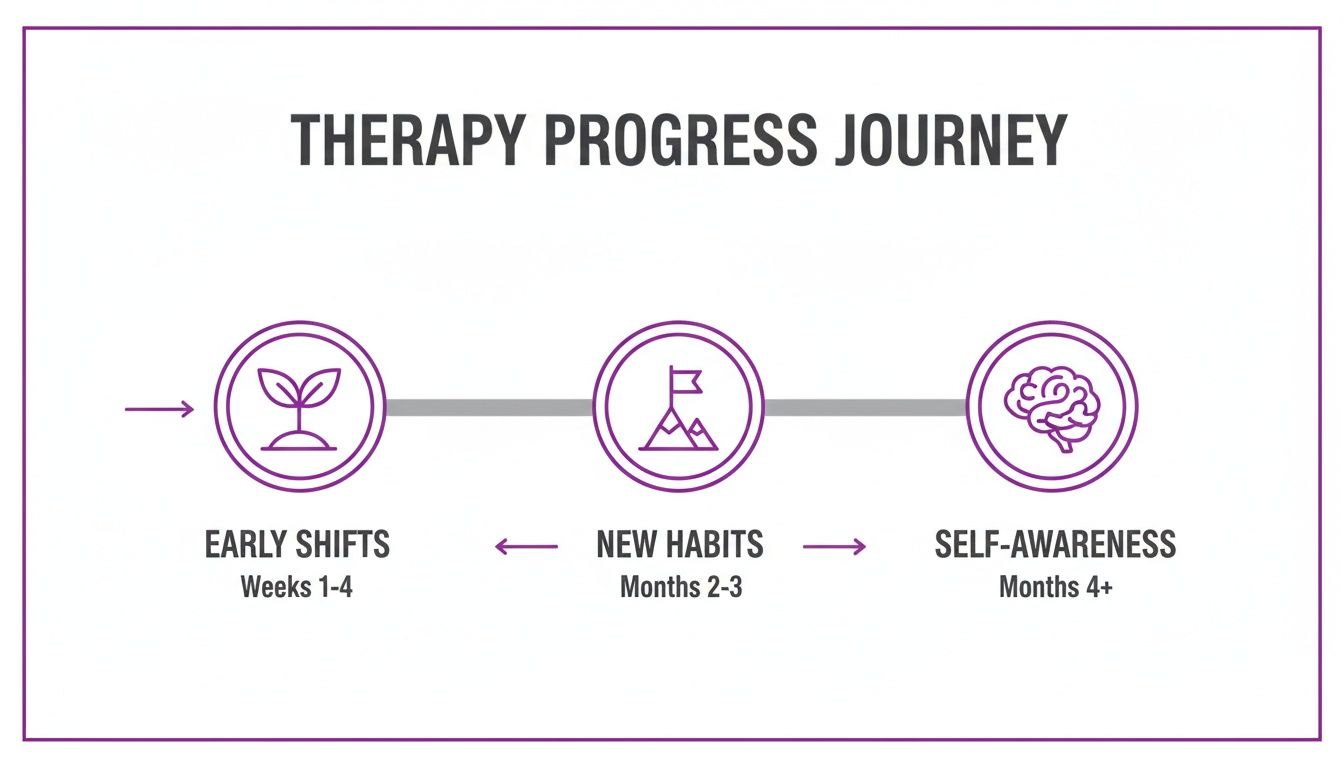
This really shows how progress builds on itself—you develop new skills and insights over time, and those small wins add up.
EMDR Therapy: The Trauma-Reprocessing Method
Eye Movement Desensitization and Reprocessing (EMDR) is a powerful, specialized therapy designed to help people heal from trauma and other painful life experiences. It works by helping your brain properly process traumatic memories so they no longer carry the same emotional weight.
The timeline for EMDR can really vary depending on the trauma. For a single event, like a car accident, some people feel significant relief in as few as 8 to 12 sessions. But for those dealing with complex or long-term trauma, the process naturally takes longer because there are more memories and beliefs to work through. The therapy itself has distinct phases, including building skills and a sense of safety before the reprocessing work even starts. You can learn more about how EMDR can help with anxiety and its structured process.
Psychodynamic Therapy: The Exploratory Journey
In sharp contrast to the focused nature of CBT and EMDR, psychodynamic therapy is all about exploration. It's a deep dive into the unconscious patterns and motivations—often stemming from your earliest experiences—that shape who you are today.
Because the goal is profound self-understanding, not just managing symptoms, psychodynamic therapy is usually a longer-term commitment. It's not uncommon for this kind of therapy to last for a year or even more. The "work" here isn't about exercises or homework; it's about exploring whatever comes to mind within the safety of the therapeutic relationship.
The Role of Medication Management
For many people, the most effective path forward is combining talk therapy with medication. Psychiatric medication can help stabilize your mood or reduce the intensity of symptoms like anxiety and depression. This makes it so much easier to dig in and do the hard work in your therapy sessions.
Think of it as building a stable foundation. Medication can provide that solid ground, allowing the therapeutic work to be built on top of it.
At reVIBE Mental Health, our integrated team of therapists and psychiatric professionals works together to create a care plan that supports your whole self. This teamwork ensures your therapy and any medication are working in harmony to help you move forward.
What Affects How Long Therapy Takes?
There’s no magic number for how long therapy takes. Anyone who gives you one probably doesn't have the full picture. Think of it less like a prescription and more like a road trip. Your arrival time is going to depend on where you started, the route you’re taking, and how you and your co-pilot (the therapist) work together.
Understanding these moving parts helps you set realistic expectations for your own journey. It’s not about hitting a deadline, but about appreciating the pace of your own unique healing process.
The Issues You're Bringing to the Table
A huge piece of the puzzle is what brought you to therapy in the first place. If you're dealing with a very specific, recent stressor—like burnout from a new job or grieving a pet—you'll likely find your footing much faster than if you're working on patterns that have been around for years.
For example, a single-incident trauma like a car accident might be processed effectively in a few months with a targeted approach like EMDR. On the other hand, healing from complex childhood trauma or deeply rooted anxiety often requires a longer-term commitment. You're not just treating a symptom; you're gently uncovering and rewiring foundational experiences.
The goal isn’t just to put a bandage on a wound. It's to understand how the wound happened in the first place and build the strength to prevent it from happening again. That kind of deep work just naturally takes more time.
The Vibe Between You and Your Therapist
Hands down, the single most reliable predictor of whether therapy will work is the quality of the relationship you have with your therapist. This connection is called the therapeutic alliance, and it’s the bedrock of all the progress you'll make.
When you feel safe, heard, and respected, you can finally let your guard down and do the tough, vulnerable work that change requires. If that trust or sense of teamwork isn't there, progress can easily stall. It's why finding the right fit is so important. A good therapist is your guide, but you're partners on this journey.
How You Show Up for Yourself
Therapy isn't a passive experience where a professional "fixes" you for an hour a week. It’s an active process, and how much you put into it directly speeds things up.
Your own involvement makes a huge difference. Here’s what that looks like:
- Consistency: Showing up for your sessions regularly, especially at the start, is crucial for building momentum. When you skip appointments, you lose that flow.
- Openness: Being as honest as you can—with your therapist and, most importantly, with yourself—is where the real work happens. Healing starts the moment you bring your authentic self into the room.
- Work Between Sessions: The most profound growth often happens outside the therapy office when you start applying what you've learned. This "homework" could be anything from practicing a new coping skill to journaling or trying a different way of communicating with a loved one.
These are the things that connect the dots between having an "aha!" moment in session and seeing real, lasting change in your life.
What’s Going On in the Rest of Your Life
Your life doesn't hit the pause button just because you started therapy. Unexpected curveballs—losing a job, starting a new relationship, a sudden health scare—can drain your emotional energy and affect your timeline. Sometimes, these new events even become the main focus of your sessions for a while, creating a detour from your original goals.
The support you have outside of therapy also plays a huge role. Friends, family, or partners who have your back can reinforce the progress you're making and offer a critical source of stability. A strong support system makes you more resilient. At reVIBE, our team-based model is designed to make sure you feel supported from all angles, and finding the right psychiatric mental health practitioner is a seamless part of that process if that's what you need.
How to Recognize the Signs of Progress
So, how can you tell if therapy is actually working? It’s a great question. The answer rarely comes in a single, lightning-bolt moment of clarity. Instead, progress reveals itself in the small, consistent shifts you start to notice in your thoughts, feelings, and everyday actions.
Learning to spot these milestones is a huge part of the healing process. It's not just about some vague idea of "feeling better"—it's about seeing tangible proof that your hard work is paying off. This awareness is what keeps you motivated and gives both you and your therapist crucial feedback on what's working.
A Checklist for Tangible Milestones
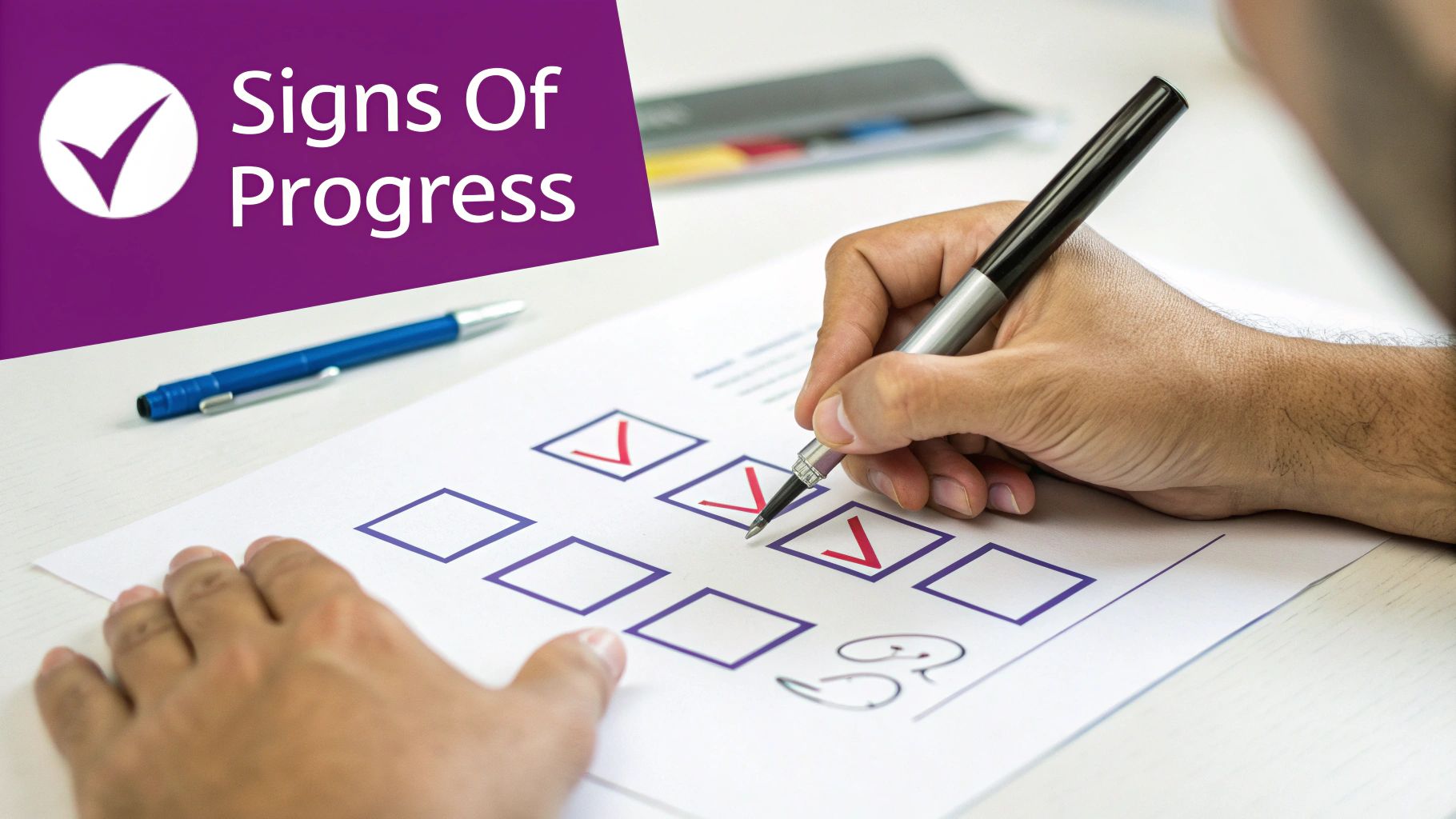
Progress can be subtle, especially in the beginning. It helps to know what you’re looking for. Think of it like collecting small wins that, over time, add up to something significant. These wins are the real-world evidence that you're moving forward.
Here are a few key signs to watch for in your daily life:
- Behavioral Shifts: You start reacting differently to old triggers. Maybe you navigate a stressful work meeting without your usual anxiety, or you reach for a healthy coping skill instead of falling into an old, unhelpful habit.
- Thought Pattern Changes: Your inner monologue becomes a kinder, more flexible voice. You might catch that harsh inner critic mid-sentence and actually challenge it. Or you find you can release spiraling, anxious thoughts instead of getting stuck in them.
- Emotional Regulation: Intense emotions still happen, but they feel more manageable. A tough day is still tough, but it doesn't completely derail your entire week. You can sit with discomfort without feeling totally overwhelmed by it.
- Relationship Improvements: You find your voice. You start communicating your needs more clearly and confidently, setting healthy boundaries with family, friends, or coworkers, which leads to more balanced and respectful connections.
The Power of Acknowledging Your Growth
Noticing these changes does more than just boost your confidence. It makes you an active, empowered partner in your own therapy. When you bring these real-life observations into your sessions, you're handing your therapist incredibly valuable information.
This kind of collaborative feedback helps your therapist see what's clicking and where you might need to adjust your approach. It keeps your treatment plan sharp, effective, and perfectly aligned with the progress you're making outside the therapy room.
Interestingly, more time in therapy doesn't always guarantee better results. A massive UK study involving 26,430 patients found that most talking therapies last between 6 and 10 appointments. The most surprising part? Shorter treatments often correlated with better outcomes. This really underscores how effective focused, goal-oriented work can be when it's driven by clear signs of progress. You can read the full research on psychotherapy duration and outcomes to dive deeper into the findings.
Recognizing your own progress is a skill in itself. It’s about learning to see and celebrate the small steps that lead to lasting change, reinforcing the idea that you are capable of healing and growth.
At reVIBE Mental Health, our therapists in Chandler, Phoenix, Scottsdale, and Tempe are committed to helping you see these milestones. We believe that empowering you to recognize your own strength is one of the most important parts of the therapeutic journey. If you're ready to start seeing real, tangible change in your life, give us a call at (480) 674-9220 to connect with a therapist who can guide you.
How to Get the Most Out of Therapy
You are the single most important person in the therapy room. While your therapist is your expert guide on this journey, think of yourself as the one in the driver's seat. How much progress you make—and how quickly you feel a real difference—is directly tied to how you show up, both in your sessions and in your day-to-day life.
Being an active participant isn't just about attending your appointments. It’s about diving in, setting clear and achievable goals with your therapist, and being brave enough to be honest, even when it’s hard. It’s about committing to try out the new tools and perspectives you’re learning. This kind of engagement turns therapy from something that just happens to you into a powerful partnership you build together.
Take an Active Role in Your Healing
To really get your money's and time's worth, it helps to see yourself as a collaborator. Your therapist brings their clinical knowledge, but you are the world's leading expert on one subject: you. When you combine those two types of expertise, you create a powerful engine for change.
Here are a few ways to make sure you're maximizing every single appointment:
- Set Clear Goals: What does "better" look like for you? Maybe it's feeling less anxious at parties or learning how to communicate without arguing. Having a specific target keeps your sessions focused and purposeful.
- Be Honest and Open: Your therapist can only work with what you share. The real breakthroughs happen when you talk about the tough stuff—the thoughts or feelings that might feel embarrassing or messy.
- Do the Work Between Sessions: Lasting change is built brick by brick, day by day. That means practicing the breathing technique when you feel stressed, consciously challenging a negative thought, or trying out that new way of talking to your partner.
Your journey to feeling better starts the moment you decide to take an active role. At reVIBE Mental Health, we're here to support that first step and every one after, creating a space where you feel truly empowered.
Find the Right Support for Your Journey
If you're ready to step into that active role, having the right team beside you makes all the difference. We are committed to making that process as straightforward and supportive as possible. You can explore the full range of our therapeutic services to see exactly how we can help you reach your goals.
With convenient locations in Chandler, Phoenix, Scottsdale, and Tempe, expert care is never far away. We also accept most major insurance plans to make sure that support is accessible. Your path to feeling better begins with a single, courageous step—and we're here to walk it with you.
Your Questions About Therapy Timelines, Answered
It's completely normal to have questions about how long therapy will take. You're putting in the time, energy, and vulnerability, so naturally, you want to know what to expect. Let's tackle some of the most common questions we hear.
How Quickly Should I Click With My Therapist?
You should start to feel a sense of comfort, safety, and being understood pretty quickly—often within the first two or three sessions. This connection is what we call the therapeutic alliance, and it's one of the most reliable predictors of whether therapy will be successful.
It doesn't have to feel like you've just met your new best friend. The important thing is that you feel heard, respected, and get a sense that this is a person you can eventually trust with the tough stuff. If after a few sessions it just doesn't feel right in your gut, it is 100% okay to look for someone who is a better fit.
Is It Normal to Feel Worse Before I Feel Better?
Yes, absolutely. In fact, it's often a sign that you're doing the real work. Therapy asks you to look at feelings, memories, and habits that you might have spent years avoiding.
Bringing all of that to the surface can feel messy and uncomfortable at first. I often compare it to cleaning out a wound before it can heal properly—it stings a bit, but it's a crucial part of the process. This initial discomfort is almost always temporary and starts to fade as you build new skills and gain clarity.
Feeling a bit raw or emotionally drained after a session isn't a red flag. It usually means you're allowing yourself to be honest and vulnerable, which is exactly where healing starts.
What Should I Do If My Therapy Feels Stuck?
If you feel like you've hit a wall, the best thing you can do is talk about it with your therapist. This isn't a sign of failure; it's a really important moment to check in on your goals and your strategy.
Be direct. Your therapist can work with you to figure out what's going on. Sometimes, a small tweak to the treatment plan is all it takes. Other times, it might mean trying a new approach or realizing there's a deeper issue that's been lurking just beneath the surface. Honest conversations like these are often what spark the next big breakthrough.
Is There Anything I Can Do to Speed Things Up?
While you can't rush genuine healing, you can definitely be an active partner in your own progress. Some of the most important work in therapy actually happens in the days between your appointments.
Here are a few things that can make a huge difference:
- Show Up Consistently: Each session builds on the last, so try your best not to skip appointments.
- Be Open and Honest: The more you're willing to share (even when it's hard), the more your therapist can help.
- Keep a Journal: Jot down thoughts, feelings, or situations that come up during the week. It’s great material to bring into your next session.
- Practice What You Learn: If you're working on a new communication skill or a mindfulness exercise, try it out in your daily life.
Your commitment to the process is the single most powerful factor in getting the results you want.
Your journey to feeling better is your own, and at reVIBE Mental Health, we’re here to support you every step of the way. With compassionate experts and convenient locations across Arizona, finding the right care is straightforward. You can start your path to healing by visiting us at https://revibementalhealth.com.