
Maya, a 32-year-old project manager, finally schedules a therapy consultation after months of anxiety. Then the scheduler asks a deceptively difficult question: “Would you like weekly or biweekly appointments?” Weekly sounds like a lot of time and money. Biweekly feels safer, but Maya worries she'll lose momentum before she has learned how to manage her anxiety.
If you're asking how often should you see a therapist, you're not looking for a calendar rule alone. Frequency affects cost, therapeutic momentum, symptom relief, and how quickly you can practice new skills between sessions. Your insurance coverage may also shape the options available to you, so reviewing how therapy insurance coverage works can help you prepare for the conversation.
The useful answer isn't “everyone must go weekly.” It's a collaborative decision based on your goals, symptom severity, therapy approach, schedule, finances, and response to treatment. The sections below offer a practical way to start, step down, pause, or resume therapy without treating any one cadence as permanent.
When the Calendar Feels Like a Puzzle
Maya's hesitation is common. She wants help with racing thoughts, poor sleep, and constant tension, but she doesn't yet know whether her concerns “qualify” for weekly care. She also wonders whether choosing biweekly appointments means she isn't taking therapy seriously.
Those questions often remain unspoken. People may discuss whether they want cognitive behavioral therapy, EMDR, medication management, or another approach, yet spend less time discussing how frequently the work should happen. The calendar becomes an administrative detail even though it can influence how much time passes between learning a skill, trying it in daily life, and reviewing what happened.
A therapist might recommend weekly appointments at the beginning because regular contact can help establish trust, clarify goals, and respond to changes before they become overwhelming. That recommendation still isn't a lifetime commitment. A person experiencing mild, stable concerns may eventually do well with less frequent visits, while someone facing severe symptoms may need more support at the start.
A practical starting point: Match the first schedule to the problem that needs attention most urgently, then set a date to review whether that schedule is working.
Maya could ask, “What would make weekly sessions clinically useful for me, and when would we consider moving to every other week?” She could also ask what her insurance covers, whether telehealth is available, and what alternatives exist if weekly care strains her budget. The aim isn't to choose perfectly before the first appointment. It's to enter treatment with enough structure to build momentum and enough flexibility to change course.
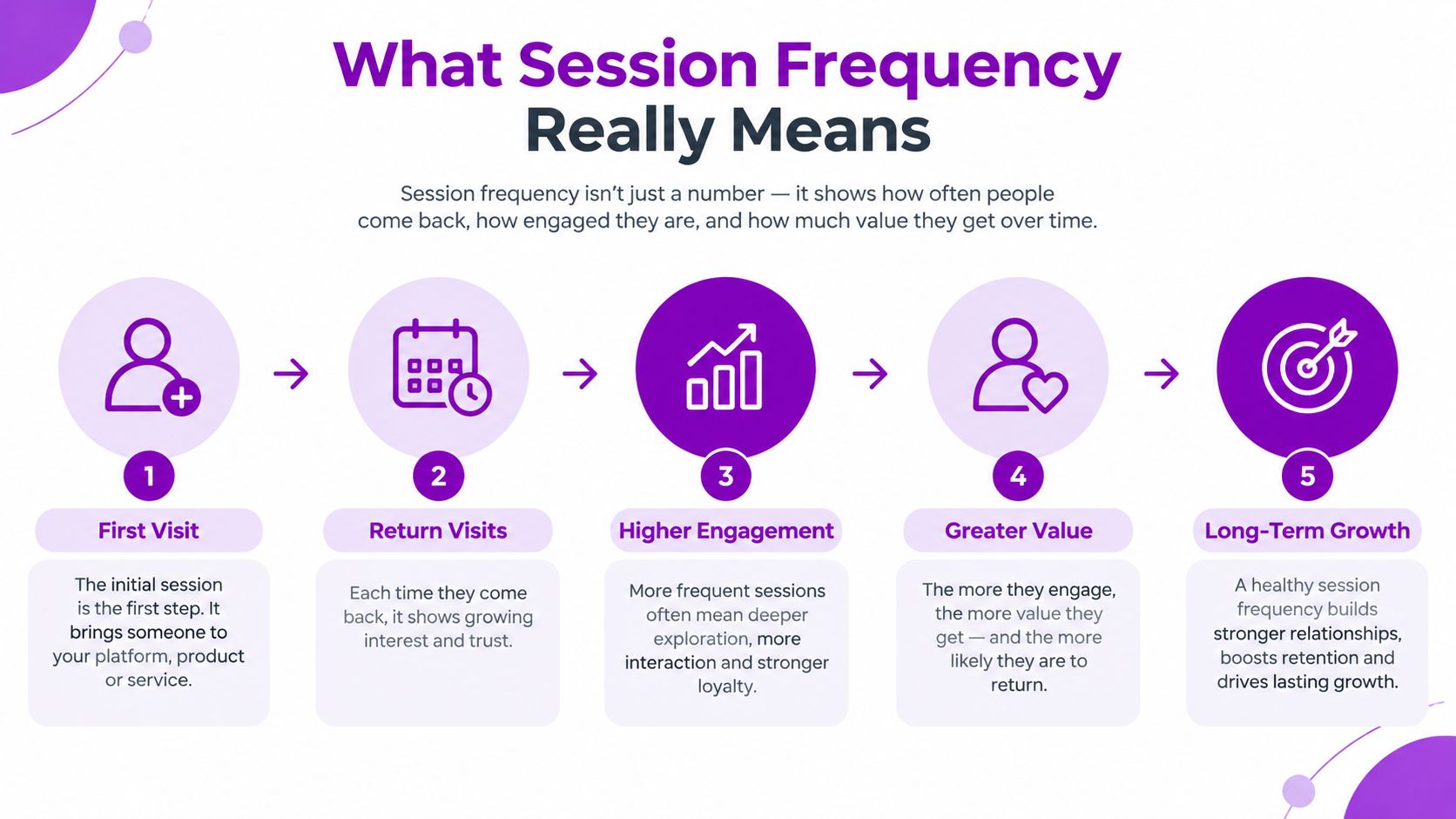
What Session Frequency Really Means
Session frequency is a clinical variable, not merely a scheduling preference. Your therapist uses it to decide how much support, practice, monitoring, and therapeutic contact you need during a particular phase of care.
Psychotherapy often follows a negatively accelerated dose-response pattern. Gains tend to be larger earlier in treatment and then taper as sessions accumulate. Review-level evidence describes a general improvement threshold around 13 to 18 sessions for about half of patients, while estimates from routine settings place the median time to reliable clinical change around 8 to 10 sessions. The same review notes that weekly therapy can accelerate improvement compared with less frequent scheduling. See the review of dose-response effects in psychotherapy for the evidence and its limits.
A physical therapy analogy can make this easier to understand. After an injury, a person might attend more frequent appointments while a clinician assesses movement, reduces pain, and teaches foundational exercises. Later, visits may become less frequent because the person can practice independently and return for corrections or progression. Therapy can work similarly, although emotional symptoms don't follow a mechanical recovery path.
Medication offers another analogy. Some treatments begin with a more active dosing phase and later move to maintenance. In psychotherapy, frequent sessions can provide a higher dose rate, meaning you accumulate therapeutic exposure more quickly. Less frequent sessions may support independence once symptoms are steadier, but fewer visits aren't automatically better or worse.
The three phases of a therapy plan
- Stabilization: The focus is safety, emotional regulation, sleep, crisis planning, and immediate coping. More frequent contact may be appropriate when symptoms are volatile.
- Active treatment: You work directly on patterns, beliefs, behaviors, trauma memories, relationships, or skills. Weekly sessions often provide enough continuity for practice and feedback.
- Consolidation and maintenance: You protect gains, handle future stressors, and strengthen self-management. Biweekly, monthly, or booster sessions may fit this phase.
Weekly care isn't required for every person, and twice-weekly care isn't automatically more effective for every goal. Frequency should change when your clinical needs change, not just because a certain interval feels conventional.
Weekly, Biweekly, or Twice a Week
Different cadences create different amounts of continuity. The right choice depends on whether you need rapid stabilization, steady skill-building, time to practice independently, or occasional support after completing active treatment.
Research supports the value of regular early contact. A university counseling-center study found that weekly therapy produced faster change trajectories, a greater likelihood of recovery, and a greater likelihood of recovering sooner than less frequent schedules. Another trial involving depressed patients found that the twice-weekly group had an average of 4.68 days between sessions, compared with 8.98 days for the weekly group, and achieved greater symptom reduction and a faster response even though total session counts were similar. These findings are summarized in the clinical study on psychotherapy session spacing.
How common cadences differ
Twice weekly care can fit severe symptoms, urgent stabilization, early trauma processing, or structured skills work. It creates more opportunities to notice deterioration, rehearse coping strategies, and address obstacles before the next appointment. It can also be demanding, so the plan should include a clear reason for the increased frequency and a review point.
Weekly care is often a strong starting cadence for active treatment of anxiety, depression, PTSD, and other concerns. A naturalistic study found that weekly clients reached clinically significant gains faster than fortnightly clients, even though the final amount of improvement was similar. The study of weekly and fortnightly psychotherapy supports thinking about frequency as a way to influence speed, not necessarily the ultimate ceiling of improvement.
Biweekly, meaning every other week, can work for moderate concerns, a stable maintenance phase, or people balancing treatment with financial and scheduling constraints. It gives you more time to apply skills, but you may need a written practice plan so the gap doesn't become passive waiting.
Monthly maintenance can suit long-term check-ins after goals have been met, provided symptoms remain stable and you can manage most challenges independently. As-needed boosters can help people with established coping skills return during a stressful transition or when familiar patterns begin to reappear.
| Cadence | Best For | Considerations |
|---|---|---|
| Twice weekly | Severe symptoms, urgent stabilization, intensive skills practice | Requires clear goals, coordination, and a taper plan |
| Weekly | Active treatment and regular skill-building | Offers consistent momentum and feedback |
| Biweekly | Moderate concerns or maintenance after stability | Leaves more time for independent practice |
| Monthly | Longer-term maintenance and periodic review | Works best when symptoms and functioning remain steady |
| As needed | Booster support during new stress or relapse risk | Needs clear signals for when to return |
For structured levels of care, learn how intensive outpatient therapy works. A useful rule is simple: start with the cadence that matches your most pressing goal, then reduce frequency when your progress and daily functioning support that change.
What Changes the Right Cadence for You
Two people with the same diagnosis may need different schedules. One may have stable housing, reliable support, and manageable symptoms. The other may be sleeping poorly, missing work, experiencing panic, or struggling to stay safe. Diagnosis matters, but current intensity and functioning often matter just as much.
Symptom severity comes first. Acute crisis, active suicidal thinking, severe functional decline, or rapid worsening may require more than standard weekly outpatient therapy. Your provider might recommend twice-weekly care, a higher level of support, urgent evaluation, or intensive outpatient services. Moderate symptoms often fit weekly treatment, while stable and improving symptoms may allow a gradual step-down.
The diagnosis and treatment target also matter. PTSD and acute trauma work may require a more concentrated schedule during early processing. Anxiety related to a specific adjustment may taper sooner once the person can use coping and exposure skills independently. Depression may require close monitoring when motivation, sleep, or safety changes quickly.
Clinical and practical modifiers
- Therapy modality: CBT and DBT often depend on repeated skills practice and review. Psychodynamic therapy may tolerate biweekly depth when the client can reflect productively between visits. EMDR scheduling can cluster sessions during early trauma-focused work.
- Medication management: If a prescriber is monitoring medication changes, therapy frequency may shift after mood or anxiety stabilizes. Therapy still addresses patterns, behavior, relationships, and coping that medication alone doesn't cover.
- Budget and insurance: Financial limits aren't a personal failure. If weekly care is unaffordable, a provider can help design a stepped-care plan, such as beginning more frequently, using biweekly visits, adding structured practice, or combining therapy with appropriate group resources.
- Life logistics: Shift work, caregiving, transportation, and privacy at home can determine whether a schedule is sustainable. A theoretically ideal cadence won't help if you can't attend consistently.
- Between-session capacity: If you can practice skills, track symptoms, and use a safety plan independently, spacing may become more workable. If every week ends with unfinished crises or overwhelming homework, more support may be needed.
| Factor | Typical Cadence Shift | Example |
|---|---|---|
| Symptom severity | More frequent or higher-level care when symptoms are acute | A crisis may require urgent assessment rather than waiting for a routine appointment |
| Diagnosis and treatment target | Front-loaded care for intensive trauma work, steady care for active depression or anxiety | Early EMDR may be scheduled more closely than maintenance anxiety treatment |
| Therapy modality | Frequency follows the method's practice demands | DBT skills work benefits from regular rehearsal and review |
| Medication changes | Closer coordination during changes, less frequent follow-up after stability | Therapy and psychiatry may coordinate while mood symptoms settle |
| Budget and access | Weekly may shift to biweekly or stepped care | The plan changes while preserving goals and continuity |
Your therapist should explain the clinical reasoning behind the recommendation. You're allowed to ask what benefit the interval is meant to provide and what evidence of progress would support changing it.
Building Your Plan With a Provider
A first appointment should produce more than a general suggestion to “come back next week.” You and your provider can create a working plan that connects frequency to goals, measures, safety, and cost.
Before intake, write down what you want to be different in the coming months. Include current symptoms, sleep changes, medications and recent changes, previous therapy, major stressors, and the situations where you struggle most. Bring a short list rather than relying on memory during an emotional conversation.
Five questions worth asking
- How many sessions should we have before reviewing progress? This turns frequency into a testable plan rather than an indefinite commitment.
- What outcomes will we track? A validated tool such as the PHQ-9 for depression or GAD-7 for anxiety can supplement, not replace, clinical discussion.
- What happens if I improve or worsen? Ask for specific signs that would support stepping down, increasing contact, or seeking a higher level of care.
- How do you handle between-session contact? Clarify whether messages are for scheduling, brief updates, or urgent concerns, and ask what to do during a crisis.
- What will each session cost with my insurance? Confirm benefits, copays, deductibles, authorization requirements, and what happens if coverage changes.
A brief check around four weeks can focus on fit, attendance, therapeutic alliance, and whether the work feels relevant. A more formal review around eight to twelve weeks can examine symptom measures, daily functioning, goal progress, and the value of the current cadence.
Bring the schedule into the treatment conversation: “What would tell us that weekly therapy is helping, and what would tell us it's time to adjust?”
Write the plan in your client portal or a shared note. Record the current frequency, goals, review date, measures, between-session tasks, and agreed warning signs. That small act makes changes deliberate instead of letting missed appointments or busy weeks determine the course of treatment.
You can also learn more about the process of therapy so you know what collaboration and progress review may look like in practice.
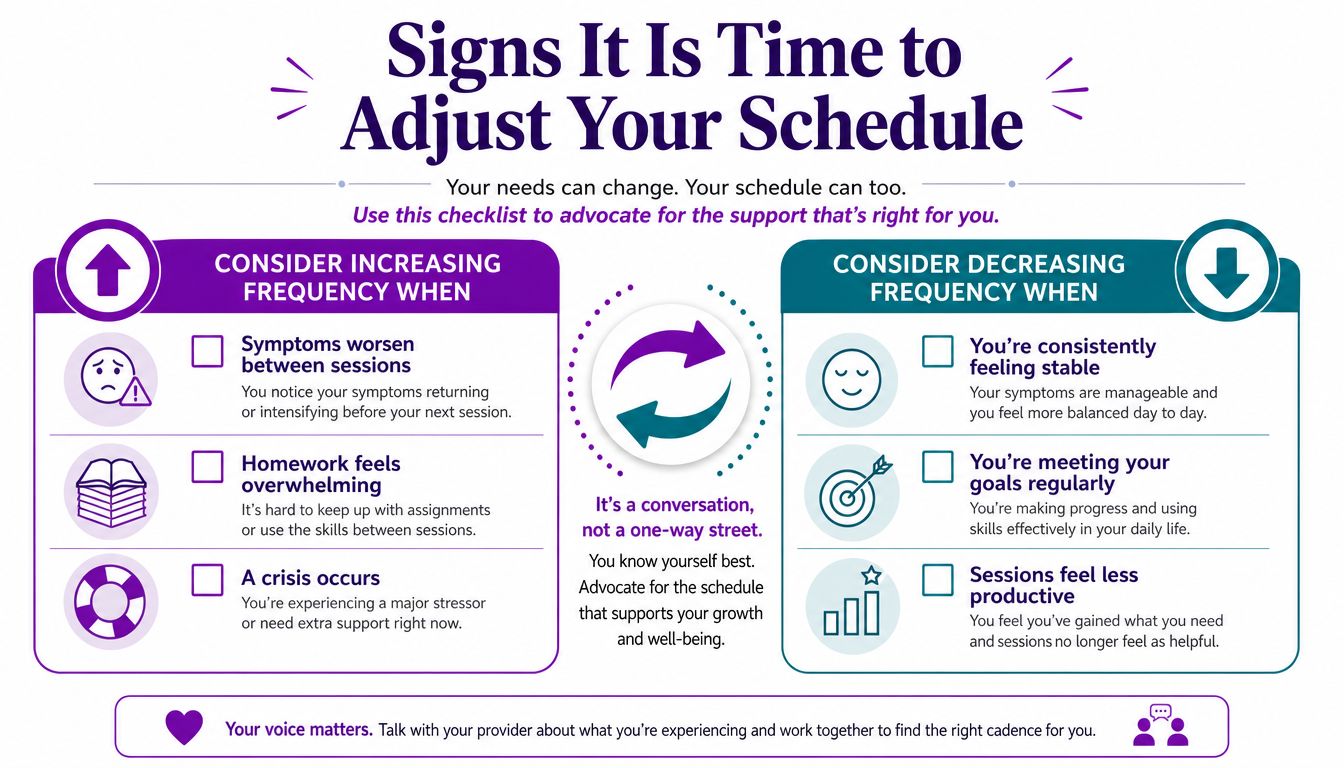
Signs It Is Time to Adjust Your Schedule
A therapy schedule should respond to your experience, not operate on autopilot. You don't need to wait until a crisis or a formal treatment milestone to tell your provider that the current interval isn't working.
Consider increasing frequency when
- Symptoms worsen between sessions: Panic, hopelessness, intrusive memories, insomnia, or avoidance are becoming more intense or harder to manage.
- Practice feels unmanageable: Homework repeatedly feels overwhelming, or you can't remember how to use the skills when distress rises.
- A crisis occurs: Suicidal thoughts, self-harm urges, a serious relationship rupture, or a sudden loss may justify a prompt reassessment.
- A new concern appears: Substance use, trauma symptoms, eating concerns, or medication changes create additional treatment needs.
- You're waiting too long for support: Each session begins by reconstructing what happened weeks earlier, leaving little time for therapeutic work.
Consider decreasing frequency when
- Your goals are mostly met: You're functioning more consistently and can identify what you've learned.
- Skills generalize: You use coping tools in real situations without needing the therapist to guide every step.
- Measures and daily life improve: Your symptom tracking shows sustained improvement, and the change appears outside the therapy room.
- Sessions feel less productive: You're repeating updates without a clear next step, and you and your provider agree that more independent practice could help.
- Weekly attendance strains your life: A sustainable biweekly plan is often better than an ideal schedule you can't maintain.
A pause can be appropriate for travel, illness, caregiving, or financial strain, but make it intentional. Agree on a resume date, decide what warning signs should prompt an earlier return, and identify crisis resources. An open-ended cancellation can make it harder to restart.
Resume therapy when old patterns return, a new stressor emerges, or your established maintenance rhythm calls for a booster. Bring the change to your therapist rather than altering appointments on your own.
A Simple Starting Plan You Can Use Today
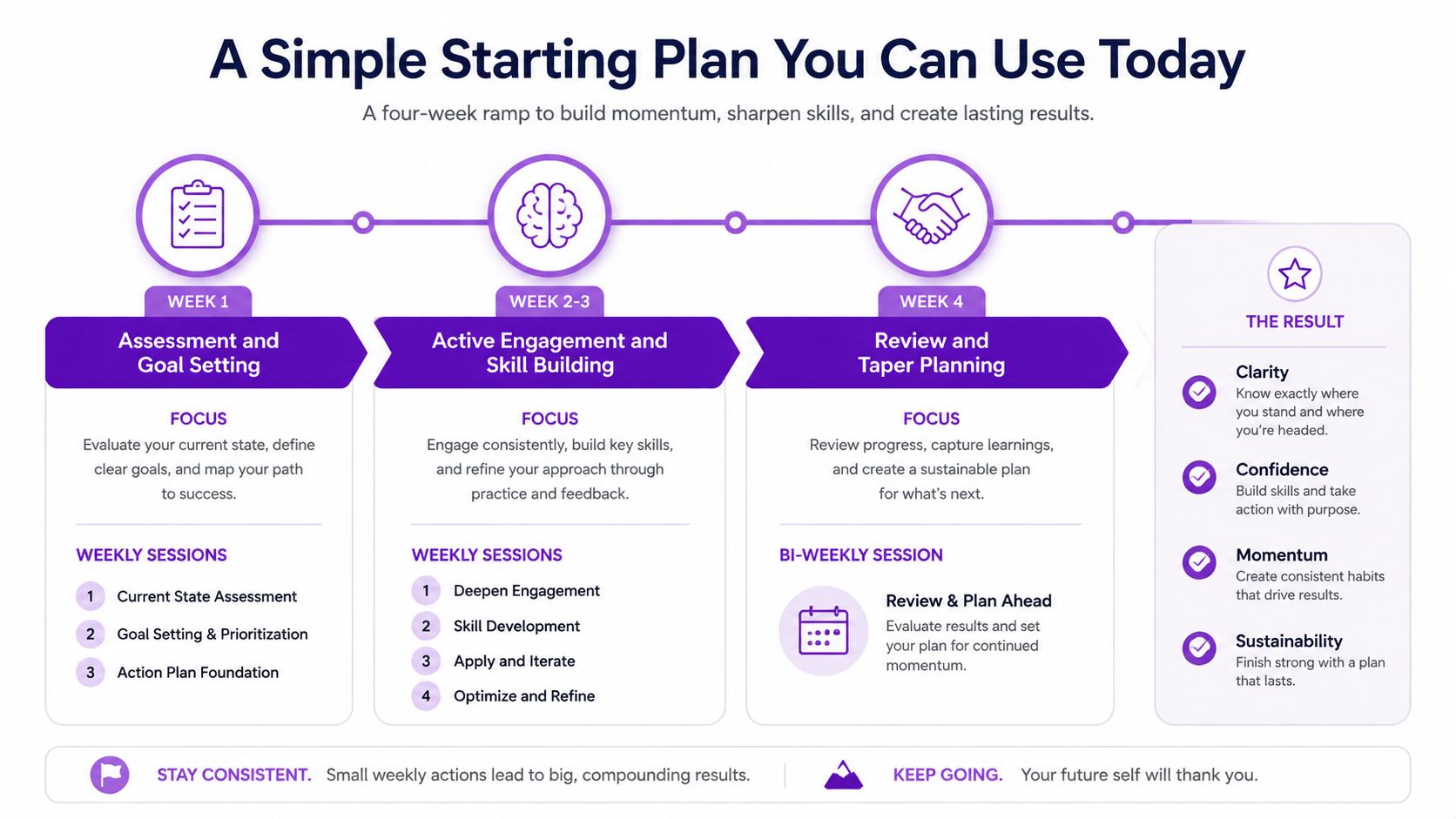
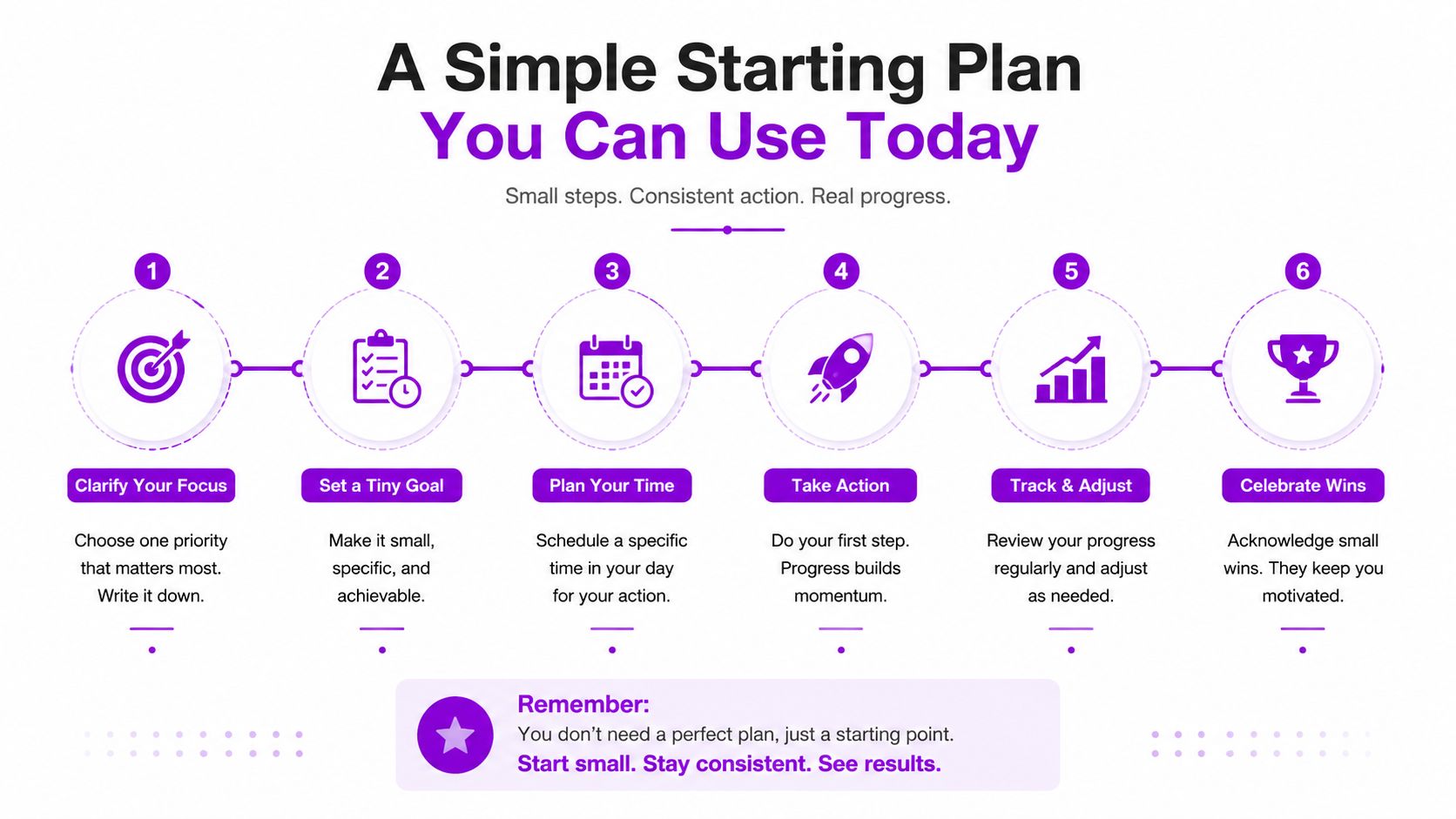
If you need a practical answer today, begin with a structured trial rather than a permanent promise.
Write down your top three therapy goals. Make them observable, such as sleeping more consistently, reducing panic-related avoidance, communicating more directly with a partner, or processing a specific trauma target. Share those goals with your provider and ask how session frequency will support each one.
Use a four-week ramp
- Week one: Complete assessment and goal setting. Weekly therapy gives you room to clarify symptoms, safety, history, and priorities.
- Weeks two through four: Continue weekly sessions, or discuss twice-weekly care if symptoms are severe, unstable, or interfering sharply with daily functioning.
- Week four: Review fit, attendance, symptom changes, skill use, and practical barriers. Schedule the next review instead of allowing the calendar to drift.
- Weeks five through eight: Continue the cadence that matches your response. If improvement is sustained and you're practicing independently, discuss a step toward biweekly care.
A four to six week stabilization phase at weekly frequency can be useful before stepping down, especially when symptoms are active. The timing still depends on your provider's assessment, treatment model, safety needs, and ability to function between appointments.
Increase frequency if symptoms worsen, a new life stressor appears, safety concerns emerge, or tracking shows deterioration. Consider decreasing frequency when goal measures show sustained improvement, skills work outside sessions, and weekly attendance has become unnecessarily burdensome. Ask for a frequency review at week four and week eight, and document the decision.
There's no prize for choosing the most intensive schedule, and no virtue in choosing the least expensive option if it leaves you without enough support. The best cadence is one that is clinically appropriate, financially realistic, and reviewed as your needs change.
reVIBE Mental Health offers talk therapy, EMDR, psychiatry, and medication management through in-person and secure online appointments across the Phoenix metro area, with scheduling available at its Chandler, Phoenix Deer Valley, Phoenix PV, Scottsdale, and Tempe locations. Visit reVIBE Mental Health to discuss a therapy cadence built around your goals, diagnosis, preferences, and budget.