

The first step toward getting a mental health evaluation can feel like the hardest one. You could start by talking to your primary care doctor for a referral, which is a great, comfortable place for many people to begin. Another common route is to check your insurance provider's website for a directory of in-network therapists or psychiatrists. Or, you can just call a mental health practice directly.
The important thing isn’t how you start, but that you start. It all begins with that one phone call or that initial appointment to talk about what’s on your mind.
Knowing When It's Time for a Mental Health Evaluation

Honestly, recognizing you might need some support is often the biggest hurdle. That feeling of being constantly overwhelmed, the hobbies you used to love that now feel like a chore, or the short fuse you suddenly have with family—these aren't just 'bad days' when they become the norm. Too many of us wait until we're in a full-blown crisis, but the signs that an evaluation could help are usually far more subtle.
Getting a mental health evaluation isn't just a last resort. Think of it as a proactive, empowering act of self-care. It’s about carving out the space to finally understand what’s going on inside, which can bring clarity, new coping skills, and a path back to a more balanced life.
Beyond Just "Having a Bad Week"
So, how can you tell the difference between a rough patch and something more serious? It really comes down to three things: duration, intensity, and impact. If feelings of sadness, anxiety, or irritability stick around for weeks and start getting in the way of your work, relationships, or just getting through the day, that's a clear signal it's time to check in with a professional.
Do any of these scenarios hit close to home?
- Persistent Overwhelm: You constantly feel like you're treading water, and even small tasks seem impossibly huge.
- Loss of Interest: Things that used to bring you joy, like catching up with friends or that weekend hobby, now feel draining or unappealing.
- Changes in Sleep or Appetite: You're either sleeping way more or way less than usual, or your appetite has gone MIA (or is in overdrive).
- Increased Irritability: You find yourself snapping at your partner, kids, or coworkers over things that wouldn't normally bother you.
- Social Withdrawal: You're making more and more excuses to avoid social events or even just connecting with the people you care about.
If you're nodding along, it doesn't mean something is "wrong" with you. It's just your mind and body sending a flare signal that they need some attention and support.
Seeking a mental health evaluation isn't an admission of weakness—it's a courageous step toward understanding yourself and building resilience. It’s a tool for growth, not just a reaction to a problem.
An Opportunity to Grow
Deciding to get an evaluation is also a powerful tool for personal development. You don't have to be at rock bottom to benefit. People often seek evaluations to get support during big life changes—a new job, a move across the country, or the end of a relationship. Others are just looking to improve their communication skills, build self-esteem, or finally understand their own patterns.
Ultimately, the goal is insight. An evaluation gives you a baseline—a clear, professional perspective on your emotional and psychological health. From that starting point, you can make informed choices about what comes next, whether that’s therapy, medication, lifestyle changes, or simply having a better handle on how your own mind works. It’s the first step toward reclaiming your balance and feeling like yourself again.
Finding the Right Mental Health Professional for You

Alright, you’ve decided to move forward with a mental health evaluation. That's a huge step. Now comes the next part: finding the right person to help.
Walking into the world of mental health providers can feel a bit like alphabet soup—LCSW, PhD, PMHNP. It's confusing at first, but each of those credentials represents a different kind of expertise. Understanding what they mean is the key to finding the right kind of help for you.
Think of it this way: you wouldn't call a plumber to fix your wiring. In the same way, knowing whether you need talk therapy, medication management, or a combination of both will point you toward the right professional from the get-go.
Understanding Different Provider Roles
So, who does what? Let's break down the most common types of providers you'll encounter. These titles aren't just for show; they signal specific training and the kind of care they can offer.
Here’s a quick guide to who’s who:
- Psychiatrists (MDs) and Psychiatric Mental Health Nurse Practitioners (PMHNPs): Think of these as the medical experts. They are licensed to diagnose mental health conditions and, most importantly, prescribe medication. If you're going for a psychiatric evaluation, the focus will likely be on your symptoms to see if medication might be a useful tool for you.
- Psychologists (PhDs or PsyDs): These are experts in human behavior who focus on psychotherapy, also known as talk therapy. They can also perform in-depth psychological testing to get to the root of complex issues. Generally, they do not prescribe medication.
- Licensed Therapists (LCSW, LMFT, LPC): This group includes Licensed Clinical Social Workers, Licensed Marriage and Family Therapists, and Licensed Professional Counselors. They are all highly trained in providing talk therapy to help you navigate your thoughts, learn new coping skills, and work toward your goals.
For many people, the best results come from an integrated care model. This is just a clinical term for a simple idea: having your therapist and your psychiatric provider work together as a team. It ensures everyone is on the same page, whether you need therapy, medication, or both. You can learn more about how to find a good psychiatrist who fits this collaborative approach.
Your Roadmap for Finding a Provider
Once you know the type of professional you're looking for, the search becomes much less daunting. You don't have to sift through endless names. A few practical strategies can quickly narrow the field.
A great first call is often to your primary care physician. They usually have a list of mental health professionals they trust and refer patients to regularly. Your insurance provider’s online directory is another powerful tool—it lets you filter by location, specialty, and who's in-network, saving you a lot of hassle.
Finding a provider who is a good fit is about more than just credentials. It’s about finding a practice that reduces logistical stress, making it easier for you to prioritize your health.
This is where practices like reVIBE Mental Health aim to make a difference. With several locations in Scottsdale, Tempe, Chandler, and Phoenix, we make it easier to find high-quality care that’s actually convenient. By offering both in-person and telehealth appointments, plus weekend availability, we remove the common scheduling roadblocks that can stop people from getting help.
When a clinic is designed to fit into your life, not the other way around, taking that first step feels a whole lot easier.
How to Prepare for Your First Mental Health Appointment
Walking into your first mental health evaluation isn't like taking a test you have to pass. It’s simply a conversation, and doing a little prep work beforehand can calm your nerves and help you make the most of that first hour.
The whole point is to give the provider a clear window into your world. By pulling a few things together ahead of time, you can walk in feeling more grounded and ready to connect. Remember, this first meeting is a two-way street—it's just as much about you deciding if they're a good fit as it is about them understanding how to help.
The Practical Side of Preparation
Let’s get the logistics out of the way first. Whether your appointment is in-person or telehealth, having your documents ready means you can focus on the conversation, not the paperwork. It’s a small step that eliminates a surprising amount of day-of stress.
Have these items handy:
- Your ID and Insurance Card: Standard stuff for any healthcare visit, but crucial for getting everything processed smoothly.
- A List of Medications: Don't forget anything! Jot down all prescriptions, over-the-counter meds, and even supplements you take regularly, including the dosages.
- Relevant Medical History: Be prepared to talk about major health conditions (both physical and mental), any treatments you've tried in the past, and if there's a family history of mental health challenges.
Getting this simple groundwork done clears the deck and lets you enter the session with a clear head.
Your Emotional and Mental Checklist
Okay, now for the part that really matters: organizing your thoughts. This isn't about crafting perfect, rehearsed answers. It’s about giving yourself space to reflect before you even sit down with the provider. Honestly, spending just 15-20 minutes on this can be a game-changer.
Think about these questions to get you started:
- What are my main concerns? Try to name the top 2-3 reasons you decided to make this appointment. Is it a constant feeling of dread, a deep sadness you can't shake, or trouble in your relationships?
- When did these feelings start? Think back. Has this been going on for a few weeks, several months, or is it a pattern that has repeated for years? A rough timeline is incredibly helpful.
- What makes things better or worse? Are there specific situations, people, or even times of day that trigger these feelings? On the flip side, does anything—a walk, talking to a friend, a certain hobby—bring you even a little relief?
- What are my goals? What does "better" look like for you? Your goal could be as concrete as, "I want to stop having panic attacks at work," or more general, like, "I just want to feel like myself again."
Remember, this is your story. There are no right or wrong answers here. Your provider is there to listen and understand, not to judge you. Your honest reflections are the single most valuable thing you can bring to this first meeting.
For a deeper dive, our guide on how to prepare for your first therapy session has even more great tips.
Finally, think of a few questions you want to ask them. This is your chance to interview them, too! Ask about their approach, their experience with issues similar to yours, or what a typical session with them looks like. This will help you feel confident you’ve found the right person to work with.
What to Expect During Your Mental Health Evaluation
Stepping into that first appointment can feel a little intimidating, but knowing what’s coming can make a world of difference. The whole point of an evaluation is to have a real, supportive conversation. A compassionate professional just wants to understand your story so they can help you build a plan to start feeling better.
While every session is unique to you, initial evaluations generally fall into two main categories. Knowing which one you’re headed for helps set the right expectations.
The Therapy Intake: A Collaborative Conversation
Think of a therapy intake less as a formal "evaluation" and more as the beginning of a conversation. This first session is all about you and your therapist getting to know each other and for them to get a 360-degree view of your life. It's your space to share what’s on your mind, at your own speed.
You'll likely touch on a few key areas:
- Your Story: Where you come from, your family life, major life events, and your relationships.
- What's Happening Now: This is the core of it—what brought you in? You’ll talk about the specific feelings, challenges, or patterns you've been dealing with.
- Your Hopes and Strengths: It's not all about the tough stuff. The conversation will also explore what’s working in your life and what you'd like to get out of therapy.
The therapist’s job here is to listen deeply, ask questions to understand better, and see the world through your eyes. This session lays the groundwork for all the progress you'll make together.
The Psychiatric Evaluation: A Focus on Symptoms
A psychiatric evaluation tends to be a bit more clinical, especially if you’re exploring medication as part of your treatment plan. You'll still talk about your history, but the provider—usually a psychiatrist or a psychiatric nurse practitioner (PMHNP)—will ask very specific questions about your symptoms.
They are trying to get a clear picture of the frequency, duration, and intensity of what you're experiencing. This helps them see if your symptoms match a specific diagnosis, which is crucial for figuring out if medication might help and, if so, which one would be the best fit.
While the approach might feel different, it's helpful to compare the two side-by-side to see how they work toward the same goal.
Therapy Intake vs. Psychiatric Evaluation At a Glance
| Aspect | Therapy Intake Session | Psychiatric Evaluation |
|---|---|---|
| Primary Focus | Building a therapeutic relationship and understanding your life context. | Diagnosing mental health conditions and assessing the need for medication. |
| Main Goal | Develop a collaborative therapy plan and set goals for treatment. | Determine a clinical diagnosis and create a medication management plan, if appropriate. |
| Typical Activities | Open-ended conversation about personal history, relationships, and current challenges. | Structured questions about specific symptoms, medical history, and symptom severity. |
Ultimately, both paths are designed to get you the right support.
No matter which type of evaluation you have, the purpose is the same: to make sure you get the right care for your specific needs. It's the first step in creating a plan that truly works for you.
In-Person vs. Telehealth Sessions
Whether you prefer meeting a provider in a cozy office or from the comfort of your own couch, the quality of care is exactly the same. In-person sessions offer that traditional, face-to-face connection that many people find reassuring.
On the other hand, telehealth offers incredible convenience and flexibility, letting you connect from anywhere you have privacy. The choice is completely up to you and what feels right for your life right now.
No matter how you meet, a little prep goes a long way. This checklist gives you a great visual for what to have ready.
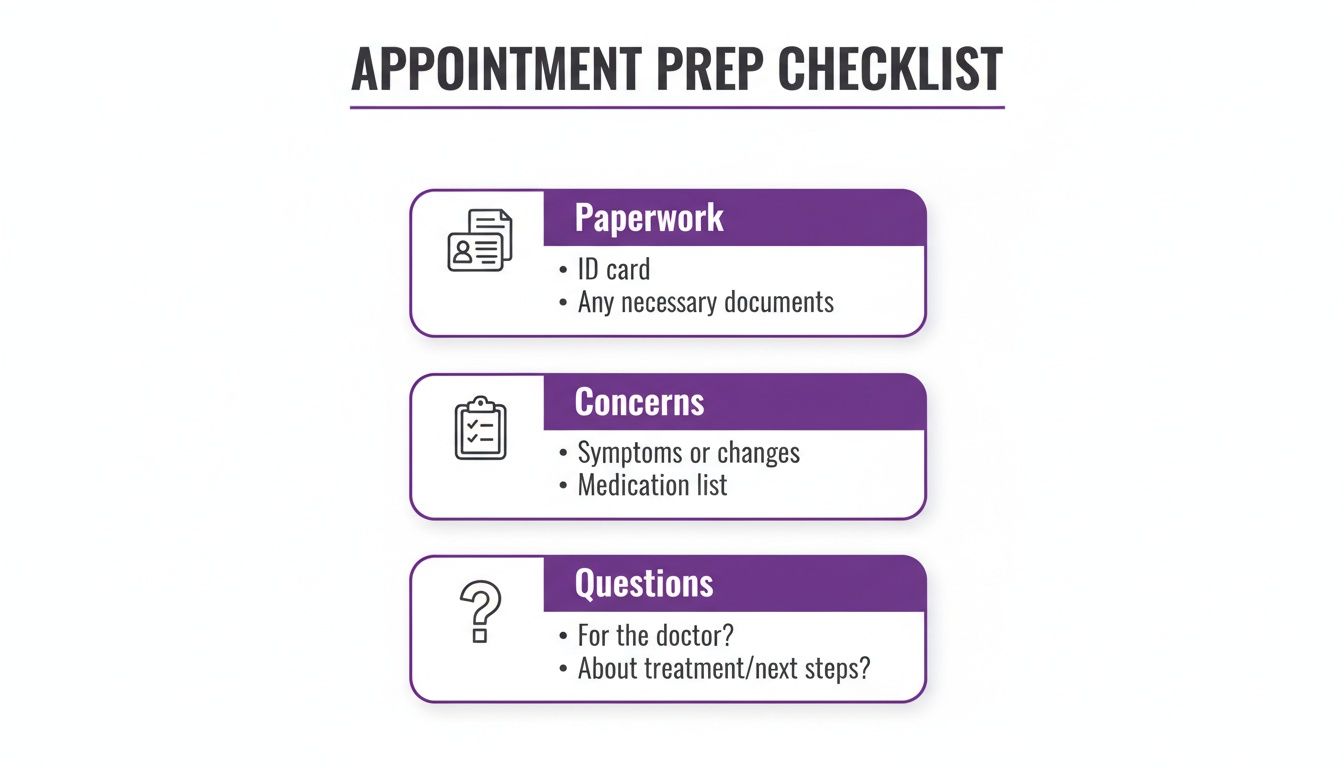
Having your documents, a list of your concerns, and a few questions ready beforehand frees you up to focus completely on the conversation.
Navigating Insurance, Costs, and Scheduling Logistics
Let’s be real—sometimes the biggest hurdle to getting a mental health evaluation isn’t the emotional part, but the practical stuff. Figuring out your insurance and then trying to squeeze an appointment into your life can feel like a full-time job. But with a bit of know-how, you can get through it without the headache.
Insurance jargon is notoriously confusing, but you really only need to get a handle on a couple of key terms. Your deductible is what you have to pay out-of-pocket before your insurance plan starts chipping in. After that, you'll typically have a copay, which is just a flat fee you pay for each visit. Getting a clear idea of these two numbers will tell you exactly what to expect financially.
Demystifying Your Insurance Benefits
Before you even think about booking an appointment, your best move is to call the member services number on the back of your insurance card. I know, nobody loves making these calls, but a few minutes on the phone can save you from a surprise bill down the road.
When you get someone on the line, you can say something simple like:
"Hi, I need to check my outpatient mental health benefits. Can you tell me what my deductible is and how much of it I’ve met so far this year? I also need to know my copay for in-network providers, for both in-person and telehealth visits."
That one script gives you everything you need to know. The good news is that many practices, including reVIBE Mental Health, accept most major insurance plans and can often handle this step for you, which is a huge relief.
Making Room for Care in Your Busy Life
Finding an appointment slot that actually works with your schedule is often the next big challenge. Between work, kids, and everything else, a provider who only offers rigid 9-to-5, weekday-only appointments just isn't an option for most people.
This is where you need to look for a practice that gets it. Keep an eye out for providers offering more realistic options, like:
- Weekend Appointments: Having Saturday or Sunday slots available can be a total lifesaver when your weekdays are packed.
- Telehealth Sessions: Being able to have a secure video call from your home or office cuts out the commute and adds a massive amount of convenience. You can learn more about the pros and cons by exploring online therapy vs in-person care.
- Multiple Locations: If you live in a larger area like Phoenix, having clinics in different neighborhoods (like Chandler, Scottsdale, Tempe, and Phoenix) means you can pick one that’s actually close to you.
Here at reVIBE, we offer appointments seven days a week across our five Valley locations precisely because we know that life is complicated. Logistics should never be the reason you can't get the care you need.
And what if you don't have insurance? Don't let that stop you. Many providers offer a sliding-scale fee, which adjusts the cost of your session based on your income. It never hurts to ask about these options—you might be surprised to find that affordable care is well within reach.
How reVIBE Mental Health Can Help
Navigating the path to a mental health evaluation can feel like a full-time job. That's a huge part of why we started reVIBE Mental Health. We saw how many barriers people faced just trying to get help, and we wanted to build something better.
Our whole approach is designed to clear those hurdles. We bring therapists and psychiatric providers together under one roof, so you're not juggling appointments across town or trying to get different clinicians to talk to each other. We handle the coordination, you focus on healing.
Think of us as your support team. We'll verify your insurance and personally match you with the right provider on our team who truly gets what you're going through. The goal is to take the logistical stress off your plate so you can pour that energy into yourself.
Finding help should feel like a relief, not another burden. From your first call, we want you to feel heard, respected, and genuinely supported in a place free of judgment.
With appointments available seven days a week, both online and in-person, getting the care you need fits into your life, not the other way around.
Find a reVIBE Location Near You!
We currently have five locations for your convenience. (480) 674-9220
reVIBE Mental Health – Chandler
3377 S Price Rd, Suite 105, Chandler, AZ
reVIBE Mental Health – Phoenix Deer Valley
2222 W Pinnacle Peak Rd, Suite 220, Phoenix, AZ
reVIBE Mental Health – Phoenix PV
4646 E Greenway Road, Suite 100, Phoenix, AZ
reVIBE Mental Health – Scottsdale
8700 E Via de Ventura, Suite 280, Scottsdale, AZ
reVIBE Mental Health – Tempe
3920 S Rural Rd, Suite 112, Tempe, AZ
Answering Your Questions About Mental Health Evaluations
It's only natural to have a lot of questions running through your mind before your first mental health evaluation. Knowing what to expect can go a long way in calming any nerves, so let's tackle some of the most common things people ask.
How Long Will My First Appointment Be?
This is probably the most frequent question we get. You can expect your initial evaluation or intake session to last somewhere between 60 and 90 minutes.
This isn't just a quick chat. That dedicated block of time gives the provider a chance to really listen to what's going on, understand the challenges you're facing, and start mapping out a plan without anyone feeling rushed. Follow-up therapy sessions are usually a bit shorter, typically clocking in around 50 minutes.
Will I Get a Diagnosis on the First Day?
This one is a "maybe." A psychiatric provider, like a psychiatrist or a psychiatric nurse practitioner, might give you a preliminary diagnosis to help guide medication choices right away.
However, in a therapy setting, it’s often a different story. Many therapists prefer to use the first few sessions to get the full picture and build a strong therapeutic relationship before putting a formal label on things.
The real goal of that first meeting isn't just to get a diagnosis; it's to start building a connection. Think of it as the beginning of a partnership focused on your well-being.
Once you have a clearer understanding of what you're dealing with, you can start exploring the right path forward. For example, if you're diagnosed with PTSD, the next step is often to research the best PTSD treatments with your provider.
Is Everything I Say Kept Private?
Absolutely. Confidentiality is the bedrock of mental healthcare. Your provider cannot share what you discuss with anyone without your explicit, written permission.
The only exceptions are very specific, legally-mandated situations where there's an immediate risk of serious harm to yourself or someone else, or in cases of suspected child or vulnerable adult abuse.
At reVIBE Mental Health, we want to make this process as clear and comfortable as possible. If you have more questions, we're here to answer them. Visit reVIBE Mental Health to learn more or to schedule your confidential evaluation today.