

Getting ready for your first therapy session really just comes down to a few things: thinking about what you hope to get out of it, sorting out the practical stuff like insurance, and getting yourself in the right headspace to be open. A little bit of prep can turn those first-session jitters into a sense of confidence, making that initial meeting feel productive right from the start.
Getting Started Without Getting Overwhelmed

Deciding to start therapy is a huge, powerful step. But then the thought of that first appointment can feel pretty daunting. It’s common to worry about what to say, how you should act, or if you're even "doing it right."
Let’s reframe that thinking. Your only job in the first session is to show up, exactly as you are. The goal is simply to start building a connection with your therapist in a safe, non-judgmental space where you feel heard from day one.
A little preparation can make a world of difference, helping you walk in feeling focused instead of flustered. This isn't about having a script ready; it's about clearing away the logistical clutter so you can focus on the conversation. Whether you’re meeting a therapist in person at one of our welcoming Phoenix-area locations or connecting online, these tips will help you begin with a clear sense of purpose.
Why a Little Prep Work Matters
It's completely normal to feel nervous before your first therapy appointment. Actually, research shows that first-session anxiety is common and predictable. A qualitative study found many clients initially have trouble with “holding back and struggling to open up,” feeling a disconnect between what they’re thinking and what they can actually say out loud.
This is exactly why a bit of emotional preparation helps so much. The therapeutic alliance—that’s the bond you form with your therapist—is one of the biggest predictors of success. Studies show the very first session carries the greatest weight in building it. One analysis even found that early alliance factors explained 77.36% of the variability in early treatment progress.
Taking just 20-30 minutes beforehand to clarify what's on your mind can make your session feel more collaborative and less overwhelming. This strengthens that vital connection from the get-go. You can explore more about these findings on alliance formation in therapy.
To make it even easier, here’s a quick checklist to help you feel organized and ready.
Quick Prep Checklist for Your First Session
Use this checklist to feel organized and ready for your first therapy appointment.
| Preparation Step | Why It Helps | Time Needed |
|---|---|---|
| Jot Down Key Topics | Helps you remember what you want to discuss so you don't leave feeling like you forgot something important. | 10-15 minutes |
| Confirm Insurance/Payment | Reduces financial stress and lets you focus on the session itself, not the bill. | 5 minutes |
| Complete Intake Forms | Gives your therapist valuable background information and saves time during your appointment. | 15-20 minutes |
| Think About Goals | Even a rough idea of what you hope to achieve helps guide the conversation from the start. | 5-10 minutes |
| Plan Your Logistics | Know how you're getting there or how to log in to avoid last-minute panic. | 5 minutes |
This isn't a test! It's just a simple way to clear your head and set yourself up for a great first conversation.
Sorting Out the Logistics Before You Arrive
Before you can really get into the heart of things, there are a few practical details to iron out. Taking care of the logistics ahead of time is one of the best things you can do for yourself—it clears your head, reduces any last-minute stress, and lets you walk into your first session ready to focus.
We get it. Dealing with insurance and scheduling can feel like a chore. At reVIBE, we do everything we can to make this part as painless as possible so administrative hurdles don't stand in the way of you getting the support you deserve.
Verifying Insurance and Understanding Costs
First things first, let's talk about insurance. A quick call to your provider can save you a lot of headaches and prevent any surprise bills down the road. Just flip over your insurance card, find the member services number, and give them a ring.
Not sure what to ask? Here are the most important questions:
- What is my copay for outpatient mental health visits?
- Do I have a deductible I need to meet before my insurance starts paying?
- Is reVIBE Mental Health an in-network provider for my plan?
Getting these answers upfront means you can budget for your sessions and walk in with total peace of mind. If you hit a snag or just aren't sure, our team is always here to help you with the verification process.
In-Person Comfort or Online Convenience?
Next up: deciding where you want to have your session. There's no right or wrong answer here—it’s all about what works for you. Do you feel more at ease in the warm, welcoming environment of a physical office? Or does the idea of logging in from your own couch sound more appealing? Both in-person and telehealth sessions are equally effective.
Believe it or not, this kind of prep work really does matter. A huge study looking at 17,607 real-world therapy sessions found that when therapists prompted a session summary, they were 83.3% more likely to assign follow-up tasks. Coming prepared helps you and your therapist create a clear plan. To learn more, read the full research on how session structure impacts outcomes.
Whether you choose to visit us in Chandler, Scottsdale, Tempe, or Phoenix, or prefer to connect online, a little planning makes all the difference. You can check out all our physical spaces by visiting our reVIBE locations page.
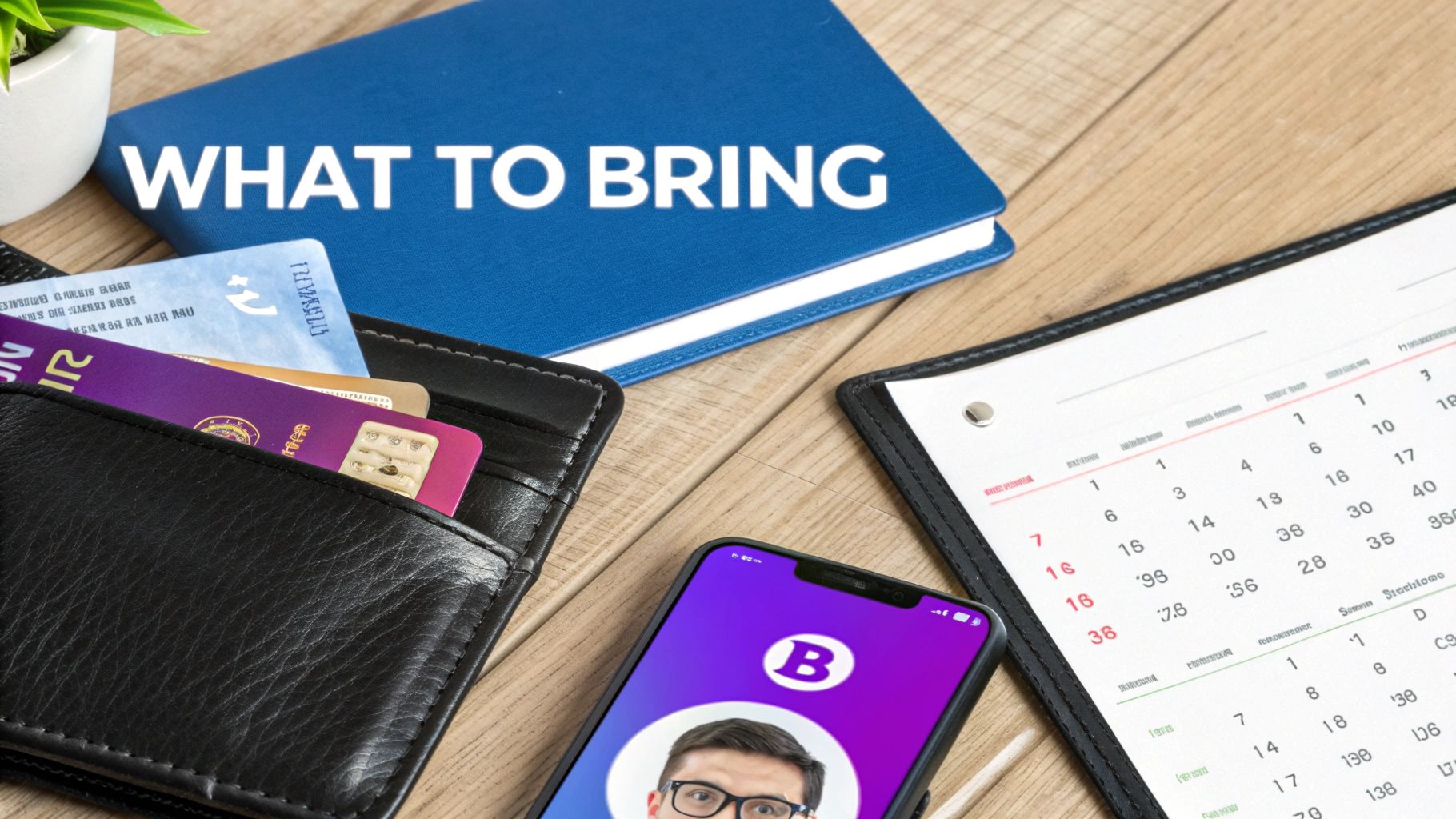
What to Bring to Your First Appointment
You don’t need to show up with a briefcase full of documents, but having a few key things ready will help everything run smoothly.
Think of it as a simple checklist:
- Your photo ID
- Your insurance card
- A list of any current medications (don't forget dosages and supplements!)
- Completed intake forms, if we sent them to you ahead of time
Taking a few minutes to gather these items means we can get the paperwork out of the way quickly. That leaves more time for what truly matters: you, your story, and what you hope to achieve.
Thinking Through What You Want to Discuss

One of the biggest hurdles for people starting therapy is the fear of sitting down and having absolutely nothing to say. What if I freeze up? What if I forget the one thing I really needed to talk about? It’s a completely normal worry, but I promise you don’t need a perfectly rehearsed script.
Think of it less like a presentation and more like a gentle organizing of your thoughts. The idea is to walk in with a few starting points, not a rigid agenda. Your therapist is a trained guide who will help you navigate the conversation—you just need to give them a sense of the terrain.
Taking a little time to reflect beforehand can make that first conversation feel much more natural and productive right from the start.
Identify What Brought You Here
Let's start with the most basic question: What’s happening right now that made you decide to schedule an appointment? Maybe it was a specific event, like a breakup or a challenging project at work. Or maybe it’s a feeling that’s been slowly building for a while, like a persistent sadness or a hum of anxiety you can’t shake.
You don’t need a perfect explanation. Just try to pinpoint the catalyst. It can be helpful to jot down a few notes on:
- Current Stressors: What's causing the most friction in your life today?
- Key Life Events: Are there any significant past or recent experiences that keep coming to mind?
- Persistent Feelings: What emotions show up for you most often (e.g., irritation, loneliness, emptiness)?
This simple reflection gives you a powerful, tangible starting point for the conversation.
Frame Your Goals and Hopes
Next, shift your thinking from what’s wrong to what you hope will be different. "I want to feel better" is a great start, but getting a little more specific can really help your therapist understand your vision for the future. You don't need a detailed roadmap, just a sense of the destination.
A helpful trick is to reframe a problem as a goal. For example, instead of just saying, "I have a lot of anxiety," you might try, "I want to feel calm enough to drive on the highway again," or "I want to enjoy social events without constantly worrying about what others think."
This kind of proactive goal-setting is actually a core part of modern mental healthcare. During the pandemic, the use of telehealth for mental health appointments increased by over 3,000%, which gave people much more control over how, when, and where they accessed care. It empowered clients to be more deliberate about what they needed, whether that meant an in-person session at a reVIBE location in Phoenix or a secure online video call.
As you prepare, remember that you're an active participant. Clarifying your goals is central to making your therapy collaborative and effective from day one. You can learn more about how this shift has reshaped first therapy sessions.
Reflect on Past Experiences
If you've been to therapy before, take a moment to think about what you liked and what you didn't. Did you click with a therapist who was direct and offered concrete tools? Or did you find more value in someone who was a reflective, patient listener?
Sharing this with your new therapist at reVIBE is incredibly helpful. It gives them immediate insight into what works for you. It's also useful to mention any past diagnoses or treatments you’ve received. Every piece of your story is valuable and helps us create a fuller picture, ensuring your care is truly personalized from the very first session.
Finding the Right Fit with Your Therapist
Think of your first therapy session less as a doctor's appointment and more like a first date. It’s an interview, for sure, but you're not the only one being interviewed—you’re in the driver's seat, too. This initial meeting is your chance to get a feel for the therapist's personality, their style, and whether their expertise truly lines up with what you're going through.
Finding a good fit is everything. It’s the foundation for the trust you'll need to build to do the real, meaningful work. You're not just there to tell your story; you're also there to gather clues and see if this is a person you can truly open up to. Walking in with a few questions ready can make a world of difference.
Questions to Help You Find Your Match
You don't need to bring a clipboard with a long list of questions. Just having a few key things you’re curious about can help you gauge if this therapist is the right partner for you. It's not about grilling them—it's about making sure their approach feels right. If you're just starting out, a solid guide on how to find a therapist can be a huge help in navigating these early steps.
Here are a few ideas for what you might ask in that first conversation:
- About their style: "Could you tell me a bit about your approach? Are you more direct and focused on solutions, or do you take a more reflective, listening role in your sessions?"
- About their experience: "Have you worked with other people who have struggled with [mention your specific concern, e.g., anxiety, career stress, relationship issues]?"
- About the logistics: "How do you like to measure progress? And what does communication typically look like between our sessions?"
The way they answer these questions can be incredibly revealing. One therapist might be all about giving you concrete tools and even homework assignments. Another might be more focused on helping you unravel deep-seated patterns just through conversation. Neither approach is inherently better, but one will almost certainly be better for you.
What Their Answers Can Tell You
Pay close attention to how they respond, not just what they say. Do they seem open and collaborative? Or do they come across as rigid and overly prescriptive? Most importantly, do you feel heard and respected when you ask your questions? That initial vibe you get is often a surprisingly accurate predictor of how well you'll connect long-term.
Your gut feeling is a huge piece of this puzzle. The goal is to find someone you feel genuinely comfortable being vulnerable with. If you leave that first session feeling understood and maybe even a little hopeful, that's a fantastic sign you've found a potential match.
Whether you need someone to talk to, a specialist trained in trauma therapies like EMDR, or a professional who can also manage medication, asking these questions helps connect you with the right person. Here at reVIBE, our team has providers with a wide range of backgrounds and specialties, including a psychiatric mental health practitioner who can weave medication management directly into your care. This first session is your key to finding the exact support you need to start thriving.
Feeling Nervous? Here’s How to Manage Your Expectations

Let's be real: it’s totally normal to feel a cocktail of emotions before your first therapy appointment. Hope, anxiety, maybe even a little skepticism—it’s all part of it. You're about to meet a stranger and share some of the most personal parts of your life. So, if you're feeling a bit on edge, know that you're in good company.
Many first-timers worry about the same things. Will my therapist judge me? What if I don't know what to talk about? Are my problems even "bad enough" for therapy? The answer is simple: a good therapist is trained to create a safe, non-judgmental space for whatever you bring. Your story is yours, and their job is to help you navigate it, not critique it.
Remembering this is a huge part of preparing for your first session. This initial meeting isn't about finding a magic bullet or walking away with all the answers. It’s about starting a conversation and seeing if you and your therapist click. That's it.
Therapy Is a Marathon, Not a Sprint
One of the biggest misconceptions about therapy is that it’s a quick fix. Your first session is simply the starting line. The main goal is to begin building a connection and give your therapist a snapshot of who you are and what’s on your mind. You won't solve a lifetime of patterns in 60 minutes, and that’s perfectly okay.
A realistic goal for your first session is to walk out feeling heard, understood, and reasonably comfortable with the person across from you. The aim is connection, not an instant cure. Think of it like planting a seed—it needs time, patience, and care to grow.
Keeping this in mind helps sidestep any potential disappointment. Instead of searching for a massive breakthrough, celebrate the small wins. Did you feel like your therapist was really listening? Did you gain one new way of looking at things? That’s a success. Real change happens through consistent effort over time, just like building muscle at the gym. Each session is another rep.
Ground Yourself Before You Go In
If your heart is pounding in the waiting room (or in your car before you walk into our Chandler or Scottsdale office), you’re not alone. Pre-session jitters are real. The good news is that a few simple grounding techniques can pull you out of your head and back into the present moment.
Here’s a quick 3-minute breathing exercise you can do right before your appointment:
- First, get comfortable in your seat. You can close your eyes if it feels right.
- Inhale slowly through your nose for a count of four. Feel your stomach rise.
- Gently hold your breath for a count of four.
- Exhale slowly through your mouth for a count of six, letting your shoulders and jaw relax.
- Repeat this cycle for a few minutes until you feel a bit more centered.
This simple exercise is surprisingly powerful. It sends a message to your nervous system that you’re safe, which can help quiet that internal chatter. For some extra support, you might also look into using essential oils for anxiety relief to help soothe your nerves. By taking a few moments to ground yourself, you can walk into your first session with a clearer mind, ready to begin this new journey.
Find a reVIBE Location Near You!
We currently have five locations for your convenience. (480) 674-9220
-
reVIBE Mental Health – Chandler
3377 S Price Rd, Suite 105, Chandler, AZ -
reVIBE Mental Health – Phoenix Deer Valley
2222 W Pinnacle Peak Rd, Suite 220, Phoenix, AZ -
reVIBE Mental Health – Phoenix PV
4646 E Greenway Road, Suite 100, Phoenix, AZ -
reVIBE Mental Health – Scottsdale
8700 E Via de Ventura, Suite 280, Scottsdale, AZ -
reVIBE Mental Health – Tempe
3920 S Rural Rd, Suite 112, Tempe, AZ
Common Questions About Starting Therapy
Even after doing your homework, a few lingering questions are bound to pop up. That’s completely normal. Getting straightforward answers to these practical details can calm those last-minute nerves and help you walk into your first session feeling ready.
Let's clear up some of the most common things we hear from people just starting out.
How Long Does a Typical Therapy Session Last?
You can expect most of your individual therapy sessions at reVIBE to last between 45 and 60 minutes. We find this gives you enough time to really dig in without feeling overwhelming.
Your very first appointment, the intake session, might run a bit longer. We want to make sure there's ample space to cover your history and what you're hoping to achieve, all without feeling rushed.
What if I Don’t Feel a Connection with My Therapist?
This is such an important question, and it's something you should never be afraid to bring up. The connection you have with your therapist—often called the therapeutic alliance—is one of the biggest predictors of whether therapy will be successful for you.
It is perfectly okay if you don't "click" with the first therapist you see. Our priority is your well-being, not anyone's ego. If it's not the right fit after a couple of sessions, our team will gladly help you find another provider within our practice who might be a better match for your personality and goals.
Is Everything I Share in Therapy Confidential?
Absolutely. Confidentiality is the bedrock of therapy. What you say in your session stays in your session, with a few very specific exceptions required by law and ethical guidelines.
Your therapist will go over these limits with you in detail during your first meeting. Generally, they involve situations where there’s a risk of serious harm to yourself or someone else, suspected child or vulnerable adult abuse, or a court order.
For more in-depth answers, we've put together a comprehensive resource on our FAQ page.
You’ve done the hard part of learning what to expect. Now it's time to connect with a professional who can walk alongside you. The integrated team at reVIBE Mental Health is here to help you find your strength and feel better, with appointments available seven days a week. Visit us online at https://revibementalhealth.com to get started.