
When you hear the term psychiatric mental health practitioner, it might sound a bit clinical, but the role is incredibly human-centered. Think of them as a specialist who blends the art of therapy with the science of medication management, offering a truly complete approach to your mental wellness.
Most often, these practitioners are highly trained advanced practice nurses, specifically Psychiatric Mental Health Nurse Practitioners (PMHNPs). They are uniquely qualified to diagnose mental health conditions, prescribe medication, and provide counseling. In essence, they bridge the gap that often exists between traditional talk therapy and psychiatry.
Demystifying the Role of Your Mental Health Guide

Navigating the world of mental health care can feel overwhelming, with a confusing array of titles and specialties. It helps to think of a psychiatric mental health practitioner as a versatile, all-in-one guide for your personal journey. They bring the compassionate, patient-first philosophy of nursing and combine it with the advanced medical training needed to look at your mental health from every angle.
Unlike a provider who only offers talk therapy or one who just prescribes medication, a practitioner like a PMHNP offers a seamless, integrated experience. This unique blend of skills allows them to develop a much deeper understanding of what you’re going through. From there, they can create a treatment plan that addresses both the psychological and biological sides of your well-being. This simplifies your care, making sure your therapy and any medication you might need work in harmony.
What Makes a Psychiatric Practitioner Unique?
The need for qualified mental health professionals has never been greater, and PMHPs are playing a vital role in meeting that demand. Their extensive training gives them a distinct set of skills that really sets them apart.
A core strength of the psychiatric mental health practitioner is their ability to provide counseling, conduct screenings, and also prescribe medication. They can often follow up more frequently than some specialists, bridging the space between what a counselor can offer and what a physician is licensed to do.
This dual capability is a game-changer. It means you have one dedicated professional managing your entire treatment plan. Instead of trying to coordinate appointments and share information between a separate therapist and a prescriber, you get to work with a single expert who knows your complete story. This naturally leads to more consistent, personalized, and effective care.
The Foundation of Their Expertise
The path to becoming a psychiatric mental health practitioner is a demanding one. An individual must first become a registered nurse and then go on to earn a master's or doctoral degree specializing in psychiatric-mental health nursing. This advanced education is paired with over 1,000 hours of supervised clinical experience.
This rigorous training curriculum covers several key areas:
- Advanced Psychopharmacology: This is an in-depth knowledge of psychiatric medications—how they work in the brain, their potential side effects, and how to carefully select the right one for an individual's unique needs.
- Diagnostic Evaluation: Practitioners are trained to conduct comprehensive assessments to accurately diagnose conditions like anxiety, depression, bipolar disorder, and PTSD.
- Therapeutic Modalities: They also receive training in various forms of psychotherapy, which equips them to provide counseling and support right alongside medication management.
The qualified professionals at reVIBE Mental Health bring this very expertise to every single appointment. If you're ready to work with someone who can provide this level of integrated care, you can learn more about our team of psychiatric mental health practitioners and find the right fit for your journey.
What Does a Psychiatric Mental Health Practitioner Actually Do?
Think of a psychiatric mental health practitioner (PMHP) as the quarterback of your mental healthcare team. They don't just hand you a prescription and send you on your way; they combine medical know-how with a genuine understanding of your life story to coordinate every aspect of your care. It’s a holistic approach designed to ensure all the pieces of your treatment puzzle fit together perfectly.
So, what does that look like in practice? The journey almost always kicks off with a comprehensive psychiatric evaluation. This is far more than a simple symptom checklist. It's a deep dive into your entire health history—mental, emotional, and physical—to get a clear and accurate picture of what's going on. That diagnosis becomes the bedrock of your entire treatment plan.
From that starting point, your practitioner begins crafting a personalized roadmap to help you feel better, one that’s built around your specific needs and goals.
Crafting Your Personalized Treatment Plan
A PMHP's core strength lies in developing a truly comprehensive treatment plan. This isn't a static document; it’s a living, breathing guide that evolves as you do. The best plans weave together multiple strategies to support your recovery from all angles.
A typical plan might include:
- Medication Management: When medication is a good fit, your practitioner carefully selects, prescribes, and monitors it. This field, known as psychopharmacology, is all about using medication to effectively treat mental health conditions.
- Supportive Psychotherapy: Many practitioners also provide talk therapy, helping you process difficult emotions, build new coping skills, and move toward your personal goals.
- Lifestyle Adjustments: You might also get guidance on improving your sleep, nutrition, or exercise habits. These fundamentals often play a surprisingly large role in our mental well-being.
- Collaboration with Other Experts: Your PMHP will coordinate with other professionals, like a therapist specializing in EMDR or CBT, to make sure everyone on your team is on the same page.
This careful, multi-faceted planning is what ensures you receive well-rounded support. You can see how these different elements come together by exploring the full range of mental health services provided at reVIBE Mental Health.
A PMHP's services are designed to address the whole person, not just a set of symptoms. The table below breaks down their primary functions to show how their work directly impacts your well-being.
Core Services Offered by Psychiatric Mental Health Practitioners
| Service Area | Description | Patient Benefit |
|---|---|---|
| Diagnostic Evaluation | A comprehensive assessment of a patient's mental, emotional, and physical health to form an accurate diagnosis. | Provides a clear understanding of the underlying issues, which is the foundation for an effective and targeted treatment plan. |
| Medication Management | The science and art of prescribing, monitoring, and adjusting psychotropic medications to optimize effectiveness and minimize side effects. | Ensures that medication is working as intended, supports therapeutic progress, and is adjusted based on your evolving needs. |
| Psychotherapy | Offering supportive talk therapy to help patients process emotions, develop coping strategies, and work toward their goals. | Gives you practical tools and a safe space to navigate challenges, build resilience, and improve your overall emotional health. |
| Care Coordination | Collaborating with other healthcare providers, such as therapists, primary care doctors, and specialists, to ensure integrated care. | Creates a seamless and unified treatment experience where all your providers are working together as a cohesive team. |
Ultimately, these services blend medical precision with compassionate, person-centered care to guide you toward lasting wellness.
The Art and Science of Medication Management
One of the most critical roles a PMHP fills is medication management. The goal here is simple but profound: find the right medication, at the right dose, to relieve your symptoms with the fewest possible side effects. This isn’t a one-and-done deal; it's a dynamic and highly collaborative process.
Your practitioner doesn’t just write a prescription and disappear. They become your partner, carefully monitoring how you’re responding to treatment and making precise adjustments along the way to ensure you get the best possible results.
Picture this: a patient struggling with anxiety is also seeing a therapist weekly. Their PMHP communicates directly with that therapist. When the patient has a breakthrough in a therapy session, the therapist can loop in the PMHP, who might then decide to adjust the medication to better support that new progress. This kind of seamless teamwork ensures your medication and therapy are always working in lockstep.
While your practitioner provides professional guidance, you can also support your own journey with self-care practices. For example, many people find great value in processing feelings through journaling for anxiety and depression as a complementary tool. It’s this collaborative, whole-person approach that makes the role of a psychiatric mental health practitioner so uniquely effective.
Comparing a PMHP to Other Mental Health Professionals
Let's be honest, figuring out the different titles in mental healthcare can feel like you need a translator. Psychiatrist, psychologist, therapist, PMHP… what’s the difference? Understanding who does what is the first step toward finding the right kind of support for you. A psychiatric mental health practitioner holds a really unique and important role in this landscape.
Think of it like building a house. A psychologist might be the architect who creates the blueprint; they are masters of assessment, diagnosis, and psychotherapy (talk therapy), but they generally can't write prescriptions. A psychiatrist is more like a specialized structural engineer—a medical doctor whose primary focus is the biological and neurological side of mental health, especially medication management.
The PMHP: A Unique Blend of Skills
So, where does a psychiatric mental health practitioner fit in? Think of them as the general contractor who can both read the blueprints and manage the build. They are trained to diagnose conditions and provide therapy, much like a psychologist, but they also have the authority to prescribe and manage medications, just like a psychiatrist.
This dual skill set means they can offer truly integrated care, often under one roof. It creates a much smoother experience for you, the client. Because their background is rooted in nursing, they often bring a holistic philosophy to their practice, focusing on you as a whole person—your mind, body, environment, and overall well-being.
The services a PMHP offers really center around three core pillars.
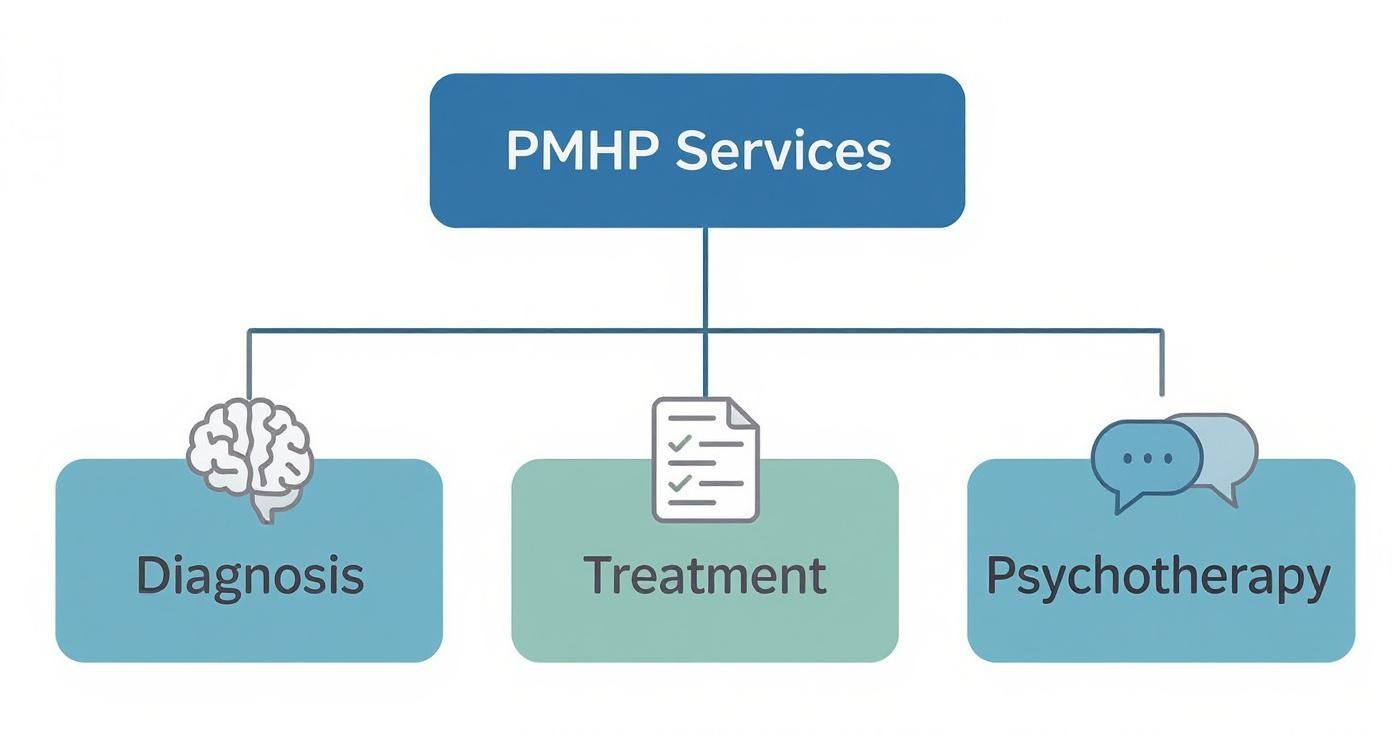
As you can see, they bring diagnosis, treatment (which includes medication), and therapy together into one cohesive approach.
Key Differences at a Glance
To cut through the confusion, let’s put these roles side-by-side. It’s much easier to see the differences when they’re laid out clearly.
Mental Health Professional Comparison Guide
This table breaks down the main focus, prescribing ability, and educational path for each type of professional.
| Professional Title | Primary Focus | Can Prescribe Medication? | Typical Education |
|---|---|---|---|
| Psychiatric Mental Health Practitioner | Integrated care, combining medication management with therapy and diagnosis. | Yes, in all 50 states. | Master's or Doctoral Degree in Nursing (MSN or DNP). |
| Psychiatrist | Diagnosis, treatment, and medication management from a medical perspective. | Yes, in all 50 states. | Doctor of Medicine (MD) or Doctor of Osteopathic Medicine (DO). |
| Psychologist | Psychotherapy, psychological testing, and assessment. | No, in most states. | Doctoral Degree (PhD or PsyD). |
| Therapist (LCSW, LPC, MFT) | Psychotherapy (talk therapy), counseling, and skill-building. | No. | Master's Degree in Social Work, Counseling, or a related field. |
This comparison really highlights the unique space a psychiatric mental health practitioner fills. They have become an absolutely essential part of modern healthcare, particularly in bridging gaps in access to care.
A report from the Health Resources and Services Administration (HRSA) found that 123 million Americans live in areas without enough mental health providers. To meet this need, the number of nurse practitioners treating Medicare patients for psychiatric disorders skyrocketed by 162% between 2011 and 2019, while the number of psychiatrists actually declined.
This shift isn't just a trend; it's a direct response to a massive need for accessible, high-quality mental healthcare. You can discover more insights about the PMHNP career outlook on APEA.com.
Ultimately, choosing the right professional comes down to your individual needs. Are you looking for talk therapy, medication management, or a combination of both? Knowing the answer is the key.
How to Prepare for Your First Appointment
First off, just scheduling that initial appointment is a huge win. Seriously. It takes courage to take that step, so give yourself credit. It's completely normal to feel a bit jittery beforehand, but a little prep work can make all the difference, turning those nerves into a sense of readiness.
Think of this first meeting less like a test and more like the beginning of a partnership. Your practitioner’s main goal is simply to get to know you and understand your story—what you’ve been going through, in your own words. They'll likely ask about your symptoms, your health history (both personal and family), and what you're hoping to get out of treatment. The more open you can be, the faster they can start putting together a plan that truly fits you.
Organizing Your Thoughts Before You Go
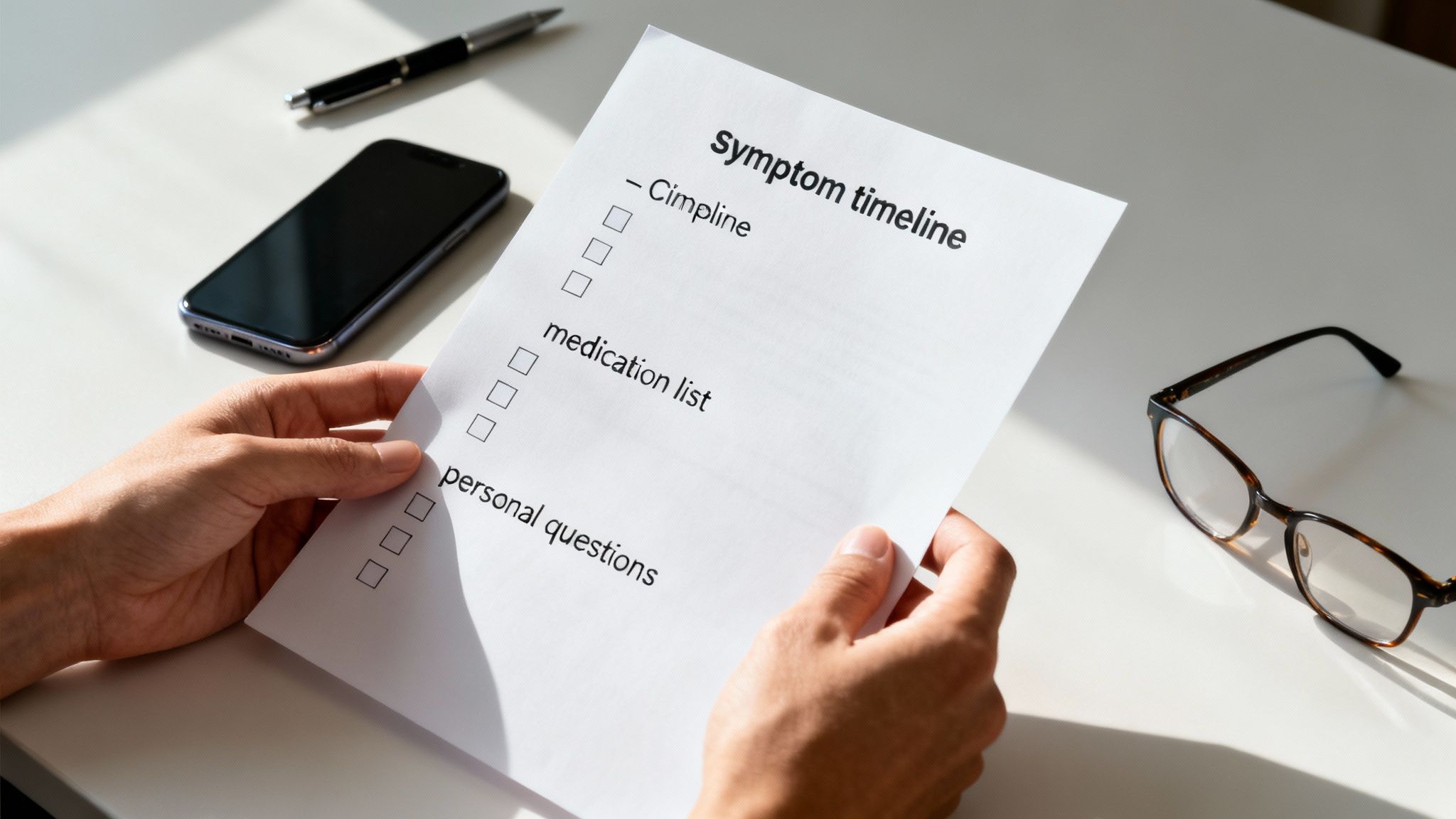
Walking in with your thoughts gathered can be a game-changer. When you're feeling anxious, it's easy to forget important details. Jotting a few things down beforehand ensures your provider gets the full picture right from the start.
Try making a few quick lists on your phone or a piece of paper:
- Symptom Timeline: When did you start feeling this way? What are the specific symptoms? Does anything seem to trigger them or make them feel more manageable?
- Medication List: Be sure to include everything you take. This means all prescriptions, over-the-counter meds like allergy pills, and even daily vitamins or herbal supplements.
- Your Personal Goals: What does "better" look like for you? Maybe it's getting a full night's sleep, having more motivation for work, or simply feeling less on edge in social situations.
- Questions for the Practitioner: This is your time, too! Don’t be shy. Ask about their treatment philosophy, what you can expect from different options, or how they typically work with patients.
This first appointment is absolutely a two-way street. You’re interviewing them just as much as they’re getting to know you. Your questions and goals are crucial for building a trusting relationship.
Building Confidence for an Open Conversation
The more prepared you feel, the easier it becomes to talk about personal and sometimes difficult topics. If you're looking for some pointers on how to phrase your thoughts, learning about how to talk about mental health with confidence can provide some great strategies for putting your feelings into words.
Taking these small steps transforms you from a passive patient into an active partner in your own care. You're not just showing up for an appointment; you're arriving ready to collaborate with a professional who is there to support you on your journey back to feeling like yourself.
Finding the Right Psychiatric Mental Health Practitioner
You've learned what a psychiatric mental health practitioner does—now comes the important part: finding the right one for you. This shouldn't feel like a chore. The goal is to connect with a provider and a practice where you feel seen, heard, and supported from the moment you reach out.
Taking that first step often means looking for someone local who truly understands how to integrate different aspects of your care. Here at reVIBE Mental Health, our whole mission is built around making excellent mental healthcare accessible. When you're ready to get help, the last thing you need is a long wait or a long drive.

Find a reVIBE Location Near You!
We currently have five locations for your convenience. (480) 674-9220
reVIBE Mental Health – Chandler
3377 S Price Rd, Suite 105, Chandler, AZ
reVIBE Mental Health – Phoenix Deer Valley
2222 W Pinnacle Peak Rd, Suite 220, Phoenix, AZ
reVIBE Mental Health – Phoenix PV
4646 E Greenway Road, Suite 100, Phoenix, AZ
reVIBE Mental Health – Scottsdale
8700 E Via de Ventura, Suite 280, Scottsdale, AZ
reVIBE Mental Health – Tempe
3920 S Rural Rd, Suite 112, Tempe, AZ
Navigating Insurance and Booking Your Appointment
It’s completely normal to have questions about insurance and what it takes to book that first appointment. These practical steps can sometimes feel like the biggest roadblocks, but a good practice will help you clear them without any stress.
Getting started should be straightforward and transparent. A quality mental health practice will have a team ready to help you figure out your insurance benefits and schedule your first visit without any hassle.
Our team at reVIBE Mental Health is well-versed in handling insurance plans. When you call, we can help you understand what your plan covers for services with a psychiatric mental health practitioner. We accept most major insurance plans because we believe quality care should be affordable.
Booking your first visit is just as easy. Our team will work with you to find a provider who aligns with your specific needs and personality. To get started, you can explore our locations and choose your preferred reVIBE clinic online.
Frequently Asked Questions About PMHPs
Even with a better understanding of what a psychiatric mental health practitioner does, it's completely normal to have some practical questions before picking up the phone. Let's walk through some of the most common things people ask, so you can feel confident taking the next step.
How Long Will I Have to Wait for an Appointment?
This is a big one. Wait times can really vary depending on where you are and how many providers are available. Here at reVIBE Mental Health, getting you seen quickly is a top priority. We know that when you've decided to seek help, waiting weeks for an open slot is the last thing you need.
The fastest way to find out our current availability is to give our central scheduling line a call at (480) 674-9220. Our team is great at finding the very next opening that works for you across any of our five Valley locations.
Does Insurance Cover Appointments with a PMHP?
Yes, absolutely. The vast majority of major insurance plans cover services provided by a psychiatric mental health practitioner. Their care is a standard, essential part of mental healthcare, viewed just like seeing a psychiatrist or a therapist.
Of course, the specifics—like your copay or deductible—will always depend on your particular plan. To get a clear picture, you have two simple options:
- Call your insurance company directly and ask about your specific mental health benefits.
- Give our office a ring. Our team can help you verify your benefits before you even come in for your first visit.
Do I Need a Referral to See a Practitioner?
This really comes down to your insurance policy. Many PPO plans give you the freedom to book an appointment directly, no referral from your primary care doctor needed. It makes getting help that much easier.
However, some HMO plans do require a referral before they’ll cover a specialist visit. The best bet is always to check with your insurance provider first to be sure. If you're not sure how to navigate that, our staff at reVIBE is always happy to help point you in the right direction.
Your journey to feeling better starts with a single step. The compassionate team at reVIBE Mental Health is here to provide the support you deserve with a plan built just for you. Start your journey today.