
It's completely normal to feel a little nervous about your first psychiatric evaluation. The good news is, it’s not a test you can pass or fail. Think of it less like an exam and more like a structured, guided conversation.
The entire point is for a mental health professional to get a clear, honest picture of what you're going through—your challenges, your strengths, and your personal story. This helps them understand your well-being so they can work with you to create the right treatment plan.
Your First Step Toward Feeling Better
Walking into a mental health clinic for the first time can feel like a huge, intimidating step, but this initial meeting is the cornerstone of your entire journey. It's like you and your clinician are creating a detailed map of your mental and emotional landscape together. You’re charting the territory to figure out where you are right now and mapping out the best route to get you where you want to be.
This first meeting really serves three main purposes:
- Building a Partnership: This is where you start to build a therapeutic relationship based on trust and open communication.
- Gathering Information: It’s a chance for your provider to learn about your symptoms, your history, and what’s going on in your life.
- Clarifying Your Goals: You’ll work together to define what "feeling better" actually looks like for you.
So, What's the Real Goal of the Evaluation?
At its core, the main goal is to go from feeling uncertain and confused to having a clear understanding of what's happening. A skilled clinician uses this session to carefully sort through different conditions that can have very similar symptoms. For example, constant worry might point to an anxiety disorder, but it could also be linked to a mood disorder or even an underlying medical issue.
A psychiatric evaluation is the bedrock of good mental health care. It takes your personal experiences and puts them into a structured framework, giving the clinician the insights needed to create a precise and effective plan just for you.
By looking at your complete history—medical, social, and psychological—the clinician starts to connect the dots and form a diagnosis. This isn't about sticking a label on you. It's about using a shared, evidence-based language that points toward the most effective treatments.
At reVIBE Mental Health, our team is here to guide you through this process. You can learn more about the specific role of a psychiatric mental health practitioner and see how they support patients from the first assessment all the way through ongoing care. Ultimately, the evaluation is meant to empower you with answers and give you a clear, actionable path forward.
What Really Happens During a Psychiatric Evaluation?
Think of your first psychiatric evaluation less like a test and more like a structured conversation—a collaborative effort to understand what's been going on. The goal is to piece together the full story of you. To do that, the clinician gathers information from a few different angles to see the whole picture, not just a single, out-of-context snapshot.
Every question asked has a purpose: to help your provider connect the dots between your life experiences and your current struggles. It’s all about building a roadmap that leads to a treatment plan that actually fits you.
This simple, three-step journey shows how your first appointment moves from just talking about your experience to creating a clear, actionable plan.
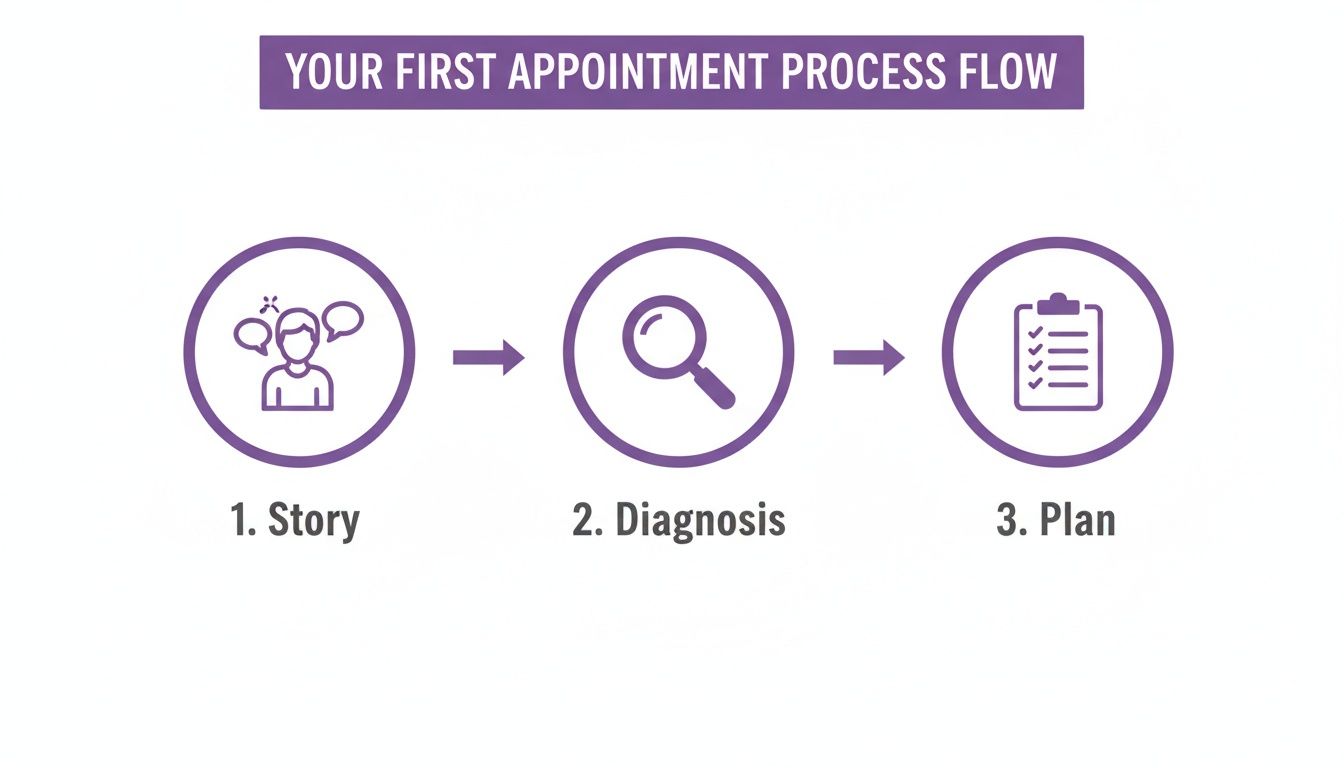
As you can see, the process is designed to turn your personal story into practical steps forward.
It Starts With Your Story: The Initial Intake
The first thing a clinician will likely ask is a straightforward question like, "So, what brings you in today?" This is your cue to share what's been on your mind. You get to tell your story, in your own words, about the symptoms or feelings that made you decide to get help.
There's no pressure to say the "right" thing. Whether you're wrestling with a persistent feeling of dread, can't seem to shake a low mood, or find it impossible to focus, this part of the conversation lays the foundation for everything else.
Zooming Out: Gathering Your Comprehensive History
Once the clinician understands your immediate concerns, they'll gently zoom out to get a wider view of your life. This isn't about being nosy; it’s about finding important context and patterns that can help explain what you're feeling now. This part of the discussion usually covers a few key areas:
- Psychiatric History: Have you ever seen a therapist or psychiatrist before? What helped? What didn't?
- Medical History: Your physical and mental health are two sides of the same coin. The clinician needs to know about any ongoing medical conditions, medications you're taking, or major health events you've had.
- Family History: Because some mental health conditions can run in families, knowing a bit about your family's health history can provide valuable clues.
- Social History: This is a broad category that includes your work, school, relationships, and who you lean on for support. Our environment has a huge impact on our well-being.
Over the last 20 years, the psychiatric evaluation process has become much more consistent across North America. Most clinics now follow a structured, five-to-six step framework. The core of this is the diagnostic interview, which typically lasts between 1 to 1.5 hours, where the clinician gathers the detailed history needed for an accurate assessment. You can learn more about this standard in this overview of psychological evaluations.
The "How You Are" Part: The Mental Status Exam (MSE)
As you're talking, the clinician will naturally be observing a few things in a process called the Mental Status Examination (MSE). This sounds way more formal than it is. It's really just a professional way of noticing your mood, how you're expressing yourself, and your thought patterns during the conversation.
It's a bit like when a car mechanic listens to an engine to diagnose a problem. While you're sharing your story, the clinician is paying attention to things like:
- Appearance and Behavior: Your general demeanor and body language.
- Mood and Affect: How you say you feel versus the emotions you express.
- Speech: The pace, volume, and clarity of how you talk.
- Thought Process: How you organize and connect your thoughts.
- Cognition: Your memory, attention, and general awareness.
This isn't a test you can pass or fail. It’s simply another layer of information that helps the clinician get a more complete and objective sense of what you're experiencing.
Adding Data to the Story: Screening Tools and Questionnaires
Finally, don't be surprised if you're asked to fill out a questionnaire or two. These are standardized screening tools that ask specific questions about symptoms related to things like anxiety, depression, or trauma.
These tools are incredibly useful because they provide objective data to complement the conversation. A score on a depression screener, for instance, can help measure the severity of your symptoms. It gives both you and your clinician a baseline to track progress over time. It's just one more piece of the puzzle to make sure your diagnosis and treatment plan are spot-on.
Common Questions Your Clinician Will Ask
Knowing what kind of questions to expect can really help take the edge off before a psychiatric evaluation. It’s not an interrogation or a test you can fail. Think of it more like a structured conversation—a way for the clinician to get to know your world and understand what you’re going through.
The questions are just tools to help them build a complete, accurate picture of your health. To make it feel less like a random string of questions, it helps to know that they usually fall into a few key categories. The clinician isn't trying to be nosy; they're just piecing together a puzzle, and every answer you give helps them see the full image and map out the best way forward.
Questions About Your Symptoms and Concerns
This is almost always where the conversation will start. The clinician needs to hear, in your own words, what’s been going on. The goal here is to get into the nitty-gritty of the challenges that led you to make the appointment in the first place.
You’ll likely hear questions like:
- What specific feelings or symptoms have been bothering you?
- When did you first start noticing these changes?
- How often do these symptoms pop up, and how long do they usually stick around?
- Are there specific situations, times of day, or triggers that seem to make things worse?
- On the flip side, is there anything you've found that seems to make them better?
- On a scale from 1 to 10, how much are these symptoms getting in the way of your daily life?
These questions give your provider a solid grasp of the nature, frequency, and severity of what you're dealing with, which is the foundation for any diagnosis.
Exploring Your Mental and Medical History
After digging into your current symptoms, the clinician will zoom out to get a bird's-eye view of your broader health history. Your past experiences, both mental and physical, provide crucial context for what's happening now. This history helps them spot patterns and rule out other things that could be causing your symptoms.
Expect questions along these lines:
- Have you ever been diagnosed with a mental health condition or tried therapy before?
- If you have, what treatments did you try? What worked for you, and what didn't?
- Does anyone in your immediate family have a history of mental health conditions?
- Do you have any chronic medical conditions, like thyroid issues or diabetes?
- What medications, supplements, or vitamins are you currently taking?
Your physical and mental health are deeply intertwined. A 2022 report noted that 23.1% of adults in the U.S. experience some form of mental illness each year, which shows just how important a thorough assessment is for getting the right care.
Understanding Your Daily Life and Environment
Finally, the evaluation will touch on your day-to-day life—your routines, relationships, work, and overall lifestyle. Your environment and daily habits play a huge role in your well-being. This part of the conversation helps the clinician understand the world you navigate every day and the support systems you have (or don't have).
The aim of these questions isn't to judge your lifestyle but to understand the context in which your symptoms occur. Your relationships, work stress, and even sleep habits are all important pieces of the puzzle.
Here are some common questions in this area:
- How would you describe your current sleep patterns?
- Have you noticed any big changes in your appetite or weight?
- Do you use alcohol, nicotine, caffeine, or any other substances?
- What's your work or school situation like? How is it going?
- Who do you have in your corner for support, like family or friends?
To give you a clearer idea of what to expect, here is a quick breakdown of the types of questions a clinician might ask.
Example Questions During a Psychiatric Evaluation
This table breaks down common questions by their area of focus to help you feel more prepared for the conversation.
| Area of Inquiry | Example Questions |
|---|---|
| Presenting Concerns | "What brings you in today?" "Can you describe the main symptoms that have been bothering you?" |
| Symptom History | "When did you first notice these feelings?" "How have they changed over time?" |
| Symptom Severity & Impact | "On a scale of 1-10, how distressing are these symptoms?" "How is this affecting your work, school, or relationships?" |
| Psychiatric History | "Have you ever been in therapy or seen a psychiatrist before?" "What past treatments have you found helpful or unhelpful?" |
| Medical History | "Do you have any ongoing medical conditions?" "Are you taking any medications, vitamins, or supplements?" |
| Family History | "Does anyone in your family have a history of mental health conditions?" |
| Social History & Lifestyle | "Can you tell me about your living situation?" "How is your sleep and appetite?" "Do you use alcohol or other substances? If so, how often?" |
| Risk Assessment | "Have you had any thoughts of harming yourself or others?" |
Remember, there are no "right" or "wrong" answers here. Being as open and honest as you can is the best way to make sure your clinician gets the information they need to truly help you. Every question they ask is one step closer to creating a plan that will help you feel better.
Understanding Your Diagnosis and Treatment Plan
After you’ve shared your story—your history, symptoms, and what daily life feels like—the next step is putting all the pieces together. This is the part where your provider uses their clinical expertise to make sense of what you're going through, which often leads to a diagnosis and, most importantly, a plan to help you feel better.
Think of this process less like getting a label and more like getting a roadmap. It’s about understanding where you are right now so you can get to where you want to be. It's a true partnership, where the clinician explains what they're seeing and you work together to build a plan that feels right for your life.

How a Diagnosis is Formed
To make sure diagnoses are consistent and accurate, clinicians use a guide called the Diagnostic and Statistical Manual of Mental Disorders (DSM-5). It’s essentially a detailed guidebook for mental health conditions, outlining the specific criteria—like symptoms, how long they’ve lasted, and how they impact your life—for each one.
Your provider will carefully listen to your experiences and compare them to these established criteria. For example, a diagnosis of major depressive disorder isn't just about feeling sad; it requires looking for a persistent low mood or loss of interest, plus other specific symptoms like changes in sleep or appetite, for at least two weeks. This structured approach ensures your diagnosis is based on solid, evidence-based standards, not just a hunch.
Crafting Your Personalized Treatment Plan
A diagnosis isn’t the end goal—it’s the starting point for your treatment plan. And this plan is never a one-size-fits-all solution. It’s a strategy built entirely around you: your needs, your strengths, and your personal goals. The best plans are always collaborative, which means your input is crucial.
Your unique treatment plan might include a mix of different approaches:
- Psychotherapy (Talk Therapy): This is where you work with a therapist to explore your thoughts and feelings, build coping skills, and shift behaviors. It could be something like Cognitive Behavioral Therapy (CBT) or a more specialized method. For instance, EMDR therapy for anxiety has become a powerful tool for people working through trauma.
- Medication Management: For some conditions, medication can make a huge difference in managing symptoms and helping you feel like yourself again. If this seems like a good option, your provider will walk you through the pros and cons of different medications so you can decide together what’s right for you.
- Lifestyle Adjustments: You’d be surprised how much simple, daily habits can impact your mental health. Your plan might include practical advice on improving sleep, incorporating exercise, making nutritional changes, or trying stress-reduction techniques like mindfulness.
If your evaluation points to a condition like ADHD and your treatment plan includes medication, there are resources to help you navigate that process. You can find helpful information on finding medications like Adderall online to ease the search.
Your treatment plan is a living document. It’s meant to be flexible. As you make progress and your needs change, the plan can and should change right along with you.
Ultimately, the diagnosis and treatment plan are tools to empower you. They bring clarity to what you've been experiencing and provide a clear, evidence-based path forward. This is the moment where "what's wrong with me?" starts to become "here's how we move forward."
How to Prepare for Your Evaluation
Knowing what happens in a psychiatric evaluation is half the battle, but doing a little prep work can make all the difference in feeling confident and at ease. Taking a few simple steps beforehand helps you organize your thoughts and make the most of your time with the clinician.
This isn't like studying for a test. It's more about making sure you don't forget the important stuff once you're in the room. It’s totally normal to get a little nervous, and that’s when key details can slip your mind.
Create a Simple Checklist of Items to Bring
Getting the practical stuff sorted out ahead of time is a great way to lower any day-of stress. That way, you can focus on the conversation, not on whether you grabbed the right paperwork.
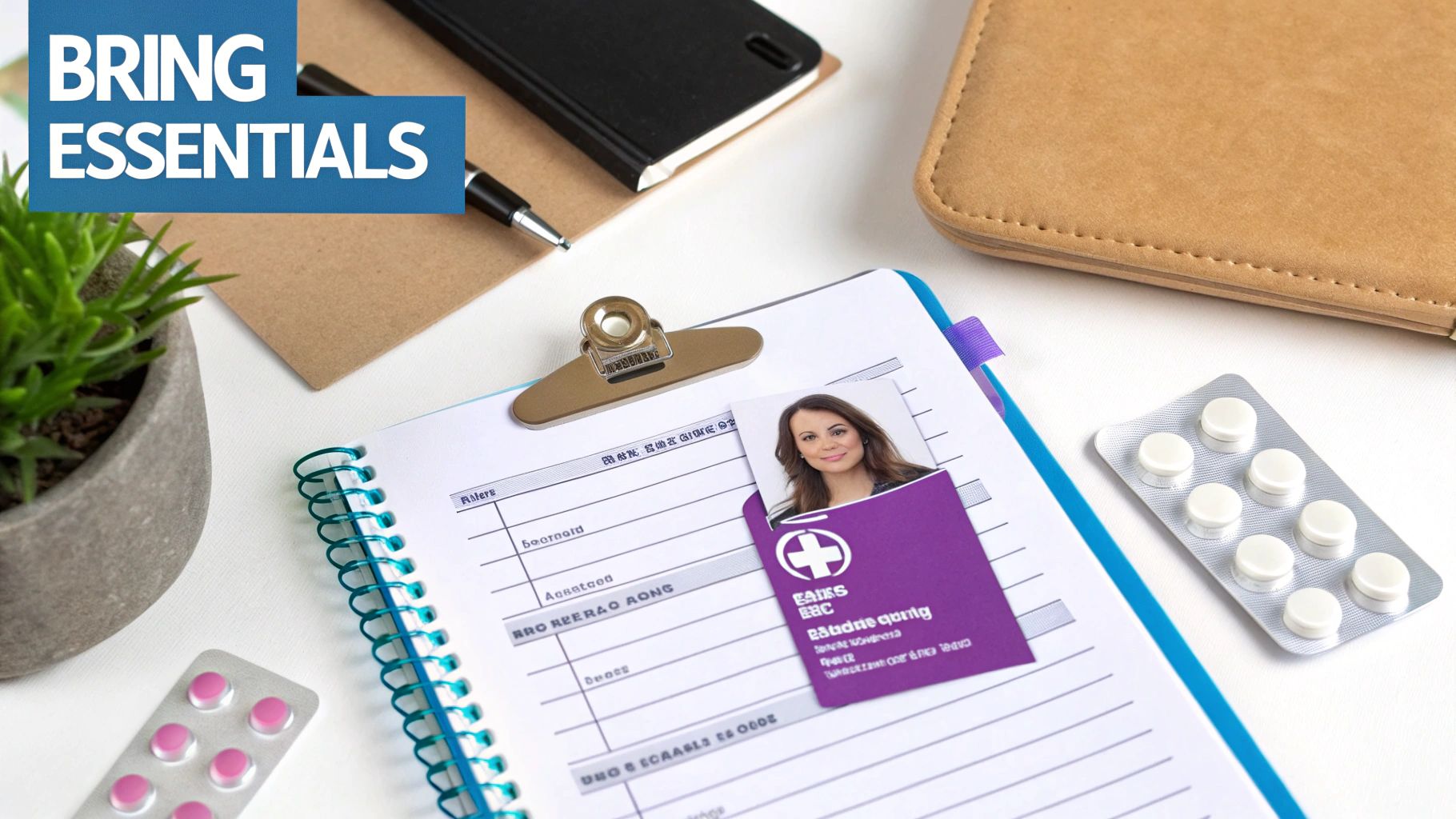
Here’s a quick checklist of what to gather:
- Identification: Your driver's license or another government-issued photo ID.
- Insurance Card: Having this ready makes check-in a breeze.
- List of Medications: This one is crucial. Write down everything you take—prescriptions, vitamins, and supplements—along with the dosage and how often you take them. This is vital for your safety.
- Medical History Notes: Jot down any major health conditions, previous surgeries, and the contact info for your other doctors.
Organize Your Thoughts and Questions
The best prep work happens before you even leave the house. Take some quiet time to think about what you really want to talk about. Jotting things down can help you clarify your thoughts and make sure you hit all your key points.
Try making a few short lists:
- Your Main Concerns: What are the top three to five symptoms or struggles that led you to make this appointment?
- Key Examples: Can you think of a specific time a symptom felt especially difficult? A real-world example gives the clinician a much clearer picture.
- Questions for the Clinician: This is your time, too! What do you want to ask? Maybe you're curious about their approach, potential diagnoses, or what treatment might look like.
Remember: There are no "right" or "wrong" answers here. The most important thing you can bring into the room is honesty. Your open, truthful perspective is the key to getting an accurate assessment and a treatment plan that actually works for you.
Part of preparing is also understanding the process for specific conditions. For example, a practical guide on how to get an ADHD diagnosis in the UK offers a great look at the steps involved for that particular evaluation.
For more information and support, feel free to explore the articles on our reVIBE Mental Health resources page. Taking these simple steps helps build a strong foundation for a productive partnership with your provider, right from the very first meeting.
So, What Comes After the Evaluation?
Think of your first psychiatric evaluation not as a finish line, but as the starting line. It's an incredibly important first step, but the real work—and the real progress—begins with what comes next. This initial meeting is all about gathering the information needed to chart a course forward, and you and your clinician will walk that path together.
It all starts with your follow-up appointment. This is where you'll sit down with your provider and go over everything they learned. They'll share their clinical perspective, explain any diagnosis they may have reached, and connect the dots for you, showing you how your conversations and assessments led to their conclusions.
Creating Your Treatment Plan, Together
This follow-up is a two-way street, not a lecture. Your clinician will lay out a recommended treatment plan, but it’s tailored specifically to you—your life, your symptoms, and what you want to achieve. This is your time to dig in with questions. Ask anything and everything you need to feel clear and confident about the plan.
And remember, a treatment plan isn't carved in stone. It's more like a living roadmap that we can and will adjust as you progress and your needs change.
A plan might involve a few different elements, such as:
- Therapy: Your clinician might recommend a specific type of therapy, like Cognitive Behavioral Therapy (CBT) or Eye Movement Desensitization and Reprocessing (EMDR), that's well-suited for what you're experiencing.
- Medication: There might be a conversation about whether medication could be a helpful tool. If so, you'll discuss the pros, cons, and any potential side effects so you can make an informed choice.
- Lifestyle Changes: Sometimes, small, practical adjustments to things like sleep habits, nutrition, or stress-management can make a surprisingly big difference.
The best treatment plans are always built on trust and teamwork. Your voice is the most important one in the room, and the goal is to create a plan that truly feels right for you.
Taking the Next Step
Once you and your clinician agree on the plan, you can start putting it into action. This might mean scheduling your first therapy session, starting a medication, or a combination of both. Whatever the first step is, you won't be doing it alone. The focus shifts from assessment to active progress, all with the steady support of your team.
This whole process is about building a real, lasting relationship with professionals who are genuinely invested in seeing you thrive. If you feel ready to take this step, our reVIBE Mental Health team is here to guide you. We have five convenient locations in Chandler, Phoenix Deer Valley, Phoenix PV, Scottsdale, and Tempe.
Give us a call at (480) 674-9220 to schedule your appointment and get started.
Frequently Asked Questions
Even with a roadmap in hand, it's natural to have a few more questions pop up before your first appointment. That's perfectly okay. Let's walk through some of the most common things people wonder about before their psychiatric evaluation.
How Is a Psychiatric Evaluation Different From a Therapy Session?
It's a great question, and the distinction is key. Think of it this way: the psychiatric evaluation is like getting the blueprint for a house, while therapy sessions are the actual process of building it.
The evaluation is typically a one-time deep dive. It’s where the clinician gathers a ton of information to get a complete picture of what's going on, arrive at a diagnosis, and outline an initial treatment plan. It’s the foundational step.
Therapy, on the other hand, is the ongoing work you do based on that blueprint. It’s the weekly or bi-weekly process of talking with a therapist, developing coping skills, working through challenges, and making real, tangible progress over time.
Will I Get a Prescription on My First Visit?
Sometimes, but not always. If the clinical picture is very clear and there's an immediate need, a provider might discuss and prescribe medication during that first meeting. But this is always done with incredible care.
More often, clinicians prefer to wait until a follow-up visit. This gives them time to thoughtfully review all the details from your evaluation and allows you time to process the information without feeling rushed. Deciding on medication is a partnership, and it’s a conversation that you and your provider will have together.
What if I Feel Uncomfortable Answering a Question?
Your comfort is the absolute top priority. You are always in the driver's seat. If a question touches on something you're not ready to discuss, it is 100% okay to say, "I'm not comfortable talking about that yet."
A good clinician will immediately respect that. They understand that trust isn't built in an hour; it’s earned over time. Their goal is to create a safe space where you feel supported, not pressured. They'll meet you where you are.
The most important part of your first evaluation is establishing a foundation of trust. Your provider is there to support you, not to judge you, and respecting your boundaries is a key part of that commitment.
Is a Psychiatric Evaluation Covered by Insurance?
In most cases, yes. Psychiatric evaluations are considered essential medical services and are typically covered by health insurance plans, just like a visit to any other medical specialist.
At reVIBE Mental Health, we work with most major insurance carriers to make sure care is accessible. The best first step is to call the member services number on the back of your insurance card to double-check your specific mental health benefits. Our team is also here to help you verify your coverage before your appointment so there are no surprises down the road.
Find a reVIBE Location Near You!
Taking that first step might feel like the hardest part, but it's a true sign of strength. If you're ready to get some clarity and start feeling better, the team at reVIBE Mental Health is here to support you with compassionate, expert care.
We currently have five locations for your convenience. (480) 674-9220
-
reVIBE Mental Health – Chandler
3377 S Price Rd, Suite 105, Chandler, AZ -
reVIBE Mental Health – Phoenix Deer Valley
2222 W Pinnacle Peak Rd, Suite 220, Phoenix, AZ -
reVIBE Mental Health – Phoenix PV
4646 E Greenway Road, Suite 100, Phoenix, AZ -
reVIBE Mental Health – Scottsdale
8700 E Via de Ventura, Suite 280, Scottsdale, AZ -
reVIBE Mental Health – Tempe
3920 S Rural Rd, Suite 112, Tempe, AZ
You can also Find a reVIBE Location Near You and learn more about how we can help you schedule an appointment today.