

When you decide to start couples therapy, you’re not just signing up for a series of conversations. You’re committing to learning a new way of being together—a language built on safety, understanding, and real communication. Those first few sessions are all about laying that foundation. Think of it as a structured, fact-finding process with a neutral guide who helps you both tell your story, spot the patterns that keep you stuck, and map out a path toward a better future.
What to Expect in Your First Couples Therapy Session
Walking into that first appointment can feel nerve-wracking. I get it. But the goal of these initial meetings isn't to dive into the biggest fight you've ever had. It's simply to create a shared understanding of what's going on.
It’s less of a confrontation and more of a consultation where the "client" is the relationship itself. A good therapist’s first job isn’t to take sides, fix, or judge—it’s to listen and learn. They're there to help you lay the groundwork by exploring the history of your relationship, the pain points that brought you to their door, and what each of you truly hopes for.
Creating a Safe, Neutral Space
Right from the start, the therapist's number one job is to make the room feel emotionally safe. So many couples show up feeling defensive, misunderstood, or just plain tired of having the same fight over and over. The whole session is structured to make sure you don't just replay that argument in a different setting.
To do this, the therapist will set some ground rules for how you talk to each other. These aren’t meant to be rigid or restrictive; they’re there to keep the conversation moving forward productively.
Common guidelines often include:
- One person speaks at a time: It sounds simple, but this rule alone ensures both of you get the floor without being cut off.
- Using "I" statements: Shifting from "You always do this…" to "When that happens, I feel…" is a game-changer. It helps you express your own feelings without putting your partner on the defensive.
- Calling a timeout: Your therapist will help you see when things are getting too heated and guide you to take a breather before the conversation goes off the rails.
This structured space is what allows you to finally talk about the hard stuff without it blowing up. You start learning how to talk about the problem instead of just fighting from within it.
A skilled therapist isn't a referee there to decide who's right and who's wrong. They're more like a choreographer, helping you both see the negative dance you’ve been stuck in so you can learn a new, more connected one together.
The Intake and Assessment Phase
Those first few sessions are all about gathering information. Your therapist needs the full picture before they can help you build a solid plan. This is often called the intake or assessment phase and usually involves both joint and individual meetings.
- Joint Sessions: You'll spend most of the initial time together as a couple. You'll talk through your relationship's story—from the day you met and the good times, to the big life events and how the current conflicts started to take shape.
- Individual Sessions: It's also really common for the therapist to schedule one separate session with each of you. This isn't about sharing secrets or getting the "real story." It’s an opportunity for the therapist to understand your personal history, your unique perspective, and your individual goals without the pressure of your partner being in the room. It gives them a 360-degree view of the dynamic.
This entire process helps the therapist pinpoint the core negative cycle—that frustrating, recurring pattern of interaction that fuels disconnection and hurt. For many couples, just seeing and naming this cycle is a huge breakthrough. It shifts the problem from "you" or "me" to "us," and you can finally start working on it as a team. From there, you'll set clear, shared goals for the relationship you both want to create.
Your Couples Therapy Journey at a Glance
Navigating couples therapy can feel like venturing into the unknown, but the process is actually quite structured. Each phase builds on the last, guiding you from understanding the problem to building lasting change.
This table breaks down what you can typically expect at each stage.
| Therapy Phase | What to Expect | Primary Goal |
|---|---|---|
| 1. Intake & Assessment | Joint and individual sessions to discuss your relationship history, current conflicts, and personal backgrounds. | To identify the core negative cycle and establish clear, collaborative therapy goals. |
| 2. De-escalation & Skill Building | Learning to recognize your conflict pattern in the moment and practicing new communication tools to stop fights before they start. | To stop the destructive cycle and create enough emotional safety to have vulnerable conversations. |
| 3. Reconnection & Repair | Exploring the deeper emotions and unmet needs that drive your cycle. This is where you practice sharing vulnerability and responding with empathy. | To heal past hurts, rebuild trust, and create new, positive patterns of connection. |
| 4. Consolidation & Maintenance | Reviewing your progress, creating a plan to handle future challenges, and solidifying the new, secure bond you've built. | To ensure your progress sticks and you feel confident navigating life's challenges as a team. |
Ultimately, this journey is about moving from a place of conflict to one of deep, secure connection. Knowing the roadmap can make the first step feel a lot less daunting.
Getting to Know Your Therapist’s Approach
Once you’re sitting in the therapist's office (or logged into the video call), you might be wondering, "Okay, so what’s the game plan here?" It's a great question. Couples therapy isn't just about talking and hoping for the best; a skilled therapist uses specific, well-researched methods to guide you.
Think of it like hiring a skilled contractor to fix a foundation. They don’t just start patching cracks randomly. They have a blueprint, they understand the structural principles, and they use specific tools to ensure the house is secure. Your therapist does the same for your relationship, using proven frameworks to help you rebuild and strengthen your connection.
Understanding these models helps you see the "why" behind their questions and exercises, turning you from a passive recipient into an active participant in your own healing.
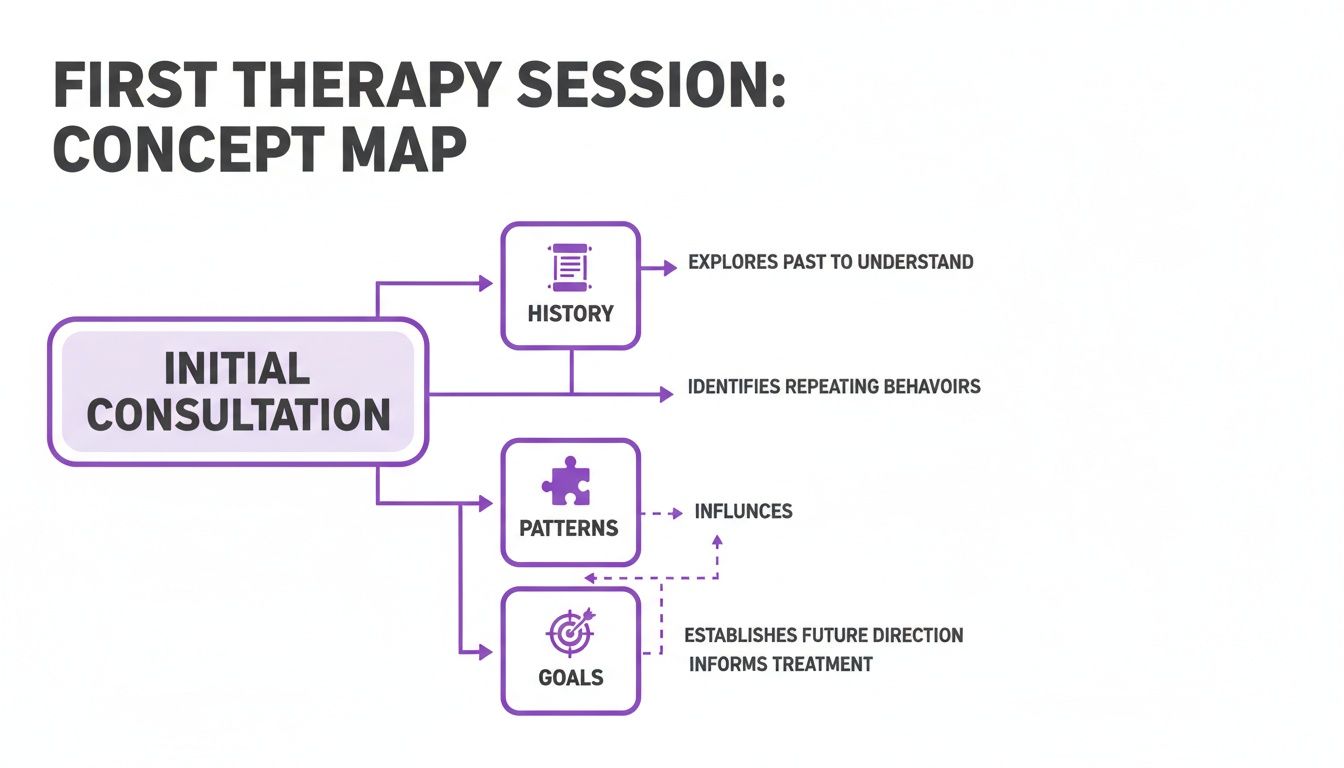
This map shows how the process isn't accidental. It’s a thoughtful exploration designed to create a solid foundation for real, lasting change. Let’s look at a few of the most common and effective approaches.
The Gottman Method
The Gottman Method is like getting a complete diagnostic workup for your relationship. Born from over 40 years of research observing thousands of real couples, this approach uses detailed assessments to pinpoint exactly where you’re strong and where you’re struggling.
Therapists using this model will guide you through exercises to build what Dr. John Gottman calls the "Sound Relationship House." It's all about strengthening your friendship, learning to manage conflict without causing damage, and creating a life of shared meaning. It’s a very practical, hands-on, skills-based approach.
Emotionally Focused Therapy (EFT)
If the Gottman Method is the diagnostic workup, Emotionally Focused Therapy (EFT) is about understanding the emotional music playing underneath your fights. This powerful approach zeroes in on the attachment bond between you and your partner. It uncovers the deep-seated feelings and needs that are actually driving those repetitive, negative cycles you get stuck in.
In EFT, the goal isn't just to change how you talk; it's to change how you feel with each other. The therapist helps you translate your anger or withdrawal into the raw emotion beneath it—the fear, the longing, the protest—so your partner can finally hear you. This process forges a new, more secure emotional bond.
EFT is so effective because it gets right to the heart of the matter. When you can finally voice your core needs and your partner can respond with genuine empathy, those old, destructive patterns start to lose their grip.
Cognitive-Behavioral Couples Therapy (CBCT)
Another incredibly useful approach is Cognitive-Behavioral Couples Therapy (CBCT). You can think of this as identifying and rewriting the unhelpful "scripts" that fuel your disagreements. CBCT helps you connect the dots between your thoughts, your feelings, and your actions.
For instance, if your partner is running late, does your mind jump to, "They don't respect me or my time"? That thought instantly triggers feelings of anger. CBCT gives you the tools to pause, challenge that automatic thought, and consider other possibilities. This simple shift can completely change the dynamic of your interactions.
Choosing a therapist with a clear, evidence-based approach really matters. Research shows that structured models like EFT and the Gottman Method see recovery or sustained improvement rates around 70–75%. Having a clear roadmap simply leads to more predictable, positive outcomes than less structured "talk therapy."
Ultimately, the best therapists don’t stick rigidly to one script. They often blend elements from different models to fit your unique situation as a couple. A great first step is simply to ask a potential therapist about the approaches they use. You can learn more about our team of therapists at reVIBE Mental Health and see how their expertise aligns with your needs. Finding someone whose style resonates with you is a huge part of a successful therapy experience.
What a Typical Therapy Session Actually Looks Like
So, what do you really do for an hour? A lot of people imagine an unstructured hour of venting or, even worse, a replay of the same fight they’ve been having at home. The reality is much more structured and productive. Think of it less as a fight club and more as a guided workshop for your relationship.
Your therapist isn't there to take sides or declare a winner. Their job is to act as a skilled facilitator—a sort of conversation coach. They slow things down, make sure both of you actually feel heard, and gently interrupt those old, tired patterns of blame and defensiveness that keep you both stuck. It's a space where you can finally say the hard things without the conversation immediately going off the rails.

The Anatomy of a Session
While every session is different, most follow a predictable rhythm. This structure isn't rigid; it’s designed to build on the progress from the week before and turn those "aha" moments into real, lasting change.
Here’s how a session usually unfolds:
- The Check-In: You’ll almost always start with a brief check-in. The therapist might ask how your week went, if anything major happened, or how you felt about your last session. This isn't just polite chatter; it sets the stage for the work you're about to do.
- Setting the Agenda: Together, you'll decide what to focus on. This is huge. It ensures the time is spent on what's most important to you, whether it's a fight from last night, a recurring issue that won't go away, or practicing a new skill.
- The Deeper Dive: This is the heart of the session. Your therapist will guide the conversation, helping you both dig underneath the surface-level conflict to get at the real emotions and unmet needs driving the disconnect.
- The Wrap-Up and Takeaway: The last 5-10 minutes are crucial. Your therapist will help summarize the key takeaways and usually give you a small, practical thing to work on before you meet again.
A therapist’s main role during a session is to translate. They help you hear the fear behind your partner’s anger or the loneliness behind their withdrawal, shifting the dynamic from adversaries to allies.
From Blame to Understanding
One of the most powerful shifts that happens in therapy is moving away from accusations and toward sharing what's really going on underneath. A good therapist is trained to see what’s happening beneath the surface and steer the conversation to a more honest place.
For instance, a common fight might start like this:
- The Accusation: "You never help with the kids. You just assume I'll handle everything!" While the feeling is valid, the words immediately put the other person on the defensive. Game over.
- The Therapist's Guidance: The therapist might gently intervene, asking something like, "When it feels like you're handling everything, what's the core feeling that comes up for you? What does that feel like in your body?"
- The Underlying Feeling: After a moment, the partner might be able to say, "I feel completely overwhelmed and alone. It makes me feel like we're not a team anymore, and that scares me."
See the difference? That second statement is something a partner can actually hear, connect with, and respond to with empathy. A lot of session time is also spent building practical tools, like learning how to improve active listening skills, which are fundamental to any healthy relationship.
The Role of Homework Between Sessions
The therapy session is where you learn the new moves, but the rest of the week is where you practice them. That's why therapists often suggest "homework." Don't worry, it's not graded. It's all about building new, healthier habits.
These assignments are always small and manageable. A therapist might suggest things like:
- Setting aside 10 minutes each night to talk with no screens allowed.
- Trying to use an "I feel…" statement just once when a tough emotion comes up.
- Making a point to notice and thank your partner for one small thing each day.
These simple practices are what bridge the gap between the therapy room and your real life. They help you integrate what you're learning so the breakthroughs you have in the session actually stick.
Setting Goals and Measuring Your Progress
Starting couples therapy without a clear destination is like hopping in the car for a road trip with no map. You’ll definitely go somewhere, but you might not end up anywhere you actually want to be. That's why one of the first and most important parts of the process is figuring out what "success" would even look like for you and your partner. It's all about turning those vague, heavy feelings of frustration into tangible, shared goals.
Therapy isn't just a place to vent; it’s a workshop for rebuilding your connection. Your therapist’s job is to act as a translator, helping you turn broad complaints into specific, measurable objectives. This gives your work together a real sense of direction and purpose.

From Vague Complaints to Concrete Goals
Most couples show up with feelings, not a game plan. They know things feel "off," or that they're stuck in the same old loop, but they can't quite put their finger on how to get out of it. A good therapist helps you build that path forward, together.
Take a classic example: "We just don't communicate anymore." It’s a real and painful feeling, but it’s not a goal. Your therapist will help you break that down into something you can actually do.
-
From: "We never talk."
-
To: "We will have a 15-minute, device-free conversation each evening just to reconnect."
-
From: "I don't trust them."
-
To: "We will define what transparency means for us and create clear, consistent agreements we can both stick to."
Making this shift from the abstract to the concrete is incredibly powerful. It gives you a clear target to aim for and an obvious way to know if you're hitting it. For many, a core goal is simply learning how to build trust in relationships again, creating a much stronger foundation to stand on.
The best therapy goals are always collaborative, specific, and realistic. The focus is on changing the dynamic—that invisible dance between you—not on "fixing" one person. This fosters a sense of teamwork and shared ownership over the future of your relationship.
How You Will Measure Progress
Progress in therapy is rarely a straight line up. Some weeks will feel like a massive breakthrough, and others might feel like you’ve slid backward. That’s completely normal. The key is to learn how to spot the small shifts in your dynamic, because that’s where the real change happens.
Your therapist will help you see and track these changes, focusing on new behaviors and different emotional responses.
What Progress Actually Looks Like:
- You de-escalate fights faster. You start noticing that arguments don’t spin out of control like they used to. You might even catch that old, negative cycle as it’s starting and consciously choose to do something different.
- You have more positive interactions. You find yourselves sharing more small moments of laughter, a quick hug, or a word of appreciation throughout the week.
- You feel heard and understood. Even when you still disagree, you can walk away from a conversation feeling like your partner truly listened to and respected your point of view.
- You get better at "repairing" after a conflict. When you do fight, you’re able to come back together afterward and fix the emotional disconnect much more quickly and effectively.
And this stuff works. Large-scale studies show that the average couple who goes through therapy is better off than 70%–80% of couples who don't. That’s a powerful outcome, on par with many other highly successful psychological treatments.
Ultimately, setting clear goals and learning to see your progress gives you a sense of control and hope. It creates a shared language for what you’re working toward and allows you to celebrate all the small, essential victories on the way to building a stronger, more resilient connection.
How Long Does Couples Therapy Usually Take?
One of the first, most practical questions every couple asks is, "So, how long is this going to take?" It’s a perfectly fair question. You’re committing time, money, and a whole lot of emotional energy, and you want to know what you’re signing up for.
While there’s no single answer that fits everyone, let’s get one thing straight: couples therapy isn't meant to be a life sentence. Think of it less like a never-ending conversation and more like an intensive training program for your relationship. The goal is to give you the tools you need to become your own relationship experts so that, eventually, you don’t need the therapist anymore.
Finding a Realistic Timeline
It helps to think about the therapy journey in phases. At the very beginning, you’ll probably meet with your therapist weekly. This frequency is on purpose—it helps you build momentum quickly and establish a strong, trusting connection with your therapist. It keeps the core issues front and center so you don't lose steam between sessions.
As you and your partner start getting the hang of new skills, like communicating without arguing or stopping a fight in its tracks, the rhythm of your sessions will likely change.
- The Intensive Start (Weekly): This is all about laying the groundwork and tackling the most urgent problems. Consistency here is the key to making real progress early on.
- Practicing and Refining (Bi-Weekly): Once you’re feeling more stable and confident, you might switch to meeting every other week. This gives you more breathing room to practice what you've learned in the real world.
- The Tune-Up (Monthly or As-Needed): Some couples like to schedule periodic check-ins, almost like a regular oil change for a car, just to make sure everything is still running smoothly and to fine-tune any lingering issues.
This isn’t a rigid schedule; it’s designed to flex and adapt to your progress. You get the most support when you need it most, and the therapist steps back as you gain your footing.
The length of therapy isn't just some random number. It's a direct reflection of how complex your issues are and, more than anything, how committed both of you are to doing the work—not just in the therapy room, but at home, too.
What Shapes the Timeline?
The exact number of sessions you'll need boils down to a few key things. For example, a couple doing premarital counseling to iron out communication habits will probably have a much shorter timeline than a couple working to rebuild trust after a major betrayal. Knowing what influences the duration can help you set realistic expectations from the start.
So, what does the research say? Studies give us a pretty good ballpark. Many couples attend a median of 10–12 sessions, with most reporting significant improvements within 12–20 sessions. In fact, a major review of different studies found that about two-thirds of couples felt their relationship got better in 20 sessions or less. You can discover what clinical studies say about therapy effectiveness to get a deeper look at the data.
But for more deep-seated, long-term issues—the kind of negative cycles that have been running for years—therapists will often suggest a commitment of at least 3–12 months to create change that actually sticks.
Ultimately, how long you're in therapy is a collaborative decision made by you, your partner, and your therapist, all focused on getting you to the goals you set together.
Find a reVIBE Location Near You!

Understanding the roadmap of couples therapy is one thing; actually taking the first step is where the real change begins. Deciding to get help isn't a sign of failure—it's a powerful act of commitment to your relationship's future. And you don't have to walk that path alone.
We currently have five locations for your convenience. (480) 674-9220
- reVIBE Mental Health – Chandler
3377 S Price Rd, Suite 105, Chandler, AZ - reVIBE Mental Health – Phoenix Deer Valley
2222 W Pinnacle Peak Rd, Suite 220, Phoenix, AZ - reVIBE Mental Health – Phoenix PV
4646 E Greenway Road, Suite 100, Phoenix, AZ - reVIBE Mental Health – Scottsdale
8700 E Via de Ventura, Suite 280, Scottsdale, AZ - reVIBE Mental Health – Tempe
3920 S Rural Rd, Suite 112, Tempe, AZ
Feel free to explore each of our Arizona therapy locations to find the center that’s right for you. Your journey can start today.
Your Top Questions About Couples Therapy, Answered
Even with a clear roadmap of what to expect, you probably still have some questions floating around. That’s completely normal. We often hear concerns about fairness, confidentiality, or what to do if one partner is dragging their feet.
Getting these questions answered upfront can make the whole idea of therapy feel less intimidating and help you walk into that first session with a bit more confidence.
What If My Partner Doesn’t Want to Go?
This is easily one of the most common challenges couples run into. Often, the best way forward is all in how you frame the conversation. Try to make it about "us" instead of "you."
Think of it less as a place to fix what’s broken and more as a workshop to build a stronger team. You could say something like, "I think we could both learn some new tools to help us communicate better."
Sometimes, just suggesting a single introductory session can feel less daunting. Pitch it as a low-commitment "test drive" to see if you both like the therapist and the process. Once a reluctant partner experiences the neutral, supportive environment for themselves, their fears often fade away.
Is the Therapist Going to Take Sides?
A good couples therapist isn’t there to be a judge or a referee. Their client isn't you or your partner; their client is the relationship itself. Their job is to stay neutral and help you both see the dance you’re doing together.
Therapists are trained to see and validate both of your perspectives, even when they seem to be in direct opposition. The goal is never to figure out who’s right and who’s wrong. It’s to identify the negative loop you're both stuck in and guide you toward creating a new, healthier one.
Think of the therapist as a translator for your relationship. They don't choose which language is better; they help you both understand each other so you can have a meaningful conversation. Their loyalty is to clear communication and mutual understanding, not to a single person's agenda.
Is Everything We Talk About Confidential?
Absolutely. Therapists are bound by strict legal and ethical codes of confidentiality. But in couples work, there’s a slight twist you should know about. The therapist holds confidentiality for the couple as a single entity.
This means what’s said in a joint session is kept private from the outside world, but it’s not kept private from each other. In fact, most therapists have a "no-secrets" policy. If you share something significant in a one-on-one session, they generally will not keep that secret from your partner, as it would destroy the trust needed for therapy to succeed.
The only exceptions are legally mandated ones, like reporting imminent risk of harm to yourself or others. For a more detailed breakdown, you can find answers in our couples therapy FAQ page.
Could Therapy Actually Make Things Worse or Lead to a Breakup?
Therapy often feels tough at first because you’re finally talking about the issues you’ve been sweeping under the rug. It's totally normal for things to feel a bit more intense before they start to get better. Honestly, that’s usually a sign that you’re finally getting to the heart of the matter.
While the vast majority of couples see real improvement, therapy also provides clarity. For a small number of couples, that clarity might lead to a shared decision that the healthiest path forward is to separate.
When this happens, therapy can be an incredible asset, helping the couple part ways respectfully and with minimal conflict. This is also considered a successful outcome, because the goal is always to find the healthiest result for everyone involved, whatever that may look like.
At reVIBE Mental Health, we understand that starting this journey comes with questions. Our compassionate team is here to provide answers and create a welcoming space where you and your partner can find your strength, together. Find out more about how we can support your relationship by visiting us at https://revibementalhealth.com.