
The absolute best time to start marriage counseling is before you think you need it. Think of it less like a trip to the emergency room and more like a regular check-up for your relationship. When you first notice those persistent, nagging issues, that's your cue.
Treating these early problems is a sign of strength and a deep commitment to each other, not an admission of failure. It's like seeing the check engine light come on in your car—you wouldn't wait for the engine to blow up to take it to the mechanic, would you?
Recognizing the Early Warning Signs in Your Relationship
So many couples wait until their relationship is on life support before they even consider therapy. By that point, years of resentment and hurt have often built up, turning what could have been a tune-up into major reconstructive surgery. The truth is, the most successful couples are the ones who treat counseling as preventative maintenance, not a last-ditch effort.
When you approach therapy as a way to build your relationship toolkit, you can tackle small disagreements before they snowball into huge, recurring fights. It's all about learning how to communicate better and connect on a deeper level while the stakes are still low. This mindset shift changes everything, turning counseling from a scary last resort into a powerful act of partnership.
Is It a Rough Patch or a Red Flag?
It can be tough to tell the difference between the normal ups and downs of a long-term relationship and a real problem. All healthy couples argue. But when you’re stuck in the same negative loops, feeling more like roommates than partners, or actively avoiding certain conversations, it might be time to bring in a neutral third party.
Before these challenges get worse, it helps to understand what a healthy partnership even looks like. Learning how to keep relationship strong can give you a solid foundation to build on.
This simple decision tree can help you see if your current struggles might be something a therapist could help with.
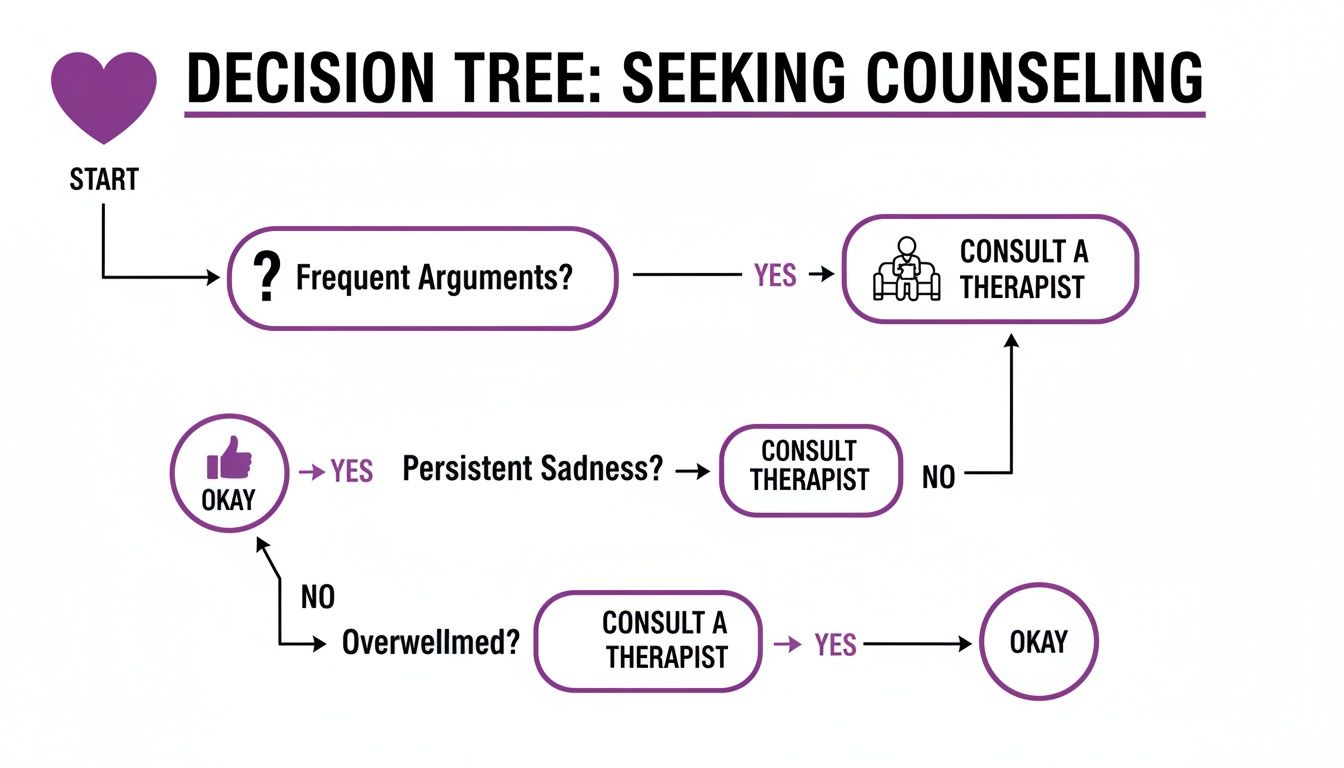
As you can see, those recurring negative patterns are a pretty clear sign that it's time to get some professional support.
It's completely normal for couples to disagree, but it's how you disagree and recover that matters. Here's a quick way to tell if you're in healthy territory or if a warning sign is flashing.
Early Warning Signs vs. Healthy Disagreements
| Healthy Disagreement | Potential Warning Sign |
|---|---|
| Arguments are about a specific issue (e.g., finances, chores). | Fights become personal, filled with criticism, blame, or contempt. |
| You can resolve the conflict and move on without lingering resentment. | The same arguments happen over and over with no resolution. |
| You still feel like a team, even when you disagree. | You feel emotionally distant, lonely, or like you're walking on eggshells. |
| You can both apologize and take responsibility for your part. | One or both partners consistently shut down, refuse to talk, or stonewall. |
| There's still a foundation of respect, affection, and humor in the relationship. | Physical intimacy has dwindled or stopped, and affection feels forced or absent. |
| You talk about a future together, making plans and sharing dreams. | You've started imagining or fantasizing about a life without your partner. |
| Even after a fight, you trust your partner has your best interests at heart. | You've lost trust due to broken promises, secrets, or a major betrayal like an affair. |
If the "Potential Warning Sign" column feels a little too familiar, it doesn't mean your relationship is doomed. It just means it's time to get some new tools to work with.
Acting on Early Indicators for Better Outcomes
Let’s be real: waiting too long to get help makes everything harder. Research from the Gottman Institute, a leader in relationship studies, found that a staggering 69% of marital conflicts are perpetual. That means they are a fundamental part of your dynamic and will never be fully "solved." Early intervention isn't about eliminating these problems; it's about learning how to manage them without letting them destroy your connection.
The numbers don't lie. Couples who start therapy within the first two years of noticing problems have a 70-80% improvement rate. Wait longer, and that success rate can plummet to as low as 30% once deep-seated resentment takes hold.
Seeking help isn't about admitting defeat. It's about choosing to invest in your relationship's future by learning new tools together, guided by an impartial expert. It’s a commitment to building a stronger, more resilient partnership.
If any of this is hitting home, the team at reVIBE Mental Health is here to help you take that proactive first step. We have five locations across the valley, making it easy to find support that's convenient for you.
Find a reVIBE Location Near You!
We currently have five locations for your convenience. (480) 674-9220
- reVIBE Mental Health – Chandler: 3377 S Price Rd, Suite 105, Chandler, AZ
- reVIBE Mental Health – Phoenix Deer Valley: 2222 W Pinnacle Peak Rd, Suite 220, Phoenix, AZ
- reVIBE Mental Health – Phoenix PV: 4646 E Greenway Road, Suite 100, Phoenix, AZ
- reVIBE Mental Health – Scottsdale: 8700 E Via de Ventura, Suite 280, Scottsdale, AZ
- reVIBE Mental Health – Tempe: 3920 S Rural Rd, Suite 112, Tempe, AZ
When Communication Breaks Down Consistently
Do you ever feel like you and your partner are speaking completely different languages? You're talking, but nothing is getting through. This isn't about the occasional squabble; it's a persistent, draining pattern where every conversation feels like hitting a brick wall, leaving you both feeling isolated and misunderstood.
This kind of communication collapse is one of the biggest reasons couples walk through our doors. It’s not necessarily about the frequency of your arguments, but the quality of them. Do they escalate into shouting matches and slammed doors? Do they always detour into old, unresolved issues? Or worse, do they just die out, leaving a thick fog of resentment hanging in the air?
When you're stuck in this cycle, a therapist can act as a neutral translator, helping you both rediscover a shared language. They create a space where you can finally hear each other again. If you're curious about how this works, you can get a better idea by reading our guide on what to expect in couples therapy.
The Four Horsemen of Relationship Conflict
Relationship experts have pinpointed four communication patterns so damaging they can predict the end of a relationship with startling accuracy. Known as "The Four Horsemen," these are major red flags that your communication has become toxic.
Criticism: This isn’t just voicing a complaint; it's a personal attack. A complaint focuses on a specific action ("I was worried when you didn't call"), while criticism attacks your partner's character ("You're so thoughtless, you never think about me").
Contempt: Widely considered the most destructive of the four, contempt is poison to a relationship. It shows up as sarcasm, mockery, name-calling, or eye-rolling—all of which communicate disgust and superiority.
Defensiveness: This is the knee-jerk reaction to play the victim or reverse blame. Instead of listening to your partner's concern, you make excuses or fire back with, "Well, what about when you…?" It's a way of saying, "The problem isn't me, it's you."
Stonewalling: When one partner feels overwhelmed, they might completely shut down. Stonewalling means withdrawing from the conversation, giving the silent treatment, or becoming totally unresponsive. It’s a final, desperate retreat from the conflict—and from the connection itself.
If these patterns have become your go-to responses during disagreements, it's a clear signal that you need support. A counselor can help you see these habits in action and give you the tools to replace them with healthier, more productive ways to connect.
The goal of counseling isn't to eliminate conflict—it's to teach you how to navigate it together. It provides a safe, neutral space to break old habits and build new skills for listening, understanding, and validating each other, even when you disagree.
Critical Moments That Signal an Immediate Need for Counseling
While catching problems early is always best, some relationship issues hit less like a slow-building storm and more like a sudden earthquake. These are the moments that demand immediate, professional support. Trying to wade through the emotional wreckage of a major crisis on your own can cause damage that’s incredibly difficult, if not impossible, to ever fully repair.
These situations almost always involve a profound break in trust or a life-altering event. When the very foundation of your partnership is shaken, the raw emotions—grief, betrayal, anger, fear—can make any kind of productive conversation feel out of reach. This is exactly when you need to seek marriage counseling, no questions asked.
High-Stakes Situations Requiring Urgent Support
Some events unleash a level of emotional chaos that simply requires a structured, neutral space to process safely. Trying to navigate these scenarios without a guide is like attempting to perform surgery on yourself—it’s incredibly risky and rarely ends well.
Think of these as the non-negotiable times to call in a professional:
Infidelity or Betrayal: Discovering an affair, whether emotional or physical, shatters the bedrock of a relationship. A therapist creates a safe container to manage the initial shock, process the agonizing pain, and figure out if rebuilding trust is even an option.
Substance Abuse Issues: When one partner’s substance use is harming the relationship, professional help is non-negotiable. Counseling is crucial for addressing the codependency, communication breakdowns, and underlying pain that often fuel addiction.
Discovery of a Major Secret: Uncovering a mountain of hidden debt, a secret family, or other life-altering secrets can make you feel like you’re married to a stranger. Therapy is essential for working through the shock and figuring out what comes next.
Significant Loss or Trauma: Grieving the loss of a child, a parent, or facing a scary health diagnosis can either pull a couple together or drive a massive wedge between them. A counselor can help you support each other through the trauma instead of turning on one another.
In a crisis, a therapist isn't there to be a judge or a referee. They are more like a crisis manager, helping you contain the damage, process the overwhelming feelings, and create a clear path forward—whether that path leads to healing the relationship or separating with dignity.
Trying to handle these high-stakes situations on your own almost always leads to more hurt, blame, and resentment. A professional provides the structure you both need to stop the bleeding and start making intentional, clear-headed decisions about the future of your marriage.
When Money and Sex Become Battlegrounds
It’s an old cliché for a reason: the two things couples fight about most are money and sex. But these aren’t just simple disagreements. They’re often smoke signals for much deeper fires burning beneath the surface—think mismatched values, power struggles, or a slow erosion of trust.
If every talk about the budget ends in a shouting match, or if the bedroom feels cold and distant, take that seriously. These are more than just rough patches. They're recurring patterns that, left unchecked, can chip away at the very foundation of your relationship.
Decoding the Fights About Money
Let’s be honest: conflicts over money are rarely just about the dollars and cents. Money is tied to our sense of security, freedom, and what we value most in life. When one of you is a meticulous saver and the other finds joy in spending, it’s a recipe for friction. Resentment can easily build when one person feels their financial freedom is being policed by the other.
Look out for these red flags that financial stress is hurting your marriage:
- Financial Infidelity: One of you is hiding debt, making secret purchases, or not being truthful about income. It's a major breach of trust.
- The Same Fight, Different Day: You're trapped in a hamster wheel, arguing about the same spending habits or financial goals over and over with no resolution.
- Unequal Power: One partner holds all the financial reins, making decisions without input and leaving the other feeling powerless.
So much of this stress comes from not having a shared game plan. Getting educated on financial planning for major life events like marriage can be a huge step in getting aligned before these disagreements take root.
It’s no exaggeration to say that money fights are a leading predictor of divorce. In fact, data shows that financial arguments contribute to about 41% of first marriages ending within just a few years. When these issues go unresolved, they're linked to a 30% higher likelihood of divorce, which is why getting help early is so critical.
Reconnecting When Intimacy Fades
Just like with money, a lack of physical intimacy is almost never just about sex. A dwindling connection in the bedroom often signals a much deeper emotional disconnect. Maybe there’s unresolved anger simmering, or resentments that have never been voiced. It creates a painful dynamic where one person feels constantly rejected and the other feels pressured, leading to a cycle of hurt and avoidance.
It might be time to seek counseling if you’re experiencing:
- Mismatched Libidos: One partner’s desire for intimacy is drastically different from the other’s, causing ongoing frustration and pain.
- A Disconnected Feeling: The physical act of intimacy feels empty or like an obligation because the emotional bond isn’t there anymore.
- Affection as a Weapon: One person withholds sex or affection to punish the other after an argument, turning intimacy into a tool for control.
This is where counseling can be a game-changer. It creates a safe, neutral space to finally have these tough conversations. A good therapist helps you get to the heart of what you're really fighting about, guiding you back toward a partnership built on teamwork and genuine respect.
Finding the Right Marriage Counselor in Arizona
Making the decision to go to marriage counseling is a huge step. But what comes next—actually finding the right therapist—can feel pretty daunting. If you're in Arizona, the good news is you have plenty of great options and a clear path to finding a professional who truly gets you and your partner.
The goal isn't just to find any therapist. It's about finding the right one, someone who makes you both feel safe enough to open up and has the right expertise to guide you. Think of it like hiring a specialized contractor for a home renovation; you want someone with a proven track record in the specific area you need help with, whether it's communication breakdowns, navigating infidelity, or untangling financial stress.
What to Look for in a Therapist
As you begin your search, a few key things should be on your radar. First, look for proper credentials. A Licensed Marriage and Family Therapist (LMFT) or a Licensed Professional Counselor (LPC) has specialized training and education focused specifically on relationship dynamics. These letters aren't just jargon—they're your assurance of a certain level of expertise.
Beyond the license, it’s worth asking about their therapeutic approach. Many of the most effective counselors use evidence-based methods to help couples. A couple of the most well-regarded are:
- The Gottman Method: This approach is very hands-on and teaches practical skills for managing conflict, being better friends with your partner, and building a life together with shared goals.
- Emotionally Focused Therapy (EFT): EFT digs into the "why" behind your arguments. It helps you identify the negative patterns you're stuck in and work toward creating a much more secure and loving emotional bond.
Never hesitate to ask a potential therapist about their background, their experience with issues like yours, and the methods they prefer. This is a partnership, and finding the right fit is everything. You can learn more about finding the right fit in our guide to couples counseling near you.
Making Counseling Accessible in the Phoenix Area
For couples living in the Phoenix metro area—whether you're in Scottsdale, Tempe, Chandler, or Phoenix—help is closer and more accessible than you might think. Recognizing the need for support is the first step, and providers like reVIBE Mental Health are making the next steps much easier.
We know that life is complicated and schedules are packed. That's why we offer appointments seven days a week, with both in-person and online options to fit your life. We also work with your insurance to match you with a therapist, taking one more stressor off your plate. This kind of accessibility is a growing trend in the marriage counseling services market and something we're proud to offer.
Choosing a therapist is a deeply personal decision. The right counselor will create a non-judgmental space where both partners feel heard, validated, and empowered to create positive change together.
Finding a convenient location shouldn't be another hurdle to jump over. We have five offices spread across the valley, so support is always nearby.
Below is a quick guide to help you find the reVIBE Mental Health office that's most convenient for your in-person sessions.
Your reVIBE Mental Health Location Guide
Find the most convenient reVIBE Mental Health office for you in the Phoenix metro area.
| Location Name | Address |
|---|---|
| reVIBE Mental Health – Chandler | 3377 S Price Rd, Suite 105, Chandler, AZ |
| reVIBE Mental Health – Phoenix Deer Valley | 2222 W Pinnacle Peak Rd, Suite 220, Phoenix, AZ |
| reVIBE Mental Health – Phoenix PV | 4646 E Greenway Road, Suite 100, Phoenix, AZ |
| reVIBE Mental Health – Scottsdale | 8700 E Via de Ventura, Suite 280, Scottsdale, AZ |
| reVIBE Mental Health – Tempe | 3920 S Rural Rd, Suite 112, Tempe, AZ |
No matter where you are in the valley, we've made it easy to start your journey. Give us a call at (480) 674-9220 to get started.
Preparing for Your First Counseling Session
Taking that first step to book a marriage counseling appointment is a huge sign of strength. It shows you're both committed to the relationship. Still, walking into that first session can feel pretty nerve-wracking. Knowing what to expect can really help take the edge off and let you focus on the future.
Think of this first meeting as a "get to know you" session for everyone involved—you, your partner, and your new therapist. It’s not about jumping in to fix everything right away. Instead, it’s about building a foundation for the work to come.
You’ll probably talk about the story of your relationship. How did you two meet? What were the good times like? When did the cracks start to show? This isn't about placing blame; it's about creating a complete picture for the therapist.
Setting the Stage for Success
The therapist’s job isn't to pick a side or decide who's right or wrong. They're there to be a neutral guide, making sure both of you have the space to share your side of the story without judgment.
Going in with an open mind and a little bit of prep work can make a world of difference. Here’s what you can do to get ready:
- Think About Your Goals: What do you personally hope to get out of this? Maybe it’s better communication, learning to trust again, or just feeling like you’re on the same team. Having a goal, even a small one, is a powerful starting point.
- Be Open and Honest: This is the most important part. Therapy works best when you’re both willing to be vulnerable. Make a pact with yourself to be as truthful as possible, even when it's uncomfortable.
- Manage Your Expectations: Remember that counseling is a marathon, not a sprint. One session won't magically solve years of issues. See this first meeting as the beginning of a journey.
Seeking help is a proactive choice to invest in your partnership's future. The first session is about opening a door to new ways of understanding each other, guided by an impartial expert who is rooting for your success.
Ultimately, preparing is all about setting a positive intention for the work ahead. If you'd like a more detailed breakdown of what to do before you walk in, our guide on how to prepare for your first therapy session has some fantastic tips.
Answering Your Questions About Marriage Counseling
It's completely normal to have questions when you're thinking about starting marriage counseling. Taking that first step can feel daunting, but understanding a little more about the process can make it feel less like a last resort and more like the supportive, proactive decision it truly is.
Here are a few answers to the questions we hear most often from couples.
What If My Partner Won't Go to Counseling?
This is probably one of the most common hurdles, and it’s a tough one. If your partner is resistant, the most important thing to know is that you can still get help on your own.
Going to individual therapy can be incredibly powerful. It gives you a space to gain clarity on what you want and need, develop stronger communication skills, and learn healthy coping strategies. Sometimes, when one person starts to change the dynamic for the better, it can inspire the other to come on board.
How Long Does Marriage Counseling Usually Take?
There’s really no magic number here. The timeline for counseling is as unique as your relationship itself. It all depends on what you want to achieve, the kinds of challenges you're working through, and how much both of you are ready to lean into the process.
For some couples, a few months of targeted, short-term therapy is enough to break through a specific gridlock. For others who are untangling deeper, more long-standing issues, it might be a journey of a year or more. The right therapist will work with you to figure out a plan that makes sense for your specific situation.
Can Counseling Help Even If We End Up Separating?
Absolutely. It’s a common misconception that counseling has "failed" if a couple decides to part ways. The real goal of therapy isn't just to keep people together; it's to foster healthier communication and understanding, no matter what the future holds.
If you do decide that separation is the right path, therapy can be an incredible asset. It offers a calm, neutral ground to navigate that process with dignity, create co-parenting plans that truly work for your kids, and find the kind of emotional closure that prevents a bitter, drawn-out split.
Is Marriage Counseling Covered By My Insurance?
Many health insurance plans do cover marriage or couples counseling under their mental and behavioral health benefits. That said, every plan is different, so you'll want to dig into the details of your specific policy to understand things like co-pays or limits on the number of sessions.
Don't let the insurance maze overwhelm you. The team here at reVIBE Mental Health can help you figure out your benefits and make the whole process as straightforward as possible.
Ready to find your strength and build a healthier connection? The compassionate team at reVIBE Mental Health is here to support you with appointments available seven days a week. Give us a call at (480) 674-9220 or visit our website to get started.