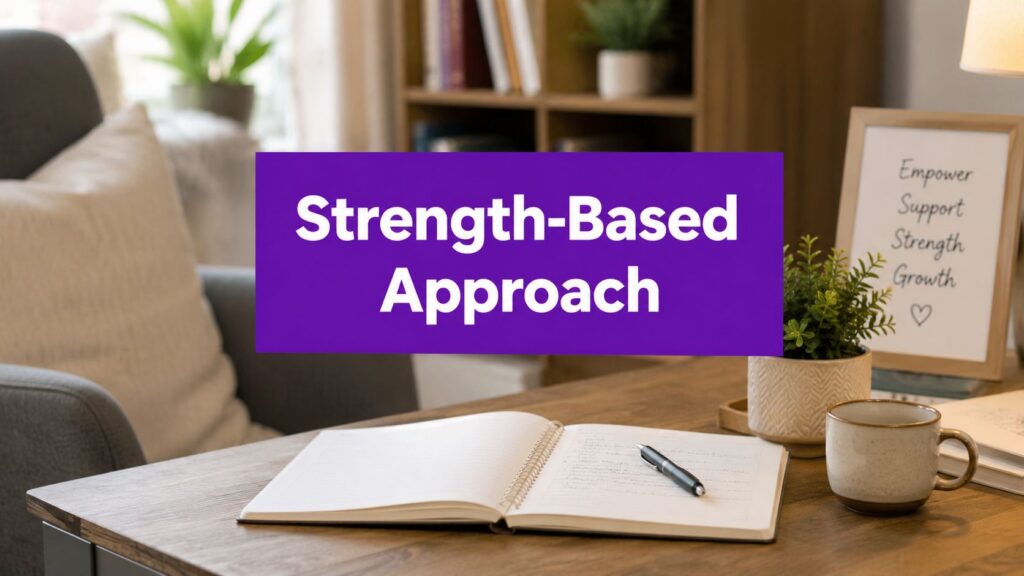
You can sit in a therapy appointment, talk about everything that feels wrong, and still leave wondering what you're building toward. The conversation may be accurate, but if it keeps circling problems without naming your abilities, your supports, or the next workable step, it can feel like you're being described instead of helped. A strength based approach changes that. It asks a different first question, not “What's broken?”, but “What's already working, and how do we build from there?”
Introduction to Strength Based Approach
A strength based approach starts from a practical observation, people usually make better progress when care pays attention to what they can already do, not only to what is causing pain. In mental health and social care, that means the practitioner and the person work together, with the practitioner sharing expertise instead of standing above the process as the only expert. The UK government's practice framework describes strengths-based practice as a collaborative, outcomes-led process where assets, goals, and supports are identified together, and where attention shifts from deficits to strengths, social networks, and community resources (UK strengths-based practice framework).
That shift changes the feel of therapy and support. A session can start to resemble a working map, with the person's skills, preferences, relationships, and practical supports laid out clearly instead of being overshadowed by symptoms alone. That matters for people who have often heard only what is wrong, because a plan built on strengths can feel more grounded and more usable across different settings. The method is best understood as a way of working, not a standalone trick added at the end.
There is also an important safeguard built into this approach: it should never slide into toxic positivity. A strengths-based conversation does not pretend that trauma, grief, poverty, discrimination, or disability are minor, and it does not ask people to be cheerful about harm. It keeps both truths in view, the person has existing capacities, and the system around them may still need to change. That is where culturally sensitive therapy matters, because strengths are only meaningful when care respects identity, context, and the barriers someone is facing.
Practical rule: if a care plan only names problems, it is incomplete. A strengths-based plan also names skills, people, places, and supports that can carry the work forward.
Understanding Strength Based Approach

Strength based approach means the clinician does not only record what is difficult. They also look for the person's strengths and resources, then use those to shape care. In practice, that makes the process collaborative. The person is not being “fixed” from the outside, they help build the plan from the inside out.
A useful way to picture it is like planning a route with someone instead of handing them a map after the fact. The route still has to pass through real obstacles, but it also starts from the places the person already knows, the supports they already have, and the skills they already use. That matters for people who have spent a long time hearing only what is wrong, because a plan built on strengths can feel more grounded and more realistic in day-to-day life. The model works as a way of working, not a separate technique added at the end.
A strengths-based approach also needs a safeguard against toxic positivity. It does not brush aside trauma, grief, poverty, discrimination, or disability, and it does not ask people to be cheerful about harm. It keeps both parts in view, the person has existing capacities, and the system around them may still create barriers that need to be addressed. For readers who want to see how identity and context shape care, culturally sensitive therapy shows why strengths only make sense when support fits the person's world.
What collaboration actually looks like
A therapist might ask what the client already does when anxiety spikes, which people they trust, or what routines help them stay grounded. Those questions matter because they uncover usable material, not just distress. The point is to turn the client from a passive recipient into an active partner in the work.
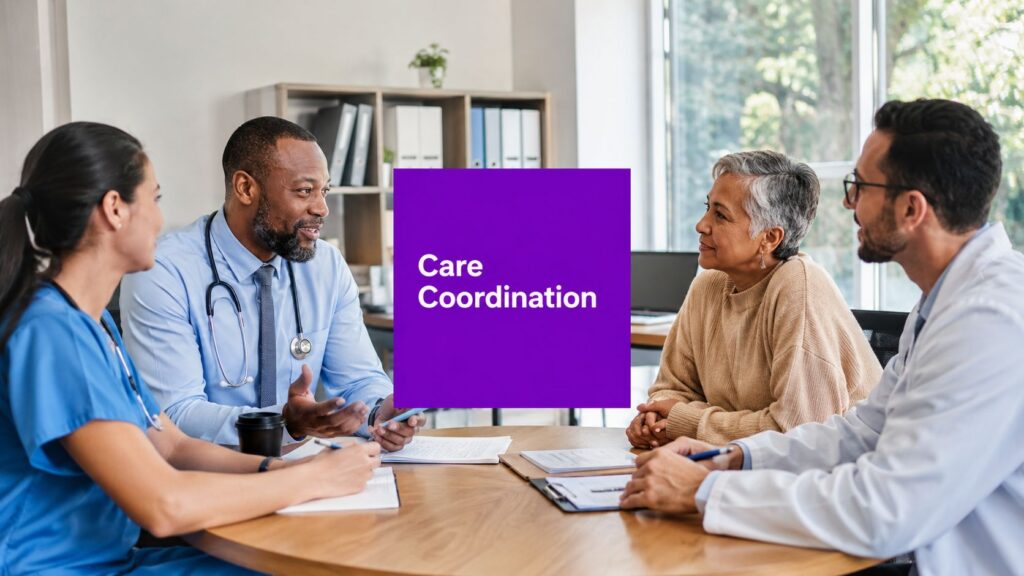
The social work literature describes this as goal-led and client-led practice. Goals are set first, then strengths are identified around those goals, including family members, groups, and institutions that can support change (VCU social work guide). SCIE adds that strengths should be considered at personal, relationship, and community levels, and that practice should stay flexible, person-centred, collaborative, and risk-enabling rather than purely problem-solving (SCIE practice guidance).
A strengths-based plan works best when the question is specific. “What support helps you get through Tuesday mornings?” usually gets a better answer than “What are your strengths?”
Why the structure matters
The structure changes the relationship. When care is organized around a person's existing resources, the person usually keeps more agency, and that can improve engagement and follow-through on tasks. It also makes the intervention easier to adapt, because the plan grows out of real life instead of an abstract idea of what should help.
The same logic appears in culturally responsive care, where support has to fit the person's context instead of flattening it. As noted earlier, this overview of culturally sensitive therapy is a useful companion for understanding that part of the picture.
Core Principles and Supporting Evidence

A client may arrive feeling overwhelmed, stuck, or defined by what is going wrong. A strength-based approach keeps those struggles in view while also asking what is already working, who helps, and what the person has managed before. The 2023 narrative review describes this balance as attention to competencies, aspirations, and motivational readiness, which helps care stay grounded in reality instead of sliding into denial or deficit-only thinking. The person's pain remains real, and so do their abilities.
The four ideas that keep the model grounded
Collaboration means the therapist and client work as partners, much like two people studying the same map from different angles.
Goal orientation means care points toward a future result the client cares about.
Validating competencies means the therapist notices skills, persistence, and coping that are already present.
Leveraging resources means the plan uses internal strengths and outside supports, including people, services, and community connections.
These principles are practical, not just encouraging language. The review describes strength-based methods as therapist behaviors that acknowledge, validate, and foster strengths and capabilities while still addressing challenges. That matters because it keeps the focus on what can be built, rather than treating distress as if it erases the whole person. It also gives room for self-efficacy, resilience, and problem-solving capacity, which are the kinds of factors that help change last in daily life.
The approach also helps guard against toxic positivity. A therapist does not ask a person to “stay positive” over hard realities or to pretend structural barriers are not there. If someone is dealing with money stress, unsafe housing, discrimination, or limited access to care, strength-based work names those barriers directly and then looks for usable supports around them. That is where the model becomes more honest than a simple optimism message.
For a closer look at how strengths-based care overlaps with a trauma-aware stance, this overview of trauma-informed therapy is a useful companion.
How it fits with other treatments
Strength-based work usually sits alongside other evidence-based treatments rather than replacing them. A person can receive CBT, trauma therapy, medication management, or other supports while the strengths lens keeps the plan concrete, client-owned, and tied to abilities the person already uses in real situations. In everyday psychotherapy, that often improves follow-through because the goals sound like the client's goals, not a generic checklist.
For readers comparing methods across care settings, understanding various coaching models can help clarify how different frameworks shape the relationship, even when the content looks similar on the surface.
Comparing Strength Based and Other Therapy Models

A client walks into therapy feeling defined by what is going wrong. A clinician using a traditional model may begin by mapping symptoms, risks, and deficits. A clinician using a strength based approach starts by asking what already helps, what has held the person together, and what skills still show up under pressure. That shift changes the tone of the first conversation, and it also changes who gets to shape the plan.
Strength lens versus deficit lens
In deficit-focused care, the clinician often holds the main authority on the problem. In strength-based care, the client helps design the response. The first model can be useful for diagnosis and symptom tracking, but if the conversation stays there, the person can start to feel reduced to a list of problems.
A common question is whether strength-based care ignores suffering. It does not. The model can still fit severe mental illness or a crisis, because it does not ask anyone to pretend pain is absent, as noted in a narrative review on strengths and serious mental illness. The difference is in focus. Symptoms still matter, but they are treated as part of the picture rather than the whole person.
Avoiding toxic positivity
Some readers hear “focus on strengths” and worry it means being upbeat, skipping over grief, or telling someone to work harder with the resources they have. That is the trap to avoid. Strength-based care only stays useful when collaboration, goal orientation, and respect remain visible, because otherwise the language of strengths can slide into pressure or dismissal.
A better way to understand it is this. If someone cannot use a strength right now, the response is support, not blame.
That matters when the primary obstacle is structural, not personal. Money stress, unsafe housing, discrimination, and limited access to care are not solved by encouragement alone. A strength-based clinician names those barriers directly, then looks for practical supports around them. For readers already thinking about safety, boundaries, and emotional attunement, this trauma-informed therapy overview pairs well with the strengths lens because both approaches keep the person's experience central.
How it fits with other treatments
Strength-based work usually sits alongside other evidence-based treatments rather than replacing them. A person can receive CBT, trauma therapy, medication management, or other supports while the strengths lens keeps the plan concrete, client-owned, and tied to abilities the person already uses in real situations. In everyday psychotherapy, that often improves follow-through because the goals sound like the client's goals, not a generic checklist.
For readers comparing methods across care settings, understanding various coaching models can help clarify how different frameworks shape the relationship, even when the content looks similar on the surface.
Clinical Examples and Client Facing Tips

A client with anxiety might arrive saying, “I can't handle work meetings.” A strengths-based therapist doesn't argue with that feeling. They ask when meetings are a little easier, what the person does before entering the room, and who or what helps them stay steady. That turns a vague failure story into a workable pattern.
Three small clinical pictures
A person dealing with depression may feel stuck because every day looks equally heavy. A strengths-based conversation can uncover the one routine they still keep, the friend they still answer, or the task they still finish. Those details matter because they show where energy still exists, even if it's limited.
A couple in conflict may only describe what they do wrong during arguments. A strengths-based therapist might ask what has helped them repair after past disagreements, or what each partner appreciates about the other when things are calm. That doesn't erase the conflict, but it gives the couple a place to begin.
Someone facing trauma or social stress may need a plan that includes more than coping skills. Recent scholarship notes that strengths-based care is being developed with systemically marginalized identities in mind, and that the hard question is how to balance personal strengths with barriers like poverty, racism, unstable housing, or limited access to care (2024 scholarship on strength framing and adversity). In those cases, strengths-based care has to connect the person to community, finances, housing, health, and other hard assets, not just internal resilience (2024 scholarship on strength framing and adversity).
Questions clients can ask a therapist
- “How will you build on what's already working for me?” This helps you hear whether the therapist looks for assets or only problems.
- “How do you balance strengths with the things that still feel hard?” This checks for realism, not toxic positivity.
- “Which people, routines, or community supports might help me reach my goal?” This gets the conversation out of theory and into daily life.
- “How will we know the plan is working?” This keeps the work outcomes-led, not vague.
If you're comparing providers, pay attention to how they talk in the first call. The right therapist usually sounds curious, specific, and respectful, not rushed to categorize you.
How reVIBE Implements Strength Based Care Locally
Strength-based care works best when it's tied to real options in the community, not just a philosophy on paper. SCIE's guidance makes that point clearly, strengths and assets should be considered at the levels of the person, relationships, and community, and practice should stay collaborative and risk-enabling (SCIE practice guidance). That fits a multi-location clinic model well, because it lets care stay flexible while still being grounded in the person's goals.
In practice, that means a team can match therapy, psychiatry, and other supports around a person's priorities instead of forcing every concern into one lane. For readers exploring building AI-powered wellness solutions, the broader lesson is the same, the best support tools are the ones that help people connect goals, resources, and next steps without stripping away their agency. In a human care setting, one option is reVIBE Mental Health, which offers talk therapy, EMDR, and psychiatry with medication management across its Arizona locations.
If you're local, Find a reVIBE Location Near You! The practice has five locations for convenience, and the main number is (480) 674-9220.
- reVIBE Mental Health – Chandler: 3377 S Price Rd, Suite 105, Chandler, AZ
- reVIBE Mental Health – Phoenix Deer Valley: 2222 W Pinnacle Peak Rd, Suite 220, Phoenix, AZ
- reVIBE Mental Health – Phoenix PV: 4646 E Greenway Road, Suite 100, Phoenix, AZ
- reVIBE Mental Health – Scottsdale: 8700 E Via de Ventura, Suite 280, Scottsdale, AZ
- reVIBE Mental Health – Tempe: 3920 S Rural Rd, Suite 112, Tempe, AZ
If you're also looking for care that stays warm and relationship-centered, heart-centered counseling can be a helpful way to think about what a supportive fit feels like. A strengths-based provider should make it easier to talk about goals, obstacles, and support systems in the same conversation, not force you to choose one.
Conclusion and Next Steps
A strength based approach is not about ignoring pain. It's about making sure pain doesn't become the only thing that defines the plan. When care stays collaborative, goal-led, and connected to real supports, it usually feels more usable and more human.
If you're looking for therapy, ask whether the clinician will help you build from what's already working, while still naming what hurts. That balance is the heart of the model, and it's a good sign you're in the right room.
A CTA for reVIBE Mental Health.