

If you've ever watched a child play, you know it's far more than just a way to pass the time. It's how they learn, how they experiment, and most importantly, how they communicate. Play therapy for kids taps into this fundamental truth, using a child's natural language of play to help them work through feelings and challenges they might not have the words to explain. It's a structured, proven approach where a trained therapist creates a safe space for healing to happen, one toy at a time.
Understanding Play Therapy for Kids
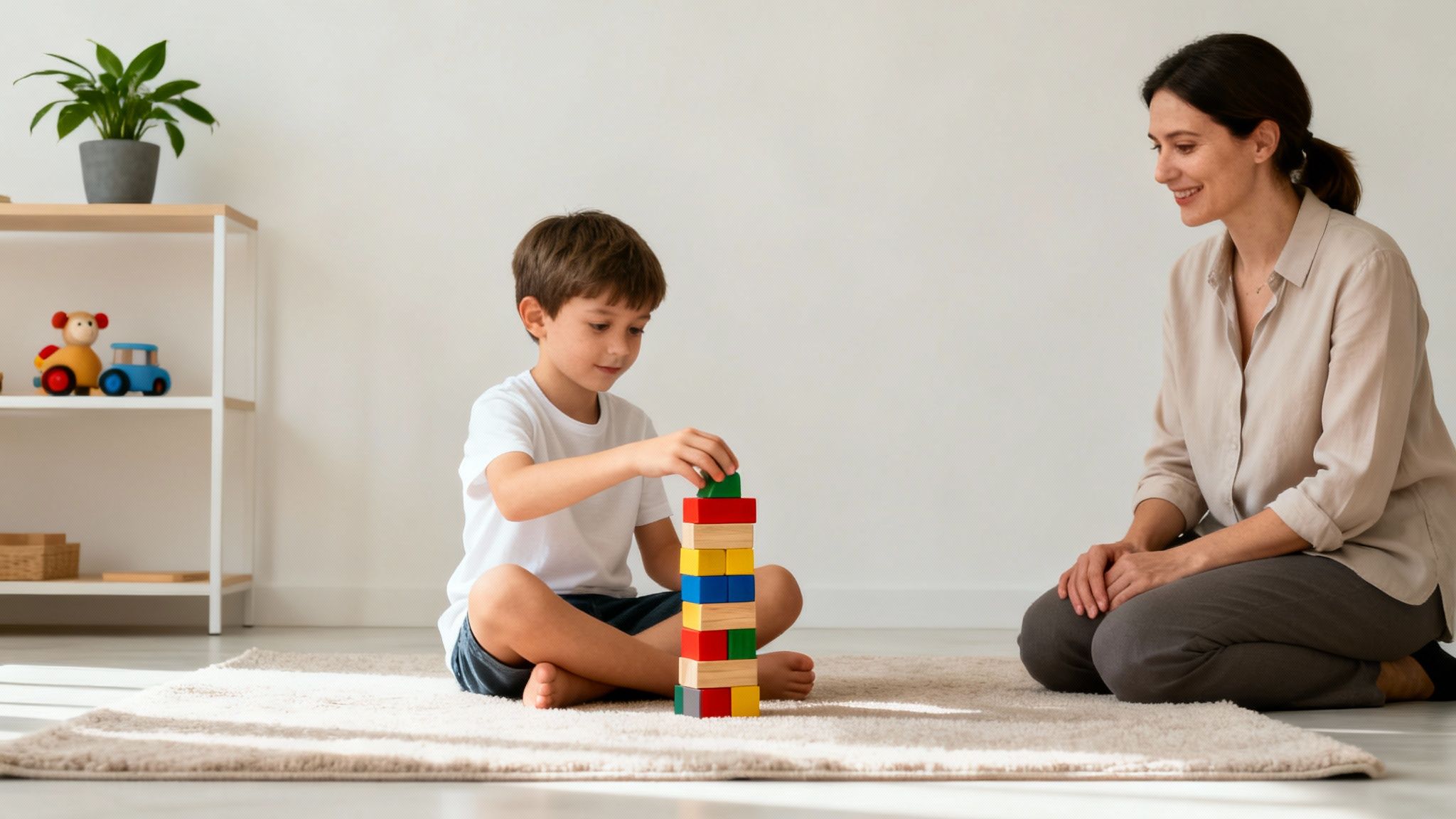
When we as adults are struggling, we talk it out. But for a child, trying to describe big, complex emotions like anxiety, grief, or frustration can feel impossible. Play therapy effectively bridges that communication gap. Think of the playroom as the child's studio and the toys as their palette—the tools they use to paint a picture of their inner world.
In a play therapy session, a sand tray isn't just a box of sand; it can become a world where a child sorts out confusing family dynamics. A puppet show might be the perfect way to act out fears about a bully at school. Even something as simple as building a tower of blocks can reveal a deep-seated need for control and stability in a chaotic world.
The therapist isn't just another playmate. They are a trained observer and guide, skilled at understanding the themes and patterns that emerge. Their role is to interpret the play and help the child find new ways of coping and understanding their own feelings, all without pressure or judgment. This isn't just "free play"—it's a thoughtful and powerful mental health intervention.
The Purpose and Power of Therapeutic Play
At its heart, play therapy gives children the power to face their struggles on their own terms and at their own pace. By creating and controlling stories through play, they gain a sense of mastery over situations that once felt overwhelming. This process does more than just address a specific problem; it builds a foundation of crucial life skills.
A few of the powerful benefits for your child include:
- A Boost in Self-Esteem: Every small problem solved in the playroom builds real-world confidence.
- Better Social Skills: Therapy provides a safe sandbox for practicing empathy, communication, and cooperation.
- Deeper Family Bonds: When children find healthy ways to express their needs, their connections with parents and siblings naturally strengthen.
The impact of this approach is backed by solid research. In a major analysis that looked at 93 different studies, play therapy was shown to have a significant positive effect on children's emotional and behavioral health. It's a well-established and respected therapeutic method.
To give you a clearer picture, let's break down the main objectives of this powerful therapy and what those goals look like in your child's day-to-day life.
Key Goals and Outcomes of Play Therapy
Here is a simple summary of the primary goals a therapist works toward and the positive changes you might see as a result.
| Core Goal of Play Therapy | Potential Positive Outcome for Your Child |
|---|---|
| Develop emotional literacy. | Your child can name their feelings (e.g., "I feel angry" instead of hitting). |
| Build healthy coping strategies. | They learn to take deep breaths or ask for a hug when overwhelmed. |
| Enhance problem-solving skills. | They start finding creative solutions to disagreements with friends or siblings. |
| Process traumatic or stressful events. | They show fewer signs of distress (like nightmares or clinginess) related to the event. |
| Foster a stronger sense of self. | Your child seems more confident, self-reliant, and sure of themselves. |
| Improve social skills and empathy. | They begin to share more easily and show concern for others' feelings. |
These outcomes don't happen overnight, but they represent the real, tangible progress that is possible through consistent therapeutic play.
Play therapy is a child's natural form of communication. It provides a safe psychological distance from their problems and allows them to express thoughts and feelings appropriate to their development.
This kind of specialized work requires a professional who truly understands the language of play. A skilled psychiatric mental health practitioner can create the right environment for your child to thrive. Understanding the profound benefits of play for children with ADHD and other challenges highlights just how vital this work is. By embracing play as a serious tool for healing, we open up a powerful pathway to a more resilient and emotionally healthy future for our kids.
Is Play Therapy Right for Your Child?
As parents, we know that childhood isn't always smooth sailing. But figuring out the difference between a normal childhood rough patch and a sign that your kid needs a little extra support can be tough. The best place to start is with your own intuition. If you have a gut feeling that something is off, it’s always worth looking into.
Play therapy for kids is often the answer when a child seems stuck, unable to process what’s happening on the inside or communicate it effectively on the outside. It's usually not about one single bad day or a random tantrum. Instead, we're looking for ongoing patterns that get in the way of their ability to be happy and function day-to-day. You are the expert on your child, so when you see a major shift in their mood or personality, that’s a real signal. The idea isn't to pathologize a behavior, but to get curious about the feeling behind it.
Common Signs a Child May Benefit from Therapy
Every child is different, of course, but some behaviors are pretty clear indicators that they're wrestling with emotions too big to handle on their own. These signs often show up consistently, whether at home, in the classroom, or out with friends.
If you’re noticing one or more of these, it might be time to think about professional support:
- Intense Emotional Outbursts: Are meltdowns happening more often? Do they seem to last forever or come out of nowhere? This can be a sign that your child is completely overwhelmed with internal stress.
- Persistent Withdrawal: Has your social butterfly suddenly gone into a cocoon? Avoiding friends, family, or activities they once couldn’t get enough of can point to anxiety, sadness, or trouble working through a recent event.
- Difficulty with Major Life Changes: Big events like a divorce, a new baby, a move to a new city, or the death of a family member can turn a child's world upside down. Play therapy gives them a safe harbor to process all those complicated feelings.
- Ongoing School Struggles: This can look like a sudden drop in grades, an inability to focus, refusing to go to school, or getting into frequent conflicts with classmates and teachers that just don't seem like them.
Trusting Your Parental Instincts
Context is everything. A toddler throwing a fit is very different from a ten-year-old having a screaming meltdown. But when any behavior consistently gets in the way of your child’s ability to learn, make friends, or just enjoy being a kid, that’s your cue to seek help.
A child’s behavior is a form of communication. When their actions become disruptive or concerning, they are often expressing a need or a hurt that they don't have the words for.
Seeing these signs isn't about blaming anyone—it's about responding to what your child needs. Reaching out for play therapy for kids is one of the most proactive and loving things you can do. It's about giving them the tools to build emotional resilience and face life's challenges with confidence.
How Different Play Therapy Techniques Work
It's a common misconception that play therapy is all the same. The truth is, a seasoned therapist has a whole toolbox of approaches they can draw from, carefully selecting what’s best for a child's unique personality and the challenges they’re facing.
What might look like simple fun on the surface—building with blocks, telling stories with puppets—is actually a carefully chosen activity with a clear therapeutic purpose. These methods usually stem from one of two core philosophies that guide how the session unfolds.
Understanding these two main approaches gives you a fantastic window into what’s happening in the playroom and the "why" behind each activity.
Child-Centered vs. Directive Play Therapy
The two big approaches in play therapy for kids are Child-Centered and Directive.
I like to use a bike-riding analogy. In one method, the child is in the driver's seat, figuring out their own balance and speed while a parent walks alongside, ready to offer a steadying hand. In the other, the parent is holding the handlebars, actively steering to help the child master a specific skill, like turning or braking.
-
Child-Centered Play Therapy: Here, the child leads the way. They choose the toys, invent the scenarios, and decide what happens next. The therapist is more like a trusted co-pilot, reflecting back what they see and hear ("Wow, you're making that tower so tall and strong!") to help the child feel seen, heard, and deeply understood. This non-directive style is incredible for building a child’s confidence, independence, and natural problem-solving abilities.
-
Directive Play Therapy: In this more structured approach, the therapist intentionally introduces specific games or activities to work on a particular goal. For instance, they might suggest a board game to practice turn-taking and managing frustration, or use a specific art activity to help a child process feelings about a big life change, like a move or a new sibling.
A great therapist often blends these styles. They might let the child lead the session for a while and then gently introduce an activity to nudge them toward exploring a deeper feeling they've been avoiding. The goal is always the same: create a safe space where the child feels empowered to work through their struggles.
Common Techniques and Their Purpose
Therapists use a fascinating variety of tools to bring these philosophies to life. Many of the most powerful techniques tap into core parts of how kids develop, like understanding the power of symbolic play, where a simple object can represent a big, complex idea.
Here are a few classic examples you might see in a playroom:
-
Sand Tray Therapy: Using a small box of sand and a collection of miniature figures, a child builds their own world. This is an amazing way for them to express thoughts and feelings that they don't have words for yet. They can create, arrange, and rearrange their experiences in a way that feels safe and gives them a sense of control.
-
Art and Drawing: Crayons, paint, and clay can be incredible outlets for emotions that feel too overwhelming to talk about. A drawing filled with dark, stormy clouds might be their way of showing sadness, while sculpting a tiny fortress could represent a deep need to feel safe and protected.
-
Puppets and Storytelling: Puppets are fantastic because they create a safe distance. A child can use a puppet to act out a tricky situation—like standing up to a bully at school—and explore different outcomes without feeling so exposed. It’s like a dress rehearsal for real life.
This infographic shows some of the key indicators that these kinds of therapeutic techniques can really help with.
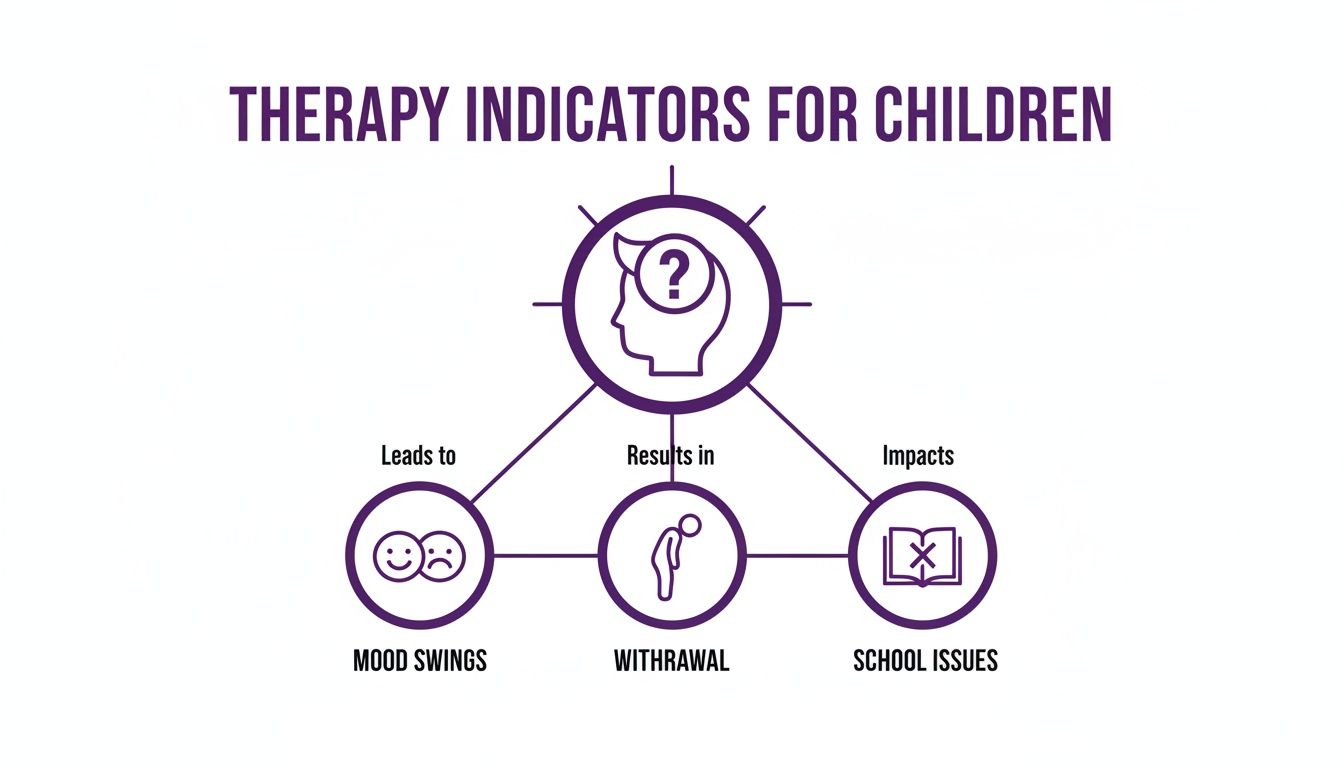
You can see how a child's emotional, social, and even school-related struggles are often intertwined, which is exactly why a holistic approach like play therapy can be so effective.
What to Expect from Your First Therapy Sessions
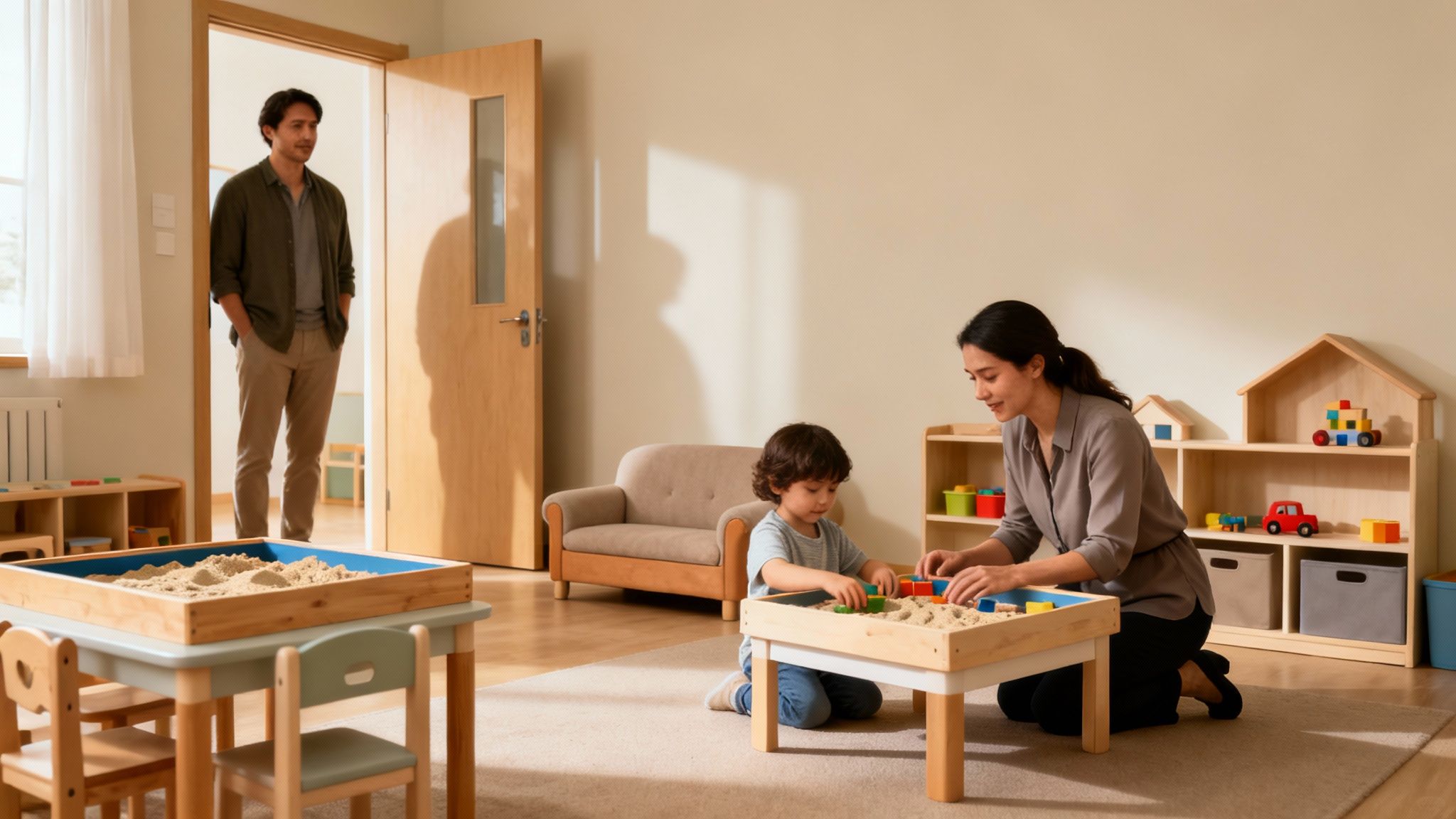
Walking into anything new can feel a little intimidating, and starting play therapy for kids is no exception. It really helps to have a roadmap of what the first few steps look like, which can ease a lot of the unknowns for both you and your child. These initial sessions are all about building a strong foundation of trust and teamwork, paving the way for real, lasting progress.
The journey starts with an initial consultation, and this one is just for the parents or caregivers. It’s a crucial, private meeting where you can talk candidly with the therapist. You’ll cover your concerns, your child’s background, and what your hopes are for therapy. Think of it as a strategy session—the moment you and the therapist officially become partners in your child’s corner.
The First Session and the Playroom
For your child, that first real session is all about getting to know the space and the therapist. The main goal is simple: to make your child feel safe and start building a connection. There’s zero pressure for them to "perform" or dive into tough topics. The entire focus is on helping them feel comfortable and at ease.
The playroom itself is a pretty special place. It’s not just a room with toys; it’s a carefully curated environment filled with specific, intentional items. You’ll see everything from art supplies and sand trays to puppets and building blocks. Each one is a tool for communication, giving your child a way to express thoughts and feelings that might not have words yet.
The therapist isn’t just a playmate. They are a highly trained observer and guide, fluent in the language of play. Their role is to create an atmosphere of unconditional acceptance where your child can be completely themselves.
This non-judgmental, accepting environment is what allows the therapeutic relationship to blossom. As that trust deepens, your child’s play will become more meaningful and expressive, giving everyone a window into their inner world.
The Parent-Therapist Partnership
Your involvement is absolutely essential to this process. Even though most sessions will be one-on-one with your child and the therapist, your partnership is the bridge that carries the progress made in the playroom back into your daily life at home.
You can expect regular check-in meetings to talk about the themes showing up in play, track progress, and adjust goals as needed. These conversations keep everyone on the same page and give the therapist a chance to share insights that can help you support your child in practical ways.
It's a collaborative approach that really works. In fact, studies show that up to 71% of children who go to play therapy show positive changes. Sessions are always paced to your child’s needs, typically lasting 30 to 45 minutes, and as that child-therapist bond grows, you’ll see improvements in everything from motor skills to how they express themselves. You can learn more about these play therapy findings from published research.
How to Support Your Child's Progress at Home
The real magic of play therapy happens when the lessons learned in the playroom start to ripple out into your child's everyday life. While the therapist’s work is vital, you, as their parent, are the most powerful agent of change in their world. Your support at home is what helps those new skills and feelings of confidence truly take root and grow.
This doesn't mean you need to turn your living room into a therapy office. Not at all. It’s more about making small, mindful adjustments to how you connect. You'd be amazed what can happen with just 15 minutes a day of dedicated, one-on-one playtime where your child has you all to themselves—no phones, no distractions, just you and them.
Simple Techniques for Home Reinforcement
One of the most powerful tools you can bring home from the therapy room is reflective listening. It sounds complex, but it's really just about being a mirror for your child's feelings. Instead of jumping in to fix a problem or dismiss their big emotions, you simply state what you see.
Imagine this: your child's magnificent block tower comes crashing down, and they dissolve into frustration. A reflective response would be, "You are so angry that your tower fell! You worked so hard on that." That's it. You're not fixing it; you're just showing them you get it.
This simple act of naming their emotion helps them understand their own feelings and lets them know it's okay to feel that way. It’s a profound way of saying, “I see you,” which builds incredible connection and trust.
A few other simple strategies can make a big difference:
- Follow Their Lead in Play: During your special playtime, resist the urge to direct things. Let them be the boss. It’s a huge boost for their confidence and sense of control.
- Set Clear and Consistent Boundaries: Predictable rules make kids feel safe. When they know where the lines are, it’s much easier for them to manage their emotions and behavior.
- Celebrate Effort, Not Just Success: Focus your praise on how hard they tried or how they didn't give up. This builds resilience, which is far more valuable than a perfect outcome.
Aligning Your Efforts with Therapy Goals
The best results always come from teamwork. Think of yourself, your child, and their therapist as a team, all working toward the same goals. Use your parent check-in meetings to talk with the therapist about what they’re seeing in sessions. Ask how you can support those themes at home.
When everyone is on the same page, the support system around your child becomes incredibly strong and consistent, which is exactly what they need to make lasting progress. Sometimes, the challenges involve the whole family dynamic. In those cases, exploring family therapy services can provide a structured way to improve communication and support for everyone.
Find a reVIBE Location Near You!
We currently have five locations for your convenience. (480) 674-9220
reVIBE Mental Health – Chandler
3377 S Price Rd, Suite 105, Chandler, AZ
reVIBE Mental Health – Phoenix Deer Valley
2222 W Pinnacle Peak Rd, Suite 220, Phoenix, AZ
reVIBE Mental Health – Phoenix PV
4646 E Greenway Road, Suite 100, Phoenix, AZ
reVIBE Mental Health – Scottsdale
8700 E Via de Ventura, Suite 280, Scottsdale, AZ
reVIBE Mental Health – Tempe
3920 S Rural Rd, Suite 112, Tempe, AZ
Frequently Asked Questions About Play Therapy
Deciding to start play therapy for kids is a big step, and it's completely natural to have a lot of questions. This whole process is a partnership, and feeling informed and confident is key for both you and your child. We've gathered some of the most common questions parents ask us before getting started.
Our hope here is to give you clear, straightforward answers that help put your mind at ease. When you feel prepared, the entire journey feels less intimidating, right from that very first session.
How Long Does Play Therapy Usually Take?
This is probably the number one question we hear, and the honest answer is: it depends. Every child is unique, and so are the challenges they're facing. Some kids make wonderful progress in as few as 12 to 15 sessions. Others, especially those dealing with more complex issues or past trauma, might need longer-term support to truly heal and grow.
It's also important to remember that progress isn't always a straight line. You might see weeks filled with breakthroughs, followed by a quiet period where it seems like not much is happening on the surface. That’s a totally normal part of the process—your child is working through tough feelings at their own speed. Your therapist will always keep you updated on how they're tracking toward their goals.
To give you a clearer picture, here’s a quick breakdown of what you can generally expect.
This table provides a simple overview of the timelines and other factors involved in the play therapy process.
Play Therapy Timelines and Considerations
| Aspect | Typical Range or Consideration |
|---|---|
| Initial Assessment | 1-3 sessions dedicated to building rapport and understanding your child's needs. |
| Short-Term Therapy | 12-20 sessions for specific behavioral issues or recent life changes. |
| Long-Term Therapy | 6 months or longer for complex trauma, developmental challenges, or deep-seated emotional issues. |
| Session Frequency | Usually once a week to maintain momentum and consistency. |
| Session Length | Typically 45-50 minutes per session. |
| Parent Check-ins | Scheduled every 4-6 weeks to discuss progress and strategies for home. |
Remember, these are just general guidelines. The journey is tailored to your child’s unique pace and needs.
The ultimate aim of play therapy is not to keep a child in therapy forever but to equip them with the resilience and coping skills they need to thrive independently. Success means they can navigate life's challenges with newfound confidence long after sessions have ended.
Will I Know What Happens in My Child's Sessions?
Confidentiality is a cornerstone of any good therapy, and that includes for kids. For your child to feel truly safe enough to open up, they need a private space where they know they won't get in trouble for what they say or do. Because of this, the therapist won't share every little detail of the session.
But that doesn't mean you'll be left in the dark—not at all. You are a crucial part of the team. Your therapist will schedule regular parent check-ins to talk about:
- General themes that keep coming up in their play.
- Progress they are making toward the goals you all set together.
- Practical strategies you can use at home to support their growth.
This approach strikes the perfect balance: it protects your child's privacy while making sure you remain an active, informed partner in their healing journey.
Can Play Therapy Help with Bullying?
Absolutely. Play therapy can be an incredibly powerful way for children to work through the hurt and confusion of being bullied. It gives them a safe outlet to express those big feelings—like fear, anger, and sadness—that are often too difficult to put into words.
Using tools like role-playing with puppets or building scenes in a sand tray, a child can act out what happened, explore different ways to respond, and start rebuilding their self-esteem. It's a space where they can safely practice being assertive and rediscover their inner strength.
Ready to take the next step? The dedicated team at reVIBE Mental Health is here to answer any other questions you may have and help you find the right support for your child. Visit our website to learn more or schedule your initial consultation.