
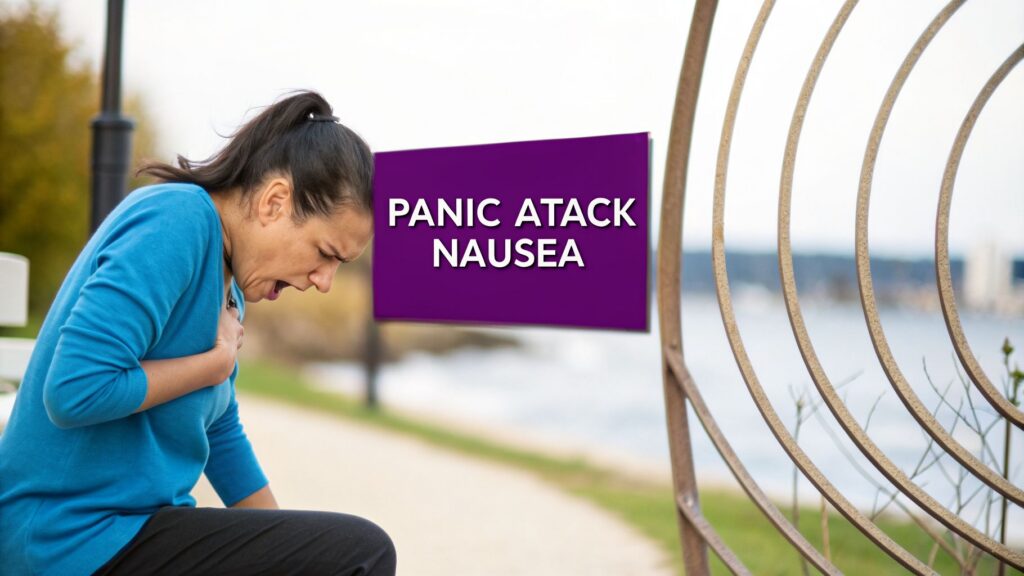
When a panic attack crashes over you, it’s a full-body experience. It's not just a storm in your mind; your body gets pulled into the chaos, too. That sudden, sickening wave of panic attack nausea is a perfect example. It's a deeply uncomfortable, but very real, symptom that comes directly from your body's own survival system going into overdrive.
Why Panic Attacks Can Make You Feel Sick

If you've ever felt that lurching, queasy feeling during a moment of intense anxiety, please know you are far from alone. For many, it's one of the most frightening parts of a panic attack. It doesn't mean you're actually sick or about to lose control. It’s simply a side effect of your body’s ancient, powerful fight-or-flight response kicking in when it doesn't need to.
Think of it this way: your brain mistakenly perceives a major threat and hits the big red emergency button. This triggers a cascade of changes designed to help you survive a real-life danger. One of the very first things to happen is a massive flood of adrenaline.
The Adrenaline Surge and Your Stomach
This rush of adrenaline is the main reason you feel sick. To prepare you to fight or run, your body instantly starts rerouting resources. It sends a surge of blood and oxygen to the systems you'd need for immediate action—your heart, lungs, and large muscle groups.
At the same time, it pulls blood away from any system that isn't essential for short-term survival. Your digestive system is at the top of that "non-essential" list.
The table below breaks down exactly how these rapid changes can leave you feeling so nauseous.
Why Panic Causes Nausea A Quick Look
| Physiological Change | Impact on Your Body | Resulting Sensation |
|---|---|---|
| Adrenaline & Cortisol Surge | Hormones signal an emergency, preparing the body for "fight or flight." | A jolt of energy, increased heart rate, and a sense of impending doom. |
| Blood Flow Diversion | Blood is rerouted from the digestive tract to your limbs and major muscles. | Your stomach and intestines get less oxygen, slowing or halting digestion. |
| Digestive System Halts | The muscles in your stomach and gut stop their normal churning and processing. | This sudden stop creates feelings of fullness, bloating, churning, and nausea. |
| Increased Muscle Tension | Muscles throughout your body, including your abdomen, tighten up. | This abdominal clenching can feel like a knot in your stomach and intensify queasiness. |
The main takeaway here is that your digestive process literally slams on the brakes. And it's that sudden halt that causes the gut-wrenching nausea, stomach knots, and waves of sickness that seem to appear from nowhere.
Understanding this is the first step toward taking your power back. The nausea isn't random. It’s a predictable, biological reaction to a false alarm.
While other symptoms might be more common, nausea is still a very real part of the experience for many people. For example, one major study on panic disorder found that while a racing heart was the most-cited symptom (36.69%), a significant 5.33% of people also reported nausea during their panic attacks. You can explore the data and learn more about these findings on panic symptoms by reading the full research.
Knowing that panic attack nausea is just a physical side effect of your body's alarm system helps you separate the sensation from the fear. Making that distinction is the key to learning how to manage not just the nausea, but the panic itself.
How Your Body's Alarm System Triggers Nausea
To really get why panic attacks make you feel so sick, it helps to see your nervous system as a state-of-the-art, but overly sensitive, home security system. Its one and only job is to protect you. During a panic attack, that system gets a false alarm—maybe a scary thought or an odd physical feeling—and treats it like a full-blown emergency. This is what kicks off the fight-or-flight response.
Once that alarm is pulled, your body goes into survival mode. Your brain tells your adrenal glands to pump out a flood of stress hormones, mostly adrenaline and cortisol. Think of these as a shot of rocket fuel, prepping your body in an instant to either fight off a threat or run for your life.
The Great Blood Heist
When this hormonal surge hits, your body has a single-minded goal: survival. It starts rerouting resources, like blood and oxygen, to the muscles and systems you'd need for a physical confrontation. Your heart pounds to pump blood faster, and your breathing gets quick and shallow to pull in more oxygen.
But where does all that extra blood come from? Your body basically "steals" it from systems that aren't crucial for escaping immediate danger. Your digestive system is one of the first to get shut down.
In a real crisis, digesting lunch is the last thing on your body's to-do list. The priority is getting blood to your arms and legs so you have the strength to escape.
This sudden diversion of blood is what triggers that wave of nausea. As blood flow is pulled from your stomach and intestines, the normal digestive process grinds to a halt. Your stomach muscles might clench up or even spasm, causing that awful churning, cramping, or "butterflies" sensation that is so common in panic.
How Hyperventilation Makes It Worse
On top of that, there's hyperventilation. That's the fast, shallow breathing that almost always comes with panic. It might feel like you can't get enough air, but what's actually happening is you're blowing off too much carbon dioxide. This change in your blood's chemistry can trigger a whole new set of physical symptoms, making you feel even worse.
- Dizziness and Lightheadedness: When your blood gases are out of whack, it can make you feel unsteady or like you're about to faint.
- Tingling Sensations: You might feel a pins-and-needles sensation in your hands, feet, or around your mouth.
- Increased Nausea: Feeling dizzy and lightheaded is a surefire way to make an upset stomach feel even more queasy.
Just knowing that this is a biological reaction—not a sign that you're medically ill—is a huge first step. Your body isn't broken; it's just running an ancient survival program that isn't always helpful in our modern world. And you're far from alone in this. The World Health Organization found that anxiety and depression rates jumped by 25% in the first year of the COVID-19 pandemic alone. Here in the U.S., about 6 million adults deal with panic disorder, with women being twice as likely as men to be affected.
You can read the full research about these mental health trends to see just how common this is. By recognizing panic-induced nausea for what it is—a physical byproduct of a false alarm—you can start to take back control.
Is It Panic or a Medical Emergency?
When a wave of panic hits, one of the most frightening questions you can ask yourself is, "Is this a real medical emergency?" The physical symptoms are so intense—especially that gut-wrenching panic attack nausea—that it can feel impossible to tell the difference between anxiety and a physical crisis. Learning how to sort through these signals is a powerful step toward feeling in control again.
This is a very common fear. When you’re in the thick of it, your thoughts can feel like they’re speeding down a hundred different roads at once. The decision tree below helps visualize that mental fork-in-the-road you face when a trigger hits—one path has you questioning your physical health, while the other considers anxiety as the root cause.

Knowing the typical patterns of a panic attack versus a medical issue can bring some much-needed clarity to that moment of crisis.
Clues Your Nausea Is From Panic
Nausea that bubbles up from a panic attack tends to follow a very specific pattern. It's rarely a solo symptom; instead, it’s part of a whole-body experience signaling that your fight-or-flight system has been hijacked.
Here are the tell-tale signs to look for:
- Sudden Onset with Fear: The nausea usually crashes in suddenly, right alongside a tidal wave of intense fear, dread, or that classic feeling of impending doom.
- Accompanied by Other Symptoms: It almost never shows up alone. You'll probably also feel other classic panic symptoms, like a racing heart, trembling, shortness of breath, dizziness, or chest tightness.
- Follows a Peak and Decline: The nausea will typically get worse and worse, hitting a peak over a few minutes, but then it will start to fade as the panic attack subsides. The whole episode usually lasts between 10 to 30 minutes.
When Nausea Might Signal a Medical Issue
On the flip side, nausea that comes from a physical health problem usually feels and acts differently. While panic can certainly mimic serious medical conditions, a few key signs should tell you it's time to get a professional medical opinion.
Think about a medical cause if your nausea is:
- Persistent and Unrelenting: The sick feeling just won't quit. It doesn’t fade after 30 minutes and might hang around for hours or even days.
- Linked to Food or Illness: It started right after eating something specific (which could point to food poisoning) or comes with other symptoms like vomiting, diarrhea, or a high fever.
- Lacks Psychological Symptoms: You feel physically ill, but without the intense, irrational fear or frantic, racing thoughts that are the hallmarks of a panic attack.
Important Disclaimer: This information is for educational purposes and is not a substitute for professional medical advice. If you are ever unsure, have new or severe symptoms, or experience chest pain, difficulty breathing, or signs of a stroke, you should seek immediate emergency medical care.
It's always a good idea to see a doctor to rule out any underlying medical conditions that could be causing or contributing to your nausea, like gastrointestinal issues or a hormonal imbalance. Getting a professional evaluation can provide peace of mind and, most importantly, ensure you're getting the right kind of care. You can get a better sense of this process by learning about what happens during a psychiatric evaluation.
Grounding Techniques To Calm Nausea Right Now

When a wave of panic attack nausea hits, it feels all-consuming. Your stomach churns, the world might start to spin, and that intense physical sickness can make the fear even worse. In that moment, you don’t need a complicated solution—you need a lifeline.
That's exactly what grounding techniques are. They act like an anchor, pulling your focus away from the internal storm of racing thoughts and a queasy stomach and reconnecting you with the solid, real world. The goal isn't to instantly stop the nausea, but to give you the tools to ride out the panic without letting the physical symptoms take over.
Your First Aid Kit for Panic-Induced Nausea
Think of these strategies as your immediate go-to's. The table below offers a quick look at what to do when nausea strikes during a panic attack.
| Technique | How It Works | When to Use |
|---|---|---|
| 5-4-3-2-1 Senses | Shifts focus from internal panic to external surroundings. | When your thoughts are racing and you feel disconnected. |
| Belly Breathing | Calms the fight-or-flight response by slowing your heart rate. | When you feel short of breath, dizzy, or your heart is pounding. |
| Cold Water/Peppermint | Uses strong physical sensations to "reboot" your system. | For a quick, sensory jolt to break the panic cycle. |
| P6 Acupressure | Applies pressure to a point linked to relieving nausea. | As a discreet way to manage queasiness anywhere, anytime. |
Learning to use these tools can make you feel more prepared and less afraid of the panic itself, which is a huge step forward.
Try The 5-4-3-2-1 Sensory Method
A favorite for a reason, the 5-4-3-2-1 method is brilliant because it forces your brain to do something other than panic. It gives your mind a simple, concrete job, breaking the cycle where fear feeds nausea and nausea feeds fear.
The next time you feel that familiar dread creeping in, pause and walk yourself through this:
- See 5 things: Look around and actually name five objects. Don't just glance. Notice the way light hits the corner of a picture frame or the texture of the carpet.
- Touch 4 things: Engage your sense of touch. Feel the soft fabric of your sleeve, the cool, smooth surface of your phone, or the solid weight of your keys in your hand.
- Hear 3 things: Listen carefully. Can you hear the low hum of the refrigerator? A bird outside? The gentle sound of your own breathing?
- Smell 2 things: Try to pick out two distinct smells. It might be the faint scent of your laundry detergent, the coffee brewing in the kitchen, or the fresh air from an open window.
- Taste 1 thing: Focus on a single taste. This could be a sip of water, a mint, or simply noticing the current sensation inside your mouth.
Use Your Breath To Soothe Your Stomach
When you panic, your breathing instinctively becomes quick and shallow. This is called hyperventilation, and it’s a direct cause of dizziness and nausea. The antidote is slow, intentional belly breathing, which signals to your body that you're safe.
- Get Comfortable: Sit down or lie back, whatever feels best for you.
- Place Your Hands: Rest one hand on your chest and the other on your stomach.
- Breathe In Deeply: Inhale slowly through your nose for about four seconds. Feel your belly rise and push your hand up, while the hand on your chest stays relatively still. This is key.
- Exhale Slowly: Breathe out gently through your mouth for about six seconds, letting your belly fall.
- Repeat: Keep this slow rhythm going for a few minutes. This simple action tells your nervous system to stand down, which in turn helps calm your panic attack nausea.
Soothe Your System With Physical Sensations
Sometimes, a simple physical shock to the system is the most effective way to break the panic cycle. Sipping ice-cold water does more than just hydrate you; the intense cold provides a jolt that can ground you in the present moment. The physical act of swallowing can also help reset a chaotic breathing pattern.
Peppermint is another classic remedy for a reason. Its strong scent and taste are well-known for easing nausea. Having some peppermint tea, essential oil, or even just a few hard candies on hand can be a game-changer when you feel that queasiness start to build.
Acupressure is another physical tool you can use discreetly anywhere. The P6 (or Neiguan) point is a pressure point on your inner wrist used for centuries to relieve nausea. Find it by placing three fingers across your wrist at the base of your palm. The spot is right below your index finger, between the two main tendons. Apply firm, circular pressure for 2-3 minutes.
These techniques are powerful examples of using your body to calm your mind. For anyone interested in digging deeper, exploring other somatic healing exercises can give you an even richer toolkit for managing anxiety’s physical symptoms.
If you’re dealing with this, you are far from alone. Panic disorder affects an estimated 2.7% of adults in the U.S.—that’s nearly 6 million people—and it's twice as common in women as in men. You can discover more insights about anxiety statistics to see just how common these experiences truly are.
Long-Term Strategies For Lasting Relief
While grounding yourself in the moment is crucial, winning the war against panic attack nausea means going after the root cause. True, lasting relief comes from recalibrating your body’s internal alarm system so it stops screaming "danger!" when there isn't one. The most reliable way to do that is by working with a professional who understands the science behind anxiety.
Think of it as moving from defense to offense. Therapy helps you get ahead of the panic by untangling the very thought patterns that set it off. This isn't just about managing symptoms; it's about fundamentally changing your relationship with anxiety, which ultimately gives you back the control you feel you've lost.
Cognitive Behavioral Therapy (CBT)
Cognitive Behavioral Therapy, or CBT, is the gold standard for treating panic disorder for a reason: it works. The whole idea is that your thoughts, feelings, and physical reactions are all connected. If you can change the catastrophic thoughts that pop up during a panic attack, you can stop the physical and emotional spiral.
A CBT therapist will guide you through a practical, hands-on process to:
- Become a Detective: You'll learn to spot the specific thoughts or physical feelings that act as a trigger for your panic.
- Challenge Your Fears: Together, you'll learn to push back against the scary thoughts. You’ll question beliefs like, "This nausea means something is seriously wrong with me," and replace them with more realistic ones.
- Rewrite the Script: Through a process called exposure therapy, you'll gradually and safely face the situations you fear. This teaches your brain, step-by-step, that these triggers are not actually dangerous, which dials down the panic response over time.
Psychiatry and Medication Management
For many people, therapy is even more powerful when paired with the right medication. This isn't a sign of weakness; it's a smart, strategic move to get your symptoms under control, especially if they're severe. Medications don't cure panic disorder, but they can lower the volume on your anxiety, making it much easier to focus and do the important work in therapy.
Most often, doctors prescribe Selective Serotonin Reuptake Inhibitors (SSRIs). These medications help balance key brain chemicals that regulate mood and anxiety, leading to fewer panic attacks and less intense nausea when they do happen. A psychiatrist can help you figure out if medication is a good fit and find the right one for you. As you work on your treatment plan, you might also want to explore these 10 effective natural ways to manage anxiety to round out your toolkit.
Eye Movement Desensitization and Reprocessing (EMDR)
Sometimes, panic attacks are tied to unresolved trauma from your past. If that’s the case, Eye Movement Desensitization and Reprocessing (EMDR) can be an incredibly effective approach. EMDR helps your brain properly process and "file away" old, distressing memories that are still triggering your body's alarm system today.
Think of EMDR as helping your brain finally put old memories in the right filing cabinet. Once they're properly stored, they lose their power to trigger a fight-or-flight reaction in the present, calming the physical symptoms—like nausea—that come with it.
Instead of talking extensively about the trauma, EMDR uses bilateral stimulation (like following a light with your eyes) to help your brain make new, healthier connections. It's a way of neutralizing the emotional sting of the past so you can find calm in the present.
For an even deeper dive into managing panic in the moment, our guide on coping strategies for panic attacks has more immediate, practical tips you can use right away.
Find Your Path to Calm in Arizona

When you're caught in a loop of panic attacks and the awful nausea that often tags along, it’s easy to feel like you're completely on your own. But if you’re in the Phoenix metro area, you don’t have to figure this out by yourself. Lasting relief isn't just a hopeful idea—it’s something you can achieve with the right kind of support.
We know that making that first call for help can be the most difficult step. Here at reVIBE Mental Health, we understand that deeply. We’ve built our practice to be a welcoming and non-judgmental place where healing feels possible, not intimidating. Our entire focus is on clearing the usual hurdles to getting care so you can concentrate on what really matters: feeling better.
Making Your First Step Simple
Getting support shouldn’t add more stress to your life. We know that anxiety doesn't stick to a 9-to-5 schedule and that life is already complicated enough. That's why we’ve made our approach to care flexible and accessible, designed to meet you right where you are.
Our commitment to you includes:
- Appointments 7 Days a Week: We offer flexible scheduling to fit your life, ensuring you can always find time for your mental health.
- Most Major Insurance Accepted: Our team is here to help you sort out and verify your insurance benefits, making the financial side of things clear and manageable.
- In-Person and Telehealth Options: You can choose the setting that feels most comfortable for you, whether it's a face-to-face meeting in our office or a secure video call from your own home.
The journey to managing panic-induced nausea starts with finding a provider who truly gets it. Our team is here to listen and thoughtfully match you with the right therapist or psychiatrist for your unique situation.
Find a reVIBE Location Near You!
We currently have five locations for your convenience. (480) 674-9220
reVIBE Mental Health – Chandler
3377 S Price Rd, Suite 105, Chandler, AZreVIBE Mental Health – Phoenix Deer Valley
2222 W Pinnacle Peak Rd, Suite 220, Phoenix, AZreVIBE Mental Health – Phoenix PV
4646 E Greenway Road, Suite 100, Phoenix, AZreVIBE Mental Health – Scottsdale
8700 E Via de Ventura, Suite 280, Scottsdale, AZreVIBE Mental Health – Tempe
3920 S Rural Rd, Suite 112, Tempe, AZ
You can also visit reVIBE online to explore our locations and take that first step toward reclaiming your well-being. You absolutely deserve to feel safe, heard, and in control on your journey to recovery. We're here to help you get there.
Frequently Asked Questions About Panic Attack Nausea
It's completely normal to have specific questions swirling around, even when you understand the link between panic and nausea. Let's tackle some of the most common concerns we hear every day.
Can Panic Attack Nausea Actually Make You Vomit?
Yes, it absolutely can, though it's not the most frequent outcome. When a panic attack hits its peak, that fight-or-flight response can disrupt your digestive system so violently—think intense stomach muscle contractions—that your body might react by throwing up.
This can be especially tough if you have a fear of vomiting (emetophobia), which can then become a trigger for more panic attacks. It's a vicious cycle, and if this sounds familiar, it’s a really important topic to bring up in therapy.
How Long Does Nausea From a Panic Attack Last?
The most intense, gut-wrenching nausea usually maps directly onto the panic attack itself. For most people, the worst of it will peak within 10 minutes and then start to ease up as the panic subsides over the next 10 to 30 minutes.
That said, don't be surprised if a general queasiness or a sense of an "off" stomach hangs around for an hour or more afterward. Your nervous system just went through a massive hormonal surge, and it needs time to recalibrate and get back to its normal "rest-and-digest" mode.
Are There Foods to Avoid if I Experience This?
While certain foods don't cause a panic attack, your diet can definitely make you more susceptible or make the nausea worse when you're already anxious. If panic attack nausea is a regular part of your experience, it pays to be mindful of what you're eating, especially during high-stress times.
Try to dial back on:
- Heavy, Greasy Meals: These are tough for your system to process and can create that bloated, uncomfortable feeling that makes nausea even worse.
- High Caffeine Intake: Caffeine is a stimulant. It's like pouring fuel on an already anxious fire, making your nervous system even more revved up.
- Excessive Alcohol: It might feel like it helps you relax in the moment, but alcohol can mess with your sleep, spike your anxiety the next day, and upset your stomach.
When you feel that queasy feeling start to creep in, think simple and soothing. Bland crackers, a piece of toast, some peppermint or ginger tea, or just sipping cold water can all help calm your stomach without overwhelming it.
Can Therapy Really Stop a Physical Symptom Like Nausea?
One hundred percent. This gets right to the heart of the mind-body connection. The nausea isn't some random stomach problem; it's a physical symptom being switched on by a psychological event—the panic attack.
Therapy works by treating the root cause. It retrains your brain to stop sounding the false fight-or-flight alarm. Techniques like CBT and EMDR teach the anxious parts of your mind that there is no real danger. Once the alarm stops blaring, the physical symptoms—including the nausea—don't have a reason to show up. Over time, they become less intense, less frequent, and can eventually disappear completely.
Your journey to overcoming panic attack nausea begins with that first step. If you're ready to find real, lasting relief, the team at reVIBE Mental Health is here to guide you. Learn more about our compassionate approach to mental healthcare and schedule an appointment to get started.