So, you’re wondering about gabapentin and anxiety. The short answer is yes, doctors do prescribe it to help manage anxiety, but it’s not what you’d call a standard, first-choice medication.
Think of it this way: if standard anxiety treatments like SSRIs are the main roads on a map, gabapentin is more like a specific, useful side street a doctor might take you down when the main routes aren't working well for you. It was originally developed as an anti-seizure medication, but its ability to calm down overactive nerve signaling in the brain also makes it a compelling option for some people with anxiety.
How Does Gabapentin Fit Into an Anxiety Treatment Plan?
When you're looking for anxiety relief, the conversation usually starts with well-established options—things like therapy, lifestyle adjustments, and medications designed specifically for anxiety. Gabapentin typically joins that conversation when those initial approaches haven't brought the relief you need, or maybe the side effects were just too much to handle.
Because gabapentin's official FDA approval is for conditions like seizures and nerve pain, using it for anxiety is considered an “off-label” use. This might sound strange, but it’s a very common and perfectly legal practice in medicine. It simply means your doctor is using their clinical expertise and scientific evidence to prescribe a drug for a condition it's known to help, even if it's not its primary, FDA-approved purpose.
Before we dive deeper, here's a quick overview of what to know about gabapentin for anxiety.
Gabapentin for Anxiety at a Glance
| Aspect | Summary |
|---|---|
| Primary Use | Officially an anticonvulsant and nerve pain medication. |
| Anxiety Use | Prescribed "off-label" to calm an overstimulated nervous system. |
| Best For | Often considered when first-line anxiety meds (like SSRIs) are ineffective or cause bad side effects. |
| Specific Anxieties | Strongest evidence supports its use for Social Anxiety Disorder. |
| Mechanism | Works by reducing excessive electrical activity in the brain. |
| Treatment Role | Typically used as part of a comprehensive plan, not a standalone solution. |
This table gives you the highlights, but let's explore why a psychiatrist might specifically choose this path for you.
Why Would a Doctor Suggest Gabapentin?
A psychiatrist here at reVIBE Mental Health doesn't just pick medications from a list. They’re building a strategy tailored to you, and gabapentin might be the right tool for the job in a few key situations.
- For Social Anxiety: Some of the most compelling research on gabapentin for anxiety is in the area of social anxiety disorder. It seems to be quite effective at dialing down the intense fear and physical symptoms that can make social situations feel impossible.
- When Other Meds Haven't Worked: If you've already tried one or more standard anxiety medications without success, gabapentin can be a fantastic alternative. It works differently, offering a new pathway to relief.
- For Multiple Issues at Once: It's a particularly smart choice if you're dealing with anxiety alongside other conditions it’s approved to treat, like chronic nerve pain. One medication can potentially help with both.
The goal isn't just to find a "magic bullet" pill. Real, lasting change comes from a holistic approach. That means combining thoughtful medication management with therapy and support that addresses the root of the issue. This way, you're not just masking symptoms—you're building a foundation for long-term well-being.
How Gabapentin Calms an Anxious Brain
To get a handle on how gabapentin can help with anxiety, it’s useful to think of your brain as a busy electrical grid. This grid has two main types of signals: excitatory messages that act like a gas pedal, revving your system up, and inhibitory messages that work like the brakes, telling everything to slow down.
When anxiety takes over, it’s like your foot is jammed on the accelerator. Your brain gets swamped with "go, go, go!" signals from a neurotransmitter called glutamate, which leads to those familiar feelings of worry, panic, and an inability to relax. This constant state of high alert is mentally and physically draining.
A Different Way to Tap the Brakes
Interestingly, gabapentin doesn't work by directly hitting the main brake pedal, a neurotransmitter known as GABA. Its approach is a bit more indirect and nuanced. Gabapentin works by influencing something called voltage-gated calcium channels on your nerve cells.
Picture these channels as tiny floodgates that control how many of those "accelerator" signals get released. Gabapentin comes in and gently nudges those gates partially closed. This doesn’t stop the signals entirely, but it significantly reduces the flow, effectively turning down the volume on the brain's hyperactivity.
By dialing back the intensity of these frantic signals, gabapentin helps bring a sense of balance back to your nervous system. The result is a calmer internal environment, which can lead to a real reduction in both the mental chatter and the physical symptoms of anxiety.
This concept map helps show how gabapentin serves as a central hub, connecting its use as an off-label anxiety aid with its other FDA-approved purposes.
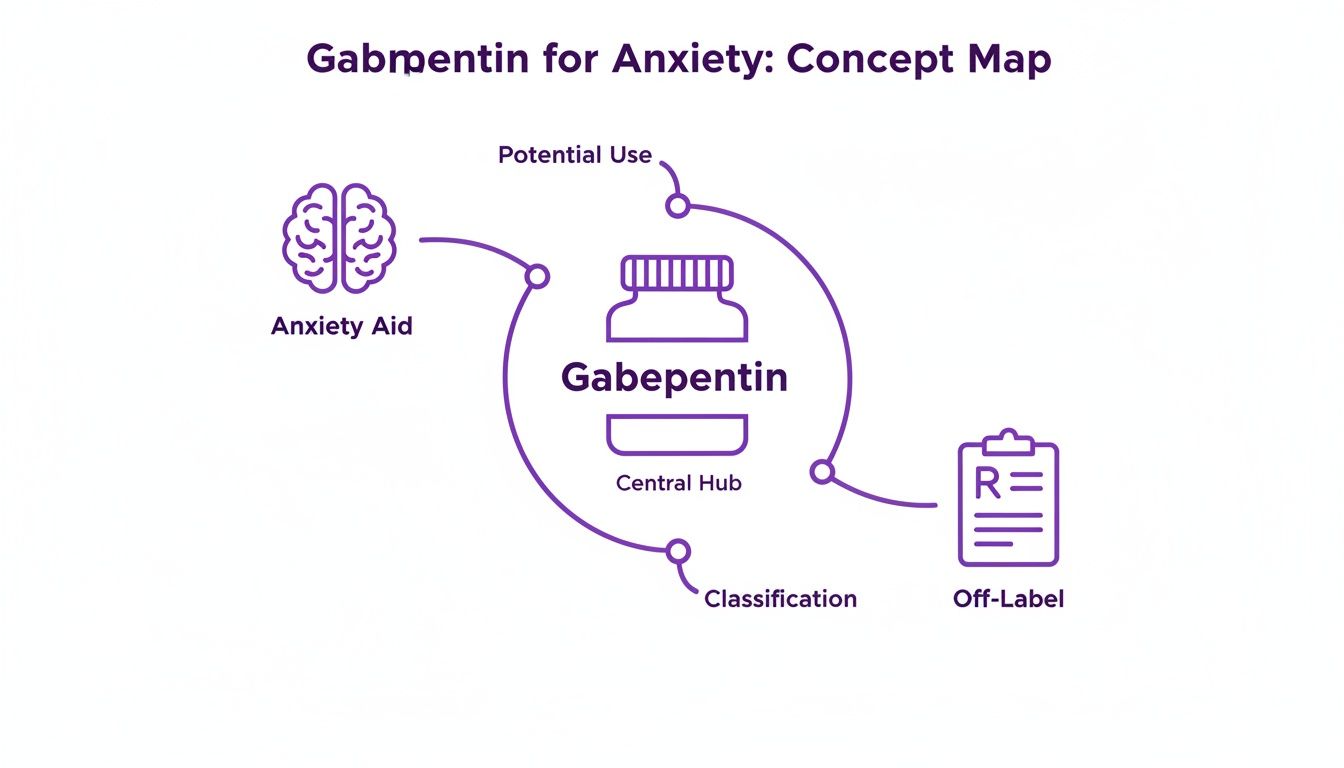
As the visual lays out, the medication connects to both its clinical application for anxiety and its important status as an off-label treatment.
The Calming Ripple Effect
This action of closing the gates sets off a ripple effect of calm throughout the brain. Once the constant barrage of excitatory signals is dampened, your nervous system finally gets a chance to reset. For many people, this neurological quiet shows up in a few key ways:
- Quieter Mind: The endless loop of racing thoughts and persistent worries often starts to fade.
- Physical Relaxation: That tense, on-edge feeling in your body—like a racing heart or tight muscles—can begin to ease up.
- Better Sleep: An overactive brain is a major barrier to good sleep. By calming things down, gabapentin can make it much easier to fall asleep and stay asleep.
This unique way of working is precisely why gabapentin can be a promising alternative when more common anxiety medications, like SSRIs that focus on serotonin, just aren't cutting it. It tackles the problem from a completely different angle by directly targeting the overstimulation that fuels so many anxiety symptoms.
What Does the Research Say About Gabapentin for Anxiety?
While it’s always helpful to hear about individual success stories, a doctor’s recommendation for a medication like gabapentin is built on a foundation of clinical research. This isn't just about anecdotal evidence; specific studies have put gabapentin to the test, giving us a clearer picture of where it can be most effective.
Let's dig into that data to understand why this medication has become a go-to off-label option for some people struggling with anxiety.
The scientific backing for gabapentin is probably strongest when it comes to social anxiety disorder (also called social phobia). If you've ever dealt with that intense, paralyzing fear in social settings, you know how much it can shrink your world. This is one area where the research is particularly compelling.
Key Studies on Gabapentin and Anxiety
One of the cornerstone studies that clinicians often look back on was published in 2009. It was a head-to-head trial comparing gabapentin against a placebo over 14 weeks specifically for people with social anxiety.
The results were pretty definitive. The group taking gabapentin reported a significantly greater drop in their anxiety symptoms compared to the placebo group. It wasn't just a small difference, either—both the patients and their doctors noted the improvement.
Another interesting piece of research from 2012 looked at a different population: breast cancer survivors, a group that often faces substantial anxiety.
The study found that even at relatively low doses (300 mg to 900 mg a day), women taking gabapentin saw a major reduction in their anxiety levels compared to those taking a placebo. This suggests that gabapentin's calming effect can be a powerful tool even when anxiety is tied to a major health crisis.
These studies help us build a more nuanced understanding. The evidence is solid for specific conditions like social phobia, which is why it’s often considered a strong candidate for that diagnosis. For other types of anxiety, the research is still evolving.
Of course, medication is just one tool in the toolbox. As you learn more about gabapentin, it's helpful to see how it fits into comprehensive, effective treatment plans that address the whole person.
A good provider uses this body of evidence as a guide, not a rulebook. It helps them decide if gabapentin makes sense for you, especially if first-line treatments haven't brought the relief you deserve. At the same time, exploring the different types of therapy for anxiety is just as crucial for building a lasting strategy for wellness.
Understanding "Off-Label" Use for Anxiety
If your doctor brings up prescribing a medication “off-label,” it’s completely normal to feel a bit hesitant. Does that mean it’s experimental? Or unproven? The reality is, off-label prescribing is a very common, legal, and often necessary part of good medical care.
It simply means that your provider is using their expert clinical judgment to prescribe a drug for a different reason than what the FDA officially approved it for. In gabapentin's case, its formal FDA approvals are for managing seizures and certain types of nerve pain.
So, Why Use It for Anxiety?
The reason gabapentin has become a go-to option for anxiety is straightforward: a lot of clinical experience and growing research show that it works. It has a knack for calming the overactive nerve signaling that fuels anxiety, which can be a game-changer for many people.
This makes it an incredibly useful tool, especially when the usual first-choice medications haven't provided relief or have come with unbearable side effects.
So, if it works, why isn't it officially approved for anxiety? Getting a new FDA indication for a drug that's already on the market is a long, complicated, and very expensive process. Once a drug like gabapentin becomes generic, pharmaceutical companies rarely have the financial motivation to jump through those hoops, even when there's strong evidence for its new use.
Here's the key takeaway: "Off-label" doesn't mean "un-researched" or "unsupported." It means a skilled clinician is making an informed decision based on solid evidence to find the best possible treatment for you.
A Look at the Mixed Evidence
When you dig into the research on gabapentin for anxiety, you find a nuanced picture. It’s not a one-size-fits-all solution, and its effectiveness can really depend on the specific type of anxiety we're talking about.
A major 2019 systematic review pulled together the existing studies and found that while gabapentin definitely showed benefits for some anxiety conditions, there weren’t any top-tier clinical trials for generalized anxiety disorder at that time.
For example, studies have shown it can work quite well for the intense anxiety of social phobia and is also effective at calming nerves before surgery. On the other hand, it seems to be less helpful for severe panic disorder. In one study of 103 patients with panic disorder, gabapentin didn't perform any better than a placebo.
This is exactly why working with an experienced professional is so critical. A good prescriber knows how to navigate this complex evidence and see if gabapentin might be a fit for your unique situation. Learning how to find a good psychiatrist who can thoughtfully consider all the options is a crucial step toward feeling better.
Navigating Dosing, Side Effects, and Safety
When using gabapentin for anxiety, think of finding the right dose as a collaborative process between you and your provider. There's no one-size-fits-all number. The real goal is to land on the lowest possible dose that quiets your anxiety without causing a lot of disruptive side effects. It’s all about careful, gradual adjustments.
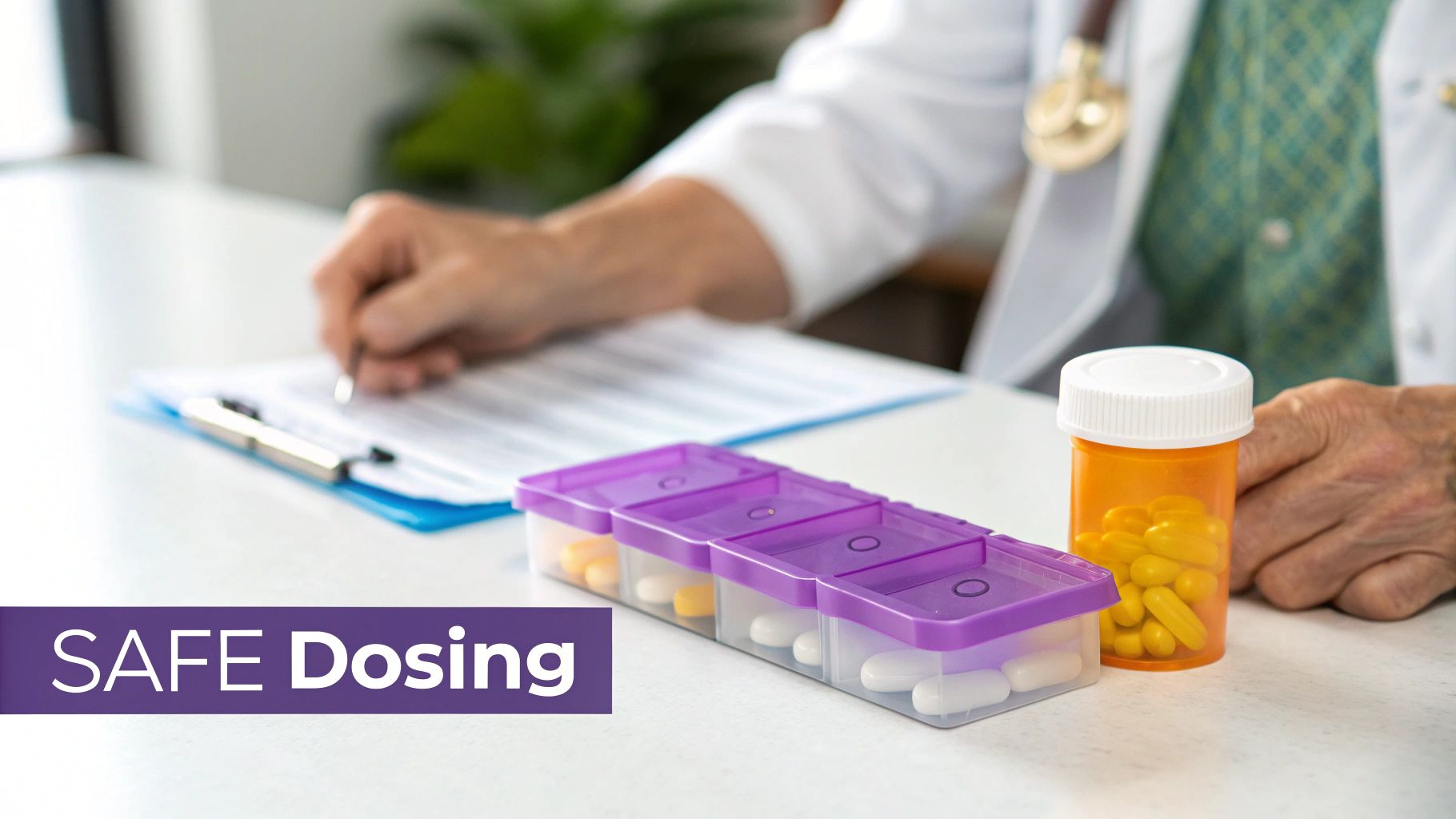
We almost always start with a low dose—often around 300 mg per day—and then slowly dial it up over several days or weeks. This "start low, go slow" method gives your body a chance to acclimate to the medication. It's the best way to minimize those initial side effects and helps your provider see exactly how you're feeling at each step.
Finding the Right Dose for Anxiety Relief
Getting that ideal dose is everything, as research makes it clear that gabapentin’s effectiveness is tied directly to how much you take. Studies show a distinct link: as the dose goes up, anxiety severity tends to go down.
The clinical data suggests that total daily doses of 900 mg or higher are where most people start to feel significant relief, often reaching a state of mild anxiety or even full remission. On the flip side, doses under 600 mg per day often aren't enough to make a dent in persistent, severe symptoms. You can always dig into the full research on how dosing impacts anxiety outcomes to see the numbers for yourself.
A great real-world example comes from a documented case in 2017. A patient with generalized anxiety disorder found complete relief on a 1,200 mg daily dose. Later, when they tried to reduce it to 600 mg, their debilitating anxiety came rushing back. It’s a powerful illustration of just how crucial that specific dosage can be.
Common Side Effects and What to Expect
Like any medication, gabapentin has potential side effects. The good news is that they are usually mild and often fade as your body adjusts. Knowing what to look out for helps you have a more productive conversation with your doctor.
Here are the most common things people report:
- Drowsiness or Sleepiness: This is a big one, especially right after you start or increase the dose.
- Dizziness or Unsteadiness: You might feel a little wobbly on your feet. It's smart to be extra careful until you see how the medication affects you.
- Fatigue: A general feeling of being tired can pop up, but this often gets better over time.
While these initial side effects can be annoying, they typically get much better within the first couple of weeks. If they hang around or feel like too much to handle, that's your cue to call your provider. A small tweak to the dose might be all it takes.
Important Safety Considerations
Beyond the common stuff, there are a few serious safety points to keep in mind. First, never stop taking gabapentin suddenly. Quitting cold turkey can lead to some pretty unpleasant withdrawal symptoms, including a rebound of anxiety, insomnia, and nausea. If you need to stop, your provider will walk you through a plan to taper off slowly and safely.
Also, while gabapentin is not a federally controlled substance, the potential for misuse and dependence is real. It is absolutely vital to take it exactly as prescribed. Combining it with other things that slow down your central nervous system—like alcohol or opioids—is a dangerous mix and should be avoided.
Honest, open communication with your doctor is non-negotiable, especially if you have a history of substance use. It's how we ensure your treatment is both safe and successful. This principle is at the heart of our entire approach to medication management for depression and other mental health conditions, because your safety always comes first.
Finding Comprehensive Anxiety Care in Arizona
Getting a handle on how a medication like gabapentin could fit into your anxiety treatment is a great start, but it's really just one part of a bigger picture. The truth is, lasting relief rarely comes from a single pill. Medication can be incredibly helpful, but it's most effective when it supports the deeper work you do in therapy.
Here at reVIBE Mental Health, we champion an integrated approach. This means our expert medication management goes hand-in-hand with proven therapeutic techniques. Our goal isn't just to quiet the symptoms; it's to give you the skills and understanding you need to truly thrive.
A personalized path to wellness combines professional guidance with compassionate support. It’s about building a partnership to help you regain your balance and feel better, not just for a moment, but for the long term.
If you're in the Phoenix metro area and feel like you're ready to explore what's next, our team is here for you. We provide a safe, non-judgmental space at our clinics to figure it all out. For those looking for direct assistance from community partners, you may find valuable information on HelpNow AZ's intake process for various services.
Find a reVIBE Location Near You!
We currently have five locations for your convenience. (480) 674-9220
reVIBE Mental Health – Chandler
3377 S Price Rd, Suite 105, Chandler, AZ
reVIBE Mental Health – Phoenix Deer Valley
2222 W Pinnacle Peak Rd, Suite 220, Phoenix, AZ
reVIBE Mental Health – Phoenix PV
4646 E Greenway Road, Suite 100, Phoenix, AZ
reVIBE Mental Health – Scottsdale
8700 E Via de Ventura, Suite 280, Scottsdale, AZ
reVIBE Mental Health – Tempe
3920 S Rural Rd, Suite 112, Tempe, AZ
Your Questions About Gabapentin for Anxiety, Answered
Starting any new medication brings up a lot of questions. Let's walk through some of the most common ones we hear from people considering gabapentin for their anxiety.
How Long Does It Take for Gabapentin to Work for Anxiety?
This is probably the most frequent question, and the answer really depends on the person and the situation. Some people notice a subtle sense of calm within just a few hours of their first dose, which can be a relief for immediate, in-the-moment anxiety.
For broader conditions like generalized anxiety, however, it’s not an instant fix. You'll likely need to take it consistently for about one to two weeks before you feel its full, steadying effects. This time allows the medication to reach a stable, effective level in your body. Your prescriber will be checking in with you to see how you're feeling during this initial period.
Is Gabapentin Addictive?
This is a very important and valid concern. Federally, gabapentin isn't classified as a controlled substance in the same way that benzodiazepines like Xanax are. However, it's not without risks.
It's possible to develop a psychological and physical dependence on gabapentin, especially if it's taken in high doses for a long time or not as directed.
The safest path forward is always responsible use. Following your doctor's instructions to the letter and keeping an open line of communication is the best way to manage any potential risks. You should never stop taking it suddenly, as this can trigger withdrawal symptoms.
Can I Take Gabapentin With My Antidepressant?
Yes, this is actually a very common approach. A provider might prescribe gabapentin as an "add-on" medication alongside a standard antidepressant like an SSRI or SNRI.
This strategy is often used when your primary antidepressant helps, but doesn't quite get you all the way to feeling your best. Since gabapentin works on a different brain pathway, it can work in tandem with your other medication to tackle anxiety from multiple angles. Of course, this should only ever be done under the close supervision of your doctor to ensure the combination is safe and effective for you.
Figuring out if gabapentin is a good fit for you is a personal decision, and one that should be made with a professional who truly understands your health history and goals. The compassionate team here at reVIBE Mental Health specializes in expert medication management and creating treatment plans that make sense for you.
Ready to start the conversation? Get in touch with us to schedule an appointment today.