
When you're trying to help a teenager with anxiety, the first step is always to understand what they're going through. It’s about recognizing the signs, validating their feelings, and creating a safe space where they feel seen and heard. The real work begins when you can tell the difference between typical teenage stress and a more serious issue that might need professional support.
Understanding Why So Many Teens Are Anxious Today
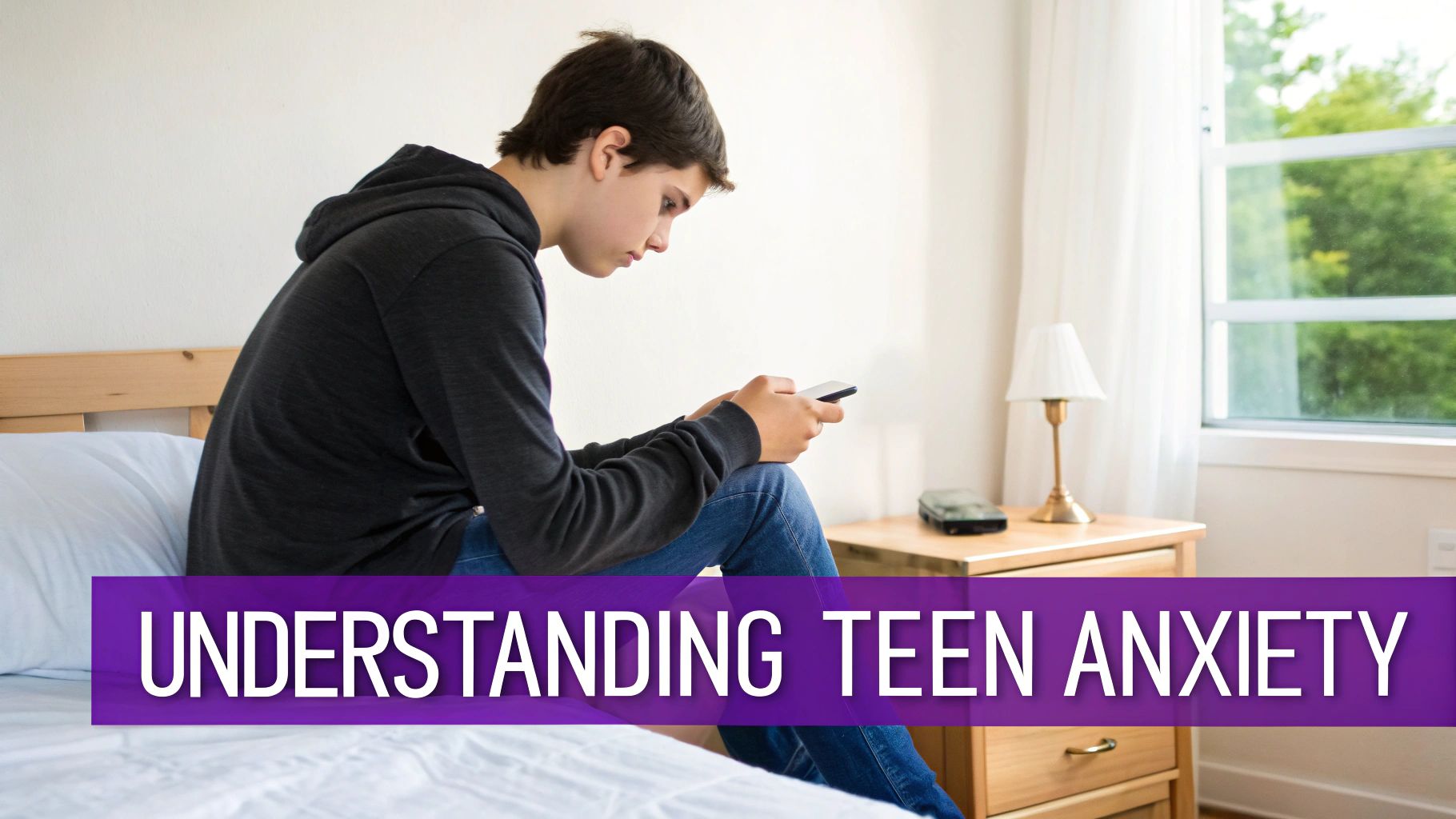
If your teenager seems more on edge, overwhelmed, or worried than you remember being at their age, you’re not alone. The pressures facing adolescents today are in a league of their own, creating a perfect storm for anxiety to take hold. This isn't just about moodiness; it's a real and growing challenge affecting families everywhere.
The numbers are pretty stark. Globally, one in seven adolescents aged 10-19 experiences a mental disorder, with anxiety and depression leading the way. Here in the U.S., recent data shows that one in five high school students reported symptoms of anxiety in just the past two weeks. It's a clear signal that this is something we need to pay attention to. You can dig deeper into these adolescent mental health statistics from the World Health Organization.
The Modern Pressures Fueling Teen Anxiety
So, what’s behind this surge? It's a mix of academic, social, and digital pressures that are uniquely intense for this generation. Today’s teens live in a world that never really shuts off.
-
Academic and Performance Pressure: The push to excel in everything—school, sports, clubs—is relentless. The competition for college and future success feels like a high-stakes game, creating a constant fear of not being good enough.
-
The Social Media Effect: Platforms like Instagram and TikTok create a non-stop feed of comparison. Teens are constantly seeing the curated, filtered highlight reels of their peers' lives, which can easily fuel feelings of inadequacy, social anxiety, and a powerful fear of missing out (FOMO).
-
An "Always-On" Culture: Unlike past generations who could leave school stress behind at the end of the day, today's teens are connected 24/7. Social drama, homework reminders, and distressing world news follow them home on their devices, leaving almost no room for a mental break.
Differentiating Anxiety from Normal Teen Stress
One of the biggest challenges for parents is figuring out if what you're seeing is the normal rollercoaster of adolescence or the more persistent, overwhelming nature of an anxiety disorder. Stress is usually a response to a specific trigger, like a big exam. Anxiety, on the other hand, tends to linger long after the trigger is gone—or sometimes has no clear cause at all.
Think of it this way: Stress is worrying about a big presentation. Anxiety is worrying about the presentation, then worrying about what everyone thought afterward, and then immediately starting to worry about the next one weeks from now.
The most telling sign is the impact on daily life. If your teen's worries are consistently getting in the way of their sleep, school, friendships, or their ability to enjoy things they used to love, it’s a strong indicator that you’re dealing with more than just stress.
Here’s a quick-reference table to help you spot the differences between what's typical and what might be a sign of anxiety.
Recognizing Anxiety Versus Typical Teen Behavior
| Category | Typical Teen Behavior | Potential Sign of Anxiety |
|---|---|---|
| Emotional | Occasional moodiness or irritability tied to specific events (like a bad grade or a fight with a friend). | Persistent, excessive worry that seems out of proportion; frequent irritability; a constant sense of dread or being on edge. |
| Behavioral | Procrastinating on a tough assignment or feeling reluctant to go to a party where they don't know many people. | Consistently avoiding social situations, school, or activities they once enjoyed; significant changes in eating or sleeping habits. |
| Physical | Feeling tired after a late night of studying or a busy weekend. | Chronic fatigue that doesn't improve with rest; frequent unexplained headaches, stomachaches, or muscle tension. |
Seeing these patterns clearly is the first real step in knowing how to help. This isn't about diagnosing your teen—it's about understanding their world with empathy. By acknowledging the unique pressures they're under, you build a foundation of trust that makes every conversation and every next step that much more effective.
Opening Up a Conversation About Anxiety
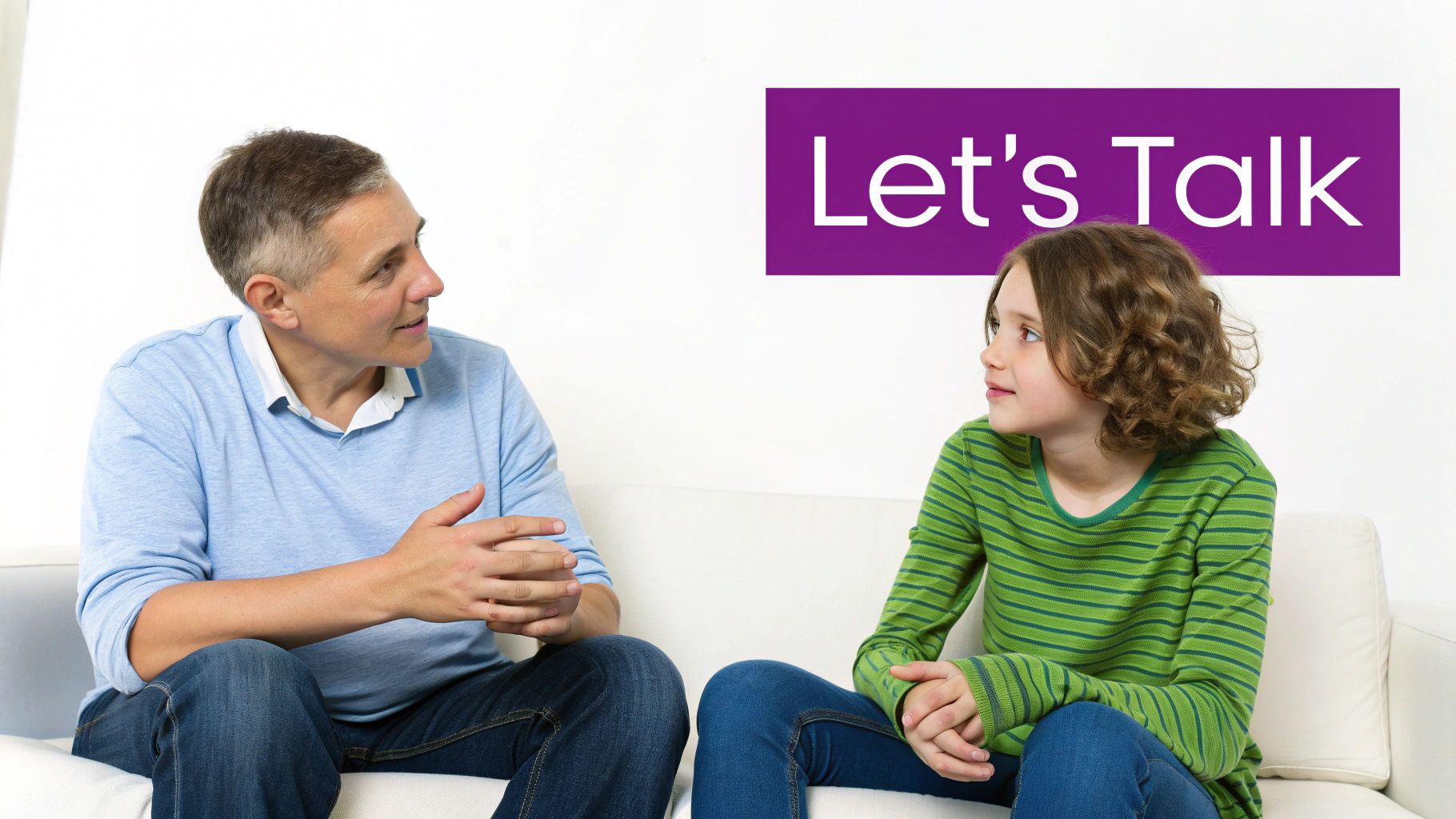
It’s one thing to see your teen struggling. It's another thing entirely to figure out how to talk to them about it. The fear of saying the wrong thing can be paralyzing, but letting the silence stretch on often feels even worse.
The most important thing to remember is that you're not going in to "fix" them. You're opening a door to connect and understand. That shift in mindset changes everything. A gentle, observant, and inviting approach is what will build trust, not walls.
Setting the Stage for a Real Talk
Believe it or not, timing and location are huge. A forced, formal "we need to talk" ambush is a surefire way to put a teenager on the defensive. Trying to have a serious chat while they're rushing out the door or scrolling on their phone is just as pointless.
Instead, you have to look for those natural, low-pressure windows of opportunity. Often, the best talks happen when you're doing something side-by-side, which feels much less confrontational than a face-to-face interrogation.
- In the car. Something about not having to make direct eye contact makes it easier for kids to open up.
- While walking the dog or folding laundry. A simple, shared task creates a comfortable and casual backdrop for a real conversation.
- Late at night. You might find your teen is more reflective and open when the day is done and the house is quiet.
Find a space that feels safe and private, where you won't be interrupted. This small act signals to them that they have your full attention and what they have to say matters.
Gentle Ways to Start the Conversation
When you finally get that moment, lead with gentle observation, not accusation. Frame your concerns using "I" statements. This comes across as you sharing your feelings, not passing judgment on theirs.
Here are a few phrases I’ve seen work well to gently crack open the door:
- "I've noticed you seem to have a lot on your mind lately. How are you really doing?"
- "You seem more stressed than usual. I just want you to know I'm here to listen if you want to talk about it."
- "It looks like you're carrying a heavy load right now. I'm on your team, and I want to help if I can."
- "I remember feeling completely overwhelmed at your age. Is anything like that going on for you?"
These are soft, open-ended questions. They give your teenager control over how much they want to share, which is absolutely vital for building trust.
Your main job in this first talk isn't to solve a single problem. It's just to listen. Validate what you hear with simple phrases like, "That sounds incredibly tough," or "I can see why you would feel that way." This simple act of acceptance is more powerful than you can imagine.
Common Conversational Traps to Avoid
Knowing what not to say is just as crucial as knowing what to say. Many well-intentioned parental instincts can actually shut a conversation down flat. Watch out for these common missteps.
1. Minimizing Their Feelings: Ditching phrases like "Don't worry about it," "It's not that big of a deal," or "You're overreacting" is non-negotiable. To your teen, it is a big deal. Invalidating their experience will only make them feel more isolated.
2. Rushing to Solutions: Jumping in with "Well, you should just…" or "Why don't you try…" cuts them off before they've even finished their thought. Sometimes, they just need the space to vent and feel heard, not to be handed a five-step action plan. Listen first, problem-solve later (and together).
3. Comparing Their Struggles: Starting a sentence with "When I was your age…" can feel empathetic, but it often lands as dismissive. Their world is different from the one you grew up in. Their experience is theirs alone.
4. Playing the Blame Game: Resist the urge to point fingers at a single cause, like "It's because of that phone" or "It's those friends you hang out with." Anxiety is complex. Oversimplifying it will only make them defensive and less likely to confide in you.
The most powerful tool you have is your ability to listen. Ask curious, open-ended questions like, "What does that actually feel like for you?" or "What's the hardest part about that?" By creating that safe space for them to share without fear of judgment, you're taking the most important first step of all.
Building a Low-Anxiety Home Environment
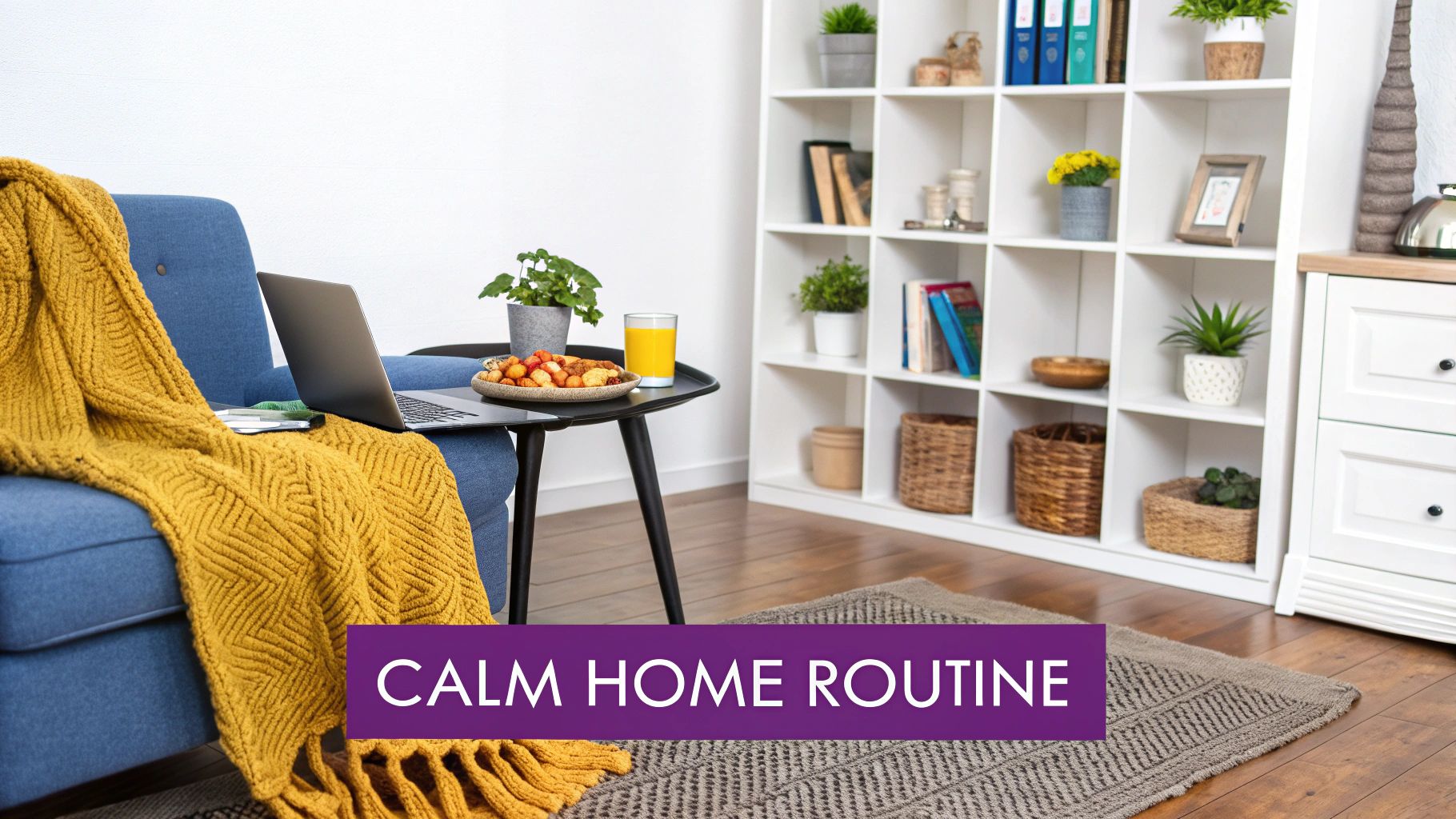
Once you've started talking, the next big step is to shape your home into a sanctuary. The outside world is already chaotic enough; your home can be a predictable, calming space where your teen can finally lower their defenses and recharge.
This isn’t about creating some impossible, stress-free bubble. It's about intentionally making your home a buffer against external pressures, giving your teen the stability and security an anxious mind desperately needs.
Establish Predictable Routines and Rhythms
Anxiety absolutely thrives on uncertainty. When a teen doesn't know what's coming next, their mind can spin out of control. One of the best ways to counter this is to build consistent, predictable routines into your family's life.
This doesn't mean a rigid, minute-by-minute schedule. Think of it more as creating a gentle, reliable rhythm for the cornerstones of daily life. Knowing what to expect removes a huge layer of mental guesswork and stress.
- Consistent Meal Times: Having dinner together around the same time each night creates a dependable anchor in the day. It’s a built-in moment for connection.
- Structured Homework Periods: Designate a specific time and a quiet spot for homework. This simple structure helps prevent that last-minute panic that fuels so much school-related anxiety.
- Protected Downtime: Actually schedule time for relaxation and make it clear that it's just as important as homework. This sends a powerful message that rest is a priority, not a luxury.
A great way to cut down on the overall family chaos is to get organized. A digital family command center can centralize schedules and to-do lists. This ultimate digital family command center guide is a fantastic resource for getting one set up.
Prioritize Sleep and Nutrition
For a teenager, the link between physical and mental health is incredibly direct. Their brains and bodies are still developing, and two of the biggest levers you can pull to help manage their anxiety are sleep and nutrition.
Let’s start with sleep hygiene. Teens need a solid 8-10 hours of sleep a night, but phones are the number one enemy of rest. With 95% of teens on social media, it's no surprise it's linked to a 25% higher rate of anxiety.
Simply enforcing a "no screens for an hour before bed" rule can improve their sleep quality by as much as 40%. That improvement alone can make a huge dent in their daily anxiety levels. On the nutrition front, even small tweaks matter. Omega-3 fatty acids, found in fish and supplements, have been shown to lower inflammation-related anxiety by 20%.
A simple family rule like "no phones in the bedroom overnight" can be a game-changer. It removes the temptation for late-night scrolling and helps the brain associate the bedroom with rest, not stimulation.
Model Healthy Coping and Set Realistic Expectations
Your teen is always watching you. How you handle your own stress sets a powerful example. If they see you constantly overwhelmed or turning to unhealthy habits, it teaches them that a state of high alert is normal.
Instead, try to be open about your own coping strategies in an age-appropriate way.
"I'm feeling really stressed about work today, so I'm going to take a 20-minute walk to clear my head."
A simple statement like that does two things: it normalizes stress and models a healthy, proactive way to manage it.
This same mindset applies to the expectations you set. In a culture obsessed with achievement, it’s vital to communicate that their worth isn’t tied to a report card or a trophy. Focus on celebrating their effort and character, not just their performance.
When family dynamics feel stuck or these strategies aren't enough, getting professional support can make all the difference. Sometimes, the key is learning how to function better as a family unit. Our family therapy in Arizona is designed to give your family the tools and guidance you need to build a more supportive and peaceful home together.
Giving Your Teen Practical Calming Techniques
When anxiety hits, it can feel like a tidal wave, leaving your teen feeling powerless and caught in a spiral of racing thoughts and physical sensations. A supportive home environment is the foundation, but giving them tools they can use in the moment is like handing them a life raft. It gives them back a sense of control.
Think of these techniques as a first-aid kit for the mind. They need to be practiced when things are calm, almost like a mental fire drill, so they become second nature when stress actually flares up. The goal is to have a few simple, discreet strategies they can use anywhere—right before a big exam, in the middle of a crowded hallway, or when worries creep in at 3 AM.
The 5-4-3-2-1 Grounding Method
Anxiety loves to pull us into a scary, uncertain future. The fastest way to break that cycle is to yank the brain back to the present moment. The 5-4-3-2-1 technique is brilliant for this because it forces engagement with all five senses, making it nearly impossible to stay lost in "what if" thinking.
You'll want to walk them through this when they're relaxed first, so it feels familiar and easy when they actually need it.
- 5 Things You Can See: Have them look around and name five things they can see right now. Encourage them to notice the little details—the way light hits a doorknob, the grain of the wood on their desk, a specific word on the spine of a book.
- 4 Things You Can Feel: Next, ask them to identify four things they can physically feel. This could be the texture of their jeans, the cool surface of their phone, the solid floor under their feet, or the weight of their backpack strap on their shoulder.
- 3 Things You Can Hear: Now, have them listen for three distinct sounds. It might be the low hum of the refrigerator, a dog barking down the street, or the clicking of their own keyboard.
- 2 Things You Can Smell: This one sometimes takes more focus. Can they smell the graphite from a pencil? The lingering scent of their shampoo? Maybe a nearby plant?
- 1 Thing You Can Taste: Finally, ask them to notice one thing they can taste. It might just be the neutral taste in their mouth, or maybe the faint mint from their toothpaste earlier.
This exercise acts like a reset button. It short-circuits the anxious part of the brain by overwhelming it with concrete, real-time sensory information. It's an incredibly powerful anchor when they feel like they're starting to drift.
Using Breath to Calm the Nervous System
When we get anxious, our breathing gets fast and shallow, which just sends more panic signals to the brain. Intentionally slowing the breath is one of the quickest ways to tell your entire nervous system, "It's okay, you can stand down." The 4-7-8 breathing technique is a fantastic tool for this.
Controlled breathing exercises actually activate the body's parasympathetic nervous system—the built-in "rest and digest" mode that calms everything down. In fact, a simple practice like this can reduce the intensity of an anxiety spike by 30-50% in just one session.
Here’s how to do it together:
- First, exhale completely through your mouth with a whooshing sound.
- Then, close your mouth and inhale quietly through your nose for a mental count of four.
- Hold that breath for a count of seven.
- Finally, exhale completely through your mouth for a count of eight.
Repeat the cycle at least three or four times. The long exhale is the real magic here—it's what tells your body it's safe to relax. Best of all, your teen can do this silently in a classroom or on the bus, and no one will have a clue.
Getting Thoughts Out on Paper
Sometimes anxiety feels so big because all the worries are tangled up and trapped inside our heads. Journaling offers a private, no-judgment zone to get it all out. This doesn’t have to be a formal "Dear Diary" entry; it can be a messy, unfiltered brain dump.
Suggest a few different ways to approach it so they can find what works for them:
- The Brain Dump: Just write. Get every single worry, fear, and frustrating thought onto the page without censoring anything. It’s amazing how much lighter you can feel afterward.
- The Gratitude List: When you’re stuck in a negative loop, forcing a shift in focus can help. Naming just three simple things they're grateful for can start to reframe their perspective.
- Scheduled "Worry Time": This sounds strange, but it works. Set aside 10-15 minutes a day to do nothing but write down every single worry. This helps contain the anxiety to a specific time instead of letting it bleed into the entire day.
Over time, journaling can help teens see patterns in what triggers their anxiety, giving them powerful insights into their own mental landscape. Beyond these specific tools, it's also helpful to explore broader practical strategies for coping with anxiety to build a well-rounded toolkit.
Knowing When to Seek Professional Help
Even with the most supportive family and the best coping skills, sometimes anxiety is just too big to handle on your own. Realizing this isn't a failure—it's actually a huge sign of strength. Deciding to get professional help is a powerful, proactive step toward getting your teen the specialized support they really need.
But how do you know when it's time? While some worry is a normal part of being a teenager, it's time to call in a professional when anxiety consistently gets in the way of their ability to function and just be a kid.
When things feel overwhelming in the moment, this simple decision tree can help you both figure out what to do next.
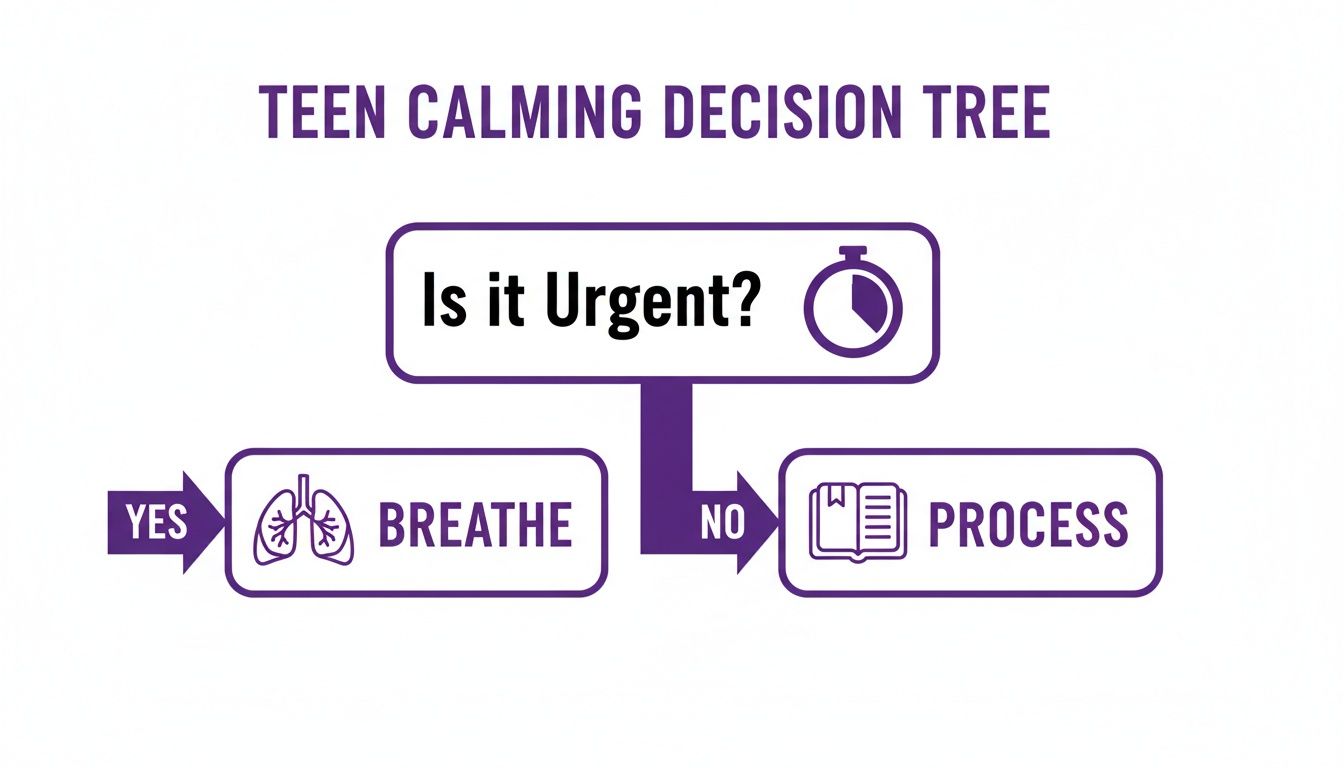
It’s a quick visual that helps separate an urgent need for calming techniques (like breathing) from a non-urgent need to process feelings (like journaling).
Clear Signs It's Time for an Expert
If you're on the fence about whether to reach out, there are several clear signals that it’s time to talk to a mental health professional. These signs suggest the anxiety has moved beyond typical teen stress and is starting to have a real, negative impact.
- Disruption to Daily Life: This is the big one. Is their anxiety stopping them from getting to school, finishing homework, or doing things they used to love?
- Social Withdrawal: Have they started avoiding friends? Are they turning down invitations to hang out or spending most of their time isolated in their room?
- Persistent Physical Symptoms: Anxiety often shows up physically. Frequent, unexplained headaches, stomachaches, or a constant feeling of exhaustion can be major red flags.
- Overwhelming or Irrational Fears: If their worries seem completely out of proportion to the situation, or if they're having panic attacks, it's a clear signal to get help.
- Changes in Mood or Behavior: A noticeable spike in irritability, anger, or a persistent sadness that hangs around for more than a couple of weeks is definitely worth a conversation with a pro.
If these patterns sound familiar, it’s a good time to start exploring therapy. The goal is always to find the right support before the roots of anxiety grow deeper.
Understanding Different Types of Therapy
The world of therapy can feel a little overwhelming at first, but a few key approaches are known to be especially effective for anxious teens. Understanding the basics will make you feel much more confident when you start talking to potential therapists.
For instance, one powerful method for dealing with the difficult experiences that might be fueling anxiety is Eye Movement Desensitization and Reprocessing. You can find out more about how EMDR therapy for anxiety helps the brain heal from distressing memories and events.
The single most important factor in successful therapy is the connection between the teen and the therapist. Your kid needs to feel safe, heard, and respected for any real progress to happen.
To help you get started, here’s a quick guide to some of the most common and effective therapy models for teenagers.
Choosing the Right Therapy for Your Teen
| Therapy Type | What It Is | Best For |
|---|---|---|
| Cognitive Behavioral Therapy (CBT) | A practical, goal-oriented therapy that teaches teens to identify and challenge the negative thought patterns and behaviors that feed their anxiety. | Generalized anxiety, social anxiety, phobias, and panic disorder. It's a great fit for teens who like structured, logical strategies. |
| Dialectical Behavior Therapy (DBT) | Focuses on teaching practical skills in four areas: mindfulness, distress tolerance, emotion regulation, and interpersonal effectiveness. | Teens who struggle with intense, overwhelming emotions, self-harm, or feelings that seem impossible to control. |
| Acceptance and Commitment Therapy (ACT) | This approach encourages teens to accept their difficult thoughts and feelings instead of fighting them, and to commit to actions that align with their personal values. | Teens who feel "stuck" in their anxiety and may be dealing with perfectionism or obsessive thought patterns. |
Each of these approaches offers a different toolkit, and a good therapist will often blend elements to create a plan that fits your teen's specific needs.
How to Find the Right Therapist
Finding a therapist who really clicks with your teen is everything. A great place to start is by asking for recommendations from your pediatrician or the school counselor—they often have a list of trusted local providers.
When you make that first call, have a few questions ready to help you gauge if they're a good fit:
- Do you have specific experience working with anxious teenagers?
- What's your therapeutic approach? (You can mention CBT, DBT, etc.)
- How do you typically involve parents in the process?
- Can you walk me through your policies on insurance, fees, and scheduling?
Most importantly, bring your teen into the decision-making process. Frame it as finding a trusted adult to add to their "team." When they have a say in who they work with, they're much more likely to be invested from day one.
Taking the Next Step: Finding Teen Anxiety Support in Arizona
Figuring out where to turn for professional help can feel overwhelming, but it's often the most important step you can take. If you're in Arizona and wondering how to help your teenager with their anxiety, our team at reVIBE Mental Health is right here to guide your family.
We're not just a clinic; we're a team that specializes in adolescent mental health. We focus on compassionate, evidence-based approaches that don't just treat symptoms but help teens build genuine, lasting resilience.
Taking that first step is simple and completely confidential. You can connect with one of our experienced psychiatric mental health practitioners, who will take the time to answer your questions and walk you through what comes next.
You don't have to navigate this journey alone. The right support can empower your teen with the skills to manage their anxiety and help your entire family find a healthier balance.
Finding care that’s close to home makes a world of difference. We've created spaces that feel safe and understanding—not clinical or intimidating—so your teen can feel comfortable from the start.
Find a reVIBE Location Near You!
We currently have five locations for your convenience. (480) 674-9220
reVIBE Mental Health – Chandler
3377 S Price Rd, Suite 105, Chandler, AZ
reVIBE Mental Health – Phoenix Deer Valley
2222 W Pinnacle Peak Rd, Suite 220, Phoenix, AZ
reVIBE Mental Health – Phoenix PV
4646 E Greenway Road, Suite 100, Phoenix, AZ
reVIBE Mental Health – Scottsdale
8700 E Via de Ventura, Suite 280, Scottsdale, AZ
reVIBE Mental Health – Tempe
3920 S Rural Rd, Suite 112, Tempe, AZ
Frequently Asked Questions About Teen Anxiety
As a parent, you're bound to have questions pop up as you navigate your teen's anxiety. It's completely normal. Here are some answers to the most common concerns I hear from parents in your shoes.
My Teen Shuts Down and Won't Talk About Their Anxiety. What Can I Do?
This is incredibly common, and honestly, trying to force a conversation usually just makes them retreat further. My best advice? Shift your focus from talking to connecting.
Create moments where conversation can happen naturally, without pressure. This often works best when you're doing something side-by-side, not face-to-face. Think about taking a drive, walking the dog, or even just watching a movie together. The silence can be comfortable, and it leaves the door open for them to share when they feel ready.
Sometimes, words on a screen or paper are easier. A simple text or a note left on their nightstand saying, "I've noticed things seem tough lately. Just want you to know I'm here for you, no matter what. I love you," can be a powerful way to show support without demanding a response.
How Do I Know if This is Anxiety or Just Normal Teenage Moodiness?
It can be tough to tell the difference, but the three things to look for are duration, intensity, and impact.
Typical teenage mood swings are usually temporary and linked to something specific—a bad grade, a fight with a friend. Anxiety, on the other hand, tends to hang around. It's a persistent, heavy feeling that often seems much bigger than the situation warrants.
The real red flag is when it starts interfering with their life. Pay attention to major shifts in their sleeping or eating patterns, if they've started isolating themselves from friends, or if their grades have taken a nosedive. If these changes last for more than a few weeks, it's a good sign that you're dealing with more than just standard moodiness.
Should I Let My Anxious Teen Skip Things That Scare Them?
Your first instinct is to protect them from what's causing distress, and that makes perfect sense. But in the long run, letting them avoid everything that makes them anxious can actually make the anxiety stronger. This cycle is a well-known pattern called accommodation.
The goal isn't to throw them into the deep end, but to help them learn they can handle the feeling of being anxious. It's about building confidence, not eliminating every challenge. In therapy, we often use a strategy called exposure therapy to do just this—taking small, planned steps toward facing a fear. It’s about gently and supportively helping them prove to themselves that they can get through it.
When you’re ready to take the next step, the team at reVIBE Mental Health is here to support your family with compassionate, expert care. You can find a provider and book an appointment online.