
Yes, in most cases you can. If you're paying out of pocket, or you carry a PPO or EPO plan, you can usually book an in-network psychiatrist without asking a primary-care doctor first. If you're on an HMO, some Medicare Advantage plans or certain Medicaid plans, a referral or prior authorization may decide whether that same appointment gets paid.
Which raises the question many don't think to ask until the bill arrives: who has to say yes? The psychiatrist who agrees to see you is only the first yes. The second one comes from your plan, and it's written in a document you've probably never opened.
Can I see a psychiatrist without a referral is really three questions stacked on top of each other. Can you get an appointment at all? Will your insurance pay for it? And will you leave the first visit with a prescription? Different systems answer each one, and only the first is under your control at the booking screen.
Short Answer by Plan Type
In the United States, whether you can schedule a psychiatrist directly is set by the health-plan design, not by a universal legal referral rule. The HealthCare.gov guide to plan types spells out how each commercial design handles specialist access, and the differences are wide enough to change your week.
| Plan type | Referral needed for coverage? | Can you book directly? | Main risk |
|---|---|---|---|
| PPO | No, for in-network specialists | Yes | Out-of-network care costs more |
| EPO | No, for in-network specialists | Yes, in network only | Nonemergency out-of-network visits usually aren't covered |
| HMO | Usually yes, from primary care | Booking possible, but coverage may be denied | Claim denial or full out-of-pocket cost |
| POS | Often yes | Yes, though the referral rule still governs coverage | Referral rules differ from plan to plan |
| Self-pay (no insurance) | No insurance referral rule | Yes, subject to practice intake | No insurance payment, practice sets intake rules |
Three rows surprise people, and they're worth a second look.
The EPO row. Members hear "no referral" and assume the plan behaves like a PPO everywhere. It doesn't. An EPO typically pays for in-network specialists only, so the freedom is real but narrow. You can call a psychiatrist yourself, and you can't take that same appointment out of network without absorbing the cost.
The HMO row. Nothing stops you from booking. What can happen is that the claim comes back unpaid, because the plan's gatekeeping condition was never met. Coverage denial, not reception refusal, is the trap here.
The self-pay row. Insurance referral rules don't apply when you're paying your own way. The practice's own intake requirements do, and those can include a deposit, a records request, or a shorter first appointment than you expected.
Treat the table as a starting point, not a verdict. Your member plan document, not a general description of PPOs and HMOs, has the final word, and an employer can pick a design that behaves differently from the label on the card.
The one rule that saves the most phone calls: find the plan type printed on your insurance card before you call a single practice. That three-letter code tells you whether to expect a referral requirement at all.
With the plan type in hand, the next question is what the plan does with it.
How Plan Gatekeeping Works
Think of your insurance plan as an office building with a front desk. The building has doors, a sign-in sheet and a manager who approves individual rooms. A claim has to clear all three before anyone pays for your appointment.
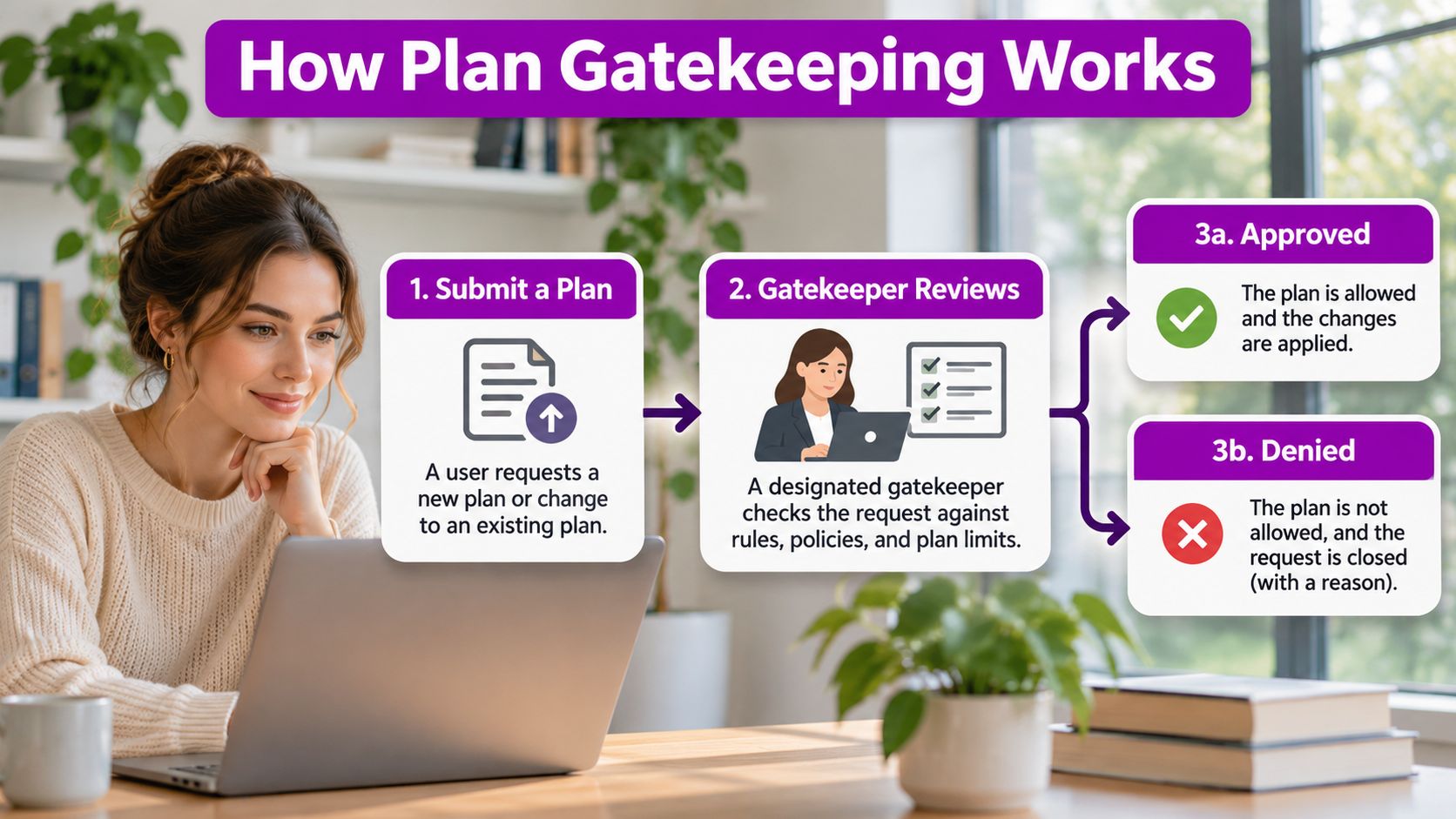
Three words that decide the claim
- Network is the list of doors the plan will open, meaning the clinicians whose bills it treats as covered.
- Referral is the sign-in sheet at the front desk, a primary-care doctor confirming that specialist care is warranted.
- Prior authorization is the manager's approval for one specific room, granted before you walk into it.
Preferred Provider Organization plans generally allow members to contact in-network specialists directly. Health Maintenance Organization plans commonly use a primary-care "gatekeeper" who must authorize or refer the patient before specialist care is covered, as the Sondermind explanation of referral rules lays out. For people paying privately, insurance referral rules don't apply, though an individual psychiatrist or practice may set its own intake requirements.
These terms get blended constantly. A referral answers who authorizes the visit. Network status answers which clinicians count as covered. Prior authorization answers whether the plan approves a specific service before it's delivered. A plan can require one, both or neither, and the psychiatrist's willingness to schedule you changes none of it.
Say you're on an HMO, you find a psychiatrist who is in network, and the front desk books you directly. You attend, you talk for an hour, you leave with a plan. The claim then reaches the plan without the referral it required, and the plan declines it. That fee now belongs to you, and the visit doesn't count as covered care.
Direct booking and covered booking are two separate questions. Answer both before the appointment, not after it.
That's the whole mechanism, and it's administrative rather than clinical. Which means it can usually be settled with one phone call, made in the right order.
Questions to Ask Your Insurer Before Booking
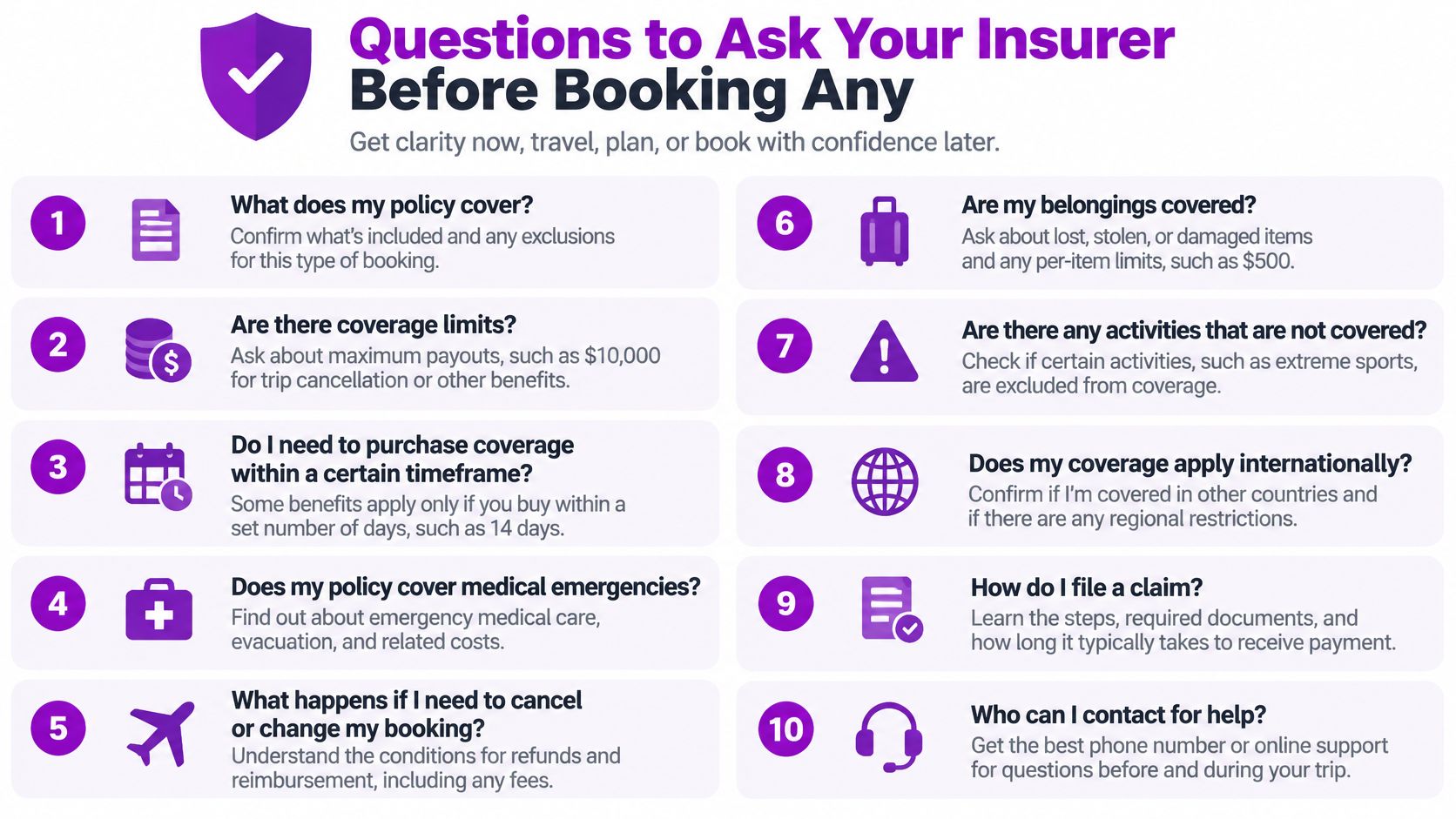
Can you book a psychiatrist without a referral, and will your insurance pay for the visit? Those are separate questions. Before scheduling, call the member services number on your insurance card and ask about your plan's rules. Write down the answers as you go.
- Does this plan classify psychiatry as specialty care? Some plans handle behavioral health through a separate administrator. The answer helps you reach the department that can explain your mental health benefits.
- Is a primary-care referral required for an in-network psychiatrist, and must it be issued before the first appointment? Ask whether the referral needs to be in place before the visit, not just whether one is required.
- Does prior authorization apply to the initial evaluation, and separately to ongoing medication management? Coverage rules may differ between an evaluation and follow-up visits. Ask about each service.
- What are the copay, deductible, and coinsurance for an evaluation and follow-up medication visits? Your costs may depend on whether you have met your deductible and how your plan classifies the appointment.
- Is this specific psychiatrist in network under this specific plan? Give the representative the clinician's name and ask them to check it against your plan's directory. A practice may accept insurance generally without every provider being in network for your plan.
A written checklist can keep the call focused. These answers address coverage and costs, not whether the psychiatrist can prescribe medication at the first visit. That depends on the clinical assessment and the provider's judgment.
Where the answers already are
Before calling, check your member portal for referral and prior-authorization rules under behavioral health. The benefits booklet may have a mental health section, and your insurance card lists the member services number. If your coverage comes through an employer, its benefits department may be able to help locate the plan document.
Keep a record of the representative's name, the date, and the call reference number. If an answer is unclear, ask for it in writing or by secure message. Your employer-specific plan document controls, and a summary of benefits may not show every authorization requirement.
For help understanding how practices check coverage, read this guide to whether psychiatrists take insurance. reVIBE Mental Health asks clients to call and verify insurance eligibility before scheduling. This helps settle coverage questions before an appointment is reserved.
Special Cases for Medicare, AHCCCS and VA Care
Which rules apply depends on both your coverage and the care pathway. Original Medicare generally lets beneficiaries see specialists, including psychiatrists, without a primary-care referral, provided the clinician accepts Medicare assignment. Medicare Advantage rules vary by plan design: HMO and point-of-service plans may require referrals, while PPO plans generally allow more direct specialist access, according to MedicareResources' explanation of referral rules.
| Program or plan | Referral needed? | How to contact a psychiatrist | Watch for |
|---|---|---|---|
| Original Medicare | Generally no for specialists | Directly, if the clinician accepts Medicare assignment | Clinician must accept Medicare |
| Medicare Advantage HMO or POS | Often yes | Through a plan-approved in-network psychiatrist | Referral and prior authorization |
| Medicare Advantage PPO | Generally no | Directly, in network | Prior authorization can still apply |
| AHCCCS (Arizona Medicaid) | No referral needed to start | Directly, if the provider is contracted with the plan | Services must be added to the treatment plan |
| VA Community Care | Generally yes, VA approval first | Through your VA health-care team | Urgent and emergency exceptions |
Why no referral doesn't mean an appointment
A referral answers whether you can seek specialist care under your plan's rules. It does not confirm that a psychiatrist is available, accepts your coverage, or has authorization to provide a particular service. Treat these as separate steps, like checking a route, confirming the service is operating, and making sure your ticket is valid.
For Medicare Advantage, a plan may require prior authorization even when it does not require a referral. Before booking, confirm the referral rule, whether the specific service needs prior authorization, and whether the psychiatrist accepts your plan and is taking new patients. A clinician's willingness to see you does not, by itself, establish that the plan will pay.
AHCCCS members can contact a behavioral-health provider directly to ask about starting care. The provider still needs to be contracted with the member's health plan, and services must be included in the treatment plan. So “no referral needed” describes how to begin seeking care, not a guarantee that every provider or service is covered.
VA Community Care follows a separate approval pathway. Veterans generally need their VA health-care team to approve community-based care before arranging an appointment, though urgent or emergency exceptions may apply. Contact the VA team to confirm the steps for your situation. Booking with a community psychiatrist and receiving VA approval are distinct actions.
The payer and the care pathway can both matter. For example, a Phoenix-area veteran enrolled in a Medicare Advantage HMO may need to account for VA approval as well as the plan's referral or authorization rules. Even after those requirements are addressed, the first appointment is a clinical intake. A referral or authorization does not guarantee that a prescription will be issued at that visit; the psychiatrist must assess your needs and determine an appropriate treatment plan.
Paying Without Insurance and Predicting Costs
Can you book a psychiatrist without a referral and still afford the visit? Paying privately may remove an insurance referral requirement, but the fee, possible follow-up costs, and whether a prescription is appropriate are separate questions. Cost is one of the most common reasons people delay mental health care, so ask the practice these questions before booking.
- What is the self-pay fee for an initial psychiatric evaluation, and does a follow-up medication visit cost differently? Evaluations may take longer than medication checks, and a practice may quote different fees for each.
- Does the fee include lab work, or is monitoring billed separately? Some medications require periodic bloodwork, which may result in a separate charge.
- Do you provide a superbill? This itemized receipt lists diagnosis and procedure codes for you to submit to an insurer. Ask whether it is issued routinely or on request.
- What are the policies for cancellations, late arrivals, and missed appointments? Is a deposit or card on file required? A missed appointment may cost the full session fee.
- If cost is a barrier, are there lower-cost options or community resources you recommend? A practice may be able to point you toward other sources of care.
About that superbill: Out-of-network reimbursement depends on your plan. It may cover only part of the fee, or none if your plan does not cover out-of-network care. A superbill documents the service; it does not guarantee payment.
If your income has changed, check whether you may qualify for AHCCCS. Medicaid coverage could change how you pay for care. For private-pay visits, ask for a written estimate before booking. A guide to self-pay billing compliance explains good faith estimate rules for practices.
A written quote makes it easier to compare the expected cost with the final bill. Ask what the estimate includes, such as the evaluation, follow-up visits, and any separate monitoring charges, then confirm whether those fees can change. The quoted amount helps you plan, but it does not determine whether a clinician will prescribe medication at the first visit. That decision follows the clinical assessment, separate from the question of how the visit is paid for.
What Happens at the First Psychiatry Visit
Direct access gets you in the door. It doesn't guarantee a prescription at the end of the hour, and that's where a lot of people feel let down.
A psychiatric evaluation is a clinical process with its own requirements, and it runs on a separate track from the insurance approval. Diagnostic history, current symptoms, medication and substance-use review, medical conditions, prior treatment response and a safety assessment are the standard components, as guidance on psychiatric evaluation requirements sets out. When a medication needs monitoring, expect lab work. When records would sharpen the picture, expect a request for them.
That's why a first visit can end without a new prescription. The psychiatrist may ask for records, request consent to coordinate with your primary-care doctor, order labs, or defer prescribing until the evaluation is complete. None of that means the appointment failed. It means the assessment came first.
What to bring
- Insurance card and photo ID, plus the plan type and any referral or authorization number you were given.
- A medication list with doses, including anything over the counter and any supplements.
- Past medications and why you stopped them, since response history shapes what gets tried next.
- A short symptom history, written down, covering when things started and what's changed recently.
Ask in advance whether telehealth is available for the first visit, and confirm any technical requirements before the day. Practices that run 24/7 intake calls for counselors can confirm coverage and intake requirements outside business hours, which matters if you're booking around a work schedule. Our own page on what happens during a psychiatric evaluation walks through the same sequence from the practice side.
Therapy and psychiatric sessions at reVIBE Mental Health are generally confidential, and information isn't disclosed without your consent, except if you're at risk of harming yourself or others, or if there's suspicion of child or elder abuse.
Emergency symptoms need emergency care, not an appointment. Thoughts of suicide with a plan, psychosis, mania, intoxication or withdrawal call for emergency services right now. Routine scheduling is the wrong tool for those.
Getting Care When Waitlists or Telehealth Rules Block You
Can you book without a referral and still get care promptly? Those are separate questions. A referral rule determines whether you can book under your plan; wait times, coverage, and clinical assessment affect what happens next. Australian 2025 research found that 22% of respondents identified high costs, long wait times, and stigma as challenges to accessing support, according to 2025 segmentation research on mental health access.
Treat the referral as one gate among several, and check the others in parallel:
- Ask about an electronic referral. If your plan requires a referral, ask your insurer or primary-care office whether it can be sent electronically. This may avoid a paper step, though the referral still needs to be processed.
- Join the cancellation list and ask about wait times. Ask the psychiatrist's office to add you to its cancellation list and explain the typical wait for a new-patient evaluation. A cancellation may create an earlier opening, but it is not guaranteed.
- Confirm self-referral rules. Ask whether the in-network psychiatrist accepts self-referrals. This can clarify whether you need a primary-care appointment before booking.
- Ask about a telehealth first visit. Confirm that the clinician is licensed to see you where you will be during the session. Your physical location and the clinician's licensure can determine whether the appointment is permitted.
Telepsychiatry does not automatically remove every barrier. Rules for prescribing controlled medications can change, so ask the practice how prescriptions are handled before your first session. reVIBE Mental Health offers online counseling and telehealth sessions by video or phone, and its team can explain availability and technical requirements during your inquiry. Personalized matching can also help you find a therapist or psychiatric care provider whose specialties and preferences fit your needs.
Removing a referral requirement may not shorten a waitlist or resolve insurance and cost barriers. Keep another care option in view while you wait, and use this guide to understand how long it can take to start therapy. A referral answers whether you can access a covered appointment; it does not guarantee a quick opening or a prescription at the first visit.
Confirm Coverage Before You Book a Visit
Before booking, separate three questions: Does your plan require a referral? Does it require prior authorization? Is the psychiatrist you want to see in network? These answers determine whether you can book directly and what your insurance may cover. A referral rule is separate from the provider's clinical intake.
Write down your plan type, the insurer's answers about referrals and prior authorization, and the network status of the specific psychiatrist. Keep the representative's name and reference number so you can refer to the conversation later.
If you want help checking benefits, you can request a call back through the reVIBE Mental Health website. reVIBE serves Scottsdale, Tempe, Chandler, Phoenix, and Paradise Valley in person, and offers secure online care for therapy and medication support. Its team requires clients to call and verify insurance eligibility before scheduling. The practice's eligibility verification services explained describes what a thorough benefits check can cover.
Have your insurance card and written answers ready when you contact a practice. This helps the team compare your benefits with your plan documents. You can also visit reVIBE Mental Health to request a call back and discuss provider matching.
Take a moment to find your plan type and note the referral and prior-authorization rules before booking. That way, you can distinguish permission to schedule from coverage approval and the clinical assessment needed before a provider decides whether medication is appropriate.