
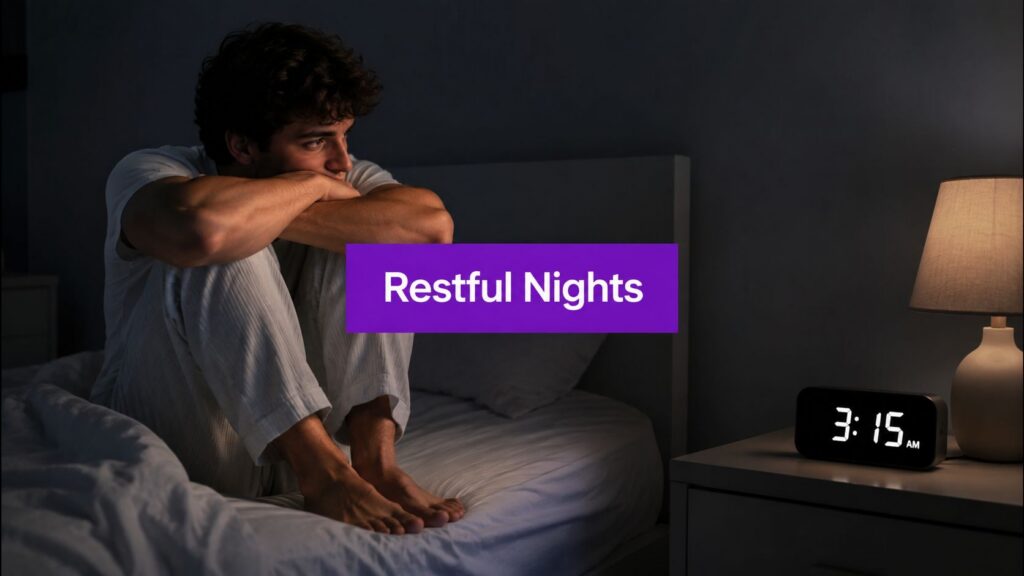
It's late. You're tired enough to know your body needs sleep, but your mind won't cooperate. One thought turns into five. You replay a conversation, worry about tomorrow, check the clock, and feel your chest tighten when you realize you're still awake.
That experience is one of the most common ways anxiety shows up at night. It can feel confusing because your body is exhausted while your brain acts like it's time to solve every problem at once. Many people start blaming themselves. They think they lack discipline, have a “bad brain,” or are somehow failing at something that should come naturally.
That's not what's happening. Anxiety and sleep problems often feed each other in ways that are real, physical, and treatable. Once you understand the loop, it gets easier to respond with skill instead of fear. And if self-help isn't enough, there are clear ways to find support in the Phoenix metro area and start getting real rest again.
The Vicious Cycle of Anxiety and Sleeplessness
You lie down hoping sleep will happen quickly. Instead, your mind starts scanning. Did I send that email? What if I'm exhausted tomorrow? Why is my heart beating so hard? The more you want sleep, the farther away it seems.
That pattern has a name. Hyperarousal means your system is too activated to settle into sleep. Anxiety turns on the body's threat response, often called fight or flight. When that happens, stress hormones such as cortisol and adrenaline prepare you to act, not drift off.
Consider it a car engine stuck in high gear. Sleep requires the body to idle down. Anxiety presses the gas pedal.

What anxiety does to the body at night
When your nervous system reads danger, even if the “danger” is a worry thought, it may create physical sensations that are the opposite of restful. You might notice:
- A racing mind: Thoughts loop, jump topics, or replay the day.
- A revved-up body: Your heart rate feels stronger, muscles stay tense, and your breathing may become shallow.
- A watchful state: You stay alert for sounds, sensations, or signs that sleep still isn't coming.
- A second layer of fear: You stop worrying only about life and start worrying about sleep itself.
That last part matters. Sleep can become a performance issue. You start monitoring yourself. Am I sleepy enough? How many hours are left? What if tomorrow is ruined? This creates bedtime anxiety, and bedtime anxiety keeps the system activated.
Practical rule: If your body acts “awake” at night, it doesn't mean you're broken. It usually means your alarm system is doing its job too aggressively.
This is common in anxiety disorders. Studies show that over 75% of adults with generalized anxiety disorder report significant sleep disturbances, with insomnia being one of the most common co-occurring conditions (Sleep Foundation).
Why the next day often feels worse
A rough night rarely stays in the bedroom. The next day, you may feel more irritable, foggy, tense, or emotionally raw. Small stressors feel bigger. You might become more sensitive to body sensations, which can make anxiety easier to trigger again the following night.
That's how the cycle keeps itself going. Anxiety disrupts sleep. Poor sleep lowers your ability to regulate stress. Increased stress makes nighttime arousal more likely.
Some people also become frightened by unusual sleep experiences when they're overtired and anxious. If that sounds familiar, reading about understanding sleep paralysis dreams can help make those episodes feel less mysterious. Anxiety can also show up in the body in broader ways, including tension, stomach issues, and chest discomfort, which is why it helps to learn more about how anxiety can cause physical symptoms.
Here's the key takeaway. Your struggle is not a character flaw. It's a loop between brain, body, and behavior. And loops can be interrupted.
Practical Self-Help Strategies for Better Sleep
When anxiety and sleep problems are tangled together, broad advice like “just relax” usually falls flat. What helps more is building a sleep toolkit. You want a few skills for your mind, a few for your body, and a few changes to your environment so you're not relying on willpower alone.
This isn't about doing everything at once. Pick one or two tools and use them consistently enough that your nervous system starts recognizing them as cues for safety.

Mind tools that reduce bedtime struggle
A good starting point is stimulus control, a core idea from Cognitive Behavioral Therapy for Insomnia. The goal is simple. Help your brain reconnect bed with sleep instead of stress.
Try these habits:
- Use the bed only for sleep and intimacy: If you scroll, work, argue, or worry in bed, your brain starts linking that space with activation.
- Get out of bed if you're wide awake: Sit somewhere dim and quiet until your body feels sleepier, then return to bed.
- Wake up at a consistent time: A stable wake time helps train your sleep system even when the night was rough.
Another useful tool is scheduled worry time. Set aside a short period earlier in the evening with a notebook. Write down worries, possible next steps, and anything you need to remember tomorrow. Then close the notebook. You're teaching your brain that bedtime is not the time for problem-solving.
If overthinking is your main obstacle, this guide on how to stop overthinking at night can give you extra structure for interrupting late-night thought spirals.
You don't need to win an argument with every anxious thought. You need a way to stop treating bedtime like a courtroom.
Body tools that help your system downshift
When your body is keyed up, physical calming techniques often work better than trying to “think” your way into sleep.
Here are three practical options:
Progressive muscle relaxation
Start at your feet. Gently tense the muscles for a few seconds, then let go. Move upward through calves, thighs, stomach, hands, shoulders, and jaw. The release matters more than the tension. This helps your body notice the difference between bracing and softening.4-7-8 breathing
Inhale through your nose for a count of 4, hold for 7, exhale slowly for 8. If those counts feel too long, shorten them. The main point is a slower exhale, which can signal the body to settle.Guided meditation
Pick an audio that focuses on body scanning, safety, or gentle imagery. Avoid content that asks you to “empty your mind.” Most anxious sleepers do better with something to follow.
For more lifestyle-focused ideas, the Pain and Sleep Therapy Center offers a helpful overview of natural ways to support sleep quality.
Environment changes that lower arousal
Your bedroom doesn't need to be perfect. It does need to support calm.
A simple way to think about this is to reduce input your brain could interpret as stimulating:
| Sleep cue | Why it helps |
|---|---|
| Low light | Darkness tells the brain it's time to wind down |
| Cooler room | A slightly cooler space supports the body's natural sleep shift |
| Less noise | Fewer interruptions mean less scanning and startle response |
| Comfortable bedding | Physical comfort reduces unnecessary body tension |
A few practical reminders matter here too:
- Limit caffeine later in the day: If you're sensitive, the nervous system may stay activated longer than you expect.
- Watch nicotine and alcohol: Nicotine can be stimulating, and alcohol may make you sleepy at first but lead to more disrupted sleep later.
- Move your body during the day: Regular exercise can help discharge tension, though intense workouts right before bed can keep some people alert.
Small changes count. The goal isn't a flawless routine. The goal is to give your brain repeated evidence that nighttime is safe.
When Self-Help Is Not Enough
Sometimes good tools help quickly. Sometimes they help a little, but not enough. That doesn't mean you're doing them wrong. It may mean the problem is deeper, more persistent, or tied to anxiety patterns that need professional support.
Many people wait too long because they think they should be able to fix sleep on their own. They tell themselves it's “not serious enough,” even while they're dragging through workdays, snapping at people they love, or dreading bedtime every evening.
Signs it's time to get extra help
Consider reaching out to a professional if any of these sound familiar:
- The problem keeps going: You've tried routines, breathing, journaling, or sleep hygiene and still can't get traction after several months.
- Your daytime life is taking a hit: Anxiety or poor sleep is affecting work, school, concentration, driving, parenting, or relationships.
- Bedtime feels loaded with fear: You start getting tense hours before bed because you expect another bad night.
- Your mood is dropping: You feel hopeless, emotionally flat, or constantly on edge.
- You're coping in ways that worry you: You're using alcohol or other substances to knock yourself out or take the edge off.
- Trauma may be part of the picture: Nighttime feels unsafe, your body stays vigilant, or sleep triggers memories and distress.
Seeking help for anxiety and sleep problems is not a last resort. It's a reasonable step when the problem keeps interrupting your life.
A clinician can help sort out what is driving the insomnia. For some people, it's primarily anxious thinking. For others, trauma, panic symptoms, depression, grief, or another sleep-related issue is also involved. That distinction matters because treatment works best when it fits the underlying cause.
If you've been trying hard and still feel stuck, let that be information, not self-criticism. Persistent sleep disruption deserves care.
Professional Treatment Options for Lasting Relief
People often know they need help but aren't sure what kind. Therapy? Psychiatry? Medication? A sleep specialist? The answer depends on what's driving your anxiety and sleep problems, but there are a few established paths that are especially useful.
The most effective care often combines symptom relief with deeper treatment. One approach helps you sleep sooner. Another helps reduce the anxiety patterns that keep pulling you back into the cycle.

Therapy options that target the root problem
Cognitive Behavioral Therapy for Insomnia (CBT-I) is widely considered the leading non-medication treatment for chronic insomnia. It focuses on the thoughts and habits that keep sleep disrupted. That includes things like sleep-related fear, irregular sleep timing, too much time awake in bed, and patterns of over-monitoring.
CBT-I is practical. You don't just talk about sleep. You track patterns, test changes, and learn how to respond differently to wakefulness at night.
Cognitive Behavioral Therapy (CBT) for anxiety can also help when worry, catastrophic thinking, panic symptoms, or perfectionism are driving nighttime arousal. It teaches people to identify automatic thoughts, challenge unhelpful assumptions, and build more realistic responses to stress.
When sleep problems are rooted in trauma, EMDR can be an important option. Some people don't have “regular insomnia.” They have a nervous system that still behaves as if danger is nearby. Trauma-focused treatment can reduce that constant watchfulness.
Therapy and psychiatry play different roles
Therapy and medication aren't competing solutions. They do different jobs.
| Option | Main role | Best fit |
|---|---|---|
| CBT-I | Changes sleep-related thoughts and behaviors | Ongoing insomnia patterns |
| CBT or EMDR | Treats anxiety, trauma, and emotional drivers | Worry, panic, trauma-related arousal |
| Medication management | Helps reduce acute symptoms and stabilize functioning | Short-term support or part of a combined plan |
Medication can be helpful when anxiety is intense, sleep loss is severe, or a person needs enough relief to engage fully in therapy. A psychiatric provider looks at symptom patterns, side effects, goals, and medical history before recommending anything. If you want to understand what that process can look like, this overview of medication management services is a useful starting point.
Clinical insight: The best treatment plan is the one that matches both the symptom and the source.
It's also worth remembering that not every sleep complaint is caused only by anxiety. Snoring, breathing pauses, jaw issues, and airway problems can disrupt sleep and increase daytime distress. If that seems relevant, learning about solutions for chronic snoring can help you think more broadly about what might be interfering with rest.
Lasting relief usually comes from matching the right level of care to the right problem. That's good news. You don't have to guess forever.
How to Get Help in Arizona Today
Taking the first step often feels harder than the treatment itself. People worry they won't know what to say, won't understand insurance, or will choose the “wrong” type of provider. A simple plan helps.
For adults in the Phoenix metro area, it can help to focus on three decisions. First, how to make contact. Second, what practical details to gather. Third, what kind of appointment format fits your life.

Start with one simple call
If anxiety and sleep problems are wearing you down, keep the first step small. You do not need to have the perfect explanation. You can say something as straightforward as, “My anxiety is affecting my sleep, and I want to get help.”
Many people feel calmer when they write down a few notes before they call:
- What nights look like: Trouble falling asleep, waking up often, racing thoughts, dread at bedtime.
- What days look like: Fatigue, irritability, trouble focusing, feeling on edge.
- What you've already tried: Breathing, journaling, sleep hygiene, cutting back on screens, or changing routines.
- What you want help with most: Better sleep, less panic, trauma support, or medication questions.
That brief summary gives the intake team a clearer picture and helps match you with the right type of provider.
Understand insurance and scheduling
Insurance is one of the biggest barriers people worry about, but it often becomes more manageable once you ask direct questions. Keep your insurance card nearby when you call. Ask whether your plan is accepted, what your estimated responsibility may be, and whether someone can help verify benefits.
If your schedule is packed, ask about appointment times that fit around work, school, or family responsibilities. Flexible options matter because treatment only works if it fits your real life.
Some people prefer in-person care because leaving home and entering a dedicated therapy space helps them shift mentally. Others do better with telehealth because it removes commuting stress and makes it easier to stay consistent. There isn't one right answer. The best format is the one you're most likely to use.
Find a reVIBE location near you
For convenience in the Phoenix metro area, these locations are available:
| Location Name | Address |
|---|---|
| reVIBE Mental Health – Chandler | 3377 S Price Rd, Suite 105, Chandler, AZ |
| reVIBE Mental Health – Phoenix Deer Valley | 2222 W Pinnacle Peak Rd, Suite 220, Phoenix, AZ |
| reVIBE Mental Health – Phoenix PV | 4646 E Greenway Road, Suite 100, Phoenix, AZ |
| reVIBE Mental Health – Scottsdale | 8700 E Via de Ventura, Suite 280, Scottsdale, AZ |
| reVIBE Mental Health – Tempe | 3920 S Rural Rd, Suite 112, Tempe, AZ |
You can reach the office at (480) 674-9220.
What a first appointment often feels like
The first session is usually more conversational than people expect. You're not supposed to arrive with polished insight. A clinician will ask about your symptoms, how long they've been happening, what seems to trigger them, and how they're affecting your life.
You may also talk about your sleep pattern, stress load, medical history, past treatment, and what kind of support feels comfortable. If medication is part of the conversation, that doesn't lock you into anything. It helps you understand your options.
The best first appointment is not the one where you say everything perfectly. It's the one you show up for.
A welcoming office setting can make a real difference when you already feel keyed up. Many people relax when the space feels less clinical and more human. That matters, especially for clients who already feel vulnerable, exhausted, or unsure about beginning care.
If your anxiety keeps telling you to wait until things get worse, try not to listen. Early support is often easier than untangling months of fear, sleep loss, and burnout.
Your Path to Restful Nights Starts Here
Anxiety and sleep problems can make life feel much smaller. Nights become something to dread, and days become something to survive. But the pattern is understandable, and above all, it's treatable.
You don't need to fix everything tonight. Start with one practical change. Move worry time out of bed. Practice a breathing exercise before you feel panicked. Use your bedroom as a place for sleep, not mental overwork. If those steps help, keep building.
If they don't help enough, that's useful information. It means you may need care that goes beyond self-help, not that you've failed. Therapy, trauma treatment, and medication support can all play a role in helping your nervous system settle and your sleep return.
Reading this far means you're already doing something important. You're paying attention to a problem that deserves care. Better nights usually begin that way, with understanding first, then action.
If anxiety and sleep problems are taking over your nights, reVIBE Mental Health offers compassionate support through therapy, EMDR, and psychiatry in the Phoenix metro area. With locations in Chandler, Phoenix Deer Valley, Phoenix PV, Scottsdale, and Tempe, help is close by. Call (480) 674-9220 to get started and take the next step toward restful sleep.