

You finally decide to look for therapy or psychiatry. You're ready to get help, maybe for anxiety, depression, trauma, burnout, or a relationship that feels harder than it should. Then insurance gets involved, and everything suddenly feels less clear.
You see terms like deductible, coinsurance, carve-out, authorization, in-network, out-of-network. The plan says mental health is covered, but that still doesn't answer the question you actually care about. What will this visit cost me, and will my insurance actually pay for it?
We talk with people in this situation every day. Most aren't avoiding care because they don't want help. They're stuck because insurance language makes a simple decision feel risky. If that's where you are, you're not behind, and you're not the only one trying to figure out how to verify insurance coverage before booking care.
A clear process helps. Insurance eligibility verification is often a three-step process that can typically be completed within five minutes by phone or through online portals when you have the right details ready, according to this overview of insurance verification basics. The hard part usually isn't the call itself. It's knowing what to ask, and knowing which answers matter for mental health care.
Understanding Your Mental Health Benefits Can Feel Overwhelming
A lot of people start in the same place. They find a therapist they like, check their insurance portal, see a provider name or a vague “behavioral health” label, and assume that means they're set. Then they get to intake and realize they still don't know whether therapy sessions are covered, whether psychiatry is billed differently, or whether they need prior authorization first.
That confusion makes sense. Insurance companies organize benefits in categories that don't match how people seek care. You're thinking, “I need support.” Your plan is thinking in codes, networks, dates, and benefit rules.
Some people also come in after trying to sort it out alone online. Portals can be useful for checking the basics, but they often leave out the details that matter most in therapy and psychiatry. A portal may tell you that mental health is part of your plan without explaining whether a specific clinician, service type, or visit format is covered the way you expect.
Insurance language can sound technical, but the real task is simpler. You're confirming whether your plan is active, whether the provider matches your plan rules, and what your share of the cost will be.
That's why it helps to use a guide written for real patients, not insurance professionals. If you want a broader overview of what mental health plans may include, this guide to mental health insurance coverage options is a useful starting point.
What usually feels hardest
- Unclear costs: You may know you have insurance and still have no idea what you'll owe at the visit.
- Mixed messages: The insurance portal, the card in your wallet, and the person on the phone don't always seem to say the same thing.
- Fear of getting it wrong: Many people worry that one missed question will lead to a denied claim or a surprise bill.
What helps
The best approach is to slow the process down and treat it like a checklist. Gather your card, call member services, ask targeted mental health questions, and write down the answers in plain English. Once you do that, the process becomes much more manageable.
Before You Call Gather Your Insurance Information
Before you call, set yourself up for one clean conversation. The easiest insurance calls happen when you have your card, your basic personal information, and your question list in front of you. That small bit of prep can save you from hanging up, searching for details, and starting over.
For behavioral health verification, patients need to have the exact name of the insurance provider, the patient's full name and unique identification number, the policy number, the group number, the type of plan such as HMO, PPO, or EPO, the effective date of coverage, the copayment amounts listed for different service types, and the member services phone number, according to this guide on verifying insurance for behavioral health services.
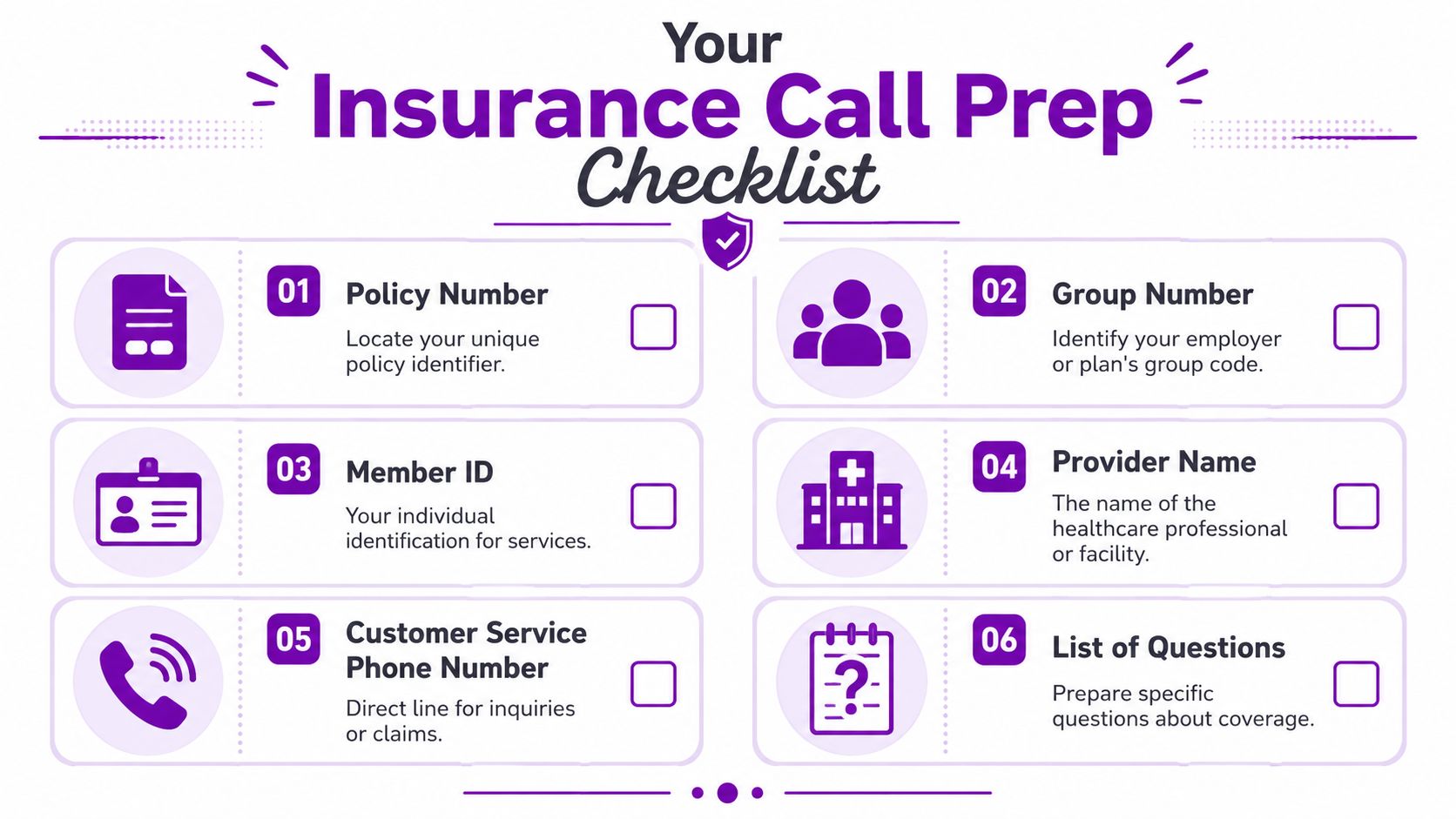
Your pre-call checklist
- Insurance company name: Use the exact name printed on the card. Large carriers often administer different plans under similar brand names.
- Member ID: This identifies you as the covered person receiving services.
- Policy number: Some plans separate this from the member ID. If your card shows both, have both ready.
- Group number: This helps the insurer identify the employer-sponsored or group plan structure tied to your coverage.
- Plan type: HMO, PPO, and EPO plans can have very different network rules.
- Effective date: This tells the insurer when your current coverage started.
- Copay information on the card: Some cards list office visit amounts, specialist amounts, or behavioral health notes.
- Member services phone number: Use the number on the back of the card for benefits questions.
Keep one more list next to you
Write down the provider or clinic name, the type of appointment you want, and whether you're looking for therapy, psychiatry, telehealth, or a combination. Mental health benefits can differ by service, so “I need help” is too broad for a useful benefits check.
Practical rule: If you have to guess during the call, the insurer may give you a general answer instead of the right one.
If a clinic asks you for additional details such as demographics or insurance card photos, that's normal. A more rigorous verification process also checks items like active eligibility, in-network status, authorization requirements, coordination of benefits, and service-specific coverage before the visit, as outlined in this insurance verification process overview.
How to Talk to Your Insurance Company
Once you have your information ready, call the member services number on your card. Keep a notebook open. Ask the representative to repeat anything that sounds unclear, and write down the date, time, and the rep's name if they provide it.
A simple opening script works well:
“Hi, I'm calling to verify my mental health benefits. I'd like to check coverage for therapy and, if applicable, psychiatry. I also want to confirm whether a specific provider or clinic is in-network, whether prior authorization is required, and what my out-of-pocket responsibility would be.”
That script does two things. It tells the rep this is a mental health benefits call, and it signals that you need more than a yes or no answer.

Ask questions that are specific to therapy
When verifying therapy session coverage, providers should explicitly ask whether psychotherapy and counseling services are included, whether prior authorization is required, whether there are restrictions on session frequency or duration, and what the annual number of covered visits is, according to this guide on questions to ask during insurance benefit verification.
Here's a practical question list you can use:
| Question Category | Specific Question to Ask |
|---|---|
| Eligibility | Is my policy currently active for outpatient mental health services? |
| Service coverage | Are psychotherapy and counseling services covered under my plan? |
| Provider status | Is this specific provider or clinic in-network for outpatient mental health services? |
| Visit cost | What is my copay, coinsurance, or deductible responsibility for each therapy visit? |
| Session rules | Are there limits on how often I can be seen or how long sessions can be? |
| Annual limits | Is there an annual limit on covered therapy visits? |
| Authorization | Do I need prior authorization before starting therapy? |
| Psychiatry | Are psychiatric evaluations and medication management visits covered differently from therapy? |
| Telehealth | Are virtual mental health visits covered the same way as in-person visits? |
| Claims | Is there anything special the provider needs to submit for claims to process correctly? |
Phone call versus portal
Online portals are convenient for basic checks. They can confirm that a plan exists, that a member is active, and sometimes whether a provider appears in a directory.
A phone call is better when you need nuance. It lets you ask follow-up questions, confirm service-specific network status, and catch wording that sounds reassuring but is incomplete.
- Use the portal for: quick eligibility checks, ID lookups, and general plan summaries.
- Use the phone for: therapy coverage, psychiatry billing differences, authorizations, and provider-specific questions.
- Use both when possible: check online first, then call to confirm the details that affect your bill.
Decoding What Your Insurer Tells You
The hardest part of learning how to verify insurance coverage usually isn't getting answers. It's understanding what those answers mean in real life.
If the representative says, “Yes, behavioral health is covered,” that still leaves several open questions. Covered by whom. At what rate. Under what conditions. With which provider. For mental health, those details matter.
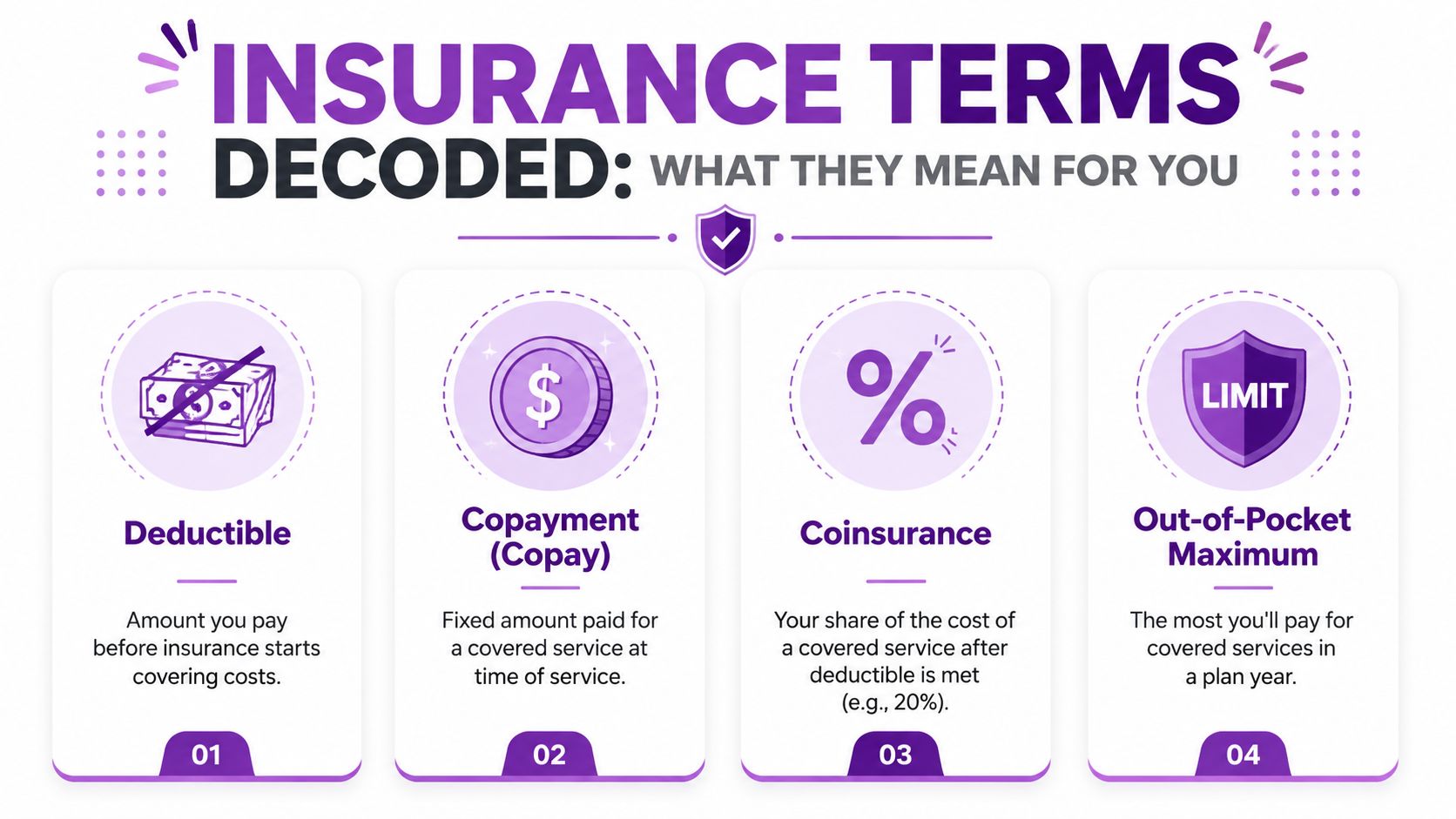
The four terms that affect your bill most
- Deductible: This is the amount you pay before insurance starts sharing more of the cost for covered services.
- Copay: This is a fixed amount you pay at the time of a covered visit.
- Coinsurance: This is your share of the allowed cost after deductible rules apply.
- Out-of-pocket maximum: This is the most you'll pay for covered services in a plan year under your plan's rules.
A simple way to think about it is this: the deductible is your entry cost, the copay is your fixed visit fee when your plan uses one, coinsurance is your percentage share, and the out-of-pocket maximum is the plan's ceiling on covered spending.
Covered doesn't always mean in-network
This is the pitfall that surprises people most in mental health care. Your plan can cover therapy as a benefit and still not cover therapy with the specific clinician or service code you planned to use.
Office Ally reported that 34% of claim denials in 2024 came from providers not being in-network for the specific service code, even when the plan broadly covered the service, and it notes that manual phone verification is required to confirm provider-specific network status for mental health in this article on eligibility verification mistakes that hurt the revenue cycle.
A provider being listed in a directory isn't the same as confirming that your exact mental health service is in-network under your plan.
This same logic shows up outside healthcare too. If you've ever had to prove business coverage for a contract, a practical COI guide for businesses helps explain why broad proof of insurance and service-specific confirmation aren't the same thing. The details on the document matter.
How to interpret a real answer
If an insurer tells you, “Outpatient therapy is covered at specialist cost share after deductible,” translate it into plain English:
- Therapy is included as a benefit.
- Your deductible may still apply before the plan pays its share.
- The amount you owe may depend on whether the clinician is in-network.
- You still need to confirm authorization rules and visit limits.
That's why a short answer from insurance isn't enough. A useful answer is one you can turn into an expected cost and a confident next step.
Navigating Special Cases Psychiatry and Prior Authorizations
Mental health coverage gets more complicated when you move beyond weekly therapy. Psychiatry, medication management, telehealth, and higher levels of care can all follow different rules inside the same plan.
One common surprise is that therapy and psychiatry may not be processed the same way. A plan may cover both, but the copay, deductible treatment, or referral requirement can differ. Ask directly whether psychiatric evaluations and medication management are covered under the same behavioral health benefit as counseling.
Five mechanics worth confirming
For behavioral health and addiction treatment, verification should confirm whether the policy is active, whether the provider is in-network or out-of-network, whether the specific services are included, whether preauthorization is required, and whether the plan has a behavioral health carve-out managed by a separate company, according to this guide on insurance verification for treatment services.
That carve-out piece matters more than many people expect. Your medical insurance card may show one company, while your mental health benefits are managed by another administrator. If that happens, the first representative may need to transfer you.
Re-check ongoing care
Verification isn't a one-time task. Health coverage can change during treatment because of job changes, renewals, marriage, or plan updates.
IRS and CMS data showed that 22% of health insurance policies changed in 2024 due to employer transitions, marriage, or policy renewals, and Medwave advises re-verifying for each encounter because eligibility can change daily, as noted on this coverage eligibility resource.
If you've been in treatment for a while, don't assume the answer from your first visit still applies.
If you're specifically exploring trauma treatment, it also helps to review how plan rules may apply to EMDR. This page on EMDR insurance coverage questions can help you think through what to ask before scheduling.
Prior authorization without the panic
Prior authorization doesn't mean your care won't be covered. It means the insurer wants certain information before approving payment for a service. When authorization is required, timing matters. Getting that checked before the visit is much easier than fixing it after a denial.
Ready to Get Started Find a reVIBE Location Near You
Once you know how to verify insurance coverage, the process gets less intimidating. You don't need to memorize insurance language. You just need the right questions, a clear record of the answers, and a clinic team that can help fill in the gaps when an insurer gives incomplete information.
That matters because insurance verification is only one piece of starting care. Scheduling, matching with the right clinician, understanding therapy versus psychiatry billing, and handling denied claims all affect how smooth the experience feels. If you want a deeper look at claim issues after verification, these solutions for billing denials offer useful context on where behavioral health claims can still go wrong.
If you're in the Phoenix area and want support finding a therapist or psychiatric provider, you can also explore mental health services in Phoenix.
Find a reVIBE Location Near You
We currently have five locations for your convenience. (480) 674-9220
reVIBE Mental Health – Chandler
3377 S Price Rd, Suite 105, Chandler, AZreVIBE Mental Health – Phoenix Deer Valley
2222 W Pinnacle Peak Rd, Suite 220, Phoenix, AZreVIBE Mental Health – Phoenix PV
4646 E Greenway Road, Suite 100, Phoenix, AZreVIBE Mental Health – Scottsdale
8700 E Via de Ventura, Suite 280, Scottsdale, AZreVIBE Mental Health – Tempe
3920 S Rural Rd, Suite 112, Tempe, AZ
The right support shouldn't feel blocked by confusing benefits language. When a clinic knows how to verify coverage carefully and explain it clearly, starting care feels much more possible.
If you'd like help taking the next step, contact reVIBE Mental Health. We can help you address insurance questions, find a provider fit, and get started with therapy, EMDR, or psychiatry in a way that feels clear and supported.