You still care about each other, but the same argument keeps returning. One partner raises an old disappointment, the other becomes defensive, voices rise, and eventually someone leaves the room or shuts down. Later, both of you may regret what happened, yet neither knows how to interrupt the pattern next time.
That's often the point when couples start asking practical questions. What can counseling change? How long does it take? Will it make things more uncomfortable before they improve? Is it worth the emotional effort? Couples counseling can help, but it isn't a guarantee, a one-time repair, or the right format for every relationship. The most useful decision begins with understanding both its benefits and its limits.
When Couples Counseling Becomes a Real Conversation
Consider a couple who still shares affection, routines, and hopes for the future, but has stopped feeling like a team. Their arguments may focus on money, parenting, sex, household responsibilities, or time with extended family. The topic changes, but the sequence stays familiar: criticism, defensiveness, withdrawal, and unresolved resentment.
During a consultation, they may not say, “We need to improve our attachment cycle.” They're more likely to say, “We can't talk without fighting,” or, “I don't know how to reach my partner anymore.” A therapist's first job isn't to decide who's right. It's to understand the repeated interaction and help both people describe what they want to change.
A useful starting question: “What happens between us when we're both trying to feel understood?”
Counseling can give couples a structured setting to slow down those exchanges. Partners can practice expressing needs without blame, listening without preparing a rebuttal, and recognizing the fear or hurt beneath anger. They can also work on concrete issues, such as rebuilding trust after infidelity, coordinating parenting decisions, or deciding whether they want to repair the relationship or separate respectfully.
If you're unsure whether your concerns justify professional support, this guide to when to seek marriage counseling can help you compare everyday strain with patterns that deserve prompt attention. You don't have to wait until the relationship feels beyond repair.
This article is most relevant to couples who can participate freely, speak openly, and consider change on both sides. A later section addresses an important exception: joint counseling can be unsafe when fear, coercion, or serious violence shapes the relationship. For everyone else, the central question is not whether counseling will erase every disagreement. It's whether it can help you handle disagreement with more safety, clarity, and cooperation.
What the Research Actually Shows About Couples Counseling
The strongest evidence supports a straightforward conclusion: structured couples counseling can improve relationship satisfaction and functioning, especially when both partners participate and continue using the skills after sessions end.
A 2020 meta-analysis in the Journal of Marital and Family Therapy synthesized 58 studies, representing 40 unique samples and 2,092 couples. Relationship satisfaction improved from before treatment to after treatment with a large effect, Hedges' g = 1.12, with a 95% confidence interval from 0.92 to 1.31 and p < .001. The review also reported improvements across several relationship domains, not only overall satisfaction, and found that gains generally remained at short- and long-term follow-up. Couples assigned to wait-list control conditions showed only a small, statistically nonsignificant change, Hedges' g = 0.12, with a 95% confidence interval from -0.04 to 0.29. Read the full 2020 meta-analysis on couple therapy outcomes for the complete methods and findings.
The comparison matters. Improvement can occur as couples gain time, distance, or new perspective, but the wait-list result suggests that waiting alone is not equivalent to participating in structured treatment.
Short-term improvement and longer-term maintenance
A 2019 meta-analysis of randomized controlled trials examined 33 studies involving 2,730 participants. Behavioral couples therapy and emotionally focused couples therapy both improved relationship satisfaction by the end of treatment, with an overall medium effect of g = 0.60. The estimate was g = 0.53 for behavioral therapy and g = 0.73 for emotionally focused therapy. At six months, benefits remained measurable, with an overall effect of g = 0.44, including g = 0.35 for behavioral therapy and g = 0.66 for emotionally focused therapy. The researchers found no statistically significant difference between the two approaches and cautioned that publication bias could influence the findings. In behavioral-therapy studies with 12-month follow-up, the effect had fallen to g = 0.06, showing why continued practice and maintenance planning matter. The details appear in the 2019 randomized-trial meta-analysis.
A 2024 Norwegian study evaluated a 12-hour couples program with 490 participants and a 242-person control group. The intervention group's mean Revised Dyadic Adjustment Scale score increased from 48.25 to 50.14, while 38.8%, or 190 people, were in the scale's clinical range for relationship distress at the start. Ninety-one percent of participants responded to the post-treatment assessment, and gains continued through the six-month follow-up. Outcomes were comparable for online and in-person delivery, which supports flexible access when distance or scheduling makes office visits difficult. The study is summarized in research on the effectiveness of the Gottman Method.
For a skeptical partner, the evidence can be summarized this way: counseling often produces meaningful improvement beyond waiting, but lasting change depends on what couples practice after formal treatment ends.
The Five Core Benefits Couples Tend to Notice
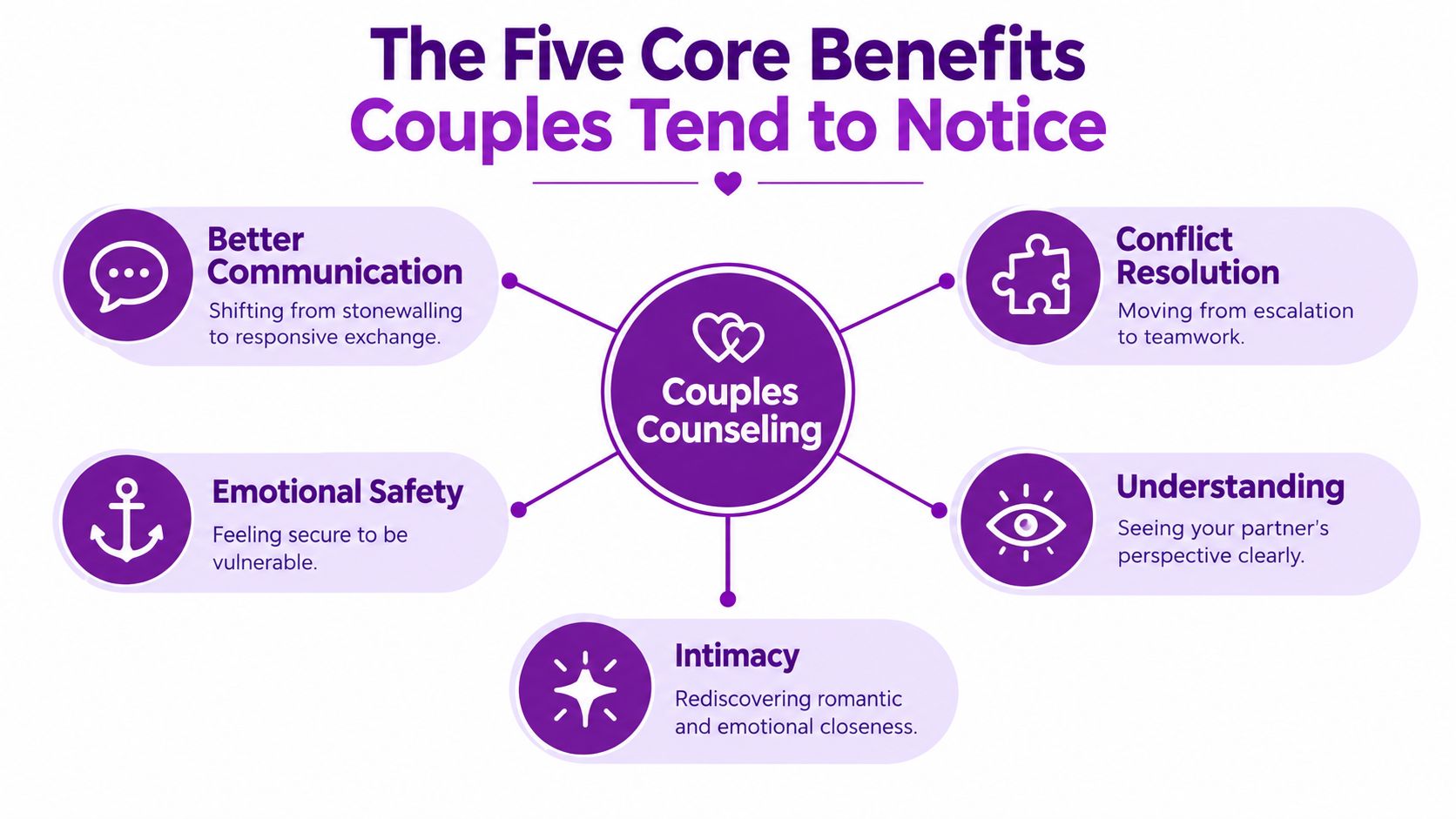
Research findings become more useful when you can recognize them in ordinary moments. The couples counseling benefits below aren't abstract promises. They're changes you can look for in conversations, disagreements, family decisions, and private moments of connection.
Communication becomes more responsive
A couple may begin by interrupting, defending, or avoiding. In counseling, they learn to slow the exchange and identify the message beneath the accusation. “You never help” may become “I feel alone with the household responsibilities and need a clearer plan.”
The change isn't perfect communication. It's a more responsive exchange, where one partner can speak and the other can show they understood before presenting a counterpoint.
Conflict shifts toward repair
Healthy conflict resolution doesn't mean eliminating disagreement. Couples learn to notice escalation earlier, take a planned pause, return to the subject, and make a specific repair attempt. Instead of proving who remembers an event correctly, they can ask, “What do we need to do differently next time?”
A useful goal is teamwork during conflict, not victory.
Emotional and physical intimacy can return
Emotional closeness usually grows when partners feel safer being honest. A therapist may help a couple explore loneliness, rejection, fear of failure, or uncertainty about affection without turning the conversation into an immediate demand for sex or reassurance.
For couples rebuilding connection, shared activities can complement therapy when both people are willing to try them. Danza Academy's guide to dance and love offers one example of how learning something physical and collaborative can create room for attention, play, and shared experience.
Parenting becomes more coordinated
When children are involved, counseling can help parents separate the couple's disagreement from the parenting decision. They might develop consistent language for limits, agree on how to handle bedtime resistance, or decide how to discuss a major family change with their children.
The benefit isn't identical parenting styles. It's a clearer shared approach that reduces the child's exposure to contradictory instructions and unresolved adult conflict.
Individual well-being may improve
Relationship distress can intensify depressive symptoms, emotional withdrawal, and difficulty managing daily responsibilities. A systematic review of couple and systemic interventions found improvements in relationship satisfaction, communication, emotional intimacy, constructive relationship behaviors, depression, and broader personal adjustment. For couples experiencing relationship distress alongside depression, systemic therapy was more effective than no treatment or treatment as usual and comparable with individual cognitive behavioral therapy for depression. The evidence is discussed in this systematic review of couple and systemic interventions.
To make progress observable, choose a few behaviors to track rather than relying only on whether you “feel better.” You might record whether you return to difficult conversations, make repair attempts, follow a parenting agreement, or ask for support before withdrawing. Couples can also use specific couples therapy goals to turn broad hopes, such as “communicate better,” into behaviors they can practice.
When Couples Counseling Is Not the Right Starting Point
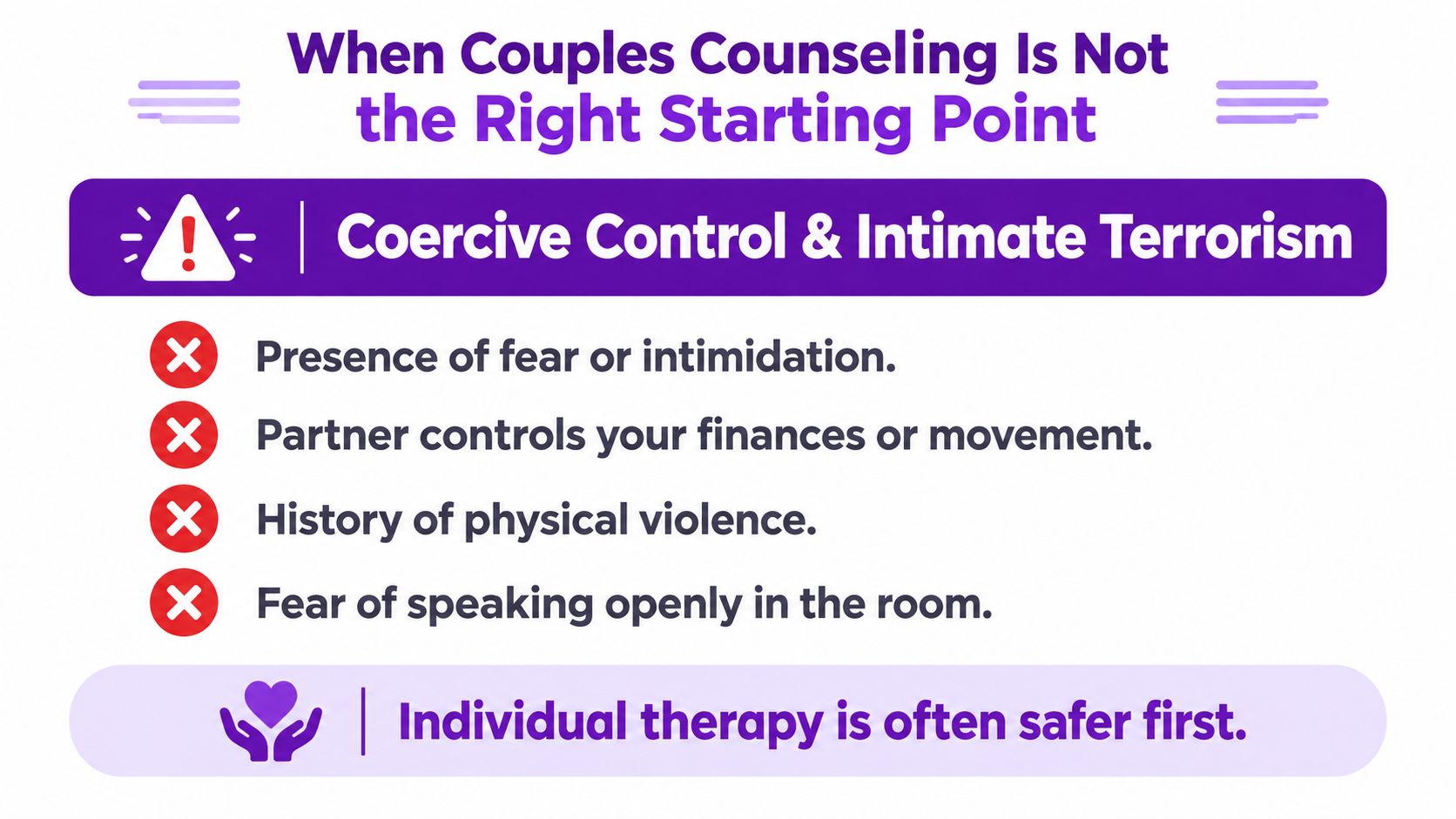
Couples counseling isn't automatically safe because a therapist is present. In relationships marked by coercive control or intimate terrorism, joint sessions can increase danger. A survivor may stay silent because speaking truthfully could trigger retaliation, be blamed for the abuse in the room, or face consequences after the appointment.
The first assessment should distinguish ordinary relationship distress from fear-based control. A therapist should ask questions privately when appropriate, not only in front of both partners.
Safety questions that change the treatment plan
A careful screening considers:
- Fear and intimidation: Does either partner feel afraid of the other's reaction?
- Physical danger: Has there been serious injury, use of weapons, or a threat to kill?
- Surveillance and pursuit: Is there stalking, monitoring, or a restraining-order violation?
- Substance-related risk: Is severe substance misuse making violence or unpredictability more likely?
- Freedom to leave: Does either partner want to leave because of violence or control?
- Freedom to speak: Can each person disagree without expecting punishment afterward?
These questions aren't accusations. They help determine whether both partners can participate voluntarily and safely.
The evidence does not support treating coercive control as an ordinary communication problem. Joint therapy can be considered only in carefully assessed situations involving situational or bidirectional violence, when both partners can participate safely, the violent partner accepts responsibility, and behavioral safeguards are in place. Even then, the evidence for couple interventions where violence is present is weak, heterogeneous, and mixed. The safety considerations are outlined in this review of intimate-partner violence and couple interventions.
Safer starting points may include separate confidential assessment, individual therapy, domestic-violence advocacy, and safety planning. If there is immediate danger, contact emergency services or a local crisis resource. The aim isn't to label the relationship from a distance. It's to avoid placing a vulnerable partner in a setting that could expose them to more harm.
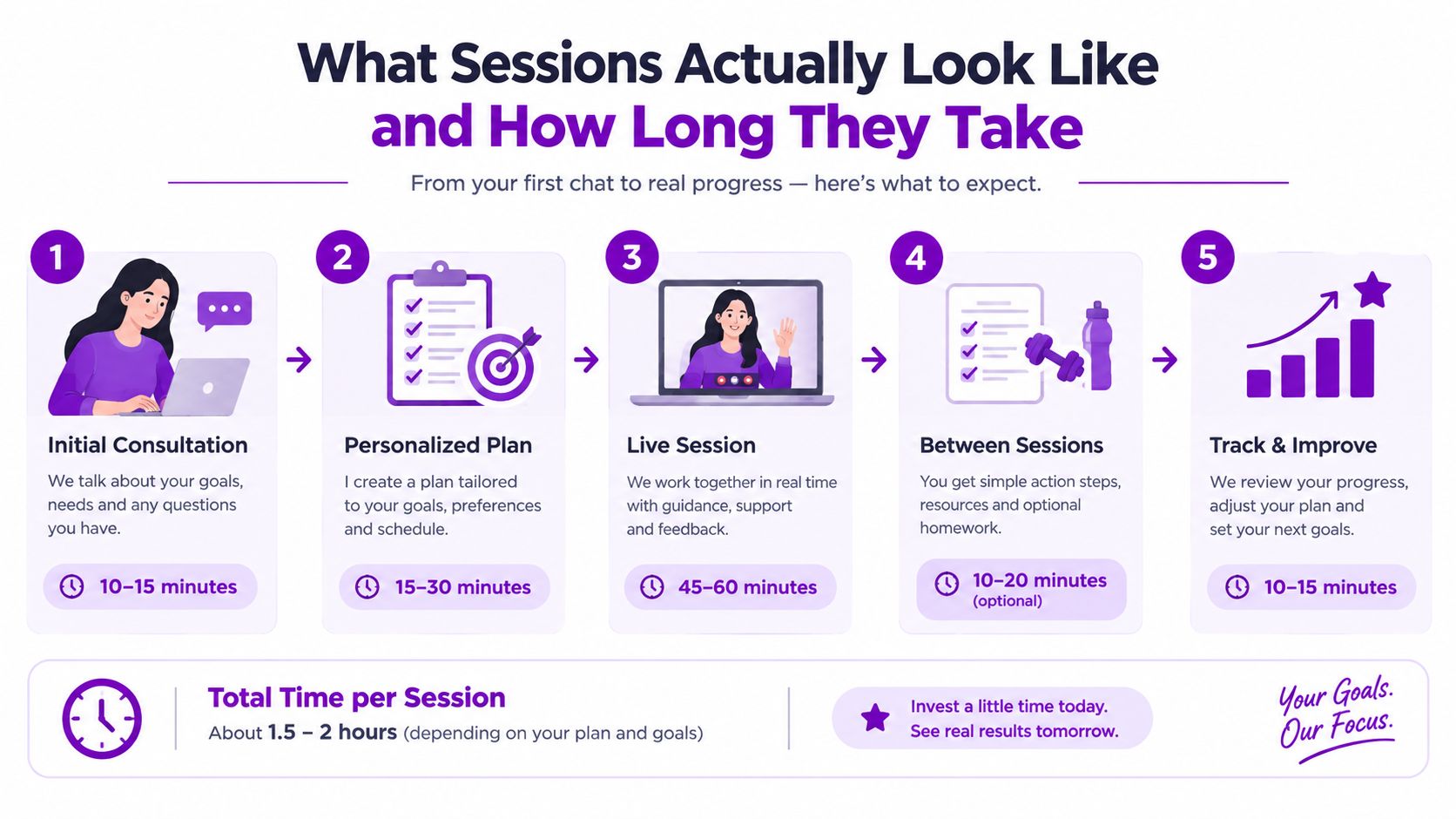
What Sessions Look Like and How Long They Take
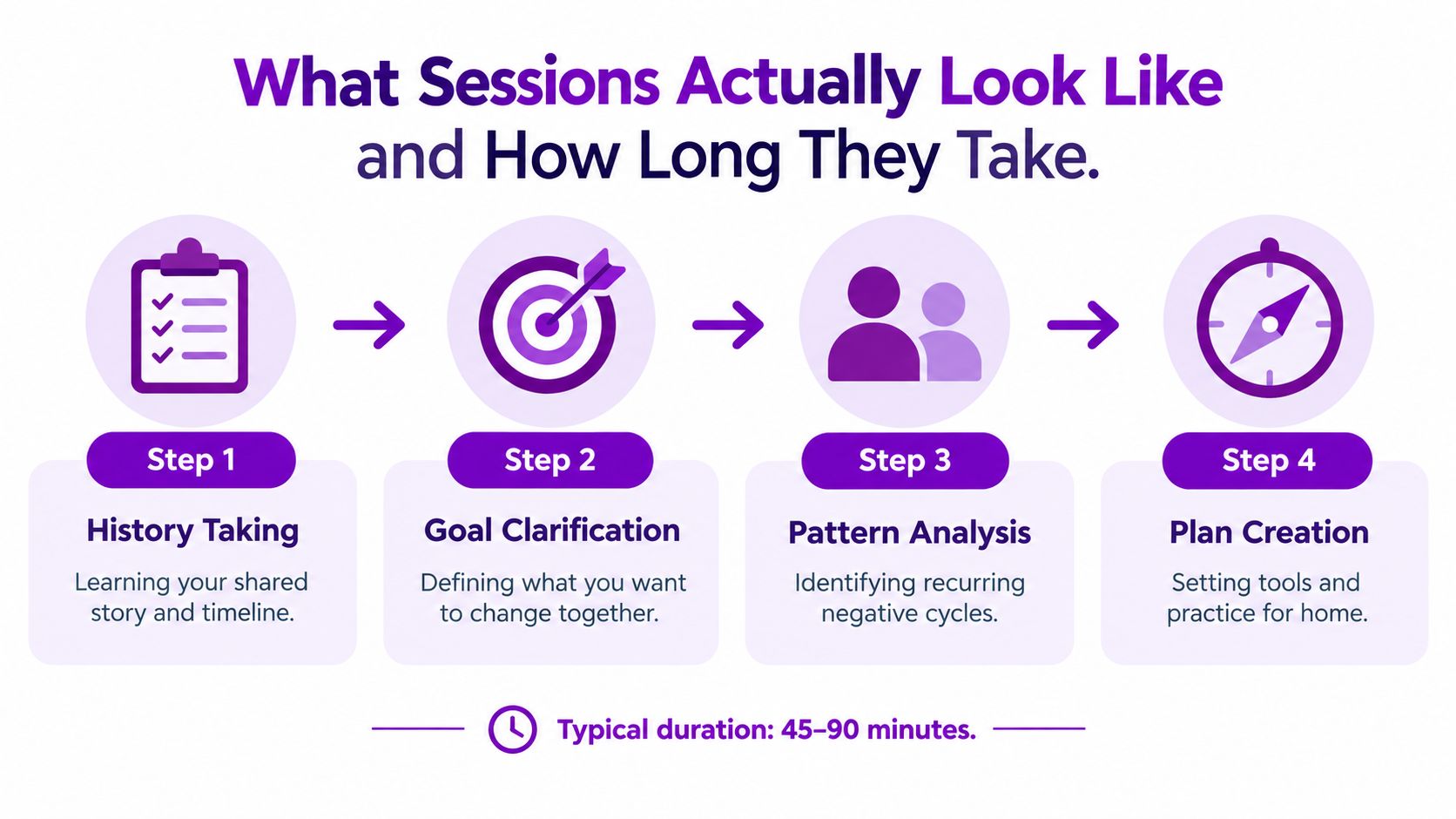
A couple may enter the first appointment expecting a formal confrontation, with the therapist deciding who caused the problem. A responsible first session moves more slowly. The clinician gathers the relationship history, traces how the current pattern developed, asks what each person hopes to change, and evaluates whether joint work is safe.
A typical appointment may include:
- History taking: The therapist reviews the relationship timeline, major transitions, previous treatment, trust injuries, mental-health symptoms, and current stressors.
- Goal clarification: Each partner describes a desired outcome. “Stop fighting” becomes more specific, such as returning to a conversation after a pause or making decisions without threats.
- Pattern analysis: The clinician maps the cycle between partners. One person may pursue reassurance while the other withdraws, which can intensify the pursuit.
- Plan creation: The couple receives tools to practice between sessions. Later appointments review what happened, identify obstacles, and adjust the plan.
Evidence-based couple therapy commonly involves roughly 20 sessions over six months. Another synthesis indicates that many effective programs span approximately three to six months. Treatment may be shorter or longer according to the couple's goals, the severity of distress, safety findings, trauma history, and whether either partner also needs individual treatment. These time frames are described in this evidence review of couple therapy durability.
Choosing an approach
Emotionally Focused Therapy often examines attachment needs and recurring emotional cycles. The Gottman Method commonly addresses friendship, conflict management, and patterns that erode trust. Cognitive Behavioral Couples Therapy works with beliefs, behaviors, communication habits, and reinforcement patterns.
A therapist may use one model or combine techniques. Ask why a particular approach fits your concerns and how progress will be evaluated. Familiar terminology matters less than a clear clinical rationale and a way to assess whether the work is helping.
Changes can remain at six months, yet some improvements weaken later without practice, booster sessions, or treatment for anxiety, depression, trauma, or substance use. Maintenance should be discussed from the beginning. Ask what you will do when an old pattern returns, how you will notice early warning signs, and whether a follow-up appointment would help.
Couples considering concentrated programs alongside ordinary weekly care can compare couples retreat options, while checking credentials, clinical scope, safety procedures, and follow-up arrangements.
How to Choose the Right Couples Therapist for You
The therapist matters, but so does the match between the therapist's training and the problem you're bringing. Look for a licensed marriage and family therapist, licensed clinical social worker, psychologist, psychiatrist, or another qualified clinician whose credentials and scope are clear in your state.
Ask about experience with your specific concern. Infidelity recovery, chronic conflict, parenting strain, trauma, depression, and coercive control require different assessment skills. A therapist who works primarily with communication coaching may not be the right clinician for a couple facing untreated trauma or serious psychiatric symptoms.
Questions for the intake call
Use the first conversation to gather practical information, not to persuade the therapist that your relationship is worth saving.
- Ask about method: “Which couples approaches do you use, and why might one fit our goals?”
- Ask about safety: “How do you screen for violence, coercive control, and fear before beginning joint work?”
- Ask about individual care: “How do you handle depression, anxiety, trauma, or substance use affecting the relationship?”
- Ask about logistics: “Are sessions available in person, online, or both?”
- Ask about progress: “How will we know whether treatment is helping?”
- Ask about privacy: “What are your policies for individual check-ins, records, and confidential disclosures?”
- Ask about coordination: “Can you collaborate with an individual therapist, EMDR clinician, or psychiatric provider when needed?”
EMDR can be a useful adjunct when an individual trauma history is driving reactivity, avoidance, nightmares, or emotional flooding. It doesn't replace relationship work when the couple's interaction has become the main source of distress, and it shouldn't be used to pressure a survivor into joint treatment.
Psychiatric support may also matter when anxiety, depression, or trauma symptoms interfere with sleep, concentration, emotional regulation, or participation. Medication management should be considered as part of coordinated care when clinically appropriate, not as a substitute for examining the couple's interaction.
Green flags and warning signs
A green flag is a therapist who stays balanced without pretending every issue has equal responsibility, explains the treatment plan, screens for safety, and welcomes questions. Another is a clinician who can describe how sessions connect to home practice.
A warning sign is pressure to book immediately, promises of guaranteed reconciliation, dismissal of fear, or a refusal to discuss how individual symptoms will be addressed. Therapy should feel like a professional fit, not a sales pitch.
If online treatment is part of your search, review guidance on choosing the best couples counseling online and compare privacy, scheduling, clinician credentials, crisis procedures, and the platform's ability to support both partners safely.
Setting Realistic Expectations and Taking the Next Step
Couples counseling can produce meaningful improvement, but maintenance is part of the treatment, not an optional extra. Expect practice between sessions, occasional setbacks, and the possibility that one partner may also need individual therapy, EMDR, or psychiatric support.
For Phoenix-area adults and couples, reVIBE Mental Health offers in-person and secure online sessions, appointments seven days a week, most major insurance plans, and an integrated team providing talk therapy, EMDR, and psychiatry with medication management.
Find a reVIBE Location Near You!
We currently have five locations for your convenience. (480) 674-9220
reVIBE Mental Health – Chandler
3377 S Price Rd, Suite 105, Chandler, AZ
reVIBE Mental Health – Phoenix Deer Valley
2222 W Pinnacle Peak Rd, Suite 220, Phoenix, AZ
reVIBE Mental Health – Phoenix PV
4646 E Greenway Road, Suite 100, Phoenix, AZ
reVIBE Mental Health – Scottsdale
8700 E Via de Ventura, Suite 280, Scottsdale, AZ
reVIBE Mental Health – Tempe
3920 S Rural Rd, Suite 112, Tempe, AZ
reVIBE Mental Health offers couples counseling alongside talk therapy, EMDR, and psychiatry with medication management, helping partners address relationship patterns while coordinating care for individual concerns. Visit reVIBE Mental Health to explore Phoenix-area locations, online appointments, insurance information, and a consultation path that fits your needs.