
You cut your dose three days ago and felt fine at first. Now you're dizzy when you stand, snapping at people you love, and lying awake wondering if the depression is already back. That fear is understandable, and it's also why SSRI withdrawal symptoms deserve a clear explanation before you make another dose change on your own.
What SSRI Withdrawal Actually Means
She missed two doses during a busy weekend and assumed it wouldn't matter. By Tuesday she had a headache, felt nauseous on the drive to work, and kept losing her train of thought in meetings. Her first thought wasn't withdrawal. It was, I'm getting sick again.
That confusion is common because the name itself is confusing. Clinicians often call this antidepressant discontinuation syndrome, while many patients call it withdrawal. Both terms describe the same thing, a set of physical and emotional symptoms that can appear when you reduce or stop an SSRI after your brain has adapted to it.
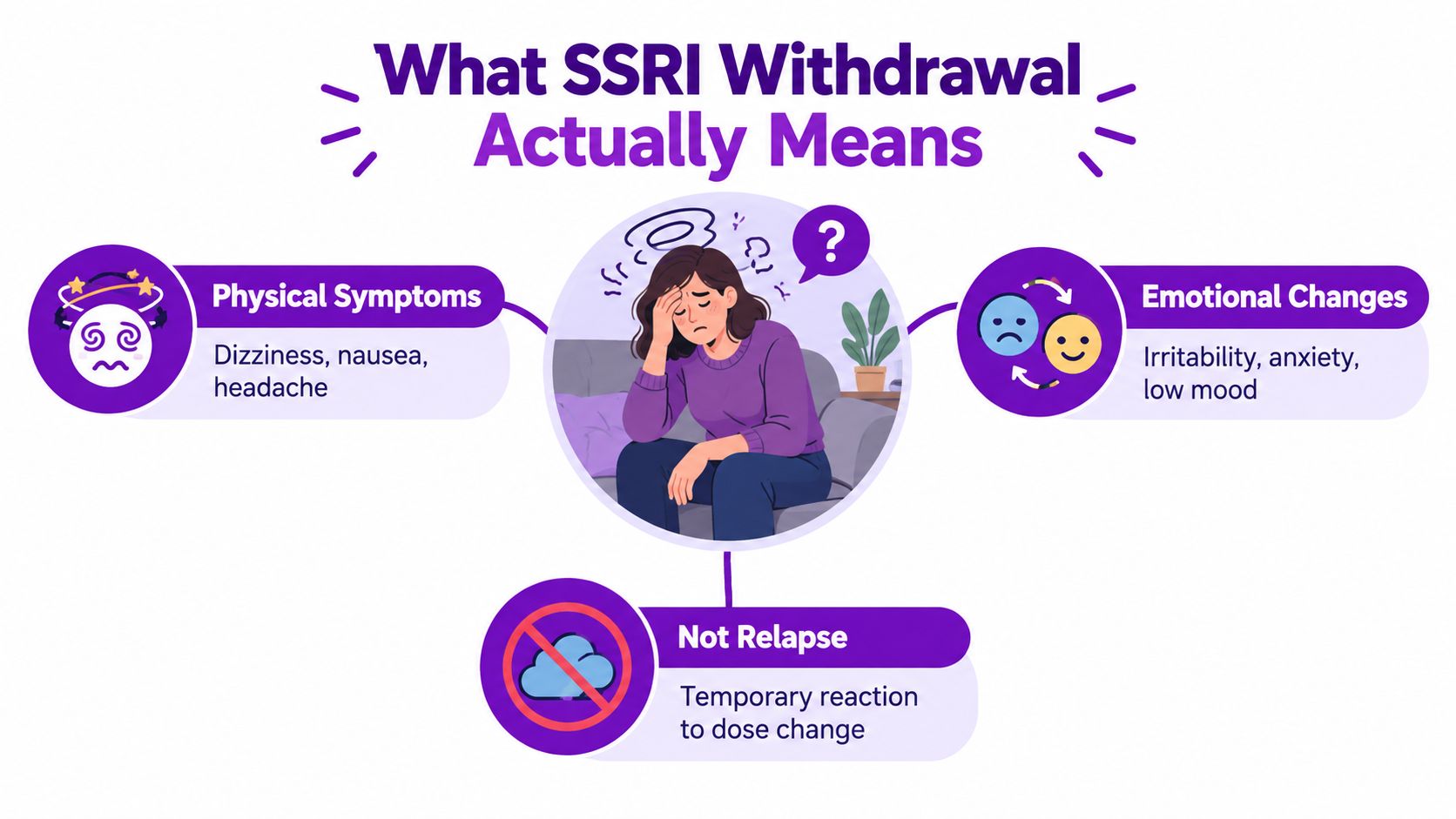
A simple picture of what's happening
An SSRI blocks the reuptake of serotonin at the synapse, so more serotonin stays available between nerve cells for a while. Over weeks and months, your nervous system adjusts to that new level. When the dose drops suddenly, serotonin signaling changes faster than those adaptations can reverse, and you feel that gap as symptoms.
This isn't the same as addiction. You're not craving the medication or seeking it compulsively. Your brain is recalibrating, much like your eyes need time after you step from bright light into a darker room.
Why you shouldn't treat this casually
A systematic review covering 14 studies found that approximately 53.6% of people experienced withdrawal symptoms after stopping or reducing an SSRI, though estimates varied by medication, study design, treatment duration, and tapering method, as summarized in Australian guidance on stopping antidepressants. That doesn't mean half of people suffer badly. It means symptoms are common enough that stopping deserves a plan, especially after long-term use.
Some people reduce with barely a ripple. Others feel quite unwell for a stretch. Neither experience says anything about your strength or whether the medication worked. It says your dose, your medication, and your history need individual attention from your prescriber.
The Most Common and Less Common Symptoms
Think of this as a mental checklist, not a prediction. You might notice two symptoms from one group and none from another. What matters is recognizing a pattern that started after a dose change.

Physical symptoms people report first
- Dizziness and imbalance: You feel lightheaded turning your head, standing up, or walking through a grocery store aisle.
- Nausea and headache: These often arrive together and can make screens, driving, and bright light harder to tolerate.
- Insomnia and fatigue: You can't fall asleep easily, then you drag through the next day feeling wired and tired at once.
- Flu-like sensations: Achiness, sweating, or a general run-down feeling without an actual infection.
Sensory symptoms unsettle people the most because they're hard to describe to family members.
Brain zaps: Brief electric-shock sensations in the head or body, sometimes triggered by moving your eyes, are a classic discontinuation symptom people search for late at night.
They're usually short. They can still be frightening the first time, especially if nobody warned you they exist.
Emotional and cognitive changes
Irritability often shows up before low mood. Small frustrations feel disproportionate, patience thins, and you may cry more easily than usual. Anxiety surges can feel sudden and physical, with restlessness or panic that doesn't match what's happening around you.
Concentration slips too. You reread the same email, forget why you opened a drawer, or lose words mid-sentence. Vivid dreams are another frequent report, sometimes intense enough to leave you unsettled after waking.
Less common, still worth tracking
Some people notice tremor, marked imbalance, or a sense of feeling detached from themselves. Others describe sudden tearfulness or emotional waves that pass quickly. Don't panic over a single odd moment, but write it down with the date and your current dose.
That record turns a vague worry into useful clinical information. It also helps your prescriber decide whether to slow down, pause, or look for another cause.
Timelines and What Affects Them
There's no single calendar for SSRI withdrawal symptoms, and pretending otherwise sets people up to feel abnormal. Timing depends heavily on which medication you're taking and how quickly it leaves your body.
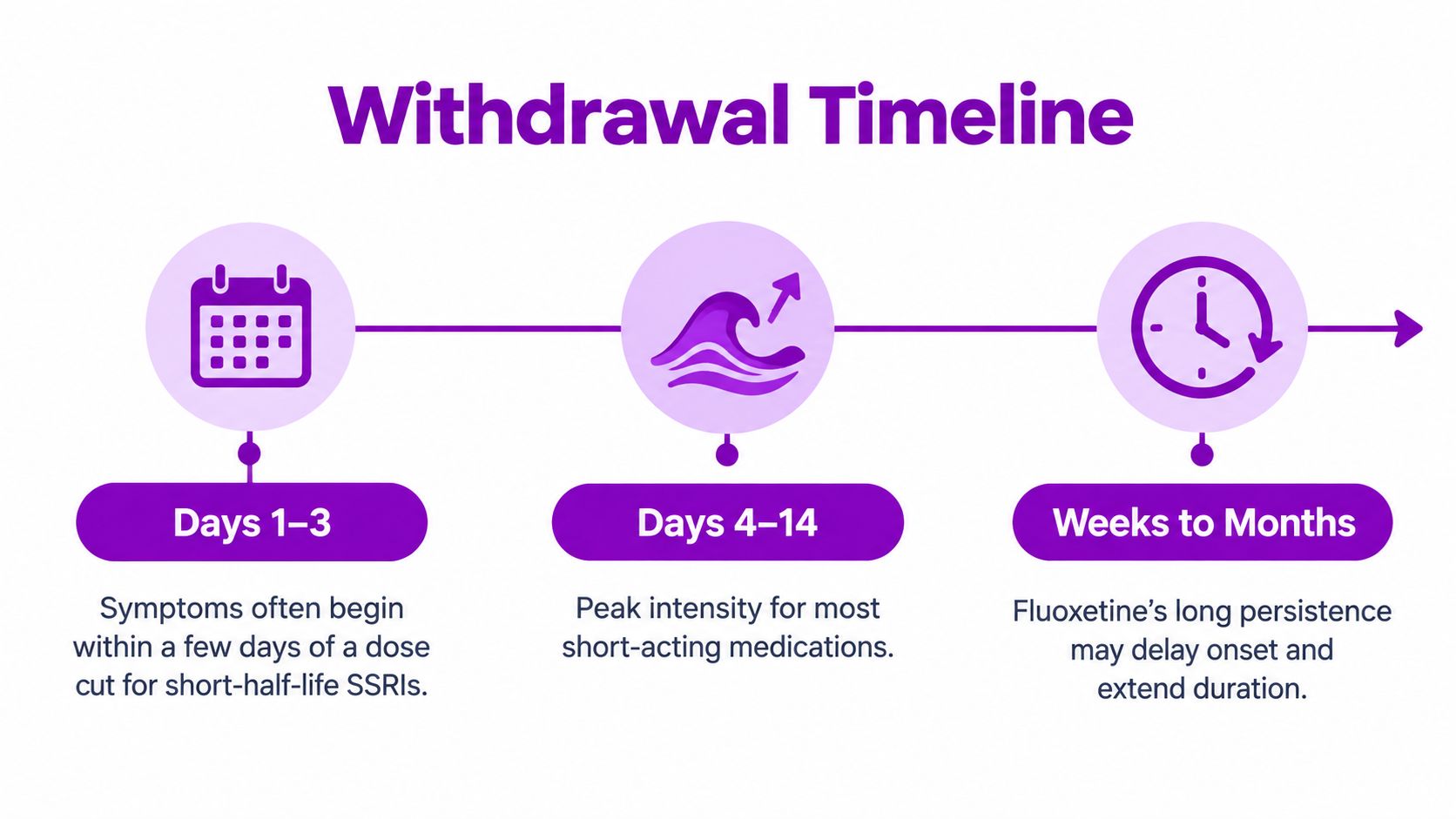
When symptoms usually start
Symptoms often begin within a few days of a dose reduction or missed doses. Short-half-life agents clear faster, so you may feel a change after even one missed dose. Fluoxetine behaves differently because it and its active metabolite linger much longer, so onset can be delayed by days or weeks and catch you off guard just when you thought you'd cleared the process.
That delayed pattern explains a common misunderstanding. Feeling well the first week after stopping fluoxetine doesn't guarantee you're past withdrawal. Your prescriber should factor that lag into follow-up timing.
How long they can last
Older guidance treated withdrawal as usually mild and finished in about a week. Newer guidance is more cautious. Duration data cited in NICE recommendations on medicines associated with withdrawal reported symptoms lasting more than 2 weeks in 55% of patients, at least 6 weeks in 40%, and at least 12 weeks in 25%. Separate community samples described even longer courses for a minority.
If you want a plain-language walk-through of how that range plays out in practice, the antidepressant discontinuation syndrome timeline from Refresh Psychiatry & Therapy is a helpful companion to discuss with your own prescriber.
Two contrasting examples
One person tapers slowly after a shorter course, feels dizzy and irritable for ten days, then settles. Another person, after years at a higher dose of a short-half-life medication, improves for a week, worsens again, and needs several pauses over months. Both stories fit within what's known.
Longer treatment, higher doses, abrupt cuts, and shorter half-life medications push risk upward. Your plan should be built around those factors, not around a friend's experience.
Withdrawal Versus Relapse
This distinction causes the most anxiety, and it's where a simple rule of thumb helps. Withdrawal usually announces itself quickly after a dose change and brings new physical symptoms. Relapse usually creeps back as the familiar pattern of your original illness.
Withdrawal vs Relapse at a Glance
| Clue | Withdrawal | Relapse |
|---|---|---|
| Timing | Starts within days of reduction or stopping | Develops gradually over weeks to months |
| Symptom shape | New dizziness, nausea, brain zaps, vivid dreams | Return of your previous depressive or anxious pattern |
| Course | Often fluctuates and eases as you stabilize | Tends to persist and build without treatment |
| Context | Clearly follows a dose change or missed doses | May follow stress, loss, or no obvious trigger |
Timing is the strongest early clue, as explained in Royal College of Psychiatrists guidance on stopping antidepressants. If symptoms erupt two days after a cut, withdrawal belongs high on the list. If your mood, sleep, appetite, and hopeless thinking slowly return two months later, relapse needs serious consideration.
If it started right after the dose changed and includes symptoms you've never had with depression, call it possible withdrawal until your prescriber helps you sort it out.
When the picture is muddy
The two can overlap. Withdrawal can lower mood and raise anxiety, and that distress can feel identical to the start of a relapse. Don't try to settle it alone by changing the dose again and again.
Keep a daily log, stay in closer contact with your prescriber, and hold the dose steady until the pattern clarifies. People sometimes read about how long medication takes to help when they're starting treatment, such as in this overview of how long antidepressants take to work, but stopping deserves the same patience. If you're also weighing broader support, depression and anxiety care from Life Primary Care outlines why follow-up matters during these transitions.
Safe Tapering Principles That Actually Work
A good taper isn't a race to zero. It's a series of small tests. You reduce a little, see how you respond, and only move again when you're stable enough.
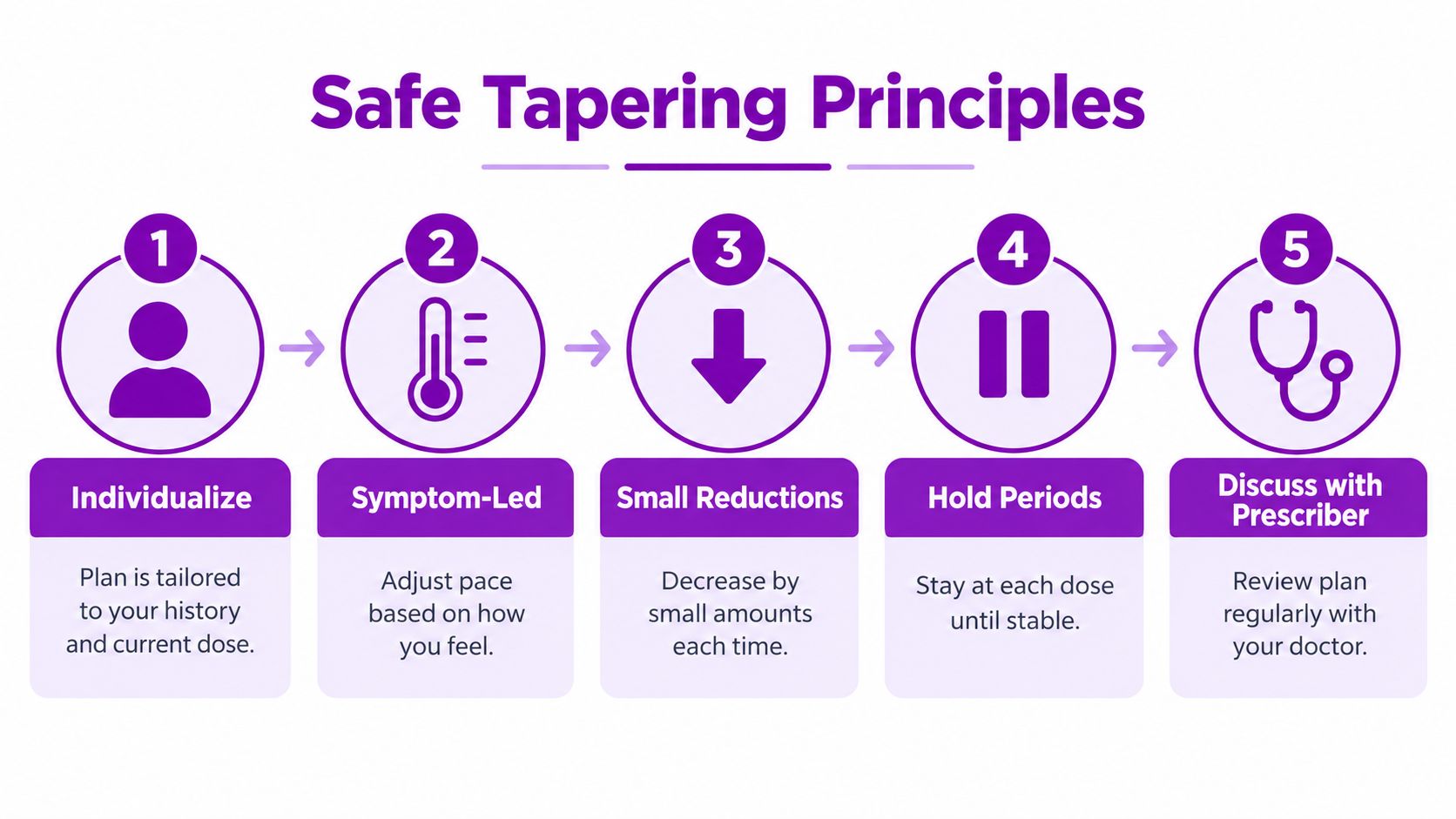
Reduce by proportion, not by fixed chunks
NICE depression guidance on stepwise dose reduction recommends reducing as a proportion of the previous dose, such as an initial 50% reduction, then smaller steps such as 25% as the dose gets lower. Clinical guidance also describes waiting 2 to 4 weeks after a reduction and slowing to around 5 to 10% of the most recent dose when symptoms are troublesome.
That detail matters at low doses. Cutting from 20 mg to 15 mg and cutting from 5 mg to zero look similar on paper, but the second is a far bigger proportional jump for your brain. That's why many people feel fine early in a taper and struggle near the end.
Make the plan symptom-led
- Agree the first step: Choose the reduction size and date with your prescriber, not during a stressful week if you can avoid it.
- Log daily: Note dose, sleep, dizziness, mood, anxiety, and any sensory symptoms in one simple line per day.
- Wait for tolerable: Don't reduce again until symptoms have resolved or become manageable.
- Pause without shame: If symptoms spike, holding or returning to the last tolerated dose can be the safest option, then restarting more slowly.
Don't skip doses to taper a short-half-life SSRI unless your prescriber specifically directs it. Alternating days creates ups and downs in drug levels, which can intensify the very symptoms you're trying to avoid. Structured medication management support helps keep those adjustments deliberate rather than improvised.
Sleep aids, anti-nausea measures, or other short-term supports may ease specific symptoms, but they don't replace pacing. If the steps are too big, no add-on reliably fixes that mismatch.
Why Population Averages and Personal Experience Can Both Be True
You may have read two opposite claims online. One says withdrawal is mostly mild and brief. The other describes months of severe symptoms. It's tempting to assume one side is lying, but both can describe real data from different groups of people.
What the trial average shows
A 2025 systematic review of 49 randomized clinical trials found that, on average, people stopping antidepressants experienced only one additional discontinuation symptom versus placebo, with dizziness, nausea, vertigo, and nervousness the clearest excess symptoms, according to the JAMA Psychiatry review of discontinuation symptoms. That's reassuring for many people, especially those stopping after shorter treatment under trial conditions.
An average, though, hides spread. If most participants have one mild symptom and a smaller group has many difficult symptoms, the average can still look low. Your personal risk isn't the average unless your history matches the average participant.
What patient reports add
That same evidence summary notes a prior systematic review found 46% of affected participants rated withdrawal as extremely severe. Notice the wording, affected participants. That's a different denominator from everyone who stopped in a trial. It tells you how bad it can feel for people who do develop significant symptoms.
A better question: Not just how long withdrawal lasts, but whose experience does this study actually describe?
Many trials stop medication after weeks or months and check symptoms around one week later. That design can miss long-term users, people who've failed previous tapers, and symptoms that worsen later. It doesn't make the trials worthless. It makes them incomplete for your situation if you've taken an SSRI for years.
Use population averages as a floor for planning, not a ceiling. Hope for the easier course, but build in follow-up and flexibility in case you're in the minority who needs more time.
Warning Signs That Need a Prescriber Soon
Most SSRI withdrawal symptoms are uncomfortable rather than dangerous. That general reassurance has limits, and you shouldn't white-knuckle through symptoms that could signal a serious problem.
Call promptly if you notice these
- New or worsening suicidal thoughts: Treat this as urgent, whether you think it's withdrawal or relapse.
- Severe agitation or panic: Especially if you can't sleep, work, drive safely, or care for yourself.
- Pronounced neurologic symptoms: Marked imbalance, confusion, weakness, or symptoms that feel far beyond ordinary dizziness.
- Possible mania: Racing thoughts, pressured speech, inflated confidence, risky behavior, or a sharply reduced need for sleep.
- Inability to function: If nausea, insomnia, or distress is derailing daily life, that's clinical information, not a personal failure.
Contacting your prescriber quickly isn't abandoning your goal. Sometimes the safest move is to pause, return briefly to a tolerated dose, or get assessed for relapse or another medical cause. That adjustment protects the overall plan.
Don't change doses repeatedly on your own while waiting for a reply if you're deteriorating. Seek urgent care or crisis support if you feel unsafe. A careful taper includes a safety net, and using that safety net is the plan working as intended.
Getting Local Support for a Smoother Transition
You don't need to manage dose changes, therapy, and symptom tracking in separate silos. A psychiatric provider can personalize the taper, help distinguish withdrawal from relapse, and coordinate support when sleep, anxiety, or mood becomes harder to manage.
For adults around Scottsdale, Tempe, Chandler, Phoenix, and Paradise Valley, integrated therapy alongside medication changes can make the transition steadier. Appointments seven days a week, including secure online sessions, also reduce the long waits that often push people to improvise dose changes alone. To find a psychiatrist near Scottsdale, bring specifics to that first conversation.
What to bring
- Medication history: Current SSRI, dose, how long you've taken it, and prior medications.
- Your log: Dates of dose changes and the symptoms that followed, even if it's rough.
- Your hardest symptoms: Name the two or three that most affect sleep, work, or safety.
- Your goal and concerns: Whether you want to stop, switch, or feel stable again.
Find a reVIBE Location Near You! We currently have five locations for your convenience. (480) 674-9220
- reVIBE Mental Health, Chandler: 3377 S Price Rd, Suite 105, Chandler, AZ
- reVIBE Mental Health, Phoenix Deer Valley: 2222 W Pinnacle Peak Rd, Suite 220, Phoenix, AZ
- reVIBE Mental Health, Phoenix PV: 4646 E Greenway Road, Suite 100, Phoenix, AZ
- reVIBE Mental Health, Scottsdale: 8700 E Via de Ventura, Suite 280, Scottsdale, AZ
- reVIBE Mental Health, Tempe: 3920 S Rural Rd, Suite 112, Tempe, AZ
If you're reducing an SSRI and don't want to guess your way through dizziness, brain zaps, or returning anxiety, the integrated psychiatry and therapy team at reVIBE Mental Health can build a symptom-led tapering plan with you and monitor it closely. Reach out to schedule in person in the Phoenix metro area or through a secure online session, and bring your dose history and symptom log so your first visit leads to a concrete next step.