
You've probably typed ketamine treatment near me after a long stretch of trying everything else. Maybe you're tired of waiting weeks for a medication to help, or you're trying to make sense of two clinics that look similar on a map but feel very different once you start asking questions. That's usually the decision, not which office is closest, but which one can offer the right formulation, proper supervision, and a cost you can plan for.
The good news is that ketamine-based depression care is no longer a fringe idea. Yale researchers published the first randomized controlled trial in 2000 showing that a single subanesthetic IV ketamine dose improved depression in under 24 hours, and by 2019 the FDA approved esketamine as the first ketamine-based antidepressant for treatment-resistant depression in adults Smithsonian Magazine history of ketamine for depression. That shift matters because treatment-resistant depression affects nearly 3 million people in the United States, and more than 30% of patients may fail to respond to at least two antidepressants Smithsonian Magazine history of ketamine for depression.
A local search should help you answer practical questions, not just locate a pin on a map. Who evaluates you first? Who stays in the room? What happens if your blood pressure rises? Does insurance cover the treatment, or is the estimate only for the visit itself? Those details separate a thoughtful clinic from a convenient one, and they matter even more when you're already exhausted.
Introduction to Searching for Ketamine Treatment Near You
A late-night search often starts the same way. Someone has already tried talk therapy, one or more antidepressants, maybe a higher level of care, and still feels stuck. They open a browser, type ketamine treatment near me, and are met with ads, wellness language, and clinic listings that do not explain what care looks like.
That search makes sense. Ketamine care can be a next step for severe or treatment-resistant depression, but clinics vary a lot in how they screen patients, monitor treatment, and explain costs. Some offer supervised IV ketamine, some offer intranasal esketamine, and some promote services that sound similar without matching the safety model a careful patient needs.
What a useful local search should answer
A useful clinic page should answer three plain questions. Is the treatment appropriate for your diagnosis and medical history. Is the setting equipped for monitoring and safe discharge. Do insurance and self-pay estimates reflect the full visit, not just the chair time.
A good rule is simple. The right clinic explains screening, supervision, and cost in clear language before the first appointment.
That matters even more when symptoms overlap. Real-world ketamine care often involves patients with depression alongside anxiety, PTSD, or other diagnoses, so the first visit should feel like a medical evaluation, not a sales call. Evidence from a real-world ketamine outcomes study supports that broader clinical picture. If a clinic only highlights its address and convenience, keep asking questions.
For readers in Phoenix, location still matters, but it should be only one part of the decision. A clinic may be close to home and still be a poor fit if it cannot explain who supervises care, what happens if symptoms change during treatment, or how the final bill is calculated. reVIBE Mental Health has Phoenix-area locations, which can make access easier, but the same questions still apply at any site. The goal is not just finding the nearest office. It is finding a clinic that can treat you safely and explain the tradeoffs clearly.
Understanding How Ketamine Treatment Works
A local clinic search should go beyond location. Before scheduling, ask whether the clinic treats the right diagnosis, has a supervised setting for monitoring, and can explain the true insurance and self-pay cost before the first visit. The nearest office is not always the safest fit.
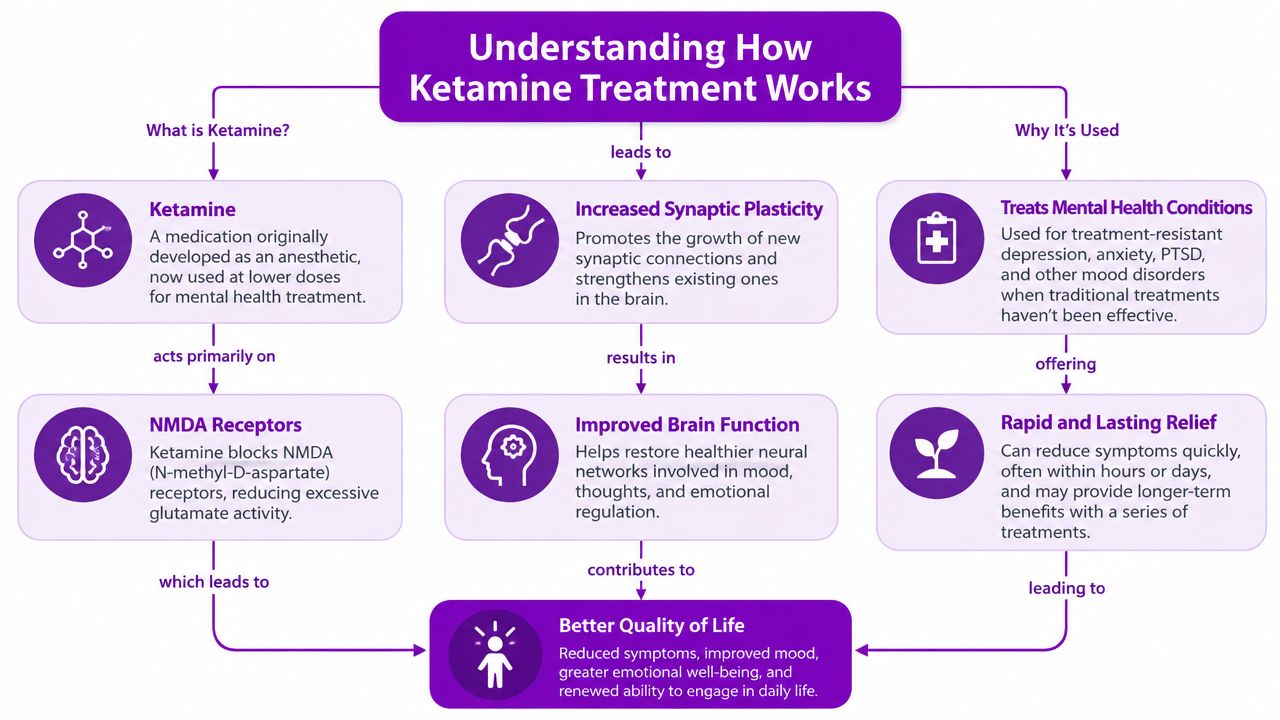
Ketamine care is used differently from standard antidepressants. Those medications usually aim for gradual change over time, while ketamine is chosen when a clinician needs a faster response for severe depression or treatment-resistant symptoms. That speed is one reason people who feel stuck with other options ask about it.
The history helps explain the current role of treatment. Yale's 2000 randomized trial showed that a single subanesthetic IV dose improved depression in under 24 hours, and later FDA approval of esketamine helped move that research into regulated care for adults with treatment-resistant depression Smithsonian Magazine history of ketamine for depression. Ketamine is not a cure, but it does work differently from standard antidepressants.
Traditional antidepressants can be like adjusting a thermostat slowly. Ketamine is more like a short reset that may let the brain respond in a different way. Because that reset can affect blood pressure, dissociation, and behavior, treatment should happen in a monitored setting with real-time clinical attention APA and ketamine/esketamine guideline PDF.
Clinicians often use IV ketamine at 0.5 mg/kg over 40 minutes, with ECG, blood pressure, and respiratory observation available during infusion APA and ketamine/esketamine guideline PDF. That setup is designed to balance effect and safety. Lower doses may reduce the chance of benefit, while the physical effects can still occur and need monitoring.
A good clinic explains this process plainly. It does not just hand over medication, it supervises the window of change and waits until the person is stable enough to leave.
Comparing Ketamine Treatment Types and Evidence
A search for ketamine treatment near me works better when you compare the actual service, not just the distance. Clinics may all use the word “ketamine,” yet the care can differ in route, monitoring, insurance handling, and how clearly the team explains what is being offered.
The main options at a glance
Spravato is the ketamine-derived nasal spray with FDA approval for specific depression indications. It is given in a clinic under supervision, which is why patients do not take it home. A clear clinic should explain that setup plainly, including why the visit is monitored and how the process works in practice Lumin Health overview of Spravato supervision.
IV ketamine is different. It is often used off-label for depression care, and coverage can be much less predictable than with approved esketamine. That is why insurance questions should happen before the first appointment, not after the bill arrives insurance coverage guide.
A clinic's choice should also fit the patient's diagnosis, goals, and level of supervision. When a practice explains how ketamine fits into broader psychiatric treatment, resources such as Integrity Together LLC on medication assisted treatment can help readers understand how supervised care is often paired with other supports. For readers comparing local options, a service page such as reVIBE Mental Health's ketamine and Spravato management should make the difference between these paths easy to see.
| Feature | IV Ketamine | Intranasal Esketamine (Spravato) |
|---|---|---|
| Regulatory status | Off-label for depression care | FDA-approved for specific depression indications |
| Setting | Clinic-based infusion | Clinic-based supervised nasal treatment |
| Monitoring | Vital-sign monitoring during infusion | Blood pressure checks before dosing, around 40 minutes after, and at least 2 hours of observation FDA label |
| Coverage pattern | Often self-pay | Commonly covered with prior authorization |
| Typical decision use | When a clinic offers infusion-based care | When a regulated nasal option fits the patient and payer rules |
Real-world outcomes help separate marketing from practical expectations. Analysts in one clinic study reported response and remission among patients who completed an initial infusion series, and another analysis found symptom scores improved in a broader group with complex diagnoses real-world ketamine outcomes study. Those findings do not mean every person responds, but they do show why reputable clinics should be able to discuss evidence without overselling what one treatment path can do.
Safety Eligibility and What Makes Treatment Appropriate
A ketamine evaluation should start with one basic question, should this person receive it at all? That question protects people who may benefit, and it also keeps clinics from treating someone in a setting where the risks are too high.
Who needs a deeper screening
The consultation should review psychiatric history, current medications, blood pressure concerns, and any signs that dissociation or behavior changes could complicate care. Ketamine can raise blood pressure, so a careful clinic should already know whether cardiovascular instability or another concern means treatment should wait informed consent and monitoring guidance.
Practical rule: if the first conversation skips medical history and goes straight to scheduling, the clinic is not screening carefully enough.
Safety also depends on the setting. Expert guidance expects ECG, blood pressure, and respiratory observation during IV treatment, along with a check for suicidality and acute behavioral changes before discharge. That is a medical workflow, not a spa experience with a prescription attached.
Why home use is a different category
Local searches can blur the lines. Arizona's Board of Nursing says ketamine prescribed for home use has to meet established standards of care, including patient assessment, informed consent, patient education, and emergency planning. It also says prescribing IV ketamine outside a healthcare setting is not within the standard of practice Arizona Board of Nursing guidance. Setting matters as much as the medication itself.
For intranasal esketamine, the FDA label requires blood pressure checks before dosing, reassessment about 40 minutes after dosing, and observation for at least 2 hours after administration. Those are operational requirements, not optional extras. A legitimate clinic should be ready to follow them.
How to Find and Vet a Reputable Local Clinic
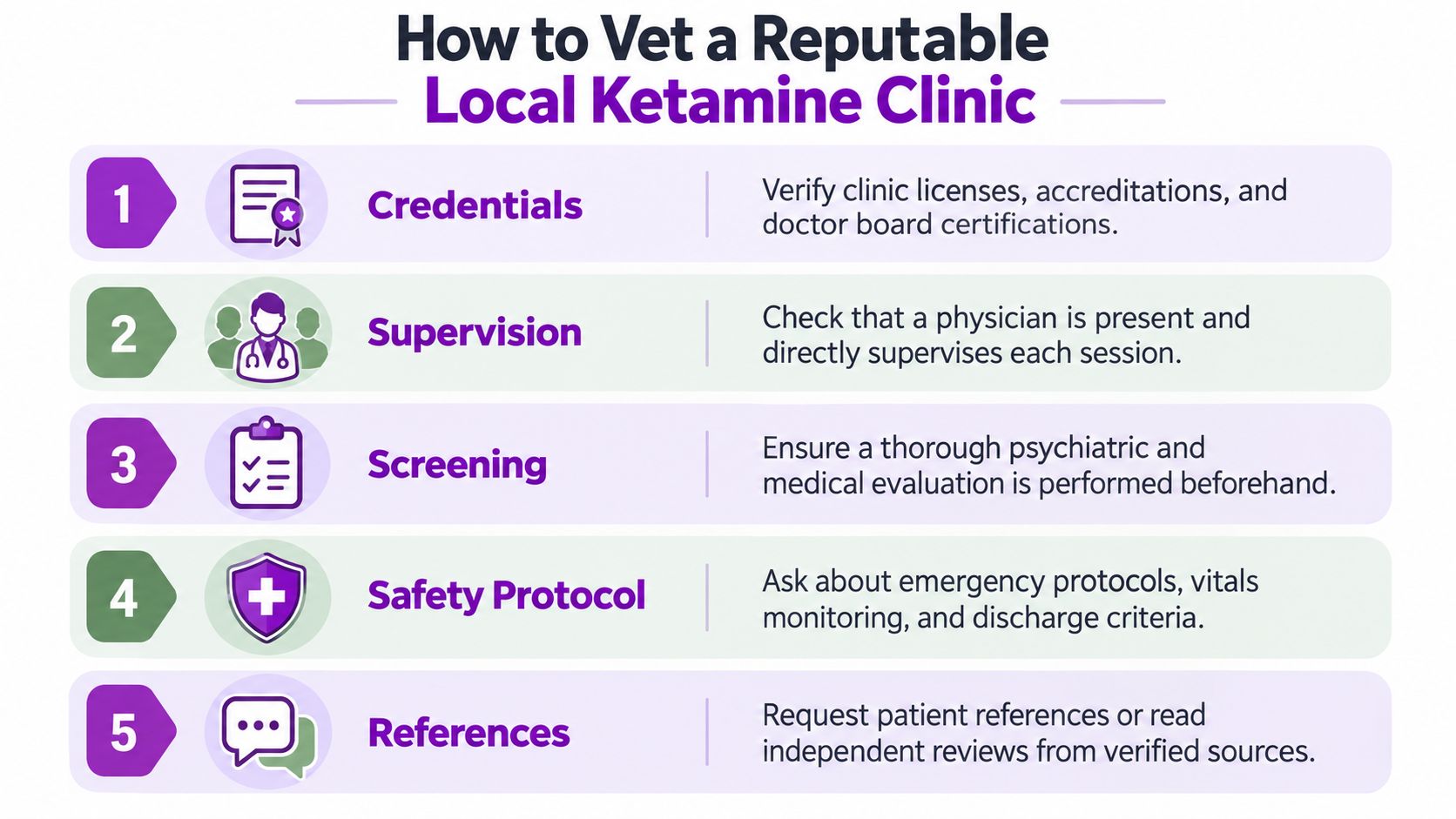
A local clinic should answer basic safety questions before you ever book a visit. Ask who does the screening, who supervises treatment, what monitoring is in place, and how the team handles emergencies or discharge. If those answers are vague on the phone, that is a warning sign.
Questions to ask before booking
Start with the people and the setting. Ask whether a physician is directly involved, who is responsible for clinical decisions, and what equipment is available during treatment. A clinic should be able to say how it tracks blood pressure, heart rate, and oxygen, and what happens if a patient becomes overly sedated or develops high blood pressure.
Cost deserves the same kind of clarity. Spravato often needs prior authorization, while off-label IV or IM ketamine is usually self-pay and less likely to be covered by insurance. In many cases, patients see prices in the range often described by insurance coverage guides as roughly $400 to $800 for IV sessions and about $590 to $1,000+ for Spravato before insurance, with many people still facing copays even when coverage is approved. The important part is to ask for the full episode-of-care estimate, not just a single-visit number. If you are comparing medication follow-up with a clinic that offers coordinated psychiatric care, reVIBE Mental Health's medication management provider page shows the kind of structured follow-up patients should ask about.
Phoenix-area patients also have a practical advantage, because local access can shorten travel and make follow-up easier. That matters when a treatment plan depends on repeat visits, paperwork, and insurance checks. A nearby clinic is only helpful if it is also clear about safety and billing.
Red flags that should slow you down
Walk away from clinics that promise at-home IV treatment, skip blood pressure monitoring, or are unclear about discharge criteria. A clinic should also be able to explain follow-up care, because ketamine is usually one part of a broader treatment plan, not a stand-alone fix.
A quick checklist can make the decision easier:
- Credentials: Confirm medical licenses, board certification, and who has the final say on treatment.
- Supervision: Make sure a licensed clinician is present, not only front-desk or sales staff.
- Screening: Expect a psychiatric and medical evaluation before the first dose.
- Monitoring: Ask about blood pressure, ECG availability, and observation after treatment.
- Costs: Verify whether prior authorization is needed and what you may owe if coverage is denied.
For patients in Phoenix, that checklist can be applied before choosing among local options, including reVIBE's nearby locations, so the decision is based on safety and fit rather than convenience alone. The goal is a clinic that can explain what happens before, during, and after the session in plain language.
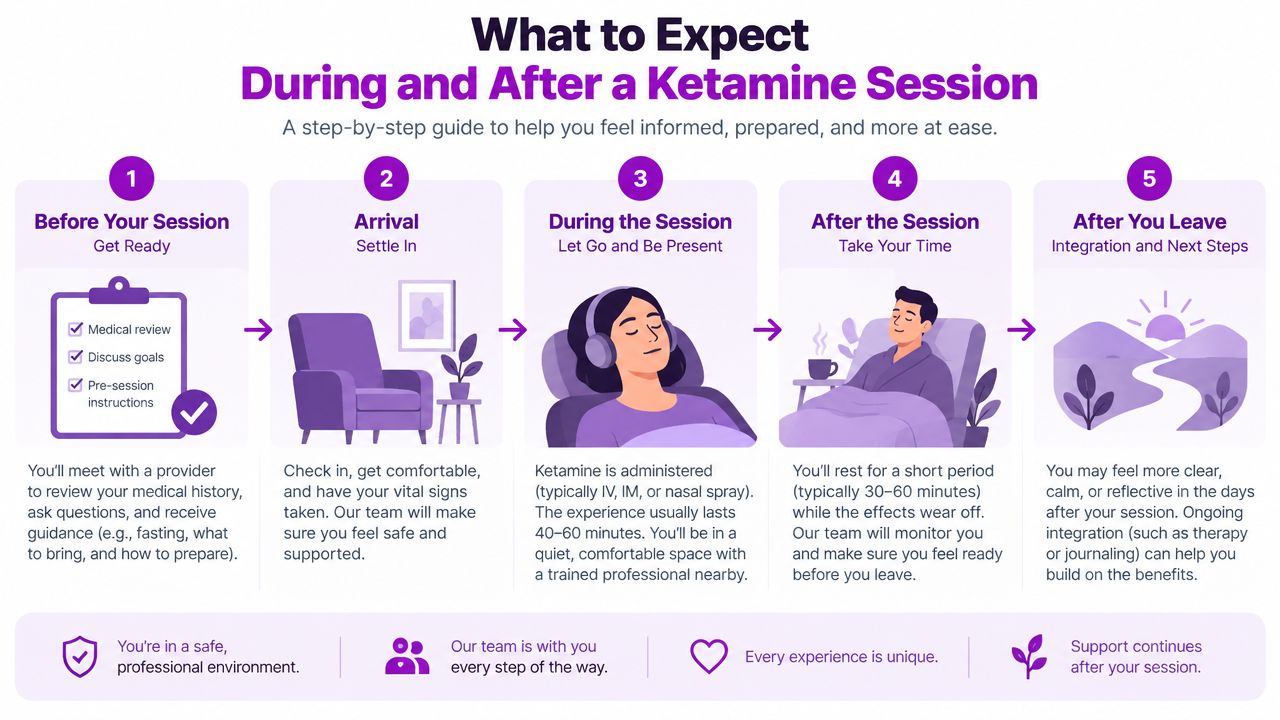
What to Expect During and After a Ketamine Session
A first session is easier to follow when you break it into stages. You arrive, the team checks your vitals, confirms the treatment plan, and gives the medication in a controlled setting. After that, staff stay with you while you rest, which is very different from being sent home without observation.
The session itself
Most clinics begin with intake and vital signs, especially blood pressure, because that is one of the clearest early safety checks informed consent and monitoring guidance. During IV treatment, staff may keep checking pulse oximetry and blood pressure through the visit, and they should be ready to respond if pressure rises.
Patients often describe the experience as dreamy, detached, or calm, but it is still a monitored medical procedure. If the clinic offers Spravato, the FDA-required observation period is at least 2 hours after dosing FDA label. That waiting period matters because blood pressure can rise during the time when the medicine is strongest, so the clinic should keep watching until you are stable.
What happens after discharge
Plan to rest for the rest of the day. You need a ride home, and the clinic should explain discharge criteria before you leave. Good clinics also explain what to watch for after you get home, so you are not guessing about the next few hours.
Follow-up matters because improvement is often tracked over time with symptom tools such as PHQ-9 rather than by memory alone real-world ketamine outcomes study.
If a clinic does not talk about aftercare, it is only offering half the treatment.
Aftercare may include a medication review, therapy coordination, or a plan for the next session. Ketamine care works best when it is connected to ongoing psychiatric support, not treated like a one-time event.
Finding Care in Phoenix and Taking the Next Step with reVIBE
Phoenix-area access is broader than it used to be, but local availability still isn't even across neighborhoods. A 2025 mapping study found ketamine access was limited in rural areas, which is a reminder that “near me” should mean more than the shortest drive PubMed mapping study. It should also mean a clinic that can verify benefits, coordinate follow-up, and offer the right treatment setting.
If you're comparing options in the valley, a useful local directory like the directory listing for Phoenix Services can help you compare providers and coverage details without assuming every clinic operates the same way. That's especially helpful if you're trying to weigh supervised care against convenience.
reVIBE Mental Health offers five valley locations, including Chandler, Phoenix Deer Valley, Phoenix PV, Scottsdale, and Tempe, and it supports insurance verification so you can understand access before the first visit. The practice also provides structured, supervised Spravato appointments in a clinical setting, which fits the supervised model readers should expect when they're choosing a ketamine-related service. You can also review their local access page at reVIBE Mental Health near me psychiatrist if you're comparing nearby psychiatric care alongside depression treatment options.
For Phoenix readers, the location question is only one part of the decision. The more important part is whether the clinic can clearly explain supervision, screening, follow-up, and what your total treatment path looks like before you commit.
If you're ready to compare supervised ketamine-related care with a clinic that can help you understand eligibility, insurance, and follow-up, visit reVIBE Mental Health. Their team can help you look at local options in the Phoenix metro area and decide whether a clinic-based approach fits your needs.