When an anxiety attack subsides, the first thing to do is give yourself some grace. Your body and mind have just run a marathon you didn't sign up for. The recovery process starts with small, gentle actions that tell your nervous system, "The threat is gone. You are safe now."
This isn't about trying to force yourself to feel calm. It’s about creating a soft landing for your system to return to a state of balance after being flooded with adrenaline.
What To Do In The Moments After An Attack
That shaky, drained, and slightly surreal feeling after an attack is completely normal. Your body has just slammed the brakes on its fight-or-flight response, and the aftereffects—like a still-pounding heart or trembling hands—can be just as unsettling as the attack itself.
Right now, your only job is gentle self-care. Forget trying to analyze why it happened or worrying if it will happen again. The focus needs to be on reconnecting with your physical body and your immediate surroundings. This simple shift in attention helps pull you out of the storm of anxious thoughts and back to the safety of the present moment.
Find Your Anchor With Grounding Techniques
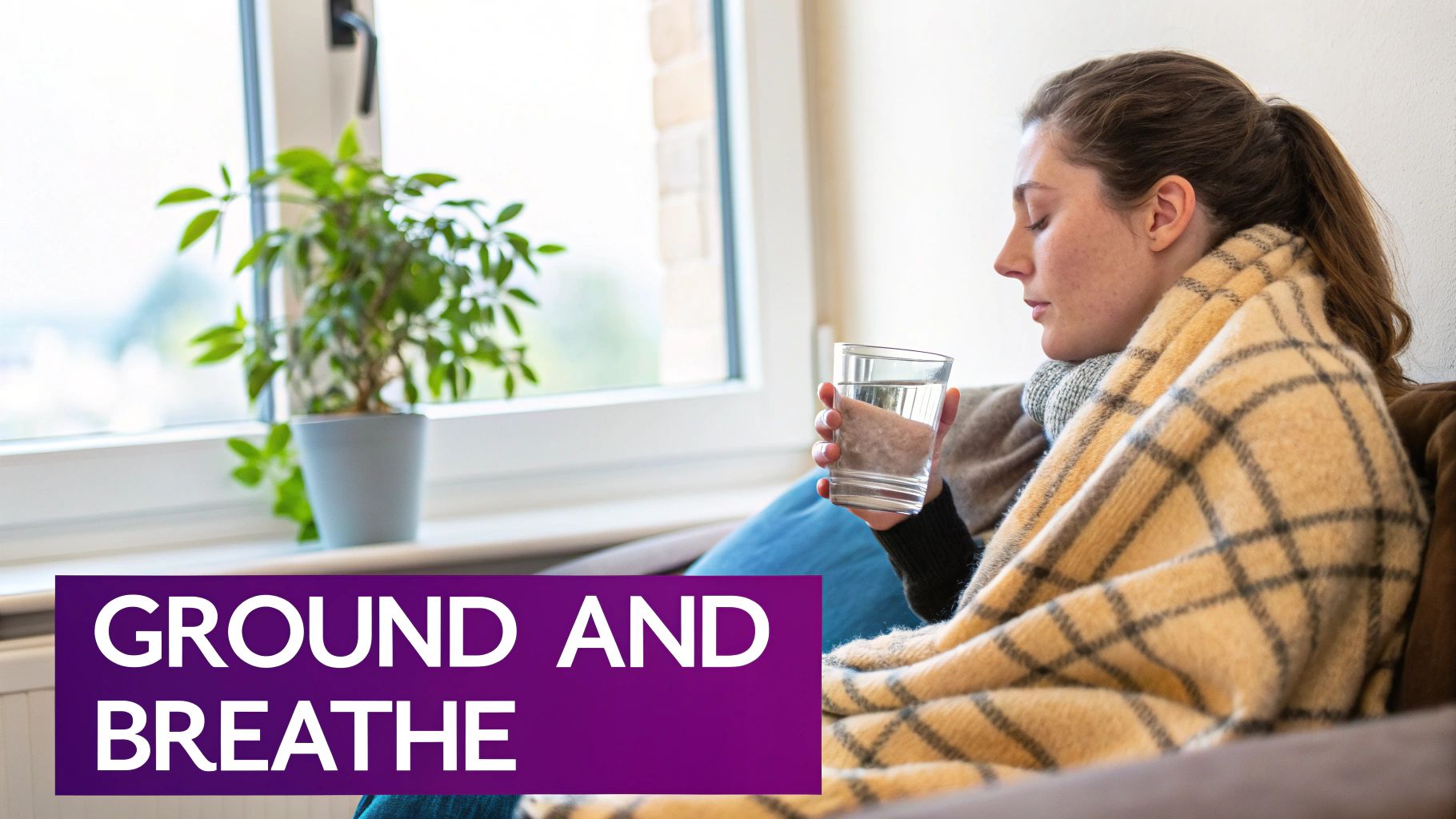
Grounding is your go-to tool for post-attack recovery. It’s simply the act of using your five senses to pull your awareness out of your head and anchor it firmly in the present. This technique is incredibly powerful because it interrupts the feedback loop of racing thoughts that can keep anxiety going.
One of the most effective and straightforward methods is the 5-4-3-2-1 technique. No matter where you are, just pause and quietly find:
- 5 things you can see: Really look around you. Name five objects in the room—a pen on the desk, a scuff mark on the wall, the way light hits a picture frame. Notice their details.
- 4 things you can feel: Bring your attention to the physical world. It could be the texture of your jeans, the cool smoothness of a countertop, or the solid feeling of your feet planted on the floor.
- 3 things you can hear: Listen closely. Tune into the sounds you might normally filter out, like the low hum of the air conditioner, a bird chirping outside, or even the sound of your own quiet breathing.
- 2 things you can smell: Take a slow breath in. Can you smell the faint scent of coffee in the air? Or maybe the clean laundry smell on your shirt?
- 1 thing you can taste: Acknowledge a taste. Maybe it’s the lingering flavor of your last drink, or you can pop a mint or take a sip of water to focus on a new sensation.
This exercise yanks you out of the abstract world of fear and plants you back in your body, reminding your brain that you are physically safe right here, right now. Some people also find it helpful to hold onto a tangible object as an anchor. In these moments, many find that holding or wearing crystal bracelets for anxiety can provide a point of focus and immediate comfort.
For a quick reference, here are a few simple grounding actions you can try.
Immediate Post-Attack Grounding Actions
This table gives you some quick, easy-to-remember actions that can help you feel more stable in the minutes following an attack.
| Action | Why It Helps | Practical Example |
|---|---|---|
| Sip Cold Water | The cold sensation provides a strong physical anchor, distracting your mind and helping to lower your body temperature. | Fill a glass with ice water and take small, deliberate sips. Focus on the feeling of the cold glass in your hands and the water in your mouth. |
| Wrap in a Blanket | The gentle pressure and warmth can have a calming, swaddling effect on an overstimulated nervous system. | Grab the coziest blanket you have and wrap it tightly around your shoulders. Focus on the weight and softness. |
| Press Your Feet to the Floor | This physically connects you to the ground, reinforcing your sense of stability and "being here." | Sit in a chair and press both feet firmly and evenly onto the floor. Imagine roots growing from your feet down into the earth. |
Remember, the goal is just to reconnect with the physical world in a gentle way.
Regulate Your Breathing To Calm Your Nervous System
When you’re anxious, your breathing gets shallow and fast, which just keeps the panic signals firing in your brain. By deliberately slowing down your breath, you send a direct message to your nervous system that the danger is over.
One of the best breathing exercises for this is called "box breathing." It’s easy to remember: Just picture a square. Inhale for a count of four as you trace one side. Hold your breath for four as you go across the top. Exhale for four down the other side. And hold again for four along the bottom.
Just a few rounds of this can make a huge difference in your heart rate and bring a wave of calm. These initial actions are your emotional first-aid kit. Once you feel a bit more settled, you can build on this foundation. To learn more about managing these overwhelming moments, check out our guide on other powerful coping strategies for panic attacks.
Your First 24 Hours: A Self-Care Blueprint
An anxiety attack is a full-body experience. It’s not just in your head; it’s a physiological event that dumps stress hormones like adrenaline and cortisol into your system. That intense fight-or-flight response takes a massive toll, using up a tremendous amount of physical and emotional energy. When it’s over, you're often left feeling completely drained and fragile.
The next 24 hours aren't about trying to "bounce back" or pretend it didn't happen. Think of this time as a crucial window for gentle restoration. Your body and mind need a quiet space to come back to baseline. Pushing yourself or ignoring what your body is telling you can actually make the recovery process longer and leave you feeling on-edge.
The most powerful thing you can do right now is give yourself permission to rest. Seriously.
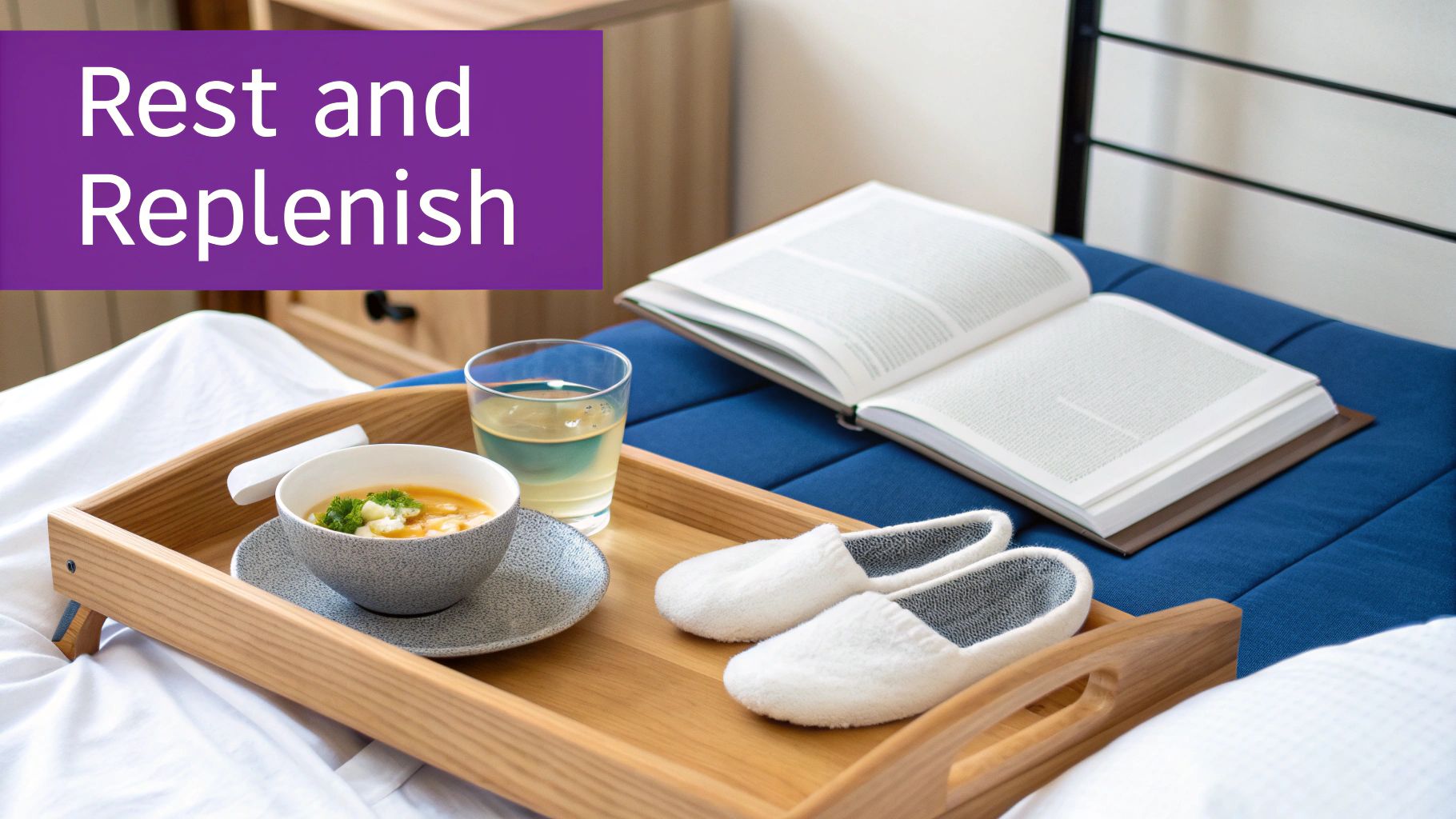
Focus on Rest and Gentle Replenishment
Your body just burned through a lot of fuel, so the first priority is to gently restock the essentials. This isn't complicated—it starts with the basics you'd focus on if you were getting over the flu.
- Hydrate, Hydrate, Hydrate: Even mild dehydration can make you feel more fatigued and dizzy, which can feel uncomfortably similar to anxiety. Keep a water bottle nearby and sip on it, or try some calming herbal tea or a simple broth.
- Keep Food Simple and Nourishing: Your digestive system can be pretty sensitive after an attack. Stick with foods that are easy to digest, like soup, oatmeal, bananas, or toast. Now is not the time for a heavy, greasy meal that will make your body work overtime.
- Steer Clear of Stimulants: This one is a big deal. Caffeine and sugar can send your already frayed nervous system right back into high alert. For at least 24 hours, it's best to skip the coffee, energy drinks, and sugary snacks.
Think of your body as being in recovery mode. The goal is simple: give it what it needs to heal without adding any more stress. Treat yourself with the same kindness and patience you'd give to a friend who is feeling unwell.
Try Some Light, Calming Movement
While a hard workout is off the table, a little bit of gentle movement can do wonders. It helps work out that residual tension that gets stored in your muscles and keeps you from feeling mentally "stuck."
A slow, mindful walk—especially outside—is a fantastic option. The fresh air, sunlight, and the simple rhythm of walking can be incredibly grounding. Instead of worrying about how far or fast you're going, just pay attention to your surroundings. Notice the trees, the sky, the feeling of your feet hitting the pavement.
Even a few minutes of gentle stretching can help release the tightness that anxiety often leaves behind in your neck, shoulders, and back. If you're looking for more strategies to manage these feelings day-to-day, our guide on how to reduce anxiety naturally has some great ideas.
Ultimately, this 24-hour period is about listening. If your body is screaming for sleep, listen. If it feels restless and tense, a gentle walk might be just what you need. There's no right or wrong way to feel after an attack, but responding with supportive, kind actions is always the right move.
Making Sense of It All Without Judging Yourself
After the adrenaline subsides and your breathing finally evens out, you're often left with a strange, quiet exhaustion. This is the emotional echo of the attack. But this quiet moment is also a powerful opportunity—not to get stuck replaying the fear, but to gently start understanding what just happened.
Processing the experience is how you turn a moment of feeling completely powerless into something you can learn from. This isn't about being hard on yourself or trying to figure out what you did "wrong." It’s about curiosity. Grab a simple notebook and pen; they might just be the best tools you have right now.
Getting your thoughts down on paper pulls them out of your head, which can make them feel far less overwhelming and a lot more manageable.
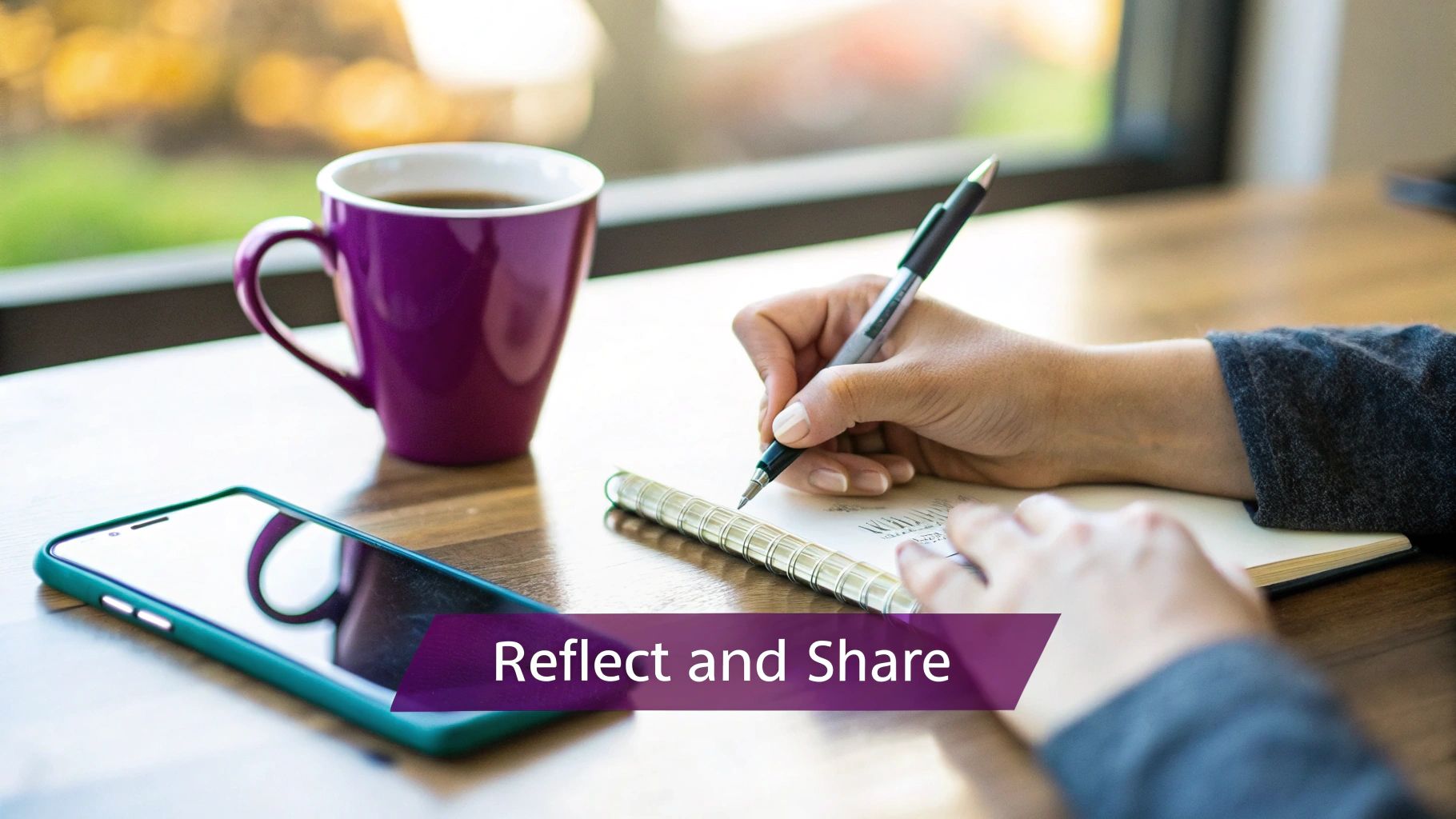
Gentle Journaling to Find Clues
You don't have to write an entire essay. Sometimes, just jotting down a few quick notes can uncover patterns you’d never see otherwise. If you're not sure where to start, try these prompts:
- What was going on right before it began? Think about where you were, who was there, or even just the thoughts that were drifting through your mind.
- What was the very first physical feeling? Was it your chest tightening up? A sudden wave of dizziness? Knowing that first signal can become your own personal early-warning system.
- What were my thoughts racing about? Don't filter or judge them. Just get them out. Seeing scary thoughts written down often robs them of their power.
- What did I do that helped, even a little? Maybe you grabbed some cold water or just stepped outside for a second. Acknowledging these small wins really helps build your confidence for next time.
Processing what happened is really about creating a personal roadmap. It helps you understand your unique triggers and responses, empowering you to navigate future challenges with greater awareness and skill.
Talk It Out to Lighten the Load
Anxiety attacks can leave you feeling isolated or even ashamed, and honestly, that can feel worse than the attack itself. Reaching out to someone you trust—a partner, a good friend, a family member—can break that feeling of isolation almost immediately. It’s a powerful reminder that you aren’t going through this alone.
It can feel awkward to start that conversation, but it doesn't need to be a big deal. Something as simple as, "I had a really rough moment earlier and could use an ear," or, "I had an anxiety attack today and I'm feeling a little shaky," is more than enough to open the door.
Sharing your story also connects you to a much larger one. With a US lifetime prevalence of 31.1% for anxiety disorders, you are in good company. Unfortunately, a 2021 study found that only 27.6% of people with anxiety actually received any kind of treatment, often because of stigma or just not knowing where to turn. This is a huge, shared struggle.
Part of this journey is also about arming yourself with knowledge. Understanding how different conditions present can be incredibly clarifying, like exploring the difference between ADHD and anxiety. The more you know, the better you can care for yourself. And when you’re ready for more structured support, therapies like CBT offer proven strategies for managing these overwhelming feelings.
You can find out more about how it works here: https://revibementalhealth.com/what-is-cognitive-behavioral-therapy/
Knowing When to Reach Out for Professional Support
Self-care and grounding techniques are powerful first-aid for the immediate aftermath of an anxiety attack. They are absolutely essential for regaining your footing in the moment. But when anxiety attacks start to cast a long shadow over your life, it’s often a sign that you need a deeper level of support. Recognizing this isn't a failure—it's an act of profound self-awareness and strength.
Deciding to get help can feel like a huge, intimidating step, but a few clear signs can cut through the uncertainty. If you notice your attacks are happening more often or feel more intense, that’s a key indicator. Another major red flag is avoidance. Maybe you've started turning down social invitations, or you find yourself changing your daily routine just to steer clear of places where you've had an attack before. When the fear of another attack starts shrinking your world, professional support can help you reclaim that lost ground.
Differentiating Between Urgent and Ongoing Care
It’s crucial to understand the difference between an immediate crisis and the need for ongoing therapy. You should seek immediate emergency help if you are having thoughts of harming yourself or others. It's also vital if you experience severe chest pain and shortness of breath and can't be sure if it’s anxiety or a medical emergency like a heart attack—it's always better to be safe.
Scheduling a consultation for therapy, on the other hand, is a proactive step for building long-term wellness. This is the right move when:
- Anxiety consistently gets in the way of your work, school, or relationships.
- You just feel overwhelmed and can't seem to cope on your own anymore.
- The after-effects of attacks, like that deep exhaustion and lingering dread, hang around for days.
Taking the Next Step Toward Lasting Well-Being
Reaching out for professional help is about building long-term resilience, not just putting out fires. Research shows that while recovery is very possible, getting support makes a massive difference. One major 2020 study found that while over half of anxiety episodes resolve within about 7.5 months, nearly a third of people still had symptoms after 36 months. This really highlights why getting help sooner rather than later is so important. You can learn more about these anxiety recovery findings directly from the research.
Seeking professional help is like getting a guide for a difficult trail. You’re still doing the hiking, but now you have an expert who knows the terrain, can point out the hazards, and helps you find the safest and most effective path forward.
For residents in the Phoenix area, accessible and compassionate care is right here. reVIBE Mental Health offers a welcoming environment for therapy and medication management, with a dedicated team ready to support your journey.
Find a reVIBE Location Near You!
We currently have five locations for your convenience. (480) 674-9220
reVIBE Mental Health – Chandler
3377 S Price Rd, Suite 105, Chandler, AZ
reVIBE Mental Health – Phoenix Deer Valley
2222 W Pinnacle Peak Rd, Suite 220, Phoenix, AZ
reVIBE Mental Health – Phoenix PV
4646 E Greenway Road, Suite 100, Phoenix, AZ
reVIBE Mental Health – Scottsdale
8700 E Via de Ventura, Suite 280, Scottsdale, AZ
reVIBE Mental Health – Tempe
3920 S Rural Rd, Suite 112, Tempe, AZ
Building Your Path to Long-Term Resilience
Getting through an anxiety attack is a huge first step, but what comes next? Real, lasting recovery isn't just about managing the crisis in the moment. It's about building a foundation of resilience so you can move through life with more confidence and a lot less fear.
This next phase is all about understanding the roots of your anxiety and actively developing new skills to change your relationship with it. This is where professional therapeutic approaches can make a world of difference.
Proven Therapeutic Approaches for Lasting Change
Working with a mental health professional gives you a guide—someone who can help you explore strategies that are a good fit for you. While there are many paths, a couple of the most effective and well-researched methods for anxiety are Cognitive Behavioral Therapy (CBT) and Eye Movement Desensitization and Reprocessing (EMDR).
Cognitive Behavioral Therapy (CBT) is a practical, evidence-based approach that gets to the heart of anxious thought patterns. A therapist helps you learn to spot the distorted thoughts that fuel anxiety—like automatically jumping to the worst-case scenario—and gently challenge them. Over time, you literally begin to retrain your brain's default reactions.
Eye Movement Desensitization and Reprocessing (EMDR) can be incredibly powerful, especially if your anxiety is tied to past trauma. It's a unique therapy that helps your brain properly process and file away traumatic memories. This doesn't erase the memory, but it dramatically reduces its power to trigger intense emotional and physical reactions today.
For some people, medication can also be a really helpful piece of the puzzle. When managed by a licensed psychiatric professional, the right medication can help regulate the brain chemistry that's contributing to your anxiety. This can often calm the storm enough for you to fully engage in therapy and get the most out of it.
The most important thing to remember is that recovery is not just possible—it's what happens for most people who get the right support. You are not alone in this, and there are truly effective treatments out there that can help you feel like yourself again.
Finding Hope and Accessible Care in Arizona
If you're feeling isolated, you should know that anxiety disorders are the most common mental health issue on the planet, affecting an estimated 359 million people. But here's the tough part: a major global analysis revealed that only 9.8% of people with anxiety actually receive what could be considered adequate care. You can explore more about these treatment statistics to see the full picture.
That gap is exactly why accessible, compassionate care is so critical.
Here in Arizona, reVIBE Mental Health is committed to closing that gap. We offer a supportive path forward with an integrated team that provides both therapy and medication management under one roof. This ensures your care plan is coordinated, personalized, and built around your well-being.
Taking that first step to get professional support isn't just about feeling better now—it's a profound investment in your future.
Find a reVIBE Location Near You!
We currently have five locations for your convenience. (480) 674-9220
reVIBE Mental Health – Chandler
3377 S Price Rd, Suite 105, Chandler, AZ
reVIBE Mental Health – Phoenix Deer Valley
2222 W Pinnacle Peak Rd, Suite 220, Phoenix, AZ
reVIBE Mental Health – Phoenix PV
4646 E Greenway Road, Suite 100, Phoenix, AZ
reVIBE Mental Health – Scottsdale
8700 E Via de Ventura, Suite 280, Scottsdale, AZ
reVIBE Mental Health – Tempe
3920 S Rural Rd, Suite 112, Tempe, AZ
Frequently Asked Questions After an Anxiety Attack
Once the storm of an anxiety attack passes, you're often left in the quiet aftermath with a lot of questions. That’s completely normal. Making sense of what just happened is a huge part of the recovery process, helping you feel less at the mercy of your body’s powerful responses.
You might feel exhausted, a little dazed, or just plain shaky. Getting clear, straightforward answers to your biggest concerns can be incredibly grounding. Let's tackle some of the most common questions that come up.
What Is an "Anxiety Hangover"?
If you've ever felt utterly wiped out for hours or even days after an attack, you've experienced an anxiety hangover. It's a perfect name for it. Your body just went through a massive physiological event—the fight-or-flight response—and it needs time to recover.
Think about it: your system was flooded with adrenaline and cortisol, sending your heart racing and muscles tensing. That burns a tremendous amount of physical and mental energy. Once the perceived threat is gone, your body is left depleted.
You’ll likely feel some of these common symptoms:
- Profound Fatigue: A bone-deep exhaustion that a quick nap won't fix.
- Sore Muscles: Your neck, shoulders, and jaw might ache from being clenched so tightly.
- Brain Fog: It can be hard to focus or think clearly. You might feel a bit detached or slow.
- Emotional Sensitivity: It's common to feel more irritable, weepy, or on-edge than usual.
This isn’t a sign of weakness; it’s your body’s natural recovery process. The best thing you can do is be gentle with yourself. Hydrate, eat something simple, and rest as much as you possibly can.
Are Panic Attacks and Anxiety Attacks the Same Thing?
This is a great question, and people often use the terms interchangeably. While they share some symptoms, they’re actually different experiences, and knowing the difference can help you find the right way to cope.
A panic attack hits you like a ton of bricks. It's a sudden, overwhelming wave of terror that peaks within about 10 minutes. It often feels like it comes out of nowhere and brings intense physical symptoms—a pounding heart, shortness of breath, chest pain, and a terrifying feeling that you're dying or losing your mind.
An anxiety attack, however, usually builds more slowly. It’s almost always tied to a specific worry or stressor. You might feel your anxiety ramping up over minutes or hours. The physical feelings are definitely uncomfortable, but they're typically less sudden and explosive than a panic attack.
Here’s a helpful way to think about it: A panic attack is a lightning strike from a clear blue sky. An anxiety attack is more like watching a storm gather on the horizon—you can feel it coming.
How Can I Prevent Future Attacks?
This is the big one, isn't it? Preventing future attacks isn't about finding a magic switch, but about building a toolkit of strategies that make you more resilient over time. It's a mix of in-the-moment skills and long-term lifestyle changes.
Some of the most effective ways to get ahead of anxiety include:
- Learning Your Triggers: Start to gently notice what's going on when your anxiety spikes. Was it a specific thought, place, or situation? A simple journal can help you connect the dots without judgment.
- Practicing Grounding Exercises: Regularly practicing things like deep breathing or mindfulness meditation helps lower your baseline level of anxiety. This makes it harder for stress to push you over the edge.
- Making Self-Care Non-Negotiable: Things like consistent sleep, moving your body regularly, and eating nourishing food are foundational for a stable nervous system.
- Getting Professional Support: You don't have to do this alone. Therapy, especially approaches like CBT, can give you powerful tools to challenge anxious thoughts and change your response to them.
By building these habits, you start to feel more in control and less afraid of the anxiety itself. That shift in perspective is a game-changer.
When you're ready to build a path toward lasting resilience, the compassionate team at reVIBE Mental Health is here to support you with therapy, EMDR, and medication management. Learn how we can help you regain your balance by visiting us at https://revibementalhealth.com.