

The very first step toward therapy isn't filling out a form or making a phone call. It’s that quiet moment of acknowledgment, the internal whisper that you might need some support. The journey really begins when you start noticing the subtle signs—maybe a persistent irritability you can't shake or a feeling of being disconnected from things you used to love—and decide you’re ready to explore them.
Recognizing that need is the most powerful move you can make for yourself. It's the starting point for building a more resilient, fulfilling life.
Recognizing It’s Time to Seek Support
The thought of starting therapy usually doesn't show up after a single, dramatic event. More often, it’s a slow burn—a gradual build-up of smaller things that leave you feeling like something is just… off.
Maybe that daily commute from Chandler to your office in Scottsdale has started to feel heavier than it used to. Or perhaps the family dynamics back home in Tempe are leaving you feeling completely drained and misunderstood. These aren't signs of weakness. Think of them as signals from your mind and body that are asking for a little attention.
This internal nudge can manifest in a lot of different ways. For some, it’s a constant sense of being on edge or a short temper that starts affecting relationships. For others, it’s a loss of interest in hobbies that once brought joy, or a feeling of being stuck on the sidelines, just watching life happen instead of really living it.
Taking that step to get help is a proactive choice for your well-being. It reframes vulnerability as a strength and puts you in the driver's seat of your own mental health, ready to build a stronger foundation for whatever comes next.
Are These Signs Familiar to You?
If you're on the fence, wondering if what you're going through is "enough" to talk to a professional, see if any of these common indicators resonate. This isn't about diagnosing yourself, but simply about gaining clarity.
- You feel overwhelmed by everyday tasks. The simple things feel like monumental efforts, and your to-do list seems impossible to even start.
- Your sleep has changed. You’re either sleeping way more than usual or struggling with insomnia, leaving you exhausted no matter what.
- You’re withdrawing from people. You find yourself making excuses to avoid friends, family, or events you used to look forward to.
- Your emotional reactions feel out of proportion. Small setbacks trigger intense anger, sadness, or anxiety that feels way bigger than the situation calls for.
Simply noticing these patterns is a huge first step. For a deeper look, you can explore more detailed signs you might need therapy in our guide.
Unfortunately, a lot of people get stuck right here. The treatment gap for mental illness is real; in the U.S., nearly half of adults with a mental illness go untreated, even though 70.8% of those with a serious condition do get care. These statistics highlight just how important it is to reach out when you need to.
If you’re just starting to recognize this need, exploring other resources like books to help with anxiety can be a gentle way to begin processing your feelings on your own time.
Ultimately, deciding to seek therapy is an act of self-compassion. It's you, affirming that you deserve to feel better.
How to Find the Right Therapist for You
You’ve made the decision to get support—that's a huge step. Now comes the part that can feel just as daunting: finding a provider who really gets you. The connection you build with your therapist is one of the single biggest predictors of a good outcome, so it's absolutely worth taking your time to find the right fit.
Let’s be honest, the process can feel overwhelming. There are so many different credentials, therapy styles, and personalities out there. Think of it less like a clinical search and more like finding any other trusted professional. You're looking for someone with the right expertise, a communication style you click with, and a presence that makes you feel comfortable.
Whether you're in Chandler, Scottsdale, or anywhere across the Valley, the goal is to find a genuine partner for your mental health journey.
This decision tree gives you a simple way to visualize when and how to start that search.
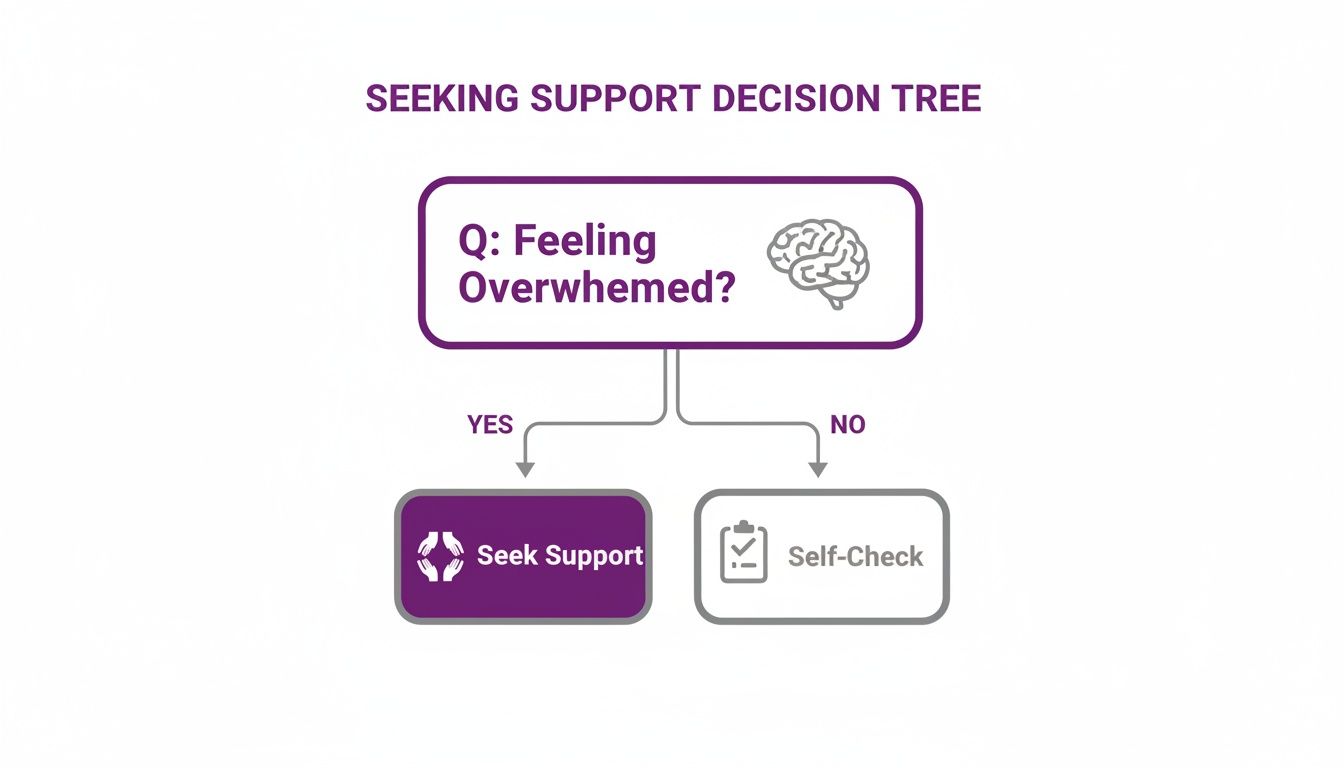
As you can see, that feeling of being overwhelmed is a clear signal. It's the prompt to start taking practical steps toward getting help.
Deciphering Credentials and Finding Your Focus
When you start looking, you'll see a jumble of letters after therapists' names: LPC, LCSW, PhD, and more. Each one represents a different educational and licensing path, but they are all qualified professionals.
Instead of getting bogged down in the alphabet soup, it's more helpful to focus on a therapist's specialties and the approaches they use. For a deeper dive, we've broken down the differences between a therapist, psychologist, and counselor in our detailed guide.
Different therapists are trained in specific methods to help with different challenges. Thinking about what you're struggling with will help point you in the right direction.
Matching Your Needs to a Therapy Style
To help you get started, here's a quick look at some common therapeutic approaches and who they might be best for. Think about what you're hoping to achieve, and see which one aligns.
| Therapy Type | Best For | What to Expect |
|---|---|---|
| Cognitive Behavioral Therapy (CBT) | Anxiety, depression, and changing specific negative thought patterns. | A structured, goal-oriented approach. You'll work on practical skills and "homework" to reframe your thinking. |
| EMDR | Processing and healing from trauma (both big and small). | A specialized therapy using bilateral stimulation (like eye movements) to help your brain reprocess stuck memories. |
| Somatic Therapy | Stress, anxiety, and trauma that shows up as physical symptoms (like tension or stomach issues). | A focus on the mind-body connection. You’ll learn to notice physical sensations to help release stored stress. |
This isn't an exhaustive list, but it's a great starting point for understanding the language you'll see on therapist profiles.
Your initial search isn't about finding "the one" on the first click. It’s about narrowing the field to a few professionals whose experience lines up with what you’re going through.
How to Find and Vet Potential Therapists
Okay, you have a better idea of what you're looking for. Now, where do you actually find these people?
Online directories like Psychology Today are an excellent place to begin. You can filter your search by location (like "Phoenix PV" or "Tempe"), insurance plan, and specialty.
When you land on a therapist's website or profile, pay close attention to the language they use. Does it sound welcoming? Do they explain their approach in a way that makes sense to you? A thoughtful website often indicates a practice that cares about the client experience from the very start.
Most therapists, including our team here at reVIBE Mental Health, offer a free 15-minute consultation call. This is your interview. Don't be shy—it's your chance to see if you click.
Here are a few questions you might want to ask:
- What's your experience working with issues like mine?
- Could you describe your therapeutic style in your own words?
- What should I expect in our first few sessions together?
Most importantly, trust your gut. Even in a brief chat, you can get a feel for someone. If you feel heard, respected, and reasonably comfortable, that's a fantastic sign you've found a promising match.
Navigating Insurance and Paying for Therapy
Let's talk about the money part. Figuring out how to pay for therapy can feel like a huge hurdle, but it doesn't have to be. Getting a handle on the costs upfront means you can actually focus on the real work—feeling better.
The best first move is to dig into your health insurance plan. You might be surprised by the mental health benefits tucked away in there. It can be a pain to decipher all the jargon, which is why many practices, including our reVIBE Mental Health spots in Chandler and Phoenix, have staff who can check your benefits for you. It's one less thing for you to worry about.
If you’d rather call your insurance company directly, you’ll want to have a few specific questions ready. This can save you from a lot of headaches and surprise bills later.
Key Questions for Your Insurance Provider
Grab a notepad and don't be shy about asking them to explain anything that sounds like gibberish. You have a right to understand what you're paying for.
- "What are my in-network mental health benefits?" This is the big one. It tells you what’s covered if you see a therapist who's partnered with your insurance.
- "Do I have a deductible I need to meet for therapy?" Your deductible is what you have to pay out-of-pocket before your insurance kicks in.
- "What's my copay or coinsurance?" A copay is just a set fee per session (like $30), while coinsurance means you pay a certain percentage of the cost (like 20%).
- "Do I need to get prior authorization before I start?" Some plans make you get their approval before they'll agree to cover your sessions.
Getting these answers early on puts you in the driver's seat. You'll be able to budget properly and find a therapist who fits your financial situation.
Understanding Your Payment Options
Insurance isn't the only route. Many people choose to pay for therapy themselves, which is often called self-pay or private pay.
Going this route gives you the most privacy since no diagnosis gets sent to an insurance company. It also gives you total freedom to work with any therapist you connect with, whether they're in your network or not.
Don’t let the cost be the barrier that stops you from getting help. With a little information, you can find a path forward that feels both supportive and financially manageable.
Globally, investment in mental health is still lagging—a recent report showed that a median of just 2% of government health budgets goes toward it. This is exactly why independent practices here in the Phoenix metro are so crucial. By accepting major insurance plans and offering different ways to pay, these practices are bridging the gap and getting quality care to the people who need it. You can read the full report from the World Health Organization to get a clearer picture of this global challenge.
What to Expect in Your First Appointment

Walking into your first therapy session can feel like a big deal—and it is. It's totally normal to feel a blend of hope and nervousness. The best way to quiet those first-day jitters is to know what to expect, so you can walk in feeling more confident and ready.
Think of this initial meeting as a conversation, not a performance. It’s a two-way street. You're getting a feel for the therapist, and they're starting to understand your story. The main goal here is to build a connection, what we call therapeutic rapport. This relationship is the bedrock of any good therapy experience.
The Intake Process
Chances are, you'll have some paperwork to fill out before you even sit down for your session. This is the intake process. While it might feel like just another form, it's actually incredibly important. It gives your therapist a snapshot of your background, what’s bringing you in, and any immediate safety concerns.
Having this information upfront means your first session can be much more productive. Instead of spending the hour on basic fact-finding, your therapist can dive right into a more meaningful conversation.
The first session isn't about solving all your problems at once. It's about establishing a safe space, making sure you feel heard, and setting the stage for the collaborative work ahead.
Preparing for Your First Session
You absolutely don't need to have your life story perfectly rehearsed. However, a little prep can go a long way in helping you get the most out of your time. I often suggest clients jot down a few notes before they come in.
- Key concerns: What are the one or two big things on your mind that made you decide to get help now?
- Your goals: What do you hope to get out of this? It could be something broad like "I want to feel less anxious," or more specific, like "I need to learn how to set better boundaries with my family."
- Questions for the therapist: Don't forget, you're interviewing them, too. Ask about their style, their experience with issues like yours, or what a typical session with them feels like.
This is just the start, of course. For a more in-depth look, you can find more tips on how to prepare for your first therapy session in our detailed guide.
Whether you're heading to an office in Scottsdale or Tempe, or logging on from home for telehealth, the core of this first meeting is the same: making a human connection. If your session is online, find a quiet, private space where you won't be interrupted. If you're going in person, give yourself a few extra minutes to find the office and get settled. That small buffer can make a huge difference in feeling calm as you begin. You're starting a conversation that could truly change your life.
Making the Most of Your Therapy Journey

Therapy isn't a passive experience where a professional simply "fixes" you. It’s an active partnership. Think of your therapist as a skilled guide on a challenging hike—they know the terrain and can point out the safest paths, but you're the one who has to take each step.
Your engagement and honesty are the fuel for progress. This all starts with the therapeutic alliance, which is just the clinical term for the trusting, collaborative relationship you build with your provider. This bond is everything. It’s what allows you to feel safe, respected, and truly heard, whether you’re meeting us in our Chandler office or from your own living room.
Being open, especially when it’s uncomfortable, is where the magic happens. Therapists are trained to sit with tough emotions and messy stories without judgment. In fact, sharing those difficult parts is often the key to unlocking major breakthroughs.
Driving Your Own Progress In and Out of Sessions
So much of the real "work" of therapy happens outside of that fifty-minute hour. It happens in the days between appointments when you start to notice old patterns and try out new ways of thinking and behaving in your actual life.
To make that happen, you have to be an active collaborator. If a coping strategy your therapist suggests just doesn't click for you, say so. If you feel like they missed the point of something you said, speak up. A good therapist will welcome this kind of feedback—it helps them tailor their approach to what you actually need.
Here are a few practical ways you can take ownership of your progress:
- Practice new skills. If you're working on setting boundaries, look for a small, low-stakes chance to try it out this week. Maybe it's saying "no" to a minor request from a coworker.
- Reflect on your sessions. After an appointment, take five minutes to jot down any key takeaways or "aha" moments. This helps cement what you've learned.
- Notice your patterns. Simply start paying attention to your thoughts, feelings, and reactions as they happen. This self-awareness is a surprisingly powerful tool for change.
Therapy gives you the tools, but you're the one who has to do the building. Remember to celebrate the small wins, like using a breathing technique instead of lashing out in anger. Those moments are just as important as hitting your big goals.
Integrating Care for a Holistic Approach
Sometimes, therapy is just one piece of a larger wellness puzzle. This is where integrated care, which combines talk therapy with services like medication management, can be a game-changer.
If you and your therapist think medication might be a helpful support, having a coordinated team makes the whole process feel seamless. At an integrated practice like reVIBE, your therapist and psychiatric provider can actually collaborate on your care plan.
This means everyone is on the same page, creating a unified strategy that addresses both your emotional and biological needs. As you move forward, you might even find that specific modalities like Cognitive Behavioral Therapy (CBT) for insomnia are a great fit for tackling targeted issues. It's all about getting you the comprehensive support you deserve.
Find a reVIBE Location Near You!
We currently have five locations for your convenience. (480) 674-9220
reVIBE Mental Health – Chandler
3377 S Price Rd, Suite 105, Chandler, AZ
reVIBE Mental Health – Phoenix Deer Valley
2222 W Pinnacle Peak Rd, Suite 220, Phoenix, AZ
reVIBE Mental Health – Phoenix PV
4646 E Greenway Road, Suite 100, Phoenix, AZ
reVIBE Mental Health – Scottsdale
8700 E Via de Ventura, Suite 280, Scottsdale, AZ
reVIBE Mental Health – Tempe
3920 S Rural Rd, Suite 112, Tempe, AZ
Your Top Questions About Starting Therapy in Arizona
It’s completely natural to have questions when you’re thinking about starting therapy. In fact, it’s a great sign—it means you’re already taking an active role in your own well-being. Getting clear on the process can make that first step feel a lot less intimidating.
Let's walk through some of the most common questions we hear from people right here in the Phoenix area.
How Long Will I Need to Be in Therapy?
This is probably the most common question, and the honest answer is: it really depends on you. There's no magic number or standard timeline because your therapy journey is tailored specifically to your goals.
Some people come to therapy to work through a very specific, short-term issue—maybe a stressful situation at work or a tough life transition. In these cases, a few months might be all it takes to gain the tools and perspective they need.
For others, therapy is a longer-term process. This is often the case when dealing with deep-rooted patterns from childhood, complex trauma, or ongoing mental health conditions.
A good therapist won't give you a rigid timeline. Instead, they'll work with you to figure out what you want to accomplish. You'll set goals together and check in regularly to see how you're progressing. The focus is always on what feels right for your unique situation.
What Is the Difference Between a Therapist and a Psychiatrist?
It's easy to get these two mixed up. Think of it this way:
A therapist—like a Licensed Professional Counselor (LPC) or a Licensed Clinical Social Worker (LCSW)—specializes in talk therapy. Their work centers on helping you build coping skills, understand your thoughts and behaviors, and process life experiences through conversation and targeted exercises.
A psychiatrist, on the other hand, is a medical doctor (an MD or DO) who specializes in mental health. Their primary role is to diagnose conditions and prescribe and manage medication.
At an integrated practice like reVIBE Mental Health, we bring both under one roof. Our therapists and psychiatric team work together, so if your treatment plan includes both talk therapy and medication, your care is completely coordinated. It's a seamless approach that takes the guesswork out of the equation for you.
The connection you have with your therapist is everything. If you have a few sessions and something just doesn't click, don't give up. It's perfectly okay to say, "This isn't the right fit," and find someone who better understands you.
Is Online Therapy as Good as Meeting in Person?
For most people, the answer is a definite yes. Study after study has shown that telehealth therapy can be just as effective as meeting in a traditional office setting.
The convenience is a game-changer. Whether you’re juggling a busy schedule in Scottsdale or live further out from central Phoenix, online sessions make consistent, quality care possible.
What truly matters isn't the screen—it's the connection. A strong, trusting relationship with your provider is the key to making progress, and you can absolutely build that online. Many practices here in the Valley, including ours, offer both options so you can choose what feels most comfortable and works best for your life.
At reVIBE Mental Health, our team is ready to answer any other questions you have and help you take that next step with confidence. We offer compassionate, personalized care with five convenient locations across the Valley. Find your strength and start your journey by visiting us at https://revibementalhealth.com to get started.