
Your three-year-old used to separate from you at preschool with only a few tears. Now they cling to your leg, scream when you leave, wake upset at night, and hit when frustrated. You've tried more warnings, fewer warnings, rewards, consequences, and calm explanations. Nothing seems to last, and you're starting to wonder whether this is normal toddler behavior or a sign your child needs therapy.
Therapy for a 3-year-old doesn't look like an adult sitting on a couch answering questions about feelings. It usually looks like play, observation, caregiver coaching, relationship-building, and practical support for the moments that happen at home. If your child's behavior is disrupting family life or seems very different from their usual personality, seeking help is a responsible next step, not an overreaction.
Recognizing When Your Toddler Needs Support
Three-year-olds have intense emotions. Tantrums, refusal, fears, and boundary-testing can all occur during ordinary development. The more useful question isn't whether your child ever has a meltdown. It's whether the pattern is persistent, unusually intense, worsening, or interfering with sleep, preschool, eating, relationships, or everyday routines.
Pay attention to changes from your child's baseline. A child who was becoming more independent but suddenly returns to constant baby talk, loses previously established skills, stops engaging in favorite activities, or becomes extremely distressed by ordinary separations may need closer attention. So may a child whose aggression is frequent, difficult to calm, and strong enough to create safety concerns for siblings or caregivers.
Trust the pattern, not one difficult afternoon. A hard week after travel or illness is different from a sustained shift that keeps affecting daily life.
Parents sometimes dismiss these signs because they fear labeling their child. That fear is understandable, but early support can clarify what's happening before frustration builds on both sides. Epidemiological studies found a 16–18% prevalence of mental health disorders among children aged 1–5 years, and one Australian study found that 12% of children had clinically significant emotional, behavioral, or social problems by age 2 in the setting of parent-child relationship disturbance. The findings are summarized in this review of infant and early childhood mental health.
Signs that deserve a professional conversation
Look for combinations of concerns rather than one isolated behavior:
- Emotional distress: persistent fear, sadness, irritability, withdrawal, or difficulty recovering after ordinary disappointments.
- Separation struggles: panic at drop-off, inability to settle with another trusted adult, or distress that prevents preschool and family activities.
- Behavioral disruption: aggression, destructive behavior, extreme defiance, or impulsivity that creates repeated safety problems.
- Regression: loss of communication, toileting, sleep, play, or social abilities that had been established.
- Developmental differences: limited social engagement, repetitive behaviors, or communication concerns that warrant developmental evaluation alongside mental health support.
If autism or another developmental difference may be involved, an autism early intervention guide can help you understand why assessment and support are worth pursuing early. You can also begin with a professional child mental health evaluation to organize your concerns and identify the appropriate next step.
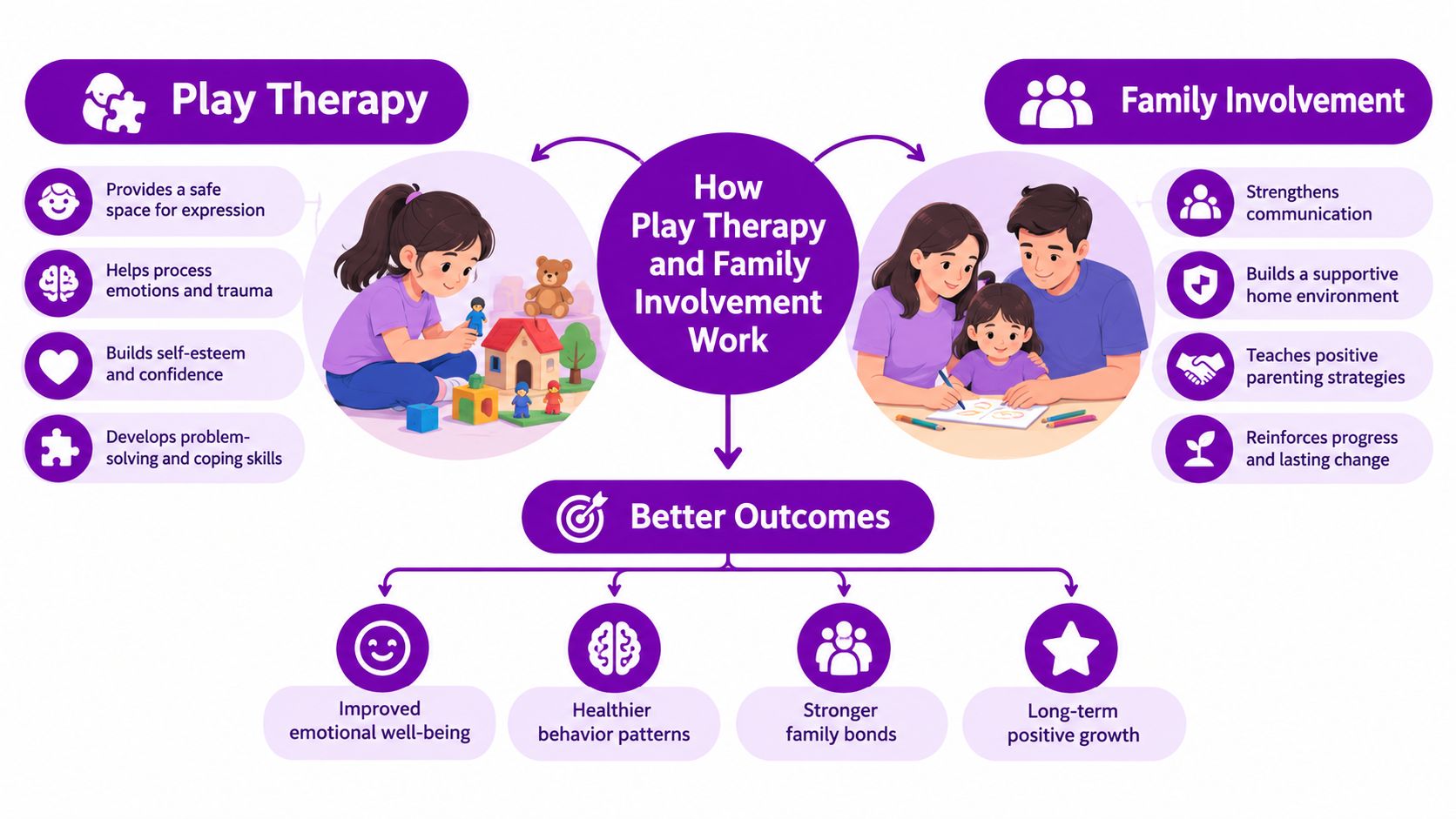
How Play Therapy and Family Involvement Work
A three-year-old usually communicates through behavior, movement, play, and relationships more easily than through abstract conversation. A therapist may use dolls, blocks, puppets, drawings, pretend food, sensory materials, or games to notice how the child handles separation, frustration, control, fear, repair, and connection.
The therapist is not just entertaining the child. In developmentally appropriate play therapy, the clinician watches themes and patterns, responds in a way that supports emotional expression, and helps the child build safer ways to communicate. The American Academy of Child and Adolescent Psychiatry describes play therapy as a method that uses toys, blocks, dolls, puppets, drawings, and games to help children recognize, identify, and verbalize feelings. Its guide to psychotherapy for children and adolescents also explains how therapists observe play to understand a child's difficulties.
What the caregiver does
For a young child, the parent isn't a visitor waiting in the lobby. The caregiver often participates directly, practices new responses, and learns how to make home routines more predictable. Depending on the concern, sessions may include:
- Child-led play: The therapist follows the child's communication and creates a safe setting for symbolic expression.
- Joint parent-child work: The clinician observes interaction, strengthens connection, and coaches both people in real time.
- Caregiver sessions: Parents review triggers, routines, responses, and progress without the child present.
- Home practice: The family tries specific skills during transitions, bedtime, sibling conflict, or separation.
Parent involvement matters because the child spends far more time with caregivers than with the therapist. A major meta-analysis of 93 controlled studies found a mean treatment effect around 0.80 for play therapy, with parent-involved play therapy producing the largest effects for young children, as reported in this evidence review of play therapy.
That doesn't mean every session requires a parent beside the child. It means the treatment plan should explain how caregiver participation will support change outside the therapy room. If you're looking for a clinician who works specifically with this age group, review the approach described in play therapy for kids and ask how the parent role is handled.
Navigating the Decision to Seek Professional Care
Start by identifying the main problem, not by choosing a diagnosis. Is your child struggling to communicate? Are they frightened after a traumatic event? Do they become aggressive during transitions? Does the difficulty appear mostly with one caregiver, across settings, or everywhere?
Early-childhood therapy is often dyadic, meaning the child and caregiver receive care together. It may focus on attachment, behavior, trauma, or emotional regulation. Speech-language delays require a different evaluation pathway, although communication frustration can also contribute to tantrums and aggression. This distinction is important because infant and early childhood mental health services often address relationship and emotional needs rather than speech production alone.
Use the pattern to choose the next step
| Behavior | Typical Phase | When to Seek Support |
|---|---|---|
| Occasional tantrums after limits, hunger, tiredness, or transitions | The child settles with support and returns to play or connection | Tantrums are unusually intense, happen across settings, or repeatedly disrupt family and preschool life |
| Frustration when others don't understand speech | Young children may struggle to express wants and feelings clearly | Request a speech-language evaluation when communication limits make daily interaction difficult, especially if frustration is frequent |
| Clinging during a new separation | A child may need reassurance, preparation, and a gradual transition | Seek help when separation distress remains severe, prevents ordinary activities, or doesn't improve with consistent support |
| Hitting during conflict | A toddler may occasionally act physically before learning better coping skills | Consult a clinician when aggression is persistent, dangerous, difficult to interrupt, or accompanied by major emotional changes |
| Fear after a stressful event | Temporary changes can follow disruption, illness, conflict, or loss | Arrange an assessment when fear, sleep disruption, regression, avoidance, or reactivity continues and affects functioning |
| Limited eye contact or unusual social communication | Children develop socially in different ways | Discuss developmental screening with a pediatrician and consider early intervention when differences are persistent or paired with regression |
A pediatrician is a sensible first contact when you're unsure whether the concern involves hearing, sleep, development, medication, nutrition, or a physical condition. A licensed child therapist is appropriate when emotional distress, behavior, attachment, trauma, or family interaction is central. You don't have to solve that distinction alone. A good evaluation should help determine whether your child needs speech-language services, developmental support, mental health treatment, or more than one type of care.
Preparing for the First Session and Provider Questions
Don't describe therapy as a test your child can pass or fail. Tell them they're going to meet a grown-up who helps children with big feelings and that there may be toys or drawing materials. Keep the explanation short, neutral, and reassuring. Avoid promising that the therapist will “fix” the problem or insisting that your child talk.
Bring information that shows the pattern clearly. A short record of triggers, sleep changes, preschool observations, aggressive incidents, separation behavior, and successful calming strategies can help the clinician see what happens before and after a difficult moment. If another caregiver or teacher sees the behavior, ask them for concrete examples rather than general impressions.
Make the visit easier
- Choose the right timing: Schedule around your child's usual capacity for engagement when possible, rather than arriving hungry or exhausted.
- Pack familiarity: Bring a comfort item, water, and any transition object that helps your child feel secure.
- Use ordinary language: Say “We're going to play and talk with someone who helps families,” not “You need therapy because you've been bad.”
- Expect observation: The first visit may involve caregiver history, child observation, play, or a combination. Your child may not participate immediately.
- Share the full picture: Mention family stress, trauma, developmental concerns, sleep, medical history, and what has already helped or failed.
Ask prospective providers direct questions:
- Do you regularly treat children around age three?
- What does a typical session involve for the child and caregiver?
- How much parent coaching or joint work do you provide?
- How do you adapt treatment when a child has limited language or developmental differences?
- How will you measure progress?
- What should we practice between sessions?
- How do you coordinate with a pediatrician, preschool, or speech-language pathologist?
- What would make you recommend a different evaluation or level of care?
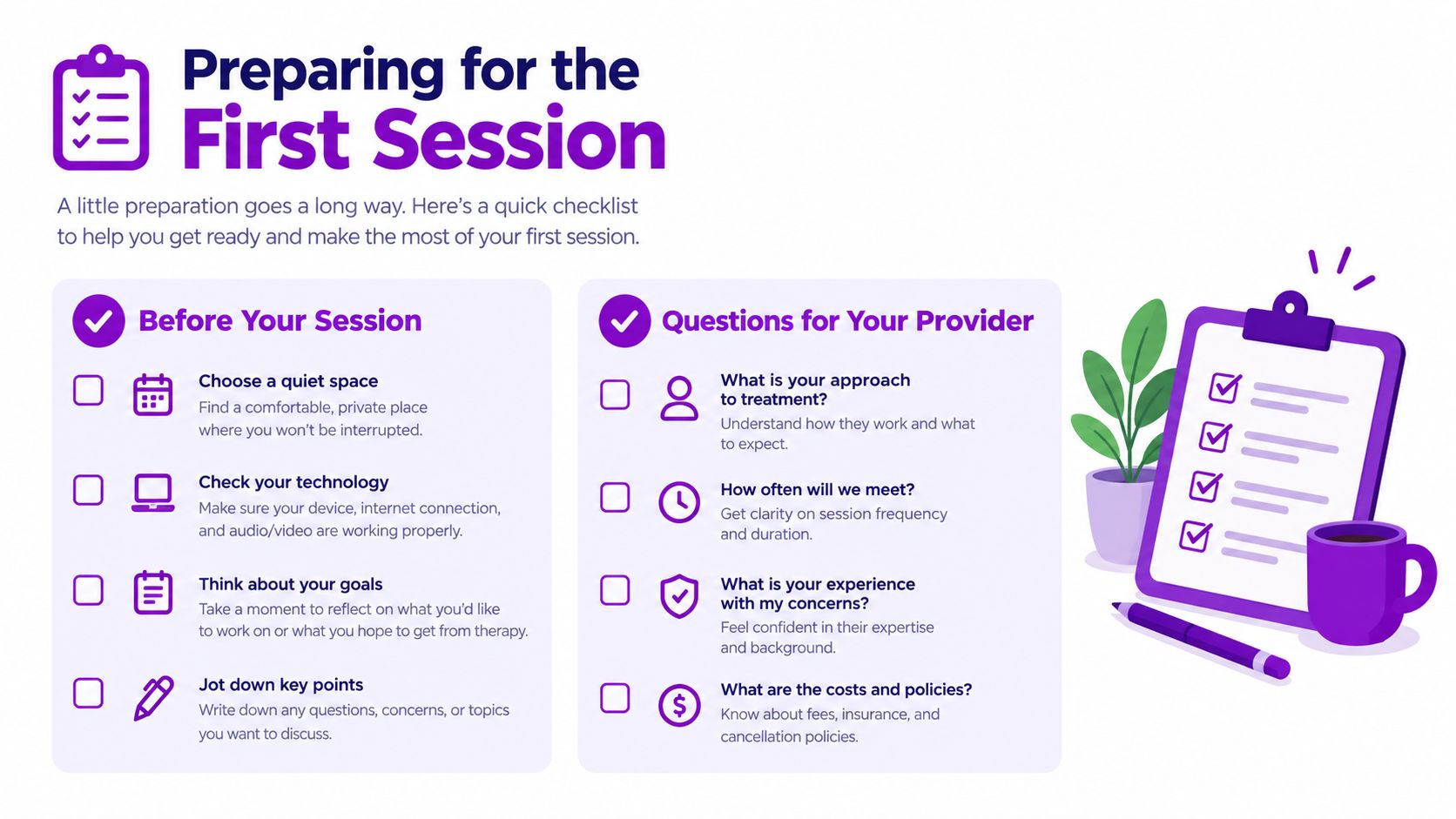
For anxiety, treatment shouldn't rely on one technique or one person. Optimal management often uses a multimodal approach involving the child and parents, with developmentally appropriate concepts and materials, according to pediatric anxiety management guidance. If a provider expects a three-year-old to carry the entire treatment through conversation, choose someone with a better developmental fit. Guidance on preparing for your first therapy session can also help you organize questions and expectations before the appointment.
Finding Compassionate Care at reVIBE Mental Health
Arizona parents need care that works in real life. That means a provider who understands early childhood, welcomes caregiver participation, explains the plan in plain language, and makes scheduling and insurance manageable. A warm office matters too. A frightened or overwhelmed three-year-old is more likely to engage in a space that feels safe than in an environment that feels imposing.
reVIBE Mental Health provides child counseling that uses play therapy and creative activities for younger children, including children ages 3–12. The practice also offers Child-Parent Relationship Therapy, an approach suited to children ages 3–10, which fits the central principle of toddler treatment: caregivers need practical tools they can use between sessions.
The practice reports appointments seven days a week, secure online sessions, and in-person care. Its team can help with insurance verification, and the practice accepts most major insurance plans. Ask about current availability, coverage, and whether the clinician's experience matches your child's needs before booking.
Five Phoenix-area locations
- Chandler: reVIBE Mental Health, Chandler, 3377 S Price Rd, Suite 105, Chandler, AZ
- Phoenix Deer Valley: 2222 W Pinnacle Peak Rd, Suite 220, Phoenix, AZ
- Phoenix PV: 4646 E Greenway Road, Suite 100, Phoenix, AZ
- Scottsdale: 8700 E Via de Ventura, Suite 280, Scottsdale, AZ
- Tempe: 3920 S Rural Rd, Suite 112, Tempe, AZ
Call (480) 674-9220 to ask about matching, scheduling, insurance verification, and whether services are available for your three-year-old's concern. You can also ask whether the first appointment will be primarily with the caregiver, primarily with the child, or shared.
The right provider won't shame you for asking questions or blame you for your child's struggles. They'll help you understand the behavior, build a realistic plan, and decide whether play therapy, caregiver coaching, developmental evaluation, or coordinated services make sense.
Building a Long-Term Plan for Your Child's Wellness
Therapy for a three-year-old is usually a process of repeated practice, not a single conversation that produces an instant change. The clinician may first establish safety and trust, then work on emotional identification, caregiver responses, separation, coping, communication, or trauma-related play. Progress may appear in small forms, such as recovering sooner after frustration, accepting comfort, using a gesture instead of hitting, or returning to play after a transition.
For trauma-related concerns, published protocols for preschool children ages 3–6 have used weekly sessions over roughly 12 months, with joint and child-only sessions, psychoeducation, emotional identification, coping skills, graduated exposure through drawing or play, and safety planning. A review of these preschool trauma treatments also describes better outcomes when caregivers participate actively and treatment matches the child's developmental level. The appropriate timeline for your child may differ, but families should expect consistency to matter.
A practical family checklist
- Name the target: Choose the behavior or emotional difficulty you most want to change first.
- Track meaningful changes: Note triggers, recovery, sleep, communication, play, and connection rather than counting only tantrums.
- Practice between visits: Use the therapist's strategies during ordinary routines, especially transitions and bedtime.
- Coordinate care: Share relevant observations with the pediatrician, preschool, or speech-language professional.
- Celebrate small gains: A child who seeks help, tolerates a short separation, or repairs after hitting is learning a meaningful skill.
- Review the plan: Ask the therapist what is improving, what remains difficult, and whether the approach should change.
Seeking therapy doesn't mean your child is broken or that you've failed as a parent. It means you're giving your child and family more support while the brain, relationships, communication, and coping skills are still developing.
reVIBE Mental Health offers play-based child counseling, Child-Parent Relationship Therapy, insurance guidance, in-person care across five Phoenix-area locations, and secure online sessions. If your three-year-old's emotions or behavior are disrupting daily life, visit reVIBE Mental Health to explore care and take the first practical step toward support.