

When you're weighing Celexa vs Cymbalta, the simplest way to think about it is this: Celexa is a specialist, while Cymbalta is more of a multi-tool. If you're dealing primarily with depression or anxiety, Celexa might be the straightforward choice. But if you have physical pain riding alongside your mood symptoms, Cymbalta’s broader action becomes a key consideration.
Choosing Between Celexa and Cymbalta
Picking the right antidepressant is a deeply personal process, one that goes beyond just listing symptoms. It’s about understanding how these medications work and which one aligns best with your unique body chemistry and health profile. While both Celexa (citalopram) and Cymbalta (duloxetine) are proven, effective options, they operate differently and are suited for different situations.
Celexa is a Selective Serotonin Reuptake Inhibitor (SSRI). In clinical terms, its job is highly focused: it works to increase the amount of available serotonin in the brain. Serotonin is a crucial neurotransmitter that helps regulate mood, sleep, and anxiety, which is why it's often nicknamed the "feel-good" chemical. Thanks to this targeted approach, Celexa is a very common starting point for treating major depressive disorder and various anxiety disorders.
Cymbalta, on the other hand, is a Serotonin-Norepinephrine Reuptake Inhibitor (SNRI). This means it takes a two-pronged approach by increasing levels of both serotonin and norepinephrine. While serotonin manages mood, norepinephrine affects your energy, focus, and alertness. Critically, norepinephrine is also involved in the nervous system’s pain-signaling pathways. This makes Cymbalta a uniquely valuable tool for people whose depression or anxiety is complicated by chronic pain.

Celexa vs Cymbalta At a Glance
For a quick snapshot of how these two medications stack up, the table below breaks down the most important distinctions. It’s a great starting point for a conversation with your clinician.
| Feature | Celexa (Citalopram) | Cymbalta (Duloxetine) |
|---|---|---|
| Drug Class | SSRI (Selective Serotonin Reuptake Inhibitor) | SNRI (Serotonin-Norepinephrine Reuptake Inhibitor) |
| Primary Action | Works only on serotonin levels. | Works on both serotonin and norepinephrine levels. |
| Key Uses | Major Depressive Disorder (MDD), anxiety disorders. | MDD, anxiety, fibromyalgia, and nerve pain. |
| Pain Treatment | Not a primary treatment for physical pain. | FDA-approved for several chronic pain conditions. |
Ultimately, choosing between these medications is a decision that requires professional medical guidance. This guide can help you feel more informed, but it’s the collaborative partnership with a psychiatric professional that truly matters. At reVIBE Mental Health, we specialize in this kind of personalized medication management. With five convenient locations in Chandler, Tempe, Scottsdale, and Phoenix, our team is here to help you navigate your options and find the safest, most effective treatment for you.
How These Antidepressants Work Differently
To really understand the difference between Celexa and Cymbalta, we have to look at how they work inside the brain. Both are designed to help with depression and anxiety, but they take different paths to get there. Think of it like using two different keys for two very similar, but not identical, locks. This core difference in their "mechanism of action" is what gives each medication its unique strengths.
Celexa is part of a drug class known as Selective Serotonin Reuptake Inhibitors (SSRIs). Its job is very specific. Serotonin is a key chemical messenger that helps regulate mood, happiness, and feelings of well-being between your brain's nerve cells (neurons).
After serotonin delivers its message, it's typically reabsorbed by the cell that sent it in a process called reuptake. Celexa essentially puts a roadblock in that process. By blocking reuptake, it leaves more serotonin available in the space between neurons, which can strengthen and prolong the "feel-good" signals.
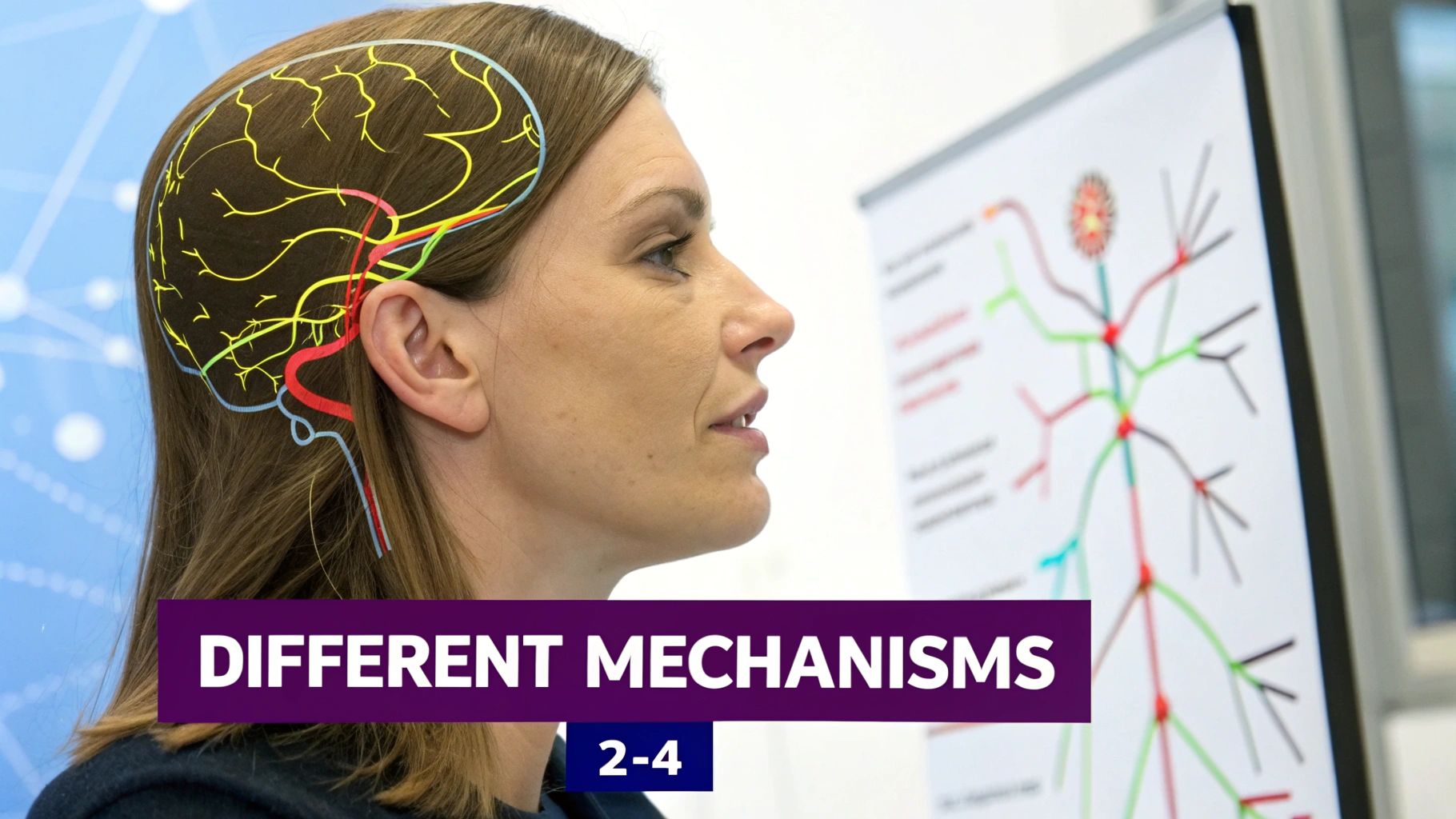
Celexa's Focused Serotonin Boost
This laser-focused action on just one neurotransmitter is the defining feature of SSRIs. By concentrating only on serotonin, Celexa offers a potent tool for conditions where low serotonin is a suspected culprit, like major depressive disorder or generalized anxiety.
For many people, this singular focus often leads to a more predictable and tolerable side effect profile. It’s a direct approach to mood regulation that doesn't complicate things by altering other brain chemicals.
Cymbalta's Dual-Action Mechanism
Cymbalta, on the other hand, is a Serotonin-Norepinephrine Reuptake Inhibitor (SNRI). Just as the name implies, it acts on two key chemical messengers: serotonin and norepinephrine. It does the same job as Celexa by blocking serotonin reuptake, but it also blocks the reuptake of norepinephrine.
Norepinephrine is another critical neurotransmitter, but it governs things like alertness, energy, and concentration. Crucially, it also plays a major role in how the central nervous system processes and responds to pain signals.
By acting on both serotonin and norepinephrine, Cymbalta provides a much broader therapeutic effect. This dual mechanism is especially helpful when depression or anxiety shows up alongside physical symptoms like chronic pain, persistent fatigue, or trouble focusing.
This dual action makes Cymbalta an incredibly versatile medication. While the serotonin boost helps with the emotional weight of depression and anxiety, the norepinephrine component can tackle the physical symptoms that so often come along for the ride. It's why Cymbalta is FDA-approved not just for mood disorders but also for nerve pain, fibromyalgia, and chronic musculoskeletal pain.
For instance, someone living with fibromyalgia often struggles with both widespread pain and deep depression. An SNRI like Cymbalta can address both issues at once by targeting the brain pathways involved in both mood and pain perception, offering a more integrated treatment than taking separate medications.
Getting a handle on these foundational differences is everything.
- Celexa (SSRI): Increases serotonin only. Its primary target is mood and anxiety.
- Cymbalta (SNRI): Increases both serotonin and norepinephrine. It addresses mood, anxiety, and physical pain.
The choice isn't about which drug is "better," but about which mechanism of action is the right fit for your unique set of symptoms. A specialist at reVIBE Mental Health can help you figure that out. With convenient offices in Phoenix, Scottsdale, Chandler, and Tempe, our team provides expert medication management to make sure your treatment plan is perfectly aligned with your needs.
Comparing Uses for Depression, Anxiety, and Pain
When choosing between Celexa and Cymbalta, the decision often boils down to a single, critical question: Are we treating mood, or are we treating mood and pain? Their different ways of working in the brain set them on distinct clinical paths, making each a strong choice for very different patient needs. This is the heart of the Celexa vs. Cymbalta comparison.

To understand their roles, it’s best to look at what each medication is officially approved to treat, alongside the common "off-label" ways clinicians use them based on their effects.
Approved and Off-Label Medical Uses
| Condition | Celexa (Citalopram) | Cymbalta (Duloxetine) |
|---|---|---|
| Major Depressive Disorder (MDD) | ✅ FDA-Approved | ✅ FDA-Approved |
| Generalized Anxiety Disorder (GAD) | 🟡 Off-Label Use | ✅ FDA-Approved |
| Diabetic Neuropathic Pain | ❌ Not Indicated | ✅ FDA-Approved |
| Fibromyalgia | ❌ Not Indicated | ✅ FDA-Approved |
| Chronic Musculoskeletal Pain | ❌ Not Indicated | ✅ FDA-Approved |
| Panic Disorder | 🟡 Off-Label Use | 🟡 Off-Label Use |
| Obsessive-Compulsive Disorder (OCD) | 🟡 Off-Label Use | 🟡 Off-Label Use |
This table makes the primary distinction crystal clear: Cymbalta is officially built for both mood and specific pain syndromes, while Celexa's formal approval is much more focused.
Celexa for Focused Mood and Anxiety Treatment
Think of Celexa as a specialist. Its sole FDA approval is for Major Depressive Disorder (MDD). Its laser focus on serotonin makes it a dependable, go-to first choice for clinicians trying to lift the emotional and mental weight of depression—like persistent sadness, loss of interest, and feelings of worthlessness.
Of course, its usefulness doesn't stop there. Clinicians frequently prescribe Celexa "off-label" for a range of anxiety disorders, including Generalized Anxiety Disorder (GAD), panic disorder, and Obsessive-Compulsive Disorder (OCD). In these cases, the serotonin boost can help quiet an overactive, worried mind.
For a person showing the classic https://revibementalhealth.com/signs-of-depression-in-adults/, like overwhelming sadness and a total lack of motivation, Celexa's targeted approach can be highly effective without involving other neurotransmitter systems. The goal is to restore emotional balance, and Celexa's mechanism is perfectly suited for that job.
Cymbalta's Dual Role in Treating Mood and Pain
Here’s where Cymbalta really sets itself apart. It's also FDA-approved for MDD and GAD, but its approved uses go much further. Cymbalta's dual action on both serotonin and norepinephrine gives it a unique edge when physical pain is a major part of the picture.
Cymbalta is also FDA-approved to treat:
- Diabetic Peripheral Neuropathic Pain: The burning, tingling nerve pain that often affects the feet and legs.
- Fibromyalgia: A chronic condition known for widespread muscle pain, deep fatigue, and sleep problems.
- Chronic Musculoskeletal Pain: This includes ongoing discomfort from conditions like osteoarthritis and chronic lower back pain.
For a patient, this is the most important distinction. If your depression is accompanied by the persistent, draining ache of fibromyalgia or the sharp signals of nerve pain, Cymbalta offers a single-medication solution to address both issues simultaneously.
This integrated approach is often much better than prescribing one medication for mood and a separate one for pain. By targeting brain pathways involved in both mood and pain signals, Cymbalta can offer more complete relief and simplify a person’s daily medication routine.
In the broader market, this difference is significant. SSRIs like Celexa are projected to hold about 48.1% of the global antidepressant market in 2025, valued for their simple once-daily dosing and generally manageable side effects. With generics making up 86% of all SSRI prescriptions, Celexa's affordability makes it a common first step. However, Cymbalta remains a powerful contender, especially for those who need that extra norepinephrine action for pain.
It’s also worth remembering that medication isn't the only path. Many people find that complementary strategies can be a great support for their mental well-being; for example, you can explore Swedish massage therapy for anxiety and stress reduction.
Ultimately, the choice highlights just how crucial a thorough diagnosis is. At reVIBE Mental Health, our clinicians at our five locations in Chandler, Phoenix Deer Valley, Phoenix PV, Scottsdale, and Tempe take the time to listen and understand your complete symptom profile before recommending a path forward.
Getting a Handle on Side Effects and Withdrawal
Every medication has its own set of potential side effects, and antidepressants are no exception. Knowing what to expect is a huge part of feeling in control of your treatment. When we look at Celexa vs Cymbalta, you'll see some overlap in the usual suspects, but their different ways of working mean you might experience things a bit differently on each.
Honestly, the first few weeks on any new antidepressant can be a little bumpy. Most of the initial side effects are mild and tend to fade as your body gets used to the medication. Think nausea, drowsiness, dry mouth, or a bit of sweating. That’s pretty standard for both.
Where they start to diverge is in the specifics. Sexual side effects, like a lower sex drive or trouble with arousal, are a known issue with both drug classes. However, the data suggests this might be a slightly more frequent complaint with SSRIs like Celexa. On the other hand, because Cymbalta also works on norepinephrine, it can sometimes bring on side effects like insomnia or constipation.
A Head-to-Head on Common Side Effects
Let's get practical and compare what you might run into. Remember, this isn't a guarantee—many people experience very few side effects, and how you react is completely individual.
- Celexa (Citalopram): As a classic SSRI, its side effects are driven by serotonin. This often translates to drowsiness, those potential sexual side effects, and sometimes long-term weight gain.
- Cymbalta (Duloxetine): Being an SNRI, Cymbalta can cause all the same serotonin-related issues, but its norepinephrine activity adds a few more possibilities to the list. Some people notice a bump in their blood pressure, dizziness, or fatigue.
A critical point for Celexa is the warning about QT prolongation. This is a change in the heart's electrical rhythm that can become a concern at doses over 40 mg per day. The risk is more pronounced in older adults or anyone with a history of heart issues, which is why a full medical history is non-negotiable before starting.
The Reality of Coming Off Antidepressants
Stopping an antidepressant isn't something to do on a whim; it requires a plan and a doctor's guidance. We call the process of slowly lowering the dose "tapering," and it’s the only safe way to avoid a rough withdrawal experience. This is one of the biggest practical differences between Celexa and Cymbalta.
Cymbalta has a reputation for being particularly tough to come off of. There are two main reasons for this: its dual-action mechanism and its shorter half-life (that’s the time it takes for half the drug to clear out of your system).
Because Cymbalta acts on both serotonin and norepinephrine, your brain has to recalibrate two different systems when the medication is removed. Its half-life is only about 12 hours, meaning it leaves your body pretty quickly. This rapid drop-off can make the withdrawal symptoms feel more sudden and intense.
Common Cymbalta withdrawal symptoms include:
- Dizziness and a feeling of vertigo
- Nausea and vomiting
- Headaches and body aches
- The infamous "brain zaps," which people describe as a brief, strange electrical shock sensation in the head.
Celexa, by comparison, generally offers a smoother off-ramp. Its half-life is much longer—around 35 hours—so it leaves your system more gradually. This slow, natural taper gives your brain more time to adjust. While withdrawal symptoms are still possible, they are often less severe than what people report with Cymbalta.
This difference is precisely why you should never stop taking an antidepressant cold turkey. A safe, medically supervised taper schedule is the only way to go. Here at reVIBE Mental Health, we make sure that any medication change, especially discontinuation, is handled with a careful, structured plan. With our convenient locations across the Phoenix area—including Chandler, Tempe, Scottsdale, Phoenix Deer Valley, and Phoenix PV—our psychiatric team is ready to guide you safely through every step of your treatment journey.
Partnering with Your Provider to Choose the Right Medication
Deciding between Celexa and Cymbalta is never a solo flight. It's a conversation—a partnership between you and your healthcare provider. This is your chance to weigh in on your care, making sure the path you choose truly fits your symptoms, your history, and what you're comfortable with.
The best choice boils down to a few critical factors. First and foremost, what are you trying to treat? If the primary struggle is depression or anxiety, that points one way. But if chronic pain is a major player in your daily life, that opens up a different conversation. From there, your provider will look at your overall health, other medications you’re taking, and how sensitive you might be to certain side effects.
Asking the Right Questions at Your Appointment
Going into your appointment with a few key questions can make a world of difference. It helps you steer the conversation toward what matters most to you and ensures you leave feeling clear and confident.
Try asking your provider things like:
- "Given that I deal with nerve pain along with my mood, does an SNRI like Cymbalta make more sense for me than an SSRI?"
- "In your experience, what are the side effects you see most often with these two, and what’s our plan if I run into them?"
- "If this first choice doesn't work out, how would we go about safely stopping it?"
- "Can we review my current medications to see how either of these would interact with them?"
This kind of open dialogue is the bedrock of good medication management. The goal isn't just to walk out with a prescription; it's to co-create a treatment plan that you fully understand and feel good about. That's a core principle of how we approach collaborative care at reVIBE Mental Health.
The decision tree below can help you start thinking through one of the biggest trade-offs: navigating initial side effects versus the potential for a difficult withdrawal experience.
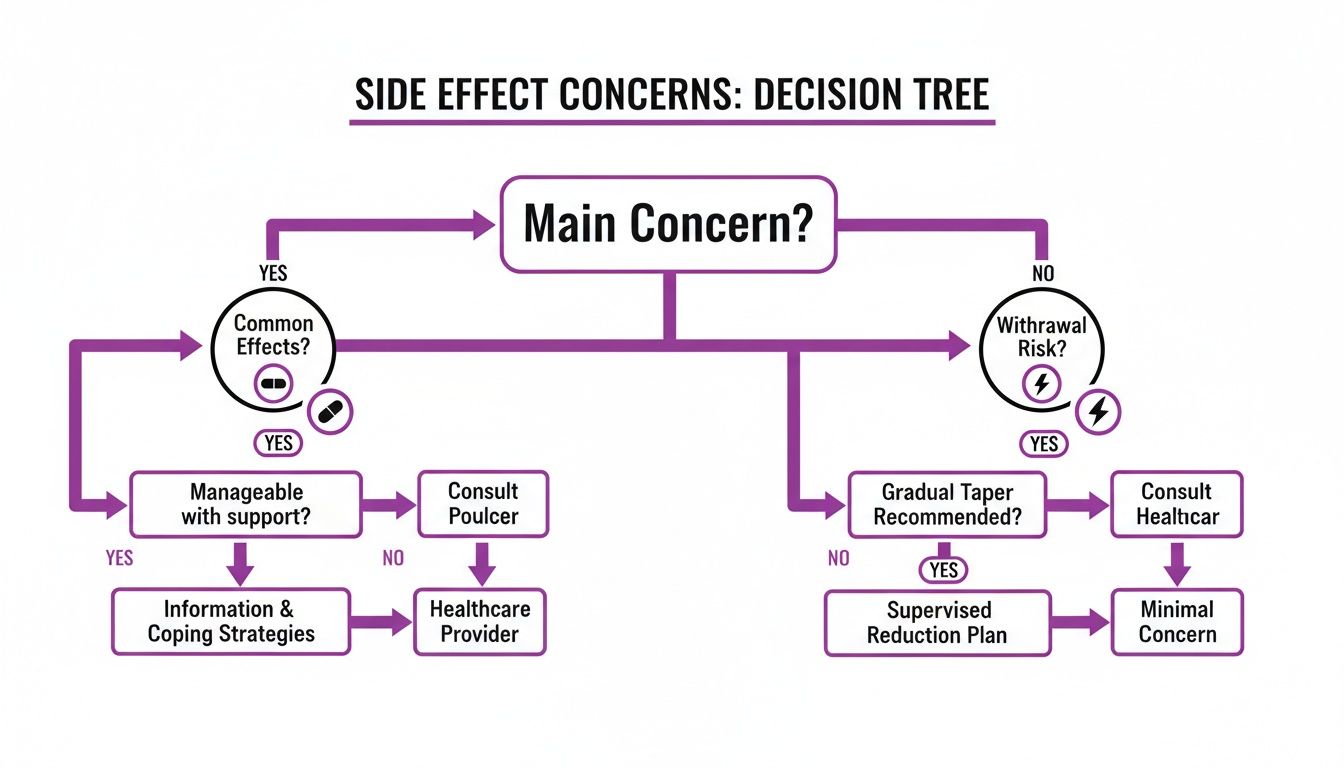
As the graphic shows, if your main concern is avoiding common but often temporary side effects, your decision might lean one way. But if you're more worried about the challenges of tapering off the medication down the road, you might consider a different option.
Making the Plan Your Own
The world of antidepressants is growing, largely because we're all talking more openly about mental health. In this market, where North America holds a 37-42.6% share, you have options. Right now, SSRIs like Celexa dominate, making up 55.8% of the market. But SNRIs like Cymbalta are catching up fast, which tells us that the link between depression and chronic pain is getting the attention it deserves.
For our patients here in the Phoenix area, this means we can be incredibly specific. Someone with straightforward depression might thrive on Celexa. Another person who's also battling fibromyalgia might find that Cymbalta is a much better fit for their dual needs.
Of course, practical things like cost and insurance coverage matter, too. Both drugs are available as generics, but prices can differ. It's always smart to check with your insurance plan. When you're weighing your options, getting professional medical advice is non-negotiable, but you can also explore convenient options like a doctor on call service for initial discussions.
Ultimately, your provider at reVIBE Mental Health is your guide. With our deep expertise in medication management for depression, we're here to walk you through every step and help find the medication that feels right for you.
Your Path to Personalized Care at reVIBE Mental Health
Figuring out the differences in the Celexa vs Cymbalta debate is a great start, but it's just one piece of the puzzle. Finding real, lasting improvement in your mental health comes from a partnership—one built on trust, clinical expertise, and a treatment plan that sees you as a whole person, not just a list of symptoms. That’s exactly how we approach care at reVIBE Mental Health.
We firmly believe that deciding on a medication shouldn't happen in a silo. Our providers work hand-in-hand, meaning your therapist and psychiatric specialist are always on the same page. This creates a cohesive plan where medication supports your therapy goals, and therapy reinforces the benefits of your medication. Every decision is made with your total well-being in mind.
How We Approach Medication Decisions
Our process always starts with a comprehensive and compassionate assessment. Before we even think about a prescription, we take the time to really listen—to understand your story, your symptoms, and what you want your life to look like. You can get a better sense of this first meeting by reading our guide on what happens during a psychiatric evaluation.
This patient-centered approach means we’ve created a space where you can feel safe, respected, and truly heard. We designed our offices to feel more like a comfortable living room than a sterile clinic, because we know that’s where the most honest and productive conversations happen.
At reVIBE Mental Health, our goal is to empower you. We bring the clinical expertise, but you are always the most important voice in the room. Your preferences, comfort level, and personal goals are what guide your journey to feeling better.
Find a reVIBE Location Near You!
We currently have five locations for your convenience. (480) 674-9220
reVIBE Mental Health – Chandler
3377 S Price Rd, Suite 105, Chandler, AZ
reVIBE Mental Health – Phoenix Deer Valley
2222 W Pinnacle Peak Rd, Suite 220, Phoenix, AZ
reVIBE Mental Health – Phoenix PV
4646 E Greenway Road, Suite 100, Phoenix, AZ
reVIBE Mental Health – Scottsdale
8700 E Via de Ventura, Suite 280, Scottsdale, AZ
reVIBE Mental Health – Tempe
3920 S Rural Rd, Suite 112, Tempe, AZ
We accept most major insurance plans and are ready to help you navigate the process. When you're ready, take the next step and schedule a consultation to find the personalized path forward that's right for you.
A Few Common Questions
Even after diving into the details, you probably have some practical questions about what it's really like to take these medications. Let's tackle some of the most common things patients ask.
How Long Until I Start to Feel Better?
This is the big question, and the answer is: it takes a little patience. With either Celexa or Cymbalta, you might notice some early, subtle shifts in things like your sleep patterns, appetite, or energy levels within the first one to two weeks. That’s a good sign, but it's not the main event.
The real mood-lifting effects—the reason you're taking the medication—usually take more time to build. Most people find they hit their stride and feel the most significant improvement after about four to six weeks of taking their dose consistently. It's crucial to hang in there during this initial period and keep your prescriber in the loop.
What About Drinking Alcohol?
It's best to either avoid alcohol completely or cut back significantly while on Celexa or Cymbalta. Think of it this way: alcohol is a depressant. It can actively work against the medication, potentially making your depression or anxiety symptoms worse.
Beyond that, mixing them can amplify side effects like drowsiness and dizziness, which isn't just unpleasant—it can be unsafe. There's a specific warning for Cymbalta, too: heavy drinking can raise the risk of liver problems. The best policy is to have an honest conversation with your doctor about your alcohol use so you can get guidance that's right for you.
Are These Medications Safe During Pregnancy?
This is a deeply personal decision, and there's no easy, one-size-fits-all answer. It's a conversation you must have with your healthcare provider, weighing the potential risks of the medication against the very real risks of untreated depression or anxiety during pregnancy.
Both medications are being actively studied. Groups like the National Pregnancy Registry for Antidepressants are constantly gathering data to better understand their safety. Your doctor is your best resource for navigating the latest research to make a decision that protects both your health and your baby's.
The Bottom Line: There’s no winner or loser here. The "better" medication is the one that fits you. The right choice comes down to your individual symptoms (especially if pain is a factor), your health history, and your unique body chemistry.
Can I Just Swap Celexa for Cymbalta?
Switching antidepressants should only ever be done under a professional's guidance. While a "direct switch" might be possible in some rare cases, the much more common and safer approach is a "cross-taper."
This means your doctor will have you slowly lower the dose of Celexa while you gradually start and increase the dose of Cymbalta over a period of time. This method is designed to prevent jarring withdrawal symptoms from the old medication and minimize side effects from the new one. It gives your system a chance to adjust smoothly. Please, don't ever try to switch on your own.
Figuring out the right medication is a partnership, and you don’t have to do it alone. At reVIBE Mental Health, our psychiatric team is dedicated to listening and working with you to create a treatment plan that makes sense for your life. If you're ready to take the next step, schedule a consultation with us at https://revibementalhealth.com.