

You may be six months into a loss and still wake up expecting to call the person who died. A song, an anniversary, or an ordinary trip to the grocery store can bring the pain back sharply. Then a frightening question appears: Am I grieving normally, or is something wrong with me?
The answer isn't found by counting tears or demanding that grief follow a schedule. In complicated grief vs normal grief, clinicians look at the pattern of symptoms, how persistently they occur, whether daily functioning is impaired, and how the response fits the person's cultural, religious, and social context. This distinction can guide support without turning ordinary mourning into a diagnosis.
What Normal Grief and Complicated Grief Actually Mean
Consider a composite example. Maya lost her father six months ago. She still feels intense yearning, becomes angry when relatives talk about “moving on,” and has nights when sleep is difficult. Yet she also works part-time, answers friends' messages, laughs with her children, and sometimes enjoys cooking. Her grief is painful and active, but it isn't occupying every part of her life.
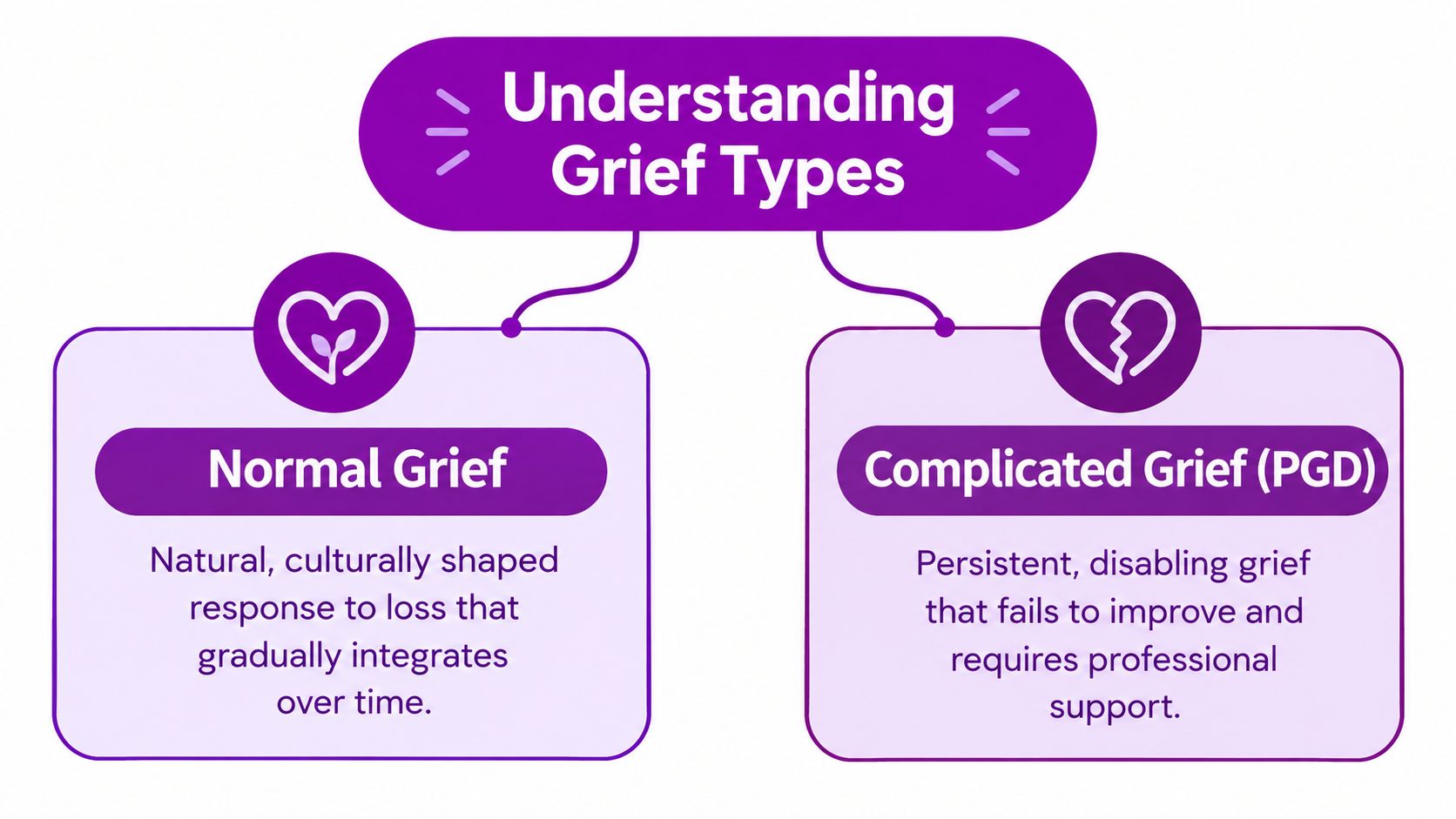
Normal grief is a broad, culturally shaped response to bereavement. It may include sadness, yearning, anger, guilt, numbness, disrupted sleep, difficulty concentrating, and changing ability to manage ordinary responsibilities. Grief can remain meaningful for months or years while gradually changing in intensity. Someone may feel devastated in the morning and connected, amused, or calm later the same day.
That fluctuation matters. Positive emotion doesn't betray the person who died, and a difficult day doesn't prove that healing has stopped. The question is whether life can gradually make room for the loss, even while the bond and pain remain.
Complicated grief, now generally termed prolonged grief disorder, or PGD, describes a persistent and intense grief response that substantially exceeds the person's cultural, religious, or social expectations and causes clinically significant distress or impairment. The central concern isn't that someone still misses a loved one. It's that the grief remains pervasive, disabling, and difficult to integrate.
A helpful distinction between grief and bereavement is that bereavement describes the condition of having lost someone, while grief describes the response that follows. Neither term tells you automatically whether the response is adaptive or clinically concerning.
Practical rule: Don't diagnose yourself from the intensity of one emotion. Look at persistence, breadth, and the effect on your ability to live.
Normal grief and PGD can both involve longing, anger, guilt, numbness, and disrupted sleep. What separates them is not love, loyalty, or the number of difficult days. It is whether the response continues in a disabling pattern beyond the relevant clinical timeframe.
Side-by-Side Comparison of Symptoms and Timelines
A grieving adult may have a painful morning, answer messages by afternoon, and still feel connected to parts of ordinary life. Another may spend most days fixed on the death, avoid reminders, and stop managing work or basic care. The table helps separate a difficult grief response from a pattern that warrants clinical assessment.
| Criterion | Normal Grief | Prolonged Grief Disorder (PGD) |
|---|---|---|
| Emotional pattern | Sadness, yearning, anger, guilt, numbness, and relief can alternate | Yearning or preoccupation remains dominant and difficult to shift |
| Frequency | Distress fluctuates, leaving some room for ordinary activity or positive emotion | Core grief occurs nearly every day, with additional symptoms present nearly every day during the preceding month |
| Relationship to time | Pain can last months or years while its form and intensity gradually change | Symptoms continue beyond the applicable diagnostic interval without meaningful loosening |
| Additional symptoms | Memories may hurt, comfort, or do both | At least 3 of 8 additional symptoms may occur, including identity disruption, disbelief, avoidance, emotional pain, difficulty re-engaging, numbness, loneliness, or meaninglessness |
| Functioning | Responsibilities and relationships may be strained, yet remain possible or slowly recover | Social, occupational, self-care, or other important functioning is clinically impaired |
| Context | The response fits the person's cultural, religious, and social mourning expectations | The response substantially exceeds that context and causes significant distress or impairment |
Read the table row by row rather than using one answer as a verdict. Mark what has been happening during the preceding month, then compare the pattern with your functioning. A strong match in the frequency, additional-symptom, and functioning rows carries more clinical weight than a single episode of intense sadness.
The DSM-5-TR, published by the American Psychiatric Association in 2022, sets the adult threshold at a death at least 12 months earlier, followed by persistent, pervasive yearning or preoccupation on most days during the preceding month and at least 3 of 8 additional symptoms. The American Psychiatric Association's diagnostic overview lists examples including difficulty accepting the death, identity disruption, avoidance of reminders, emotional numbness, intense loneliness, and difficulty re-engaging with life.
For children and adolescents, the DSM-5-TR minimum period is 6 months. The World Health Organization's ICD-11 framework also recognizes PGD after a death when the core grief response has persisted for at least 6 months. These timeframes support consistent assessment, but they do not replace attention to culture, symptom pattern, or impairment.
Support can be appropriate before formal criteria are met. If sleep, eating, employment, parenting, safety, or connection is deteriorating, arrange a consultation now. Assessment does not commit you to a diagnosis or a specific treatment.
How Common Prolonged Grief Disorder Really Is
A person can be unable to sleep, work, or connect with family during the first weeks after a death and still be experiencing an intense, adaptive grief response. Prolonged Grief Disorder (PGD) is a minority outcome of bereavement, not the expected result of severe early pain. Acute grief often disrupts psychological, physical, and interpersonal functioning, yet it generally settles within approximately 1 year for most bereaved adults. A smaller group develops persistent symptoms and impairment.
Prevalence estimates differ because studies examine different populations, time points, recruitment methods, and diagnostic approaches. DSM-5-TR validation studies estimated PGD prevalence at 4.4% in the Yale sample, 15.3% in the Utrecht sample, and 10.9% in the Oxford sample. A population-based analysis found a 4.7% conditional prevalence among people exposed to bereavement, compared with 2.0% across the full sample, including people without bereavement exposure. The population and validation data show why no single percentage applies to every grieving population.
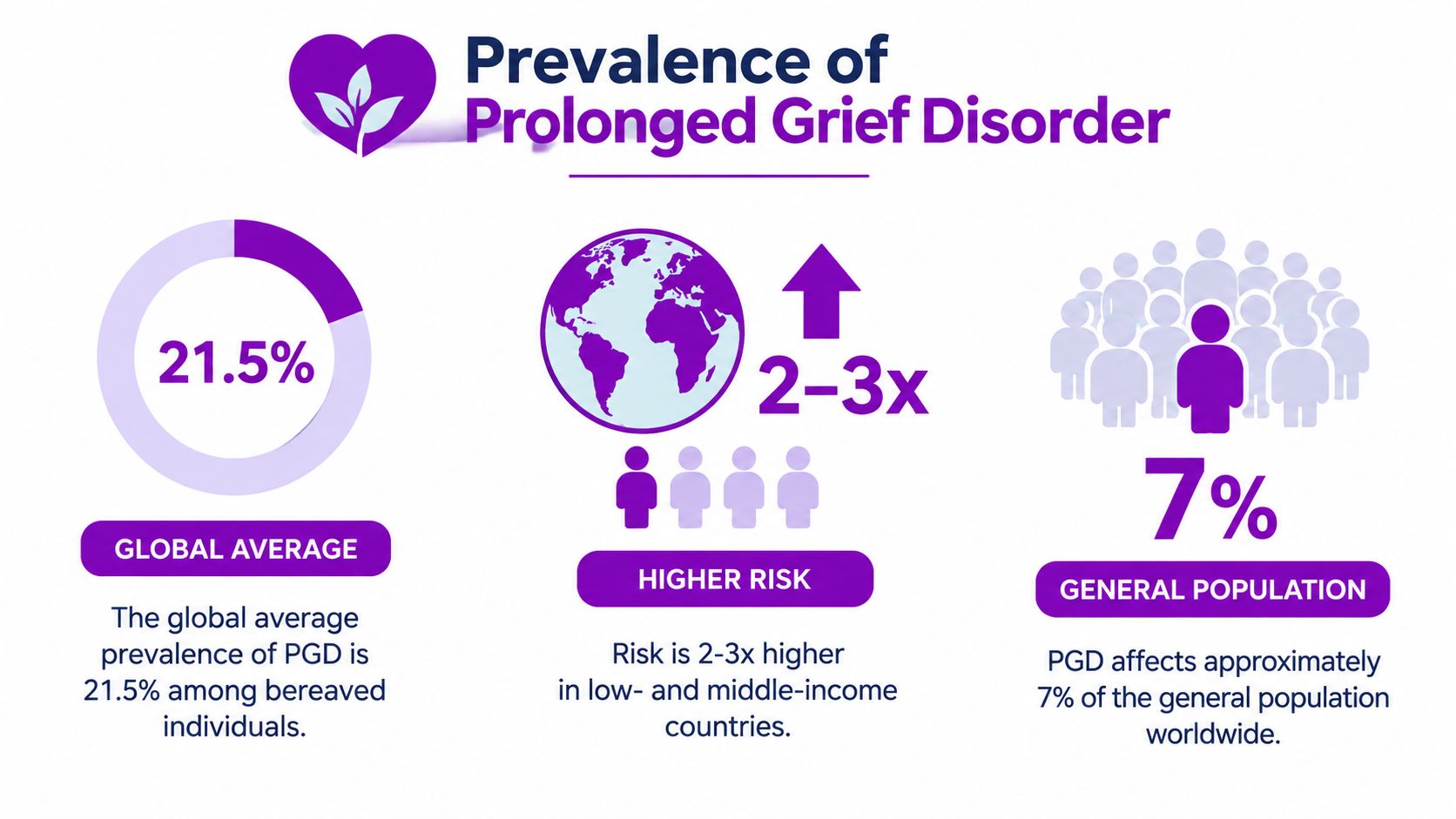
A 2025 review reported ICD-11 PGD estimates ranging from 1.5% to 15.3% among bereaved adults. Another review found approximately 5% in probability samples versus 16% in non-probability samples. These differences reflect sampling rather than a simple disagreement about whether PGD exists. Samples that include people already seeking help or experiencing marked distress can produce higher estimates than carefully selected population samples. The 2025 review of prevalence and evidence gaps examines these limitations, including restricted geographic diversity.
Because PGD affects a minority of bereaved adults, prevalence data should prevent catastrophizing an early high quiz score. Recheck persistence, frequency, and impairment after the relevant diagnostic interval. A quiz can identify symptoms worth discussing, but it cannot establish PGD.
A painful beginning does not determine the outcome. Reassess the pattern instead of treating an early score as a permanent forecast.
Risk Factors and What Overlaps With Depression or PTSD
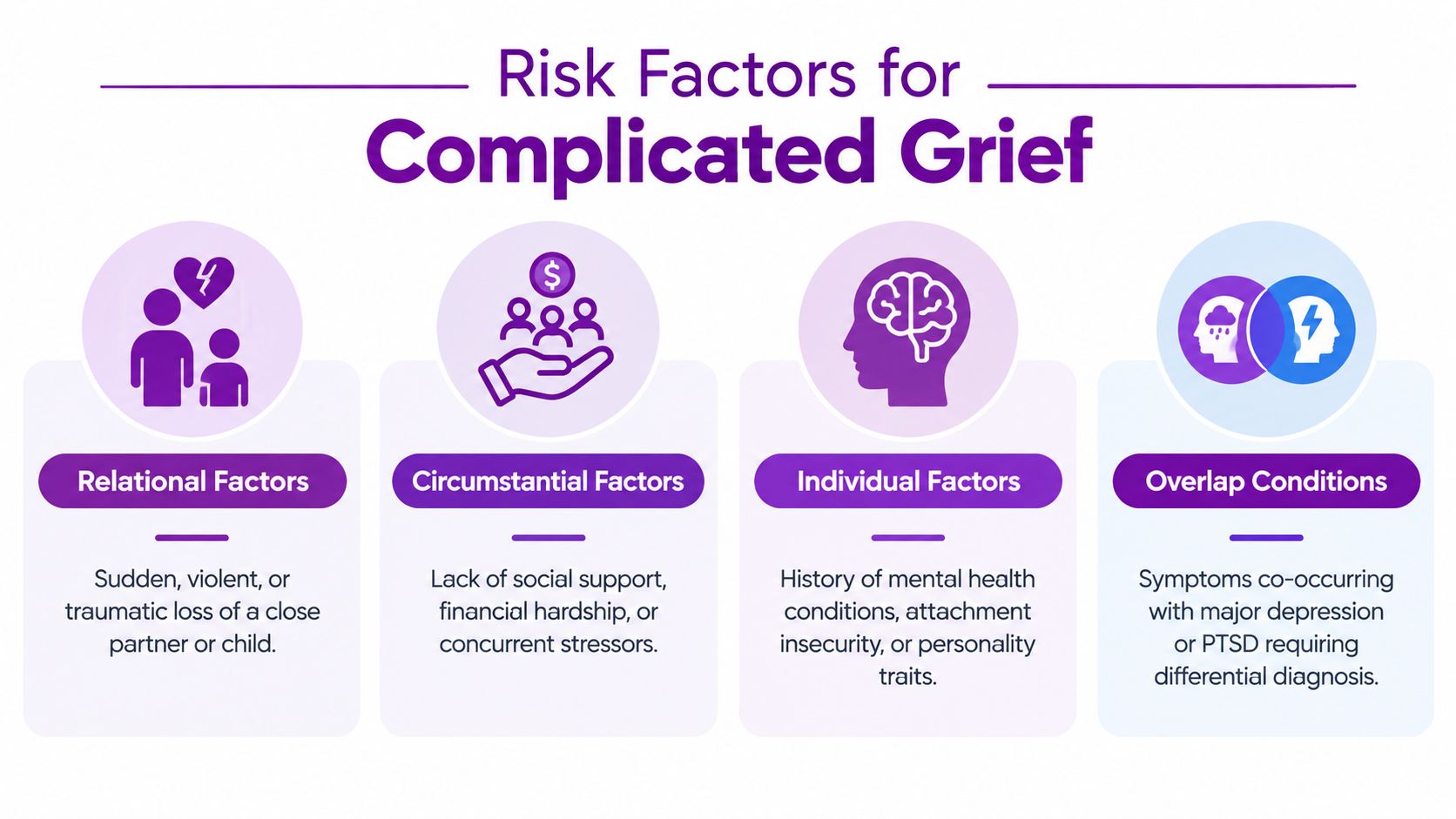
Risk factors help a clinician decide how closely to monitor a situation. They don't determine how anyone will grieve. A sudden or violent death, the death of a child or partner, multiple losses, limited social support, financial strain, or a history of depression, anxiety, or trauma can make adaptation harder. So can a relationship that was central to identity, emotional security, home life, or future plans.
The circumstances also matter. A death by suicide, homicide, disaster, or another stigmatized circumstance may leave survivors with unanswered questions and less socially recognized support. Cultural and religious mourning practices can look intense to an outsider while remaining appropriate within the person's community. Conversely, a loss that others minimize can create profound isolation.
A practical screening flow
Start with duration. Has the death occurred beyond the applicable diagnostic interval, or is the loss still relatively recent? Time alone doesn't diagnose PGD, but it determines whether formal criteria can be considered.
Next, examine daily frequency. Is yearning or preoccupation present nearly every day, or does grief arrive in waves with genuine intervals of connection and relief? Then assess function. Can you work, care for yourself, maintain essential relationships, and handle basic responsibilities, even imperfectly?
Finally, check for overlap:
- Depression: A pervasive loss of interest or pleasure, hopelessness, low mood, or self-criticism may indicate depression alongside grief. PGD centers more specifically on separation distress, yearning, or preoccupation with the deceased.
- PTSD: Intrusive memories may focus on the traumatic circumstances of the death, accompanied by avoidance, hyperarousal, or a sense of current threat. A clinician separates trauma-driven re-experiencing from grief-driven longing and preoccupation.
- Both conditions: PGD, depression, and PTSD can coexist. Treating one doesn't automatically resolve the others.
If you're considering nontraditional approaches, evaluate safety carefully and discuss them with a qualified clinician, especially if depression, trauma symptoms, medication, or substance use is involved. The Ayahuasca.com safe plant medicine guide is one example of a resource that highlights why depression and plant-medicine decisions require health and safety context rather than casual self-treatment.
Evidence-Based Treatment Options to Discuss With a Clinician
Treatment shouldn't aim to erase love or force a person to “move on.” The realistic aim is better functioning, greater flexibility, and pain that becomes bearable without controlling every decision. The right approach depends on whether the central problem is persistent yearning, traumatic images, depression, anxiety, relationship strain, or a combination.
Grief-focused CBT
Grief-focused cognitive behavioral therapy is among the most studied approaches for PGD. It may combine education, gradual engagement with avoided reminders, work on guilt or unhelpful beliefs, behavioral activation, and rebuilding goals. Clinicians commonly plan for a structured course of roughly 12 to 20 sessions, depending on assessment and progress.
This approach fits people who feel stuck in avoidance, rumination, isolation, or catastrophic beliefs about the future. It isn't a demand to think positively. The work is to test whether behaviors that provide short-term relief are also keeping life narrow.
EMDR and trauma-informed care
EMDR can be a reasonable discussion when the death was sudden, violent, medically traumatic, or accompanied by intrusive images. It focuses on distressing memories and the nervous system's response to them. A trauma-informed clinician should first establish safety and determine whether trauma processing is appropriate, rather than assuming every grief response needs exposure-based work.
Support-oriented therapy may fit someone whose grief is painful but not clearly disabling, or someone who isn't ready for a highly structured protocol. The therapist can provide monitoring, emotional regulation skills, meaning-making, and a place to revisit the assessment as symptoms change.

Medication, family work, and fit
A psychiatry referral can help when depression, anxiety, insomnia, severe agitation, or safety concerns are present. SSRIs may be considered for co-occurring depression or anxiety, while evidence for medication aimed specifically at grief remains evolving. Medication should support a broader plan, not replace grief-focused assessment.
Couples or family therapy can help when relatives mourn differently, conflict has intensified, or one person's withdrawal is affecting the household. Ask a prospective clinician what symptoms they treat, how they assess PGD against depression and PTSD, what modality they use, and how they measure functional improvement. Complicated grief therapy information from reVIBE Mental Health can help readers understand what a grief-specific treatment conversation may involve.
No single modality is universally best. A technically sound therapy that feels culturally alien, financially impossible, or emotionally unsafe may be less useful than a well-matched clinician using a different evidence-informed approach.
Self-Care and Coping Strategies Between Sessions
After a loss, self-care is not forced positivity or a purchase meant to make grief disappear. It protects the basic capacities that let you mourn while staying connected to daily life.
Start with a small, repeatable structure. Keep a predictable wake time when possible, eat something with substance even when appetite is low, move gently, and choose one daily task that reconnects you with ordinary life. Keep the routine modest. A shower, a short walk, paying one bill, or replying to one supportive person can mark a meaningful return to function.
Make room for grief without surrendering the whole day
A continuing-bonds ritual can preserve connection while acknowledging the death. Prepare a familiar recipe, visit a meaningful place, write to the person, or keep a memory box. Personalized memorial gifts can offer a tangible remembrance cue, as shown in these personalized memorial gifts. Use the object as an optional aid, not as treatment, exposure, or avoidance. Discuss it with your clinician if it increases isolation or preoccupation.
Journaling can clarify what is happening when thoughts become circular. Separate “what I miss,” “what I fear,” and “what I need today.” If grief arrives in relentless waves, set aside a short period to write or remember, then shift to a grounding activity. This does not suppress grief. It practices approaching and leaving the emotion safely.
For additional structured ideas, see ways to cope with grief alongside the routine and continuing-bonds steps above.
Choose support by access and need
A peer group, faith community, trusted friend, or moderated online community may reduce isolation. Ask for a specific action. “Can you sit with me while I sort my father's clothes?” gives someone a clear way to respond.
Online and asynchronous support can matter when traditional therapy is difficult to access. A 2025 rapid review covering four systematic reviews and 35 individual studies found online bereavement interventions feasible, acceptable, and effective for reducing grief intensity, stress-related outcomes, and depression, with reported participant retention typically above 70%. The rapid review of online bereavement interventions also documented access barriers affecting minoritized ethnic groups, LGBTQ+ communities, and people with lower socioeconomic status.
Digital support may suit people who need evening access, live remotely, prefer writing to speaking, or are not ready for a clinic. It does not resolve privacy, technology, cost, language, or cultural-fit problems for everyone. Choose the least intensive option that meets the need, then seek clinical help when impairment or safety concerns exceed what peer support can hold.
When to Seek Professional Help and How to Start in Arizona
Use a three-level decision rule.
Monitor and support yourself when grief is painful but you can maintain basic safety, self-care, essential responsibilities, and some connection. Keep observing whether the pattern is changing. You don't need to wait for symptoms to disappear before asking someone trusted to check in.
Schedule a therapy consultation when impairment persists, daily yearning or preoccupation remains intense, you avoid most reminders, or work, relationships, sleep, eating, and self-care continue to deteriorate. You can seek an evaluation before a formal diagnostic interval is complete. The consultation can clarify whether you're experiencing expected grief, PGD, depression, PTSD, or overlapping concerns.
Pursue urgent or psychiatric care if suicidal thoughts appear, you feel unsafe, functioning collapses, or alcohol or drug use is escalating. Contact emergency services or a crisis service in an immediate emergency. Don't handle imminent danger through an online quiz, a peer group, or an appointment request that may take time.
If traditional therapy feels too formal, ask about a clinician trained in trauma-informed care or EMDR, an online appointment, psychiatry with medication management, or an integrated practice that coordinates therapy and psychiatric care. reVIBE Mental Health offers talk therapy, EMDR, psychiatry with medication management, and grief support through in-person and secure online sessions, with appointments available seven days a week.
Find a reVIBE Location Near You!
We currently have five locations for your convenience. (480) 674-9220
reVIBE Mental Health – Chandler
3377 S Price Rd, Suite 105, Chandler, AZ
reVIBE Mental Health – Phoenix Deer Valley
2222 W Pinnacle Peak Rd, Suite 220, Phoenix, AZ
reVIBE Mental Health – Phoenix PV
4646 E Greenway Road, Suite 100, Phoenix, AZ
reVIBE Mental Health – Scottsdale
8700 E Via de Ventura, Suite 280, Scottsdale, AZ
reVIBE Mental Health – Tempe
3920 S Rural Rd, Suite 112, Tempe, AZ
If grief is disrupting your daily life, reVIBE Mental Health can connect you with therapy, EMDR, or psychiatric medication management through in-person or secure online care. Visit reVIBE Mental Health to explore your options and contact the location that fits your needs.