

What if the most important question isn't whether family therapy or individual therapy is “better,” but where the problem keeps getting reinforced? A person may feel depressed alone, yet become overwhelmed by criticism at home. A teenager may need private space to talk, while the family's response to that distress keeps the crisis active.
The right format should match the mechanism maintaining the symptoms. Individual therapy is usually the stronger starting point when the main work is private processing, personal coping, trauma disclosure, or skill development. Family therapy deserves priority when conflict, caregiving patterns, communication failures, treatment adherence, or household stress keep symptoms going. Sometimes the most responsible plan combines both.
Understanding Your Options
A mother brings her fifteen-year-old to treatment because he has stopped attending school and spends most of the day in his room. She expects the therapist to work privately with him and return a solution. Her son, however, says his parents argue about him every night, question him repeatedly, and threaten consequences when he shuts down. His distress is personal, but the cycle around it is relational.
That distinction changes the care plan. Individual therapy can give the teenager a protected place to describe hopelessness, fear, shame, or experiences he isn't ready to discuss with family members. Family therapy can show the clinician how questions become interrogations, how concern becomes pressure, and how withdrawal triggers even more pressure. Treating only the teenager may miss the system that keeps the problem active.
The decision behind the diagnosis
A diagnosis doesn't determine the therapy format by itself. Depression, anxiety, trauma symptoms, substance-use concerns, and eating disorders can all require individual work, family involvement, or a carefully coordinated combination. The practical question is whether symptoms are being maintained primarily by internal distress, relational interaction, or both.
Use individual therapy as the default when you need confidential exploration, direct coping practice, or focused work on experiences that family members shouldn't control. A resource such as one-on-one counseling Ohio can help clarify what private therapy typically offers before you choose a provider.
Family therapy becomes more appropriate when arguments follow a predictable cycle, relatives reinforce avoidance or substance use, caregivers struggle to support treatment, or everyone agrees that the household has become part of the crisis. The therapist isn't there to identify one guilty person. The work is to observe how each person's behavior affects the others and create a different response.
Practical rule: Choose the room that contains the maintaining factor.
A working comparison
| If the main difficulty is… | Start by considering… | Why |
|---|---|---|
| Private grief, trauma, shame, or intrusive thoughts | Individual therapy | The client needs protected disclosure and personal processing |
| Repeating arguments or criticism | Family therapy | The therapist needs to address the interaction cycle |
| Weak coping skills or emotional regulation | Individual therapy | The client can practice skills without managing relatives' reactions |
| Poor adherence, caregiver strain, or relapse triggers | Family therapy or blended care | Relatives may need practical tools to support recovery |
| Both personal symptoms and relationship distress | A coordinated plan | Each format can address a different maintaining factor |
For a plain-language explanation of the individual process, talk therapy offers useful context. Don't choose based on which format sounds less uncomfortable. Choose based on what must change for recovery to hold outside the therapy room.
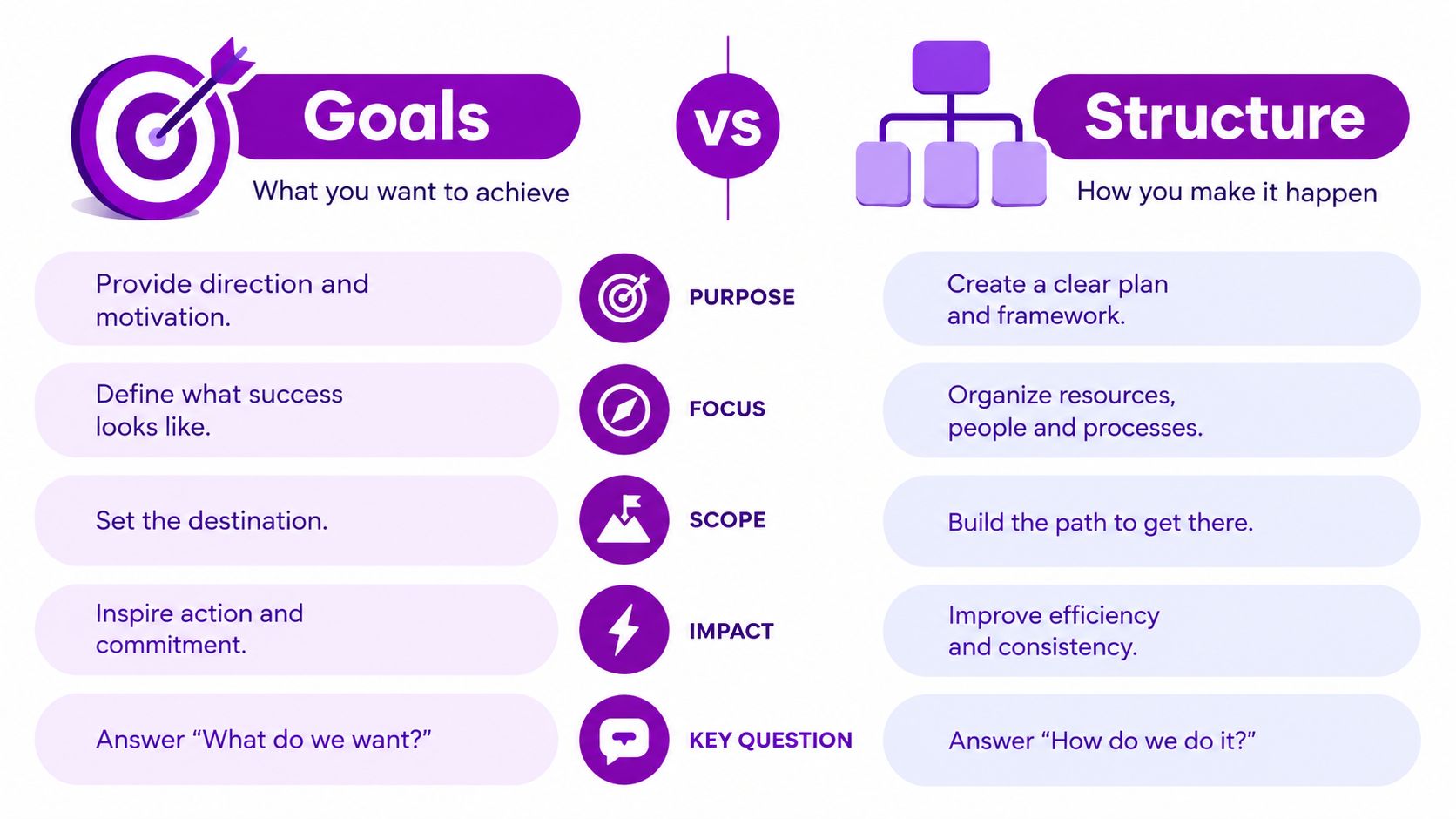
Goals and Structure Compared
Individual therapy and family therapy don't just place different numbers of people in the same appointment. They ask different clinical questions, collect different information, and direct the therapist's attention toward different points of change.
In individual therapy, the client and therapist build a private formulation. They examine thoughts, emotions, behaviors, body responses, history, and current stressors. The therapist may help the client identify an anxiety trigger, challenge an unhelpful belief, process trauma, practice emotional regulation, or create a plan for behavior change.
Family therapy treats the relationship system as part of the clinical picture. The therapist watches how people respond to one another, who speaks for whom, where conversations break down, and how the household reacts when symptoms intensify. The aim isn't to make everyone agree. It's to change patterns that keep distress circulating.
What individual therapy does week to week
A typical individual plan may focus on one person's goals, symptoms, and decisions. The therapist can slow down a difficult event, help the client name what happened, and rehearse a different response. Privacy matters because clients often disclose material they can't safely or comfortably discuss in front of a partner, parent, or child.
The therapist may assign between-session practice, such as tracking anxious predictions, using grounding during trauma reminders, scheduling meaningful activity during depression, or preparing for a difficult conversation. Progress is measured through the client's functioning, symptom experience, safety, and ability to use skills in daily life.
Individual therapy also protects developmental needs. A young person may need a space where they aren't responsible for reassuring a parent or defending a sibling. An adult may need to explore relationship choices without turning every appointment into a negotiation.
What family therapy changes
Family sessions bring interaction into view. A therapist might ask each person to describe the same disagreement, interrupt blame, slow down escalation, and help relatives make specific requests instead of accusations. The focus may include boundaries, caregiving, communication, safety planning, or support for treatment adherence.
Family therapy doesn't require every relative to attend every session. A partner, parent, caregiver, or other motivated family member may participate for a defined task, while the primary client continues individual sessions. The structure should follow the clinical purpose, not a rigid rule about who must be in the room.
| Feature | Individual therapy | Family therapy |
|---|---|---|
| Primary focus | Internal experience and personal behavior | Interactions, roles, and relationship patterns |
| Main participant | One client and one therapist | Multiple relatives and a therapist, as clinically appropriate |
| Therapist's attention | Formulation, privacy, coping, and processing | Communication, conflict cycles, boundaries, and support |
| Best fit | Private symptoms or personal skill-building | Symptoms reinforced by household dynamics |
| Common outcome target | Better functioning and emotional regulation | Healthier interaction and more effective support |
Neither format is automatically more serious or more intensive. The therapist's job is to match the structure to the work that needs to happen.
Evidence by Common Concerns
The evidence supports a targeted choice, not a universal winner. For adults, a multilevel meta-analysis of systemic therapy found a small but statistically significant overall effect, Hedges' g = 0.30, across 171 outcomes from 32 studies (Braus and colleagues' evidence review%20Is%20symptom%20outcome%20the%20whole%20story.pdf)). The effect was similar for symptoms, g = 0.30, and slightly larger for family-system functioning, g = 0.34. That distinction matters: family therapy may improve the relational environment even when symptom improvement looks similar to individual care.
Depression and anxiety
For children aged 7–14 with depressive disorders, a randomized clinical trial found a higher immediate response rate for family-focused treatment than for individual supportive psychotherapy, 77.7% versus 59.9%, with an odds ratio of 2.29 and a number needed to treat of approximately 5.72 (the randomized clinical trial). In practical terms, family-focused treatment deserves serious priority when parent-child interactions, adherence, communication, or the home environment are central.
That result shouldn't be generalized to adults or treated as proof that family therapy beats every individual treatment. The comparison involved a specific child population, a specific family-focused protocol, and individual supportive psychotherapy.
Anxiety requires the same discipline. A review found that youth CBT and CBT involving parents both performed better than a wait-list condition, while parental involvement in individual or group CBT was generally about as effective as treatment without parental involvement. Some studies suggested better longer-term outcomes with parents involved (the review of systematic reviews). Start with individual therapy when the client needs direct coping skills. Add family participation when caregivers affect adherence, avoidance, or relapse prevention.
Adolescents and young adults
Engagement can determine whether treatment has a chance to work. In a 2023 study of a remote intensive outpatient program, youths and young adults who attended at least one family-therapy session stayed in treatment for a median of 11 weeks, compared with 9 weeks for those whose families didn't participate. They attended a median 84.38% of program sessions versus 75.00%, and each additional family-therapy session was associated with a 1.4-fold increase in the odds of completing treatment, with a 95% confidence interval of 1.3–1.4 (the remote intensive outpatient program study).
That makes family involvement especially compelling when retention, transportation, monitoring, or home support is the immediate obstacle. It doesn't eliminate the need for private sessions with the young person.
Trauma, substance use, and relationship conflict
Trauma recovery often requires individual privacy, especially when disclosure could be inhibited by a relative's presence or reaction. Family sessions may still help later with boundaries, communication, safety, or rebuilding trust, but they shouldn't force disclosure before the client is ready.
For substance-use treatment, a systematic review found that incorporating family members generally supported reduced substance use and improved family functioning. In one trial of 109 adolescents, multidimensional family therapy didn't produce a statistically significant overall advantage over CBT, although it reduced substance use more among participants with higher initial severity (the systematic review of family-based substance-use treatment). Use family therapy when household relationships shape access, triggers, or accountability. Keep individual therapy in the plan when personal motivation and coping remain central.
Couples and family work can be particularly useful when relationship distress is itself a treatment target. Readers looking for general communication perspectives may find relationship advice articles useful, but educational reading isn't a substitute for a clinical assessment.
Benefits and Limitations of Each Approach
The strongest choice depends on what you're willing and able to change. Individual therapy gives one person control over the pace and content of treatment. Family therapy asks the surrounding relationships to participate in change, which can be powerful when those relationships help sustain the problem.

Individual therapy
Where it helps most
- Privacy: The client can discuss trauma, resentment, identity, self-harm thoughts, or relationship decisions without managing another person's response.
- Focused skill-building: Sessions can concentrate on behavioral activation, emotional regulation, grounding, communication preparation, or coping with anxiety.
- Flexible participation: The client doesn't need relatives who are available, willing, or safe to involve.
- Developmental protection: Teens and adults can develop an authentic therapeutic relationship without becoming responsible for family members' comfort.
Where it can fall short
Individual therapy may miss the way a partner responds to panic, how a caregiver accommodates avoidance, or how family criticism intensifies depression. A client may learn excellent skills in the office and then return to a household that rewards withdrawal, escalates conflict, or undermines treatment recommendations.
Family therapy
Where it helps most
- Relational accountability: Each participant can see how their behavior affects the cycle rather than assigning the entire problem to one person.
- Practical support: Relatives can learn how to respond to symptoms, reinforce safety plans, support appointments, and reduce unhelpful accommodation.
- Communication repair: The therapist can slow conversations down and translate accusations into specific needs and boundaries.
- System-level change: The household can practice a new pattern in the same setting where distress usually escalates.
Where it can create problems
Family therapy is not appropriate only because relatives are available. Power imbalances, coercion, intimidation, active danger, or fear of retaliation can make joint sessions unsafe. A family member may dominate the appointment, minimize the client's experience, or use therapy information outside the room.
Family involvement also depends on logistics and willingness. Relatives may refuse treatment, live far away, or participate inconsistently. In addiction recovery, family-focused education and support can be relevant, and Reflections addiction recovery provides one example of that broader treatment perspective.
The trade-off is simple: Individual therapy protects the client's inner space. Family therapy changes the environment around the symptoms.
Neither approach guarantees better depression symptoms or improved communication. A systematic review found mixed evidence for communication improvements from family-focused interventions, and one comparison reported no significant effect of family psychoeducation on depressive symptoms or major-depressive-disorder diagnosis, with P = 0.052 (the systematic review of family-focused interventions). Pick the format for the task, not for the promise.
For additional context on what family-focused care can involve, see family therapy benefits, then discuss whether those benefits match your actual treatment goal.
How to Choose the Right Approach
Use a decision process instead of asking which format has the better reputation. The right answer usually becomes clearer when you identify the point where symptoms worsen and the kind of change you need from treatment.
Start with the maintaining factor
Ask what happens immediately before and after the problem intensifies.
- If panic, shame, grief, intrusive memories, or hopelessness worsen when you're alone, begin with individual therapy.
- If symptoms escalate during arguments, caregiving conflicts, meals, medication discussions, or attempts to set limits, consider family therapy.
- If both patterns appear, plan for individual work with selected family involvement rather than forcing a permanent either-or decision.
Set the treatment task
A family session should have a job. That job might be psychoeducation, communication practice, safety planning, relapse prevention, or reducing a pattern that reinforces avoidance. If no one can name what relatives are expected to do differently, individual therapy may be the cleaner starting point.
Use this table to make the first recommendation concrete.
| Concern Type | Key Indication | Preferred Focus |
|---|---|---|
| Adolescent depression | Parent-child interaction affects mood, adherence, or monitoring | Family-focused care with protected individual time |
| Repeating household conflict | Arguments follow a predictable escalation cycle | Communication, boundaries, and conflict interruption |
| Substance-use concerns | Family responses affect triggers, access, or accountability | Family support combined with individual recovery work |
| Trauma recovery | Privacy and safe disclosure are primary | Individual processing before selected family sessions |
| Relapse prevention | Relatives can reinforce a safety or recovery plan | Targeted family participation |
| Relationship distress | The relationship itself is the central source of suffering | Couples or family-focused sessions |
Protect consent and confidentiality
Psychiatric practice literature recommends discussing goals with the adult patient, obtaining consent before involving relatives, and protecting confidentiality unless there's a serious safety risk. Family participation can be calibrated for psychoeducation, communication work, and relapse prevention (psychiatric practice guidance).
That means family therapy doesn't require a harmonious or fully available family. It also means individual therapy doesn't require total exclusion of relatives. An adult client can receive private therapy and invite a partner or caregiver for a limited appointment when that participation serves a defined goal.
Finally, ask about clinician fit. The difference between an LMFT and a psychologist can affect training, scope, and the way care is structured, so review LMFT vs psychologist before scheduling. Bring your answers about privacy, safety, family readiness, and treatment goals to the intake.
How reVIBE Matches You to Care
A useful intake should do more than ask whether you want individual or family therapy. It should identify the concern, assess what maintains it, clarify who needs to participate, and determine whether privacy or shared practice is the immediate priority.
At reVIBE Mental Health, the care pathway can include individual, couples, and family therapy, along with talk therapy, EMDR, and psychiatry with medication management. That range allows the treatment plan to change when the clinical task changes. Someone may begin with private anxiety treatment, add a family session to improve support, and later return to individual work for trauma processing.
What to discuss before the first appointment
Bring specific information rather than a general statement that things feel difficult.
- Name the pattern: Explain when symptoms intensify and who is present.
- State your privacy needs: Tell the provider what you need to discuss alone.
- Identify useful participants: A partner, parent, or caregiver may be helpful for one task without joining every session.
- Describe access limits: Mention scheduling, transportation, remote participation, or relatives who won't attend.
- Clarify your preferred tools: Ask whether talk therapy, EMDR, psychiatric evaluation, medication management, or a combined plan fits the concern.
The practice serves clients in Scottsdale, Tempe, Chandler, Phoenix, and Paradise Valley, Arizona, with in-person and secure online sessions. Appointments are available seven days a week, and the team provides insurance verification guidance for clients using major insurance plans.

Find a reVIBE location near you
We currently have five locations for your convenience. Call (480) 674-9220.
reVIBE Mental Health, Chandler
3377 S Price Rd, Suite 105, Chandler, AZreVIBE Mental Health, Phoenix Deer Valley
2222 W Pinnacle Peak Rd, Suite 220, Phoenix, AZreVIBE Mental Health, Phoenix PV
4646 E Greenway Road, Suite 100, Phoenix, AZreVIBE Mental Health, Scottsdale
8700 E Via de Ventura, Suite 280, Scottsdale, AZreVIBE Mental Health, Tempe
3920 S Rural Rd, Suite 112, Tempe, AZ
Don't wait for certainty before asking for an assessment. Tell the provider whether the distress lives mainly inside you, between people, or in both places. That answer gives the clinician a practical starting point for matching therapy format, privacy, family participation, and any psychiatric support to the care you need.
If you're weighing family therapy vs individual therapy, reVIBE Mental Health offers individual, couples, and family-focused care, plus EMDR and psychiatry with medication management. Visit reVIBE Mental Health to explore care options, review access details, and take the next step toward a treatment plan built around what's maintaining your symptoms.