

Just like any therapy powerful enough to create real change, EMDR can have side effects. Think of them less as "side effects" and more as signs that your brain is hard at work, doing some deep-level processing. You might feel a temporary spike in emotions, have some unusually vivid dreams, or just feel plain tired after a session. This is all completely normal, and these feelings usually fade within 24-48 hours.
Knowing what to expect is the first step toward making your EM-DR journey a safe and successful one.
What Is EMDR and How It Can Help
Imagine your brain is a library, and a traumatic memory is like a book that's been jammed onto the wrong shelf. It’s out of place, precariously balanced, and every time you walk by, it falls on your head. This is what an unprocessed trauma feels like—it keeps popping up and causing distress when you least expect it.
Eye Movement Desensitization and Reprocessing (EMDR) is a structured therapy that helps you finally file that book away correctly. Using bilateral stimulation (like following a therapist's hand with your eyes), it kickstarts your brain’s own information processing system, allowing it to work through these "stuck" memories so they no longer disrupt your life.
EMDR is well-known as a highly effective treatment for Post-Traumatic Stress Disorder (PTSD) and other conditions rooted in trauma. One of the reasons people find it so helpful is that it doesn't require you to talk in exhaustive detail about what happened. Instead, it focuses on the internal experience—the images, feelings, and physical sensations tied to the memory. For anyone who finds it incredibly difficult to put their trauma into words, this approach can be a huge relief.
Understanding Reactions as Part of Healing
It's completely normal to be curious, or even a little nervous, about the side effects of EMDR. The key here is a shift in perspective: these reactions aren't a sign that something is wrong. They're actually predictable signs that your mind and body are actively healing.
I often compare it to a deep-tissue massage. The therapist works on a knotted muscle, and it feels sore for a day or two afterward. But then, it feels so much better. EMDR works in a similar way, stirring up old emotions and physical sensations as part of the healing process.
This timeline gives you a great visual overview of what the journey often looks like.
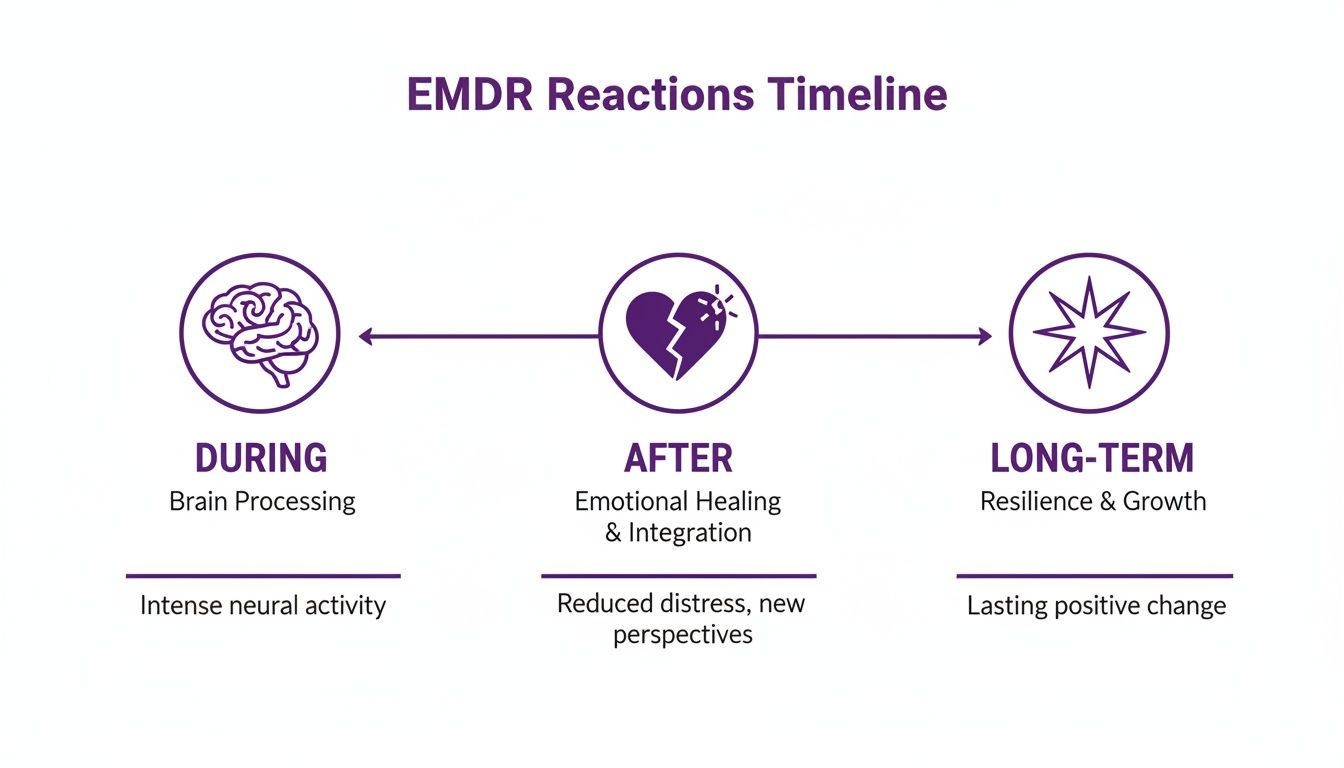
As you can see, the most intense work happens during the session itself. This is followed by a period where your brain integrates what it has processed, which ultimately leads to long-term resilience and a sense of peace.
What to Expect From Your Sessions
Working with a properly trained and experienced therapist is absolutely crucial for a safe EMDR experience. They’ll guide you through a standardized eight-phase process, but just as importantly, they’ll make sure you have the coping skills to manage any distress that comes up along the way.
Before you ever dive into processing a difficult memory, your therapist will spend time helping you build a personal toolkit of grounding and self-soothing techniques. Think of these as your anchors—they keep your ship steady, even when the emotional waters get a little choppy. These resources are designed to keep you within your "window of tolerance," which is the optimal zone where real, lasting healing can happen without you feeling completely overwhelmed.
To give you a clearer picture, here’s a quick summary of what you might experience.
A Quick Look at Common EMDR Reactions
This table breaks down the most frequent reactions people have during and after EMDR, how long they usually last, and the simple reason they happen—your brain is healing.
| Side Effect | Typical Experience | Why It Happens |
|---|---|---|
| Emotional Intensity | A sudden wave of sadness, anger, or fear during or after a session. | You're finally accessing and processing emotions that were previously "stuck" with the memory. |
| Vivid Dreams | Unusually detailed, strange, or emotionally charged dreams for a night or two. | Your brain continues to sort through and file away the material from your session while you sleep. |
| Physical Sensations | Feeling lightheaded, tired, or noticing new body sensations like tingling or tightness. | Your body is releasing physical tension and stress that it was holding onto from the trauma. |
These experiences are typically short-lived and are a normal part of the process. At reVIBE Mental Health, our compassionate therapists in Chandler, Phoenix, Scottsdale, and Tempe are here to guide you safely on your path to recovery.
Navigating the Emotional Ups and Downs of EMDR
Starting EMDR can feel a lot like deciding to finally clean out that one cluttered, long-neglected room in your house. At first, as you pull everything out into the open, the mess seems to get worse before it gets better. This initial chaos is a perfect way to think about the emotional side effects of EMDR—they're a sign that you’re finally doing the deep work needed to sort things out and heal.
This temporary spike in emotional intensity isn’t just normal; it’s an expected part of the journey. As you start to access and work through memories that have been "stuck," you're also re-engaging with all the emotions, thoughts, and physical sensations that were frozen in time with them. It’s a powerful signal that your brain's natural healing system is kicking back into gear.
Why You Might Feel a Surge of Emotions
It’s very common to feel a temporary spike in anxiety, sadness, or irritability during or after an EMDR session. In fact, this kind of emotional distress is one of the most frequently reported side effects, as you’re directly recalling and reprocessing traumatic events. This is a natural, manageable part of the process, much like what happens in other effective trauma therapies. As explained by trauma therapy specialists at High Focus Centers, a skilled therapist anticipates this and knows how to adjust the pace of your session to keep you from feeling overwhelmed.
So, why does this happen? EMDR is designed to help your brain connect different parts of a memory that were previously fragmented. All of a sudden, a mental image might link up with a long-buried feeling of fear, or a specific body sensation might connect to a forgotten sense of helplessness. While it’s certainly uncomfortable, this reconnection is exactly what allows the memory to be properly filed away, finally stored in a way that feels more peaceful and less disruptive.
The Return of Old Memories and New Insights
Don't be surprised if memories you haven't thought about in years suddenly pop into your head between sessions. It can feel a bit strange, but it’s another sign that the therapy is working. Your brain is continuing to make new connections and sort through the clutter, even when you’re not actively in the therapy room.
These emerging memories can show up in a few different ways:
- Forgotten Details: You might suddenly remember a very specific detail of an old event.
- Related Memories: A completely different memory, linked by a similar emotion, might come to mind.
- New Perspectives: You could have a sudden "aha!" moment or gain a new understanding of a past experience.
This ongoing processing is a testament to your brain's incredible capacity to heal. The work doesn't stop when the session ends; you've given your mind the tools it needs to keep going, leading to a deeper and more lasting resolution.
Think of it like following a single thread in a tangled mess. When you pull on one part of the memory network, it naturally leads you to other connected threads. They're all part of the larger picture that your brain is working to reprocess.
Understanding Vivid Dreams and Nightmares
Another common experience is a change in your dreams. Many people report having unusually vivid, detailed, or emotionally intense dreams after an EMDR session. While this can be unsettling at times, it’s often seen as a really positive sign. It means your brain is actively processing the material from your session during REM sleep, its natural memory consolidation phase.
Imagine your dreams are a mental sorting room where your brain works overnight to file away the day's experiences. After EMDR, that room is much busier than usual, handling the complex job of reprocessing old, stuck memories. This can lead to:
- Direct Processing: Dreams that seem to directly replay or relate to the memory you worked on in therapy.
- Symbolic Dreams: Dreams that use metaphors or symbols to work through the emotions tied to the memory.
- Emotional Release: Dreams that feel intense but leave you with a sense of relief or clarity when you wake up.
These dream patterns are almost always temporary and tend to fade in intensity as you move forward in therapy. Your therapist is there to help you make sense of them and can use any insights you gain to guide your next sessions, ensuring you feel supported every step of the way.
Understanding Physical Sensations During Healing
Here’s something you might not expect: trauma isn’t just in your head. It lives in your body. Stress, fear, and pain can get lodged in our systems, showing up as chronic muscle tension, aches, or other physical symptoms we can't quite explain. When you start EMDR, you’re not just revisiting memories—you’re giving your body a chance to finally let go of that stored traumatic energy.
This release process can trigger a whole range of physical side effects that might feel odd at first. But it's helpful to reframe them. Instead of seeing these sensations as something going wrong, think of them as proof that real, deep healing is underway. It’s like a frozen river in spring; the ice has to crack and shift before the water can flow freely again. Those physical feelings are the "cracks" in the long-held tension.

Common Physical Reactions to EMDR
As your brain works overtime to process tough memories, it's totally normal for your body to react. The good news is that these physical side effects are almost always temporary, usually fading within a day or two after your session as your system recalibrates. They are a sign that stuck energy is finally on the move.
Here are some of the most common things people feel:
- Fatigue: Processing trauma is hard work. It's mentally and physically draining, so feeling wiped out or needing more sleep is one of the most common experiences.
- Headaches: The intense focus of an EMDR session, plus the release of tension you might be holding in your neck and shoulders, can sometimes bring on a mild headache.
- Lightheadedness or Dizziness: As your nervous system starts to downshift from a state of constant high alert, you might feel a bit woozy. This usually passes quickly.
- Nausea: Our gut and brain are deeply connected. When you process intense emotions, it’s not unusual to feel a bit nauseous as your body lets go of stress.
- New Body Sensations: You might notice tingling, muscle twitches, or waves of warmth or cold. This is often the literal, physical release of energy that was trapped with the trauma.
Think of these sensations as your body’s way of talking. It’s telling you that the old, rigid patterns of holding stress are breaking down to make room for something new—a more relaxed and settled way of being.
The Mind-Body Connection in Healing
The link between our minds and bodies is powerful, especially with trauma. When something overwhelming happens, your body’s fight-or-flight response kicks in. If that response never gets to complete its cycle, the energy gets stuck, leading to all sorts of physical symptoms. EMDR helps your brain finally close that loop.
For example, a memory of feeling frozen with fear might be held physically as chronic tension in your shoulders. As you reprocess that memory during EMDR, you might feel your shoulders suddenly drop, relax, or even shake as that trapped energy is finally released. Getting a handle on this mind-body link is a game-changer for healing, and you can learn more practical ways to work with it in our guide on somatic healing exercises.
How to Listen to and Care for Your Body
Being gentle with yourself during your EMDR journey is non-negotiable. Your body is doing some heavy lifting, and it needs your support. If you can tune into these physical signals and respond with care, the whole process will feel much smoother.
Try these simple self-care steps after your sessions:
- Hydrate Well: Drink plenty of water. It helps flush your system and can ease things like headaches and fatigue.
- Allow for Rest: If you feel tired, listen to that. A short nap or an earlier bedtime can make a world of difference.
- Gentle Movement: A slow walk or some light stretching can help your body integrate the changes and work out any lingering physical tension.
- Nourishing Food: Eat a balanced, comforting meal. Your body is burning a lot of fuel, and giving it good energy helps the healing process.
By listening to what your body is telling you, you become an active partner in your own recovery. These physical feelings are just temporary mile markers on the road, signaling that you are moving from being "stuck" toward a future with more freedom and ease.
How Your Therapist Creates a Safe Space for Healing
The idea of digging into painful memories can sound pretty intimidating, and it's natural to worry about the side effects of EMDR. But you're never asked to walk that path alone. A good EMDR therapist acts as your guide, and the entire process is built on a foundation of safety, making sure you're well-equipped long before you start processing anything heavy.
Think of it like preparing for a challenging hike. Your therapist is the expert guide who knows the trail like the back of their hand. They know where the steep parts are, where the footing gets tricky, and they make sure you have the right gear, a map, and a solid plan before you even take the first step.
This preparation isn't just a formality; it’s a non-negotiable part of the official eight-phase EMDR protocol. Before you ever dive into the deep work, your therapist will spend a good amount of time helping you build a personal toolkit of coping strategies. This ensures that when side effects do pop up, they feel manageable, not like you're being thrown into the deep end.
Building Your "Psychological First-Aid Kit"
One of the very first things you'll do with your therapist is something called resourcing. This is all about identifying and strengthening the good stuff you already have inside you—your personal strengths, positive memories, and the feelings of calm and security you can tap into. It’s like stocking a psychological first-aid kit before a big trip.
These resources become your anchors. They're what you'll hold onto to keep you steady when the emotional waves get high during or after a session. For example, your therapist will guide you through exercises to create a "calm place" or "safe place" in your mind—a mental sanctuary you can retreat to whenever you start to feel distressed.
This resourcing phase is absolutely fundamental. It's what gives you immediate access to grounding techniques that can settle your nervous system, reminding you that you are in control throughout the entire process.
By practicing these skills upfront, you build real confidence in your ability to handle whatever comes up. This careful preparation is what keeps EMDR a safe, contained experience and prevents the risk of retraumatization. You're never pushed beyond what you’re truly ready to handle.
Staying in the "Just Right" Zone for Healing
A key concept your therapist will constantly be tracking is your window of tolerance. You can picture this as your optimal zone for healing. When you're inside this window, you can touch on difficult emotions and process them without getting completely overwhelmed (hyperaroused) or shutting down and feeling numb (hypoaroused).
EMDR works best when you can stay within this productive emotional zone. Your therapist is trained to be incredibly attuned to you, watching for even subtle signs that you might be nearing the edge of your window. Their job is to be a gentle guide, keeping the processing active but always contained.
If you start to feel too much distress, they’ll immediately pause the processing. They'll then use the resourcing techniques you've already practiced to bring you back to a place of stability before continuing. This expert navigation is precisely what makes the experience feel safe. You can trust that your therapist is right there with you, co-piloting the session to make sure the journey is always productive, never dangerous.
The Power of a Trusting Relationship
Ultimately, the most important safety feature in EMDR isn't a technique—it's the relationship you have with your therapist. A strong connection built on trust, empathy, and genuine collaboration is the bedrock of any successful healing journey. You have to feel seen, heard, and respected every step of the way.
At reVIBE Mental Health, our therapists aren’t just trained in the mechanics of EMDR; they are compassionate partners in your recovery. They get how much courage it takes to face what you've been through and are committed to creating a space where you feel safe and empowered, not judged.
This kind of supportive partnership means you can:
- Be totally open: You can be honest about your fears, what you’re experiencing in sessions, and any side effects you notice afterward without feeling like you have to hold back.
- Set the pace together: You and your therapist decide together when to push forward and when it's time to ease up, making sure the pace of therapy feels right for you.
- Feel genuinely secure: Just knowing you have a trusted professional in your corner gives you the confidence to do the deep, meaningful work of healing.
With a skilled guide creating this safe container, the potential side effects of EMDR transform from something to fear into manageable, predictable signs that you are on exactly the right path. This structured, supported, and deeply human approach is what makes EMDR such a powerful tool for lasting recovery.
Your Self-Care Toolkit Between EMDR Sessions
The work you do in an EMDR session doesn't just switch off the moment you leave your therapist's office. Your mind and body are busy processing in the background, making new connections and healing old wounds. This in-between time is incredibly important, and having a solid self-care plan can make a huge difference in managing any emdr therapy side effects that pop up.
Think of it this way: your therapy session is the intensive workout. The days that follow are your recovery period. Just like an athlete needs rest and proper nutrition to rebuild muscle, you need practices that help your nervous system integrate the changes taking place.
This isn't about piling more chores onto your to-do list. It’s about equipping yourself with simple, powerful strategies to make the healing journey smoother and feel more contained.

Grounding Techniques for Immediate Calm
When a sudden wave of anxiety hits, a memory feels too close, or you just feel disconnected, grounding techniques are your anchor. They pull you out of the emotional storm and plant you firmly back in the present moment.
One of the best and easiest to remember is the 5-4-3-2-1 technique. Here's how it works:
- Look: Name 5 things you can see right now. Notice details—the grain of wood on your desk, the color of a book spine.
- Feel: Acknowledge 4 things you can physically feel. The pressure of your feet on the floor, the texture of your jeans, the cool surface of a glass.
- Listen: Tune in to 3 sounds. Maybe it's the hum of your computer, birds chirping outside, or the sound of your own breathing.
- Smell: Find 2 things you can smell. A cup of coffee, the soap on your hands, or fresh air from an open window.
- Taste: Name 1 thing you can taste. A sip of water, the lingering taste of toothpaste, or a piece of gum.
This simple exercise is a powerful reset button. It forces your brain to focus on your immediate surroundings, sending a clear signal to your nervous system that you are safe right here, right now. It effectively interrupts the distress loop and helps you get your bearings.
Journaling to Process and Integrate
Your brain will keep working on things long after you've left a session. Insights can bubble up at the most random times. Journaling gives you a private space to catch these thoughts and feelings without having to make sense of them right away.
You don't need to write a masterpiece. A few minutes of scribbling can be incredibly helpful.
- Note new thoughts or memories: Did a random memory or feeling surface while you were washing dishes? Jot it down to bring to your next session.
- Track your dreams: EMDR can lead to some vivid dreams. Note any recurring themes or feelings when you wake up—they can offer clues about what your mind is processing.
- Check in with yourself: Ask simple questions. How does my body feel right now? What do I need in this moment? What felt a little lighter today?
Getting these thoughts out of your head and onto paper can make them feel much less overwhelming and far more manageable.
Gentle Movement and Body Care
Trauma gets held in the body, and EMDR helps it move through. Supporting that physical process is a crucial piece of the self-care puzzle. It helps your body settle into its new, calmer state.
Especially in the first 24-48 hours after a session, focus on gentle, mindful movement instead of an intense workout. Try things like:
- A slow walk outside: Forget about pace and just notice the world around you—the sky, the trees, the feeling of the breeze.
- Light stretching or yoga: Pay attention to your breath and focus on releasing tension in your neck, shoulders, and hips.
- A warm bath with Epsom salts: This is fantastic for soothing any physical aches and calming your entire nervous system.
Fueling your body with nourishing food and plenty of water is also vital. This work is demanding, and your body needs resources. For some, emotional shifts can trigger changes in eating habits. If you're looking for guidance, here is a practical guide with emotional eating help to support your well-being. Taking care of your body this way sends a powerful message of safety and compassion to your whole being.
Your Healing Journey Starts Here with reVIBE Mental Health
Reading about EMDR therapy side effects can feel a bit daunting, but it's actually the first step toward taking control. The most important thing to remember is that these reactions—whether emotional, physical, or psychological—aren't a sign that something is wrong. They’re proof that your mind and body are finally processing and letting go of old trauma.
It's a process, and while it can be intense at times, it’s both temporary and manageable with the right support.
At reVIBE Mental Health, we don't just see you as a client; we see you as a courageous partner in your own healing. Our entire approach to EMDR is built on a bedrock of safety, trust, and genuine collaboration, so you feel supported and in the driver's seat from start to finish.
A True Partner in Compassionate Care
We know from experience that real healing thrives in a strong, trusting therapeutic relationship. Your therapist isn't just a facilitator; they're a compassionate ally who is deeply committed to creating a safe space for this important work to unfold.
From our very first session, a huge part of our focus is on building your personal toolkit of coping skills. We want you to feel prepared and empowered, not just during our sessions, but in your daily life. This client-first philosophy means we always move at a pace that feels right for you. We listen, respect your boundaries, and tailor every step to what you need.
Your journey is completely unique, and your care should be too. We're here to provide a supportive, non-judgmental environment where you can safely process your experiences and build a more peaceful future.
Find a reVIBE Location Near You!
We currently have five locations for your convenience. (480) 674-9220
reVIBE Mental Health – Chandler
3377 S Price Rd, Suite 105, Chandler, AZreVIBE Mental Health – Phoenix Deer Valley
2222 W Pinnacle Peak Rd, Suite 220, Phoenix, AZreVIBE Mental Health – Phoenix PV
4646 E Greenway Road, Suite 100, Phoenix, AZreVIBE Mental Health – Scottsdale
8700 E Via de Ventura, Suite 280, Scottsdale, AZreVIBE Mental Health – Tempe
3920 S Rural Rd, Suite 112, Tempe, AZ
If you’re ready to explore how EMDR can help you move past what’s been holding you back, our team is ready to connect you with a skilled therapist who truly gets you. You can learn more about starting EMDR therapy near you and see how we can help.
Frequently Asked Questions About EMDR Side Effects
It's completely normal to have questions when you're exploring trauma therapy. Concerns about EMDR therapy side effects are at the top of the list for many, and getting straight answers is key to feeling confident about your healing journey. Let's walk through some of the most common questions we hear from people just like you.
How Long Do EMDR Side Effects Last?
For the most part, any side effects from an EMDR session are pretty short-lived. It’s typical for heightened emotions, tiredness, or even some vivid dreams to fade within 24 to 48 hours.
Think of this as your brain's "cool-down" period after a heavy workout—it's actively integrating the hard work you just did. Of course, if anything feels too intense or sticks around for more than a couple of days, let your therapist know. They can always adjust the pacing to make sure you feel safe and in control.
Can EMDR Make My Trauma Feel Worse?
This is a big one. It can sometimes feel like things are getting more intense before they get better, but EM-DR, when done correctly with a trained professional, doesn’t actually make your trauma worse. You might feel a temporary spike in distress as you finally access and process those stuck memories, and that’s a totally expected part of the work.
It's a bit like lancing a wound to clean it out. The process is uncomfortable for a moment, but it’s absolutely necessary for it to heal properly. This intensity isn’t a sign you’re getting worse; it’s a sign the therapy is working right where it needs to.
Is It Safe to Drive Home After My Session?
Most people are perfectly fine to drive home, but it’s smart to play it safe, especially after your first few sessions. The processing work is deep, and it's not uncommon to feel emotionally drained, a little spacey, or even lightheaded right afterward.
My advice? Give yourself a few minutes to just sit and ground yourself before you even think about putting the car in drive. Sip some water, take a few deep, slow breaths, and just notice how your body feels. You could even arrange for a ride for your first appointment until you know how your body typically responds. Feeling prepared also means sorting out the practical stuff, like figuring out if EMDR is covered by insurance.
Ready to take the next step with a team that puts your safety and well-being first? The compassionate EMDR specialists at reVIBE Mental Health are here to guide you. Visit us at https://revibementalhealth.com to get matched with a provider at one of our five convenient Arizona locations.