

Anxiety can feel like being caught in a powerful current, pulling you away from the present moment and into a turbulent storm of racing thoughts and overwhelming physical sensations. It disconnects you from your surroundings, making you feel unmoored and out of control. This is where grounding techniques for anxiety become essential tools for your mental health toolkit. They are not about ignoring or suppressing anxiety, but rather about anchoring yourself firmly in the here and now, interrupting the anxiety cycle before it escalates.
This practical guide offers a curated collection of eight distinct, evidence-based grounding techniques. We will move beyond generic advice to provide you with a comprehensive look at methods that engage your senses, body, and mind. From the widely-used 5-4-3-2-1 sensory method to temperature-based techniques that stimulate the vagus nerve, you will find actionable strategies for immediate relief. Managing anxiety is crucial not just for mental well-being but for physical health as well; understanding the impact of chronic anxiety on the body highlights the importance of having effective coping mechanisms ready.
Each section provides clear, step-by-step instructions, practical variations for different scenarios like panic attacks or dissociation, and expert tips to maximize effectiveness. For residents in the Phoenix metro area seeking comprehensive support for anxiety, trauma, or family counseling, reVIBE Mental Health offers specialized services. This guide is your first step toward building a reliable set of skills to find stability whenever you need it most.
1. 5-4-3-2-1 Sensory Grounding Technique
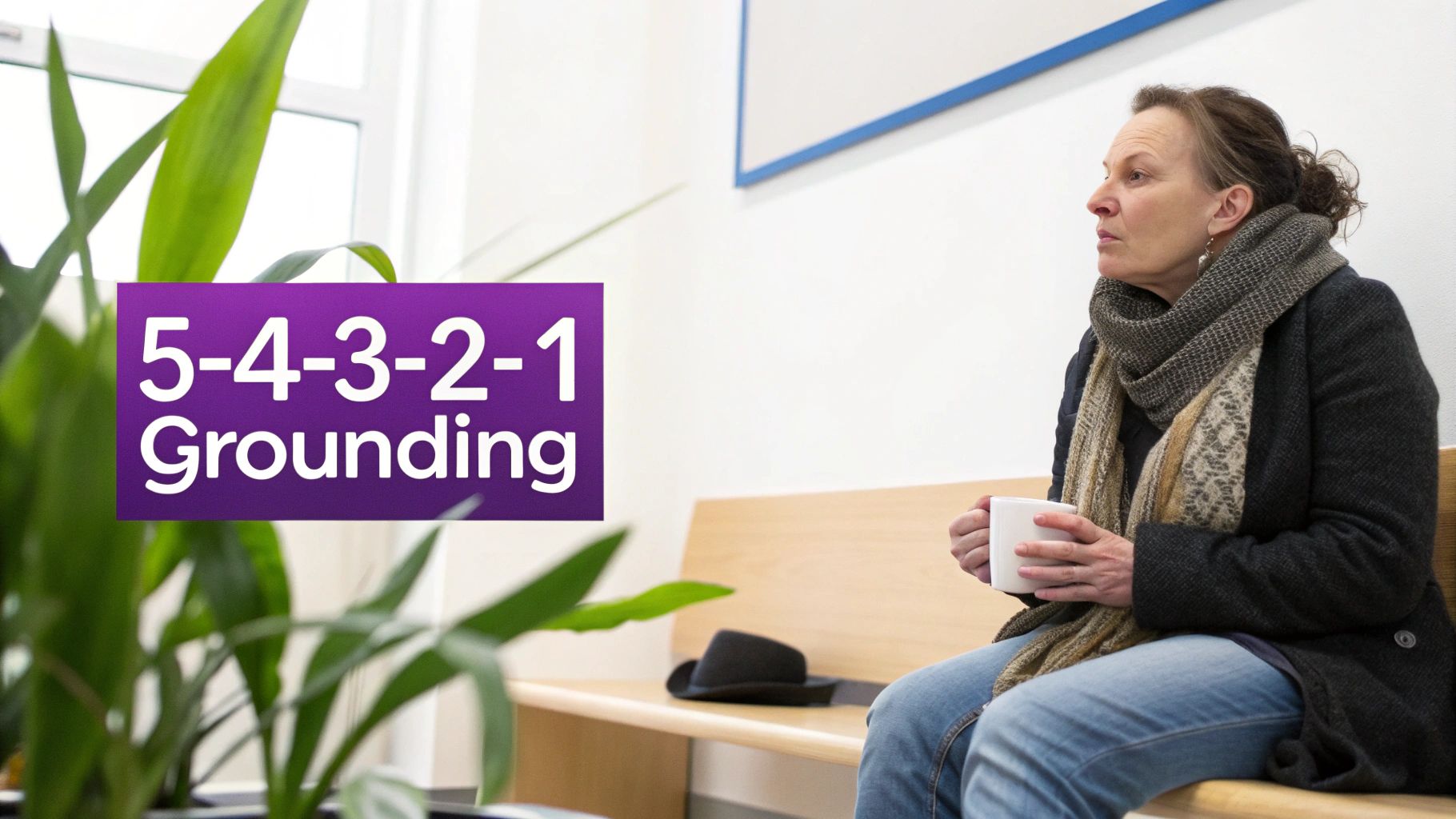
The 5-4-3-2-1 method is one of the most effective and widely recommended grounding techniques for anxiety. It systematically pulls your attention out of the chaotic, internal storm of anxious thoughts and anchors you firmly in the present moment. By deliberately engaging your five senses, you interrupt the brain's panic loop and redirect its focus to your immediate, tangible surroundings.
This technique is incredibly versatile. A patient at reVIBE might use it in our Scottsdale waiting room to manage pre-appointment jitters, while a professional in a Phoenix high-rise could use it discreetly before a stressful board meeting. It's a cornerstone of evidence-based therapies like Cognitive Behavioral Therapy (CBT) and Dialectical Behavior Therapy (DBT) because of its simplicity and immediate impact.
How to Practice the 5-4-3-2-1 Technique
When you feel anxiety, dissociation, or overwhelm begin to build, pause and follow these steps. Go slowly and be intentional with each observation.
- 5 Things You Can SEE: Look around and name five distinct objects. Notice details. For example, instead of just "desk," see "the smooth, dark wood grain of my desk," "my silver pen with the blue cap," or "the light reflecting off the computer screen."
- 4 Things You Can FEEL: Bring your attention to physical sensations. This could be the texture of your jeans on your legs, the solid pressure of the floor beneath your feet, the coolness of a glass of water in your hand, or the soft fabric of your chair.
- 3 Things You Can HEAR: Listen closely for three different sounds. It could be the distant hum of traffic, the rhythmic whir of a fan, or the sound of your own steady breathing.
- 2 Things You Can SMELL: Try to identify two distinct scents. Perhaps it's the faint aroma of coffee, the clean smell of a book's pages, or the fragrance of hand soap on your skin.
- 1 Thing You Can TASTE: Focus on one thing you can taste. This could be the lingering flavor of your morning tea, the mint from your toothpaste, or simply the neutral taste inside your mouth. You can also pop a mint or take a sip of water for this step.
This structured process provides a predictable and calming framework when your thoughts feel out of control. It's a powerful tool because it doesn't require any special equipment, making it an excellent first-line defense during a sudden spike of anxiety. For those experiencing intense moments of panic, you can explore more coping strategies for panic attacks that build upon these foundational grounding skills.
2. Grounding Through Progressive Muscle Relaxation (PMR)
Progressive Muscle Relaxation (PMR) is a powerful grounding technique that intentionally addresses the physical manifestations of anxiety. It involves a systematic process of tensing specific muscle groups for 5-10 seconds and then releasing the tension completely. This practice interrupts the body's anxiety feedback loop, reduces physical tension, and powerfully anchors your awareness in the present moment through direct physical sensation.
Developed by Dr. Edmund Jacobson in the 1920s, PMR has become a staple in modern therapies like CBT for its proven effectiveness. A reVIBE therapist might teach PMR to a client in our Tempe office to manage evening anxiety and improve sleep, or it could be incorporated into a comprehensive treatment plan for anxiety-related muscle pain. It’s an active form of relaxation that gives you a tangible sense of control when your body feels hijacked by stress.
How to Practice Progressive Muscle Relaxation
Find a comfortable and quiet space where you can sit or lie down without interruption. Close your eyes if it feels comfortable and take a few deep, slow breaths before you begin.
- Start with Your Feet: Inhale and tightly clench the muscles in your feet and toes. Hold this tension for 5-10 seconds, noticing the strain. Exhale and release the tension completely. Notice the difference between the feeling of tension and the feeling of relaxation.
- Move Up Your Legs: Continue this process, moving up your body. Tense and release your lower legs (calves), then your upper legs (thighs and glutes). Isolate one muscle group at a time, holding the tension and then letting it go.
- Progress Through Your Torso: Bring your focus to your abdomen and chest. Tense these muscles on an inhale, hold, and then release fully on the exhale. Then, move to your back, arching it slightly to create tension before relaxing.
- Address Arms and Hands: Tense your hands into fists and squeeze your arms up to your shoulders. Hold the tension tightly, then release completely, letting your arms go limp and heavy.
- Finish with Shoulders, Neck, and Face: Shrug your shoulders up toward your ears, holding the tension. Release and let them drop. Finally, clench your jaw, furrow your brow, and tighten your facial muscles. Hold, then release, letting your entire face feel soft and relaxed.
This methodical practice not only releases stored physical stress but also enhances your mind-body connection, a core principle in many therapeutic approaches. It's an excellent tool for anyone whose anxiety manifests as muscle tightness, headaches, or difficulty sleeping. For a deeper dive into body-based grounding, you can learn more about somatic healing exercises that complement PMR.
3. Box Breathing (Square Breathing)
Box breathing, also known as square breathing, is a powerful yet simple technique for calming the nervous system and regaining control during moments of high stress. Popularized by U.S. Navy SEALs and widely used by first responders, this controlled breathing pattern directly counteracts the body's fight-or-flight response. By imposing a deliberate, even rhythm on your breath, you activate the parasympathetic nervous system, signaling to your brain that the danger has passed and it is safe to relax.
This technique is a core skill we teach clients at reVIBE because it is discreet and can be used anywhere. A client might practice it in our Tempe office to center themselves before an EMDR session, or a student could use it during an exam at Arizona State University to quiet a racing mind. Its rhythmic nature provides a predictable structure that is deeply grounding when thoughts feel chaotic.

How to Practice Box Breathing
When you feel anxiety rising, find a comfortable position, either sitting or standing, and follow this four-part cycle. You can visualize tracing the sides of a square as you breathe.
- Breathe in for 4 seconds: Inhale slowly and deeply through your nose, filling your lungs for a count of four.
- Hold for 4 seconds: Hold your breath at the top of the inhale for another count of four. Avoid tensing your muscles.
- Breathe out for 4 seconds: Exhale slowly and completely through your mouth or nose for a count of four.
- Hold for 4 seconds: Hold your breath again at the bottom of the exhale for a final count of four before starting the next cycle.
Repeat this cycle for at least four to five rounds, or until you feel a sense of calm returning. The key is maintaining an even, steady pace. If a four-second count feels too long, start with three seconds and gradually work your way up. This deliberate regulation of breath is one of the quickest and most effective grounding techniques for anxiety because it physically slows your heart rate and lowers your blood pressure, providing immediate relief.
4. Grounding Through Movement and Environmental Immersion
When anxiety floods the mind, the body often feels restless or frozen. Grounding through movement channels this anxious energy into intentional physical activity, while environmental immersion uses your surroundings to soothe the nervous system. This dual approach shifts your focus from internal distress to external, bodily sensations and the calming influence of your environment.
This technique is highly adaptable to the needs and resources of individuals across the Phoenix area. A patient at reVIBE might be encouraged to take a mindful walk through the Desert Botanical Garden, focusing on the unique shapes and textures of the cacti. Others might find relief in a yoga class at a Scottsdale studio, using the structured poses to reconnect mind and body. The core principle is transforming anxious energy into a healing, present-moment experience.
How to Practice Grounding Through Movement and Environment
When you feel anxiety building, use your body and your surroundings as anchors. The goal is not intense exercise but mindful, intentional presence.
- Engage in Gentle Movement: Choose an activity that feels nurturing, not punishing. This could be a slow walk around your Tempe neighborhood, gentle stretching in your living room, or even simple yoga poses. Focus on the physical sensations: how your feet connect with the ground, the feeling of muscles lengthening, or the rhythm of your breath as you move.
- Immerse Yourself in Nature: If possible, step outside. The natural world is rich with grounding sensory input. A short hike on a Phoenix mountain trail can be incredibly effective. Pay attention to the feeling of the sun on your skin, the sound of a breeze rustling through palo verde trees, or the earthy smell of the desert after a rain.
- Create a Calming Indoor Space: When you can't get outdoors, you can create a grounding environment inside. Sit near a window with natural light, listen to a recording of nature sounds like flowing water, or focus on a houseplant. The goal is to deliberately engage with a peaceful and stable part of your immediate environment.
- Incorporate Rhythmic Activity: Rhythmic, repetitive motions are especially calming for the nervous system. This could include dancing to a favorite song, gently swaying back and forth, or even tapping your hands on your legs in a steady beat. The predictability of the rhythm provides a sense of safety and control.
This technique is powerful because it addresses both the cognitive and physiological symptoms of anxiety. By engaging the body, you trigger the release of endorphins and reduce cortisol levels, while immersion in a calming environment sends signals of safety to your brain. Combining these grounding techniques for anxiety with professional support, such as the services offered at our reVIBE Mental Health clinic in Scottsdale, can create a comprehensive plan for managing anxiety.
5. Mindfulness and Present-Moment Awareness
Mindfulness is the practice of intentionally focusing your attention on the present moment without judgment. As one of the most foundational grounding techniques for anxiety, it helps you step back from the turbulent stream of anxious thoughts and emotions. Instead of getting swept away by worries about the future or regrets about the past, you anchor yourself in the now.
This approach, rooted in practices like Mindfulness-Based Stress Reduction (MBSR), helps you observe your thoughts as temporary mental events rather than absolute truths. A client at reVIBE might use a brief mindfulness exercise to de-escalate stress during a challenging family therapy session in our Tempe office, or a parent might practice it to stay patient with their child. It’s a core component integrated into many evidence-based therapies, including CBT and DBT, for its profound ability to reduce reactivity and increase emotional regulation.
How to Practice Mindfulness for Grounding
When you feel your mind racing or anxiety creeping in, mindfulness offers a gentle yet powerful way to return to your center. The goal isn't to stop your thoughts, but to change your relationship with them.
- Find an Anchor: Your breath is the most accessible anchor. Simply notice the sensation of the air entering your nostrils and filling your lungs, and then the feeling of it leaving your body. Other anchors could be the sounds around you or the physical sensations in your hands or feet.
- Observe Without Judgment: As you focus on your anchor, your mind will inevitably wander. This is normal. The practice is to gently notice where your mind has gone, acknowledge the thought ("thinking") without judging yourself, and then kindly guide your attention back to your anchor.
- Start Small: You don’t need to meditate for an hour. Begin with just two to five minutes each day. Consistency is more important than duration. Using guided meditation apps like Calm or Headspace can provide structure as you build this habit.
- Integrate into Daily Life: You can practice mindfulness anywhere. While washing dishes, focus completely on the warmth of the water and the feel of the soap. While walking, notice the sensation of your feet on the ground.
This technique cultivates a state of non-reactive awareness, creating a crucial space between a trigger and your response. By practicing regularly, you strengthen your ability to remain calm and centered, even when faced with internal or external stressors. Learning this skill with a therapist can deepen its impact, helping you apply it to specific anxiety triggers identified in your sessions.
6. Tactile Grounding and Sensory Objects
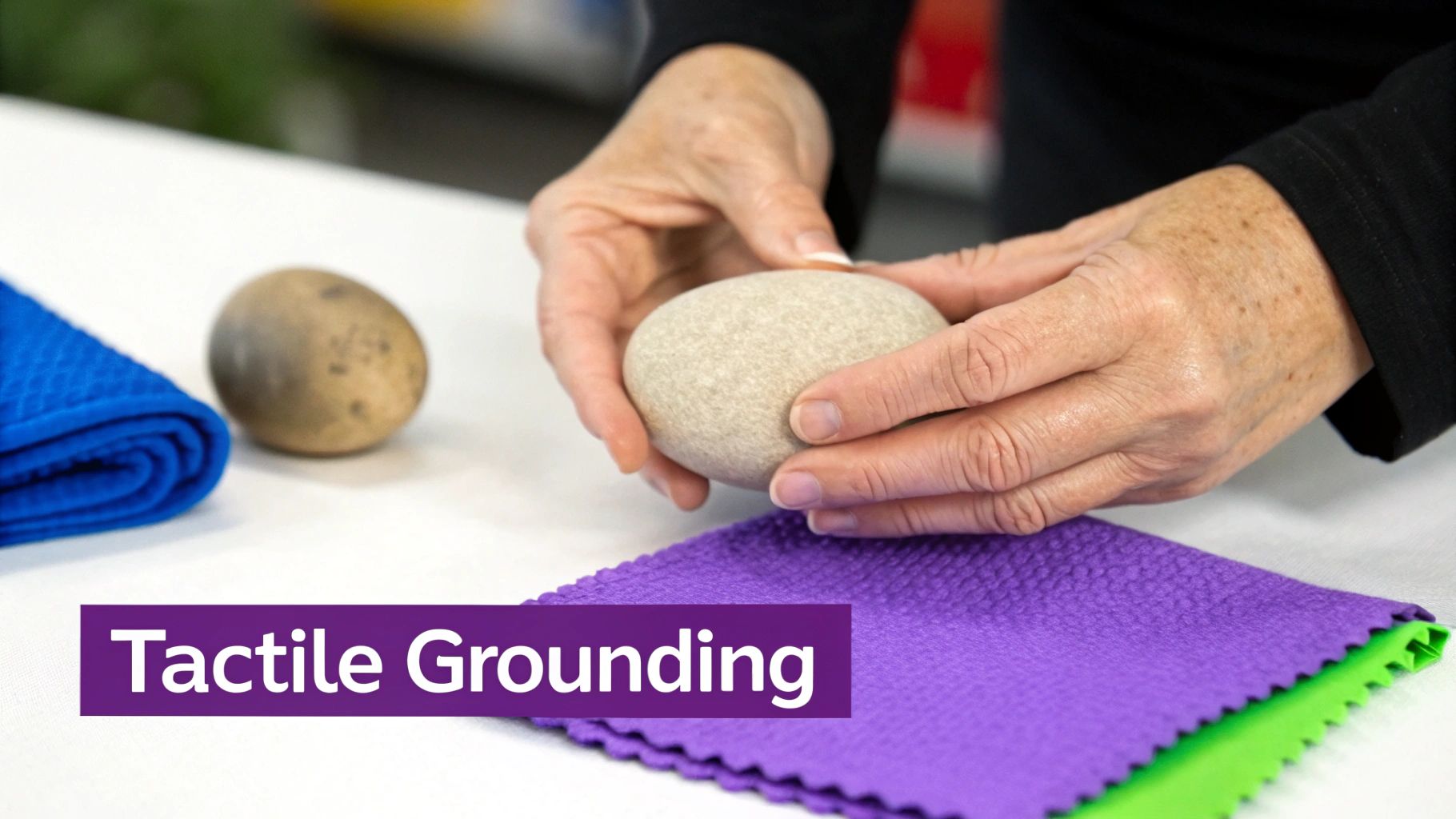
Tactile grounding involves using physical touch and sensory objects to pull your awareness away from distressing thoughts and into the present moment. When anxiety takes hold, your mind can feel abstract and disconnected. Introducing a strong physical sensation, like the intense cold of an ice cube or the unique texture of a worry stone, provides your brain with immediate, concrete data to process, effectively interrupting the anxiety cycle.
This method is a core component of therapies like Dialectical Behavior Therapy (DBT) and is frequently used by occupational therapists to help regulate the nervous system. At our reVIBE clinics in Tempe and Chandler, we often use textured objects or weighted blankets during therapy sessions to help clients feel more anchored and secure, especially when discussing difficult topics. The physical sensation acts as a powerful, non-verbal anchor to the here and now.
How to Practice Tactile Grounding
The key is to focus all your attention on the physical properties of the object you are interacting with. Instead of just holding something, truly explore it with your sense of touch.
- Choose a Grounding Object: Select something with a distinct sensory quality. This could be a smooth stone, a piece of soft velvet, a spiky fidget toy, or even a small, weighted object. Keep it in a pocket, purse, or on your desk.
- Engage with Temperature: For a more intense grounding experience, hold an ice cube in your hand, focusing on the sharp cold and the sensation of it melting. Alternatively, run your hands under cold water or hold a warm mug of tea.
- Notice Textures: Slowly run your fingers over a textured surface. It could be the rough bark of a tree, the soft knit of your sweater, or the cool, smooth surface of a table. Describe the feeling to yourself: "This is rough, bumpy, and solid."
- Incorporate Scent: Some tactile objects can be combined with other senses. For example, engaging your sense of smell with calming fragrances can be a powerful sensory anchor; explore some of the best stress relief candle scents for ultimate calm.
- Use Your Body: Firmly press your feet into the floor. Push your hands against a wall or desk. The proprioceptive feedback from engaging your muscles can be incredibly grounding and centering.
This technique is especially useful for people who find purely mental exercises difficult during high anxiety. By giving your body a tangible task, you create a direct pathway out of your head and back into your physical self, providing a sense of control and stability when you need it most.
7. Cognitive Grounding and Mental Anchoring
While sensory grounding anchors you in your physical environment, cognitive grounding techniques anchor you in your own mind. This method involves engaging in focused mental tasks that demand your full attention, effectively redirecting your brain's resources away from the spiraling, catastrophic thoughts that fuel anxiety. By giving your mind a structured, neutral job to do, you interrupt the emotional escalation and regain a sense of mental control.
This approach is particularly powerful for those whose anxiety manifests as racing thoughts or obsessive worries. A professional in our Phoenix PV office might use it to stop a worry cycle before a big presentation, while a student in Tempe could use it to manage test anxiety. These techniques are rooted in the principles of Cognitive Behavioral Therapy (CBT), which emphasizes changing unhelpful thought patterns to manage emotional responses.
How to Practice Cognitive Grounding
When you feel your thoughts starting to race, choose a mental exercise that is challenging enough to require concentration but not so difficult that it causes frustration. The goal is to occupy your cognitive bandwidth.
- Categorical Listing: Choose a broad category and list as many items as you can. For example, name all the Arizona cities you can think of alphabetically, list different breeds of dogs, or name every movie starring a particular actor.
- Counting Challenges: Simple counting can work, but a more complex task is better. Try counting backward from 100 by increments of 7 (100, 93, 86…). This requires enough focus to sideline anxious thoughts.
- The Alphabet Game: Pick a category, like "fruits" or "animals," and name one for each letter of the alphabet (Apple, Banana, Cherry…). This is a fantastic, discreet tool you can use anywhere.
- Memory Recall: Engage your long-term memory. Try to mentally walk through the layout of your childhood home, recall the lyrics to a favorite song, or list the steps for a familiar recipe.
These mental anchors act as a circuit breaker for anxiety. They prove that you have control over your focus, even when your emotions feel overwhelming. They are an essential tool for anyone learning to manage anxiety, offering a quick and private way to find stability from within.
8. Temperature-Based Grounding and Vagal Stimulation
Leveraging temperature changes is a powerful, physiological approach to grounding that directly influences your nervous system. By using cold or warmth, you can activate the vagus nerve, which is a primary component of the parasympathetic nervous system, your body's "rest and digest" state. This triggers a biological reset that can rapidly interrupt a panic cycle, slow your heart rate, and pull you out of an overwhelming state of anxiety.
This method is a core component of Dialectical Behavior Therapy's TIPP skills and is deeply rooted in Polyvagal Theory. It’s a technique our reVIBE therapists often teach clients in Scottsdale and Tempe for managing acute distress because its effects are so immediate and tangible. When your mind is racing too fast for cognitive techniques, this somatic intervention can provide the circuit breaker you need.
How to Practice Temperature-Based Grounding
When you feel panic or intense anxiety building, a swift change in temperature can provide a powerful shock to your system, forcing it to refocus.
- Cold Water Immersion: This is the most potent version. Splash your face with cold water or, for a stronger effect, fill a bowl with cold water and immerse your face for 15-30 seconds while holding your breath. This activates the "mammalian dive reflex," which instinctively slows your heart rate to conserve oxygen.
- Hold Ice Cubes: If a full-face immersion isn't possible, tightly grasp one or two ice cubes in your hands. Focus entirely on the intense cold sensation as it spreads. This creates a strong, distracting physical feeling that pulls your attention away from internal panic.
- Use a Cold Pack: Place a cold pack or a bag of frozen vegetables on the back of your neck, on your chest, or on your wrists. These areas are rich with vascular pathways, allowing the cold to influence your nervous system quickly.
- Apply Gentle Warmth: For a less intense but deeply calming effect, use a warm compress, heating pad, or a warm mug of tea. Place it on your neck or hold it in your hands. The gentle heat can be soothing and help relax tense muscles, offering a comforting alternative to cold shock.
This grounding technique is particularly useful because it works on a primal, physiological level, bypassing the need for complex thought. Whether you're navigating intense emotions during a therapy session at our Phoenix location or dealing with a sudden surge of anxiety at home, temperature can be an incredibly effective and accessible tool.
Comparison of 8 Grounding Techniques for Anxiety
| Technique | 🔄 Implementation Complexity | ⚡ Speed & Resources | 📊 Expected Outcomes | ⭐ Key Advantages | 💡 Ideal Use Cases |
|---|---|---|---|---|---|
| 5-4-3-2-1 Sensory Grounding Technique | Low — stepwise, easy to learn | 5–10 min; no equipment | Immediate reduction in dissociation/racing thoughts · ⭐⭐⭐⭐ | Multisensory, portable, easy to teach | Acute anxiety, public settings, pre-therapy |
| Grounding Through Progressive Muscle Relaxation (PMR) | Moderate — requires learning and structure | 15–20 min; quiet space or guided audio | Reduces muscle tension and heart rate; improves sleep · ⭐⭐⭐⭐ | Targets physical symptoms; measurable relaxation effects | Generalized anxiety, bedtime routine, therapy adjunct |
| Box Breathing (Square Breathing) | Low — simple rhythm to follow | 1–2 min; no materials, discreet | Rapid parasympathetic activation; quick calming · ⭐⭐⭐⭐ | Fast, discreet, evidence-based for vagal tone | Acute moments, work/public settings, before appointments |
| Grounding Through Movement & Environmental Immersion | Moderate–High — planning and time commitment | 10–60+ min; space, access to nature or exercise | Long-term anxiety reduction; improves mood and sleep · ⭐⭐⭐⭐⭐ | Holistic benefits, builds resilience, physical health gains | Integrated wellness, nature access, regular practice |
| Mindfulness and Present-Moment Awareness | Moderate — skill develops with practice | 5–30+ min; apps or instructor helpful | Improved emotional regulation and reduced reactivity · ⭐⭐⭐⭐ | Strong research base; addresses cognitive root causes | Sustained anxiety management, therapy integration |
| Tactile Grounding and Sensory Objects | Low — simple to adopt with chosen objects | Immediate use; requires portable objects | Immediate sensory anchoring; helpful for dissociation · ⭐⭐⭐ | Portable, personalized, quick feedback | On-the-go grounding, dissociation, public settings |
| Cognitive Grounding and Mental Anchoring | Low — mental tasks requiring focus | 1–5 min; no materials | Interrupts rumination and improves focus · ⭐⭐⭐ | Discreet, strengthens executive control, adaptable | Racing thoughts, discreet environments, work situations |
| Temperature-Based Grounding & Vagal Stimulation | Low–Moderate — simple but safety considerations | Seconds–minutes; ice/cold water or warm compress | Very rapid physiological calming via vagal activation · ⭐⭐⭐⭐⭐ | Fastest-acting physiological effect; powerful for panic | Acute panic/crisis (with safety precautions), severe anxiety |
Integrating Grounding Into Your Life and Knowing When to Seek Support
Throughout this guide, we have explored a diverse and powerful toolkit of eight distinct grounding techniques for anxiety. From the immediate sensory focus of the 5-4-3-2-1 method and tactile objects to the physiological regulation of box breathing and progressive muscle relaxation, each strategy offers a unique pathway back to the present moment. We’ve also covered how movement, cognitive anchoring, and even temperature changes can serve as potent anchors when your mind is adrift in a sea of worry, panic, or dissociation.
The central takeaway is that grounding is not a passive activity but an active, learnable skill. Its true power is unlocked not by simply knowing these techniques exist, but by integrating them into the fabric of your daily life. The goal is to build a "muscle memory" for self-regulation, making these tools second nature and readily accessible when you need them most.
From Knowledge to Practice: Your Actionable Next Steps
Mastering these concepts requires intention and repetition. Think of it like learning a new language or a musical instrument; consistent practice is what builds fluency. Waiting until you are in the midst of a full-blown panic attack to try a new technique is like trying to learn to swim during a flood.
To make these strategies work for you, consider these next steps:
- Start Small and Calm: Choose one or two techniques that resonate with you the most. Practice them for a few minutes each day when you are feeling relatively calm and centered. This builds the neural pathways that make the skill easier to access under duress.
- Create a Grounding Kit: Assemble a small collection of sensory items. This could be a smooth stone, a small vial of essential oil, a textured piece of fabric, or a sour candy. Keep it in your bag, car, or at your desk so it’s always within reach.
- Identify Your Triggers: Pay attention to the situations, thoughts, or physical sensations that typically precede a spike in your anxiety. By recognizing these early warning signs, you can proactively engage a grounding technique before the emotional intensity becomes overwhelming.
- Share Your Plan: Let a trusted friend, partner, or family member know which techniques you are practicing. Explaining what helps you can empower them to offer effective support during a difficult moment, such as gently guiding you through the 5-4-3-2-1 exercise.
The Bigger Picture: Grounding as a Component of Holistic Wellness
While these grounding techniques for anxiety are incredibly effective for managing acute symptoms, it is crucial to view them as one part of a larger, comprehensive approach to mental wellness. They are the emergency brakes, the life raft, the anchor in the storm. They can stop the spiral, but they may not address the underlying weather patterns causing the storm in the first place.
If you find that anxiety is a constant companion, persistently interfering with your work, your relationships, or your ability to enjoy life, it is a clear signal that professional support could be profoundly beneficial. Chronic anxiety, trauma, or depression often have deep roots that require more than in-the-moment coping skills to heal.
Key Insight: Grounding techniques are for managing the symptoms of anxiety. Therapy is for understanding and healing the source of anxiety. Both are essential for long-term well-being.
At reVIBE Mental Health, our compassionate team of therapists, psychiatric providers, and specialists understands this distinction. We are dedicated to providing personalized, evidence-based care to residents across the Phoenix metro area. Whether you are processing trauma with EMDR, learning new cognitive patterns with CBT, seeking support for your child or teen, or exploring medication management, we are here to partner with you.
You don't have to navigate the complexities of anxiety alone. We offer convenient, accessible mental health services seven days a week, both in-person and online.
Find a reVIBE Location Near You!
We currently have five locations for your convenience. (480) 674-9220
- reVIBE Mental Health – Chandler
3377 S Price Rd, Suite 105, Chandler, AZ - reVIBE Mental Health – Phoenix Deer Valley
2222 W Pinnacle Peak Rd, Suite 220, Phoenix, AZ - reVIBE Mental Health – Phoenix PV
4646 E Greenway Road, Suite 100, Phoenix, AZ - reVIBE Mental Health – Scottsdale
8700 E Via de Ventura, Suite 280, Scottsdale, AZ - reVIBE Mental Health – Tempe
3920 S Rural Rd, Suite 112, Tempe, AZ
Taking control of your anxiety is a courageous step toward a more peaceful and fulfilling life. Integrating these grounding skills is your first move, and seeking support is the next. You have the strength to find your balance, and we are here to help you every step of the way.
Ready to move beyond just coping with anxiety and start healing its roots? At reVIBE Mental Health, our expert team can help you build a comprehensive wellness plan that integrates powerful skills like grounding techniques with proven therapeutic approaches. Visit reVIBE Mental Health or call us at (480) 674-9220 to schedule your appointment today.